The question of engine life remains one of the most important for car owners. Against the backdrop of the constant increase in the cost of repair and maintenance, more and more drivers are wondering how durable the power unit of their car is. Especially often, they cite the example of trucks, whose engines are capable of traveling a million kilometers or more without major repairs. For passenger cars, such indicators usually remain unattainable.
This difference is explained not only by the use of diesel fuel. The main role is played by engineering solutions that are incorporated into the design of commercial engines at the design stage.

Truck diesels are created with an eye to heavy and continuous operation. Unlike passenger car engines, where dynamics and fuel efficiency are important, truck power units are designed for long-term driving under high load. Therefore, they develop maximum torque at relatively low speeds — usually in the range of 1000–2000 per minute.
This mode of operation significantly reduces the mechanical load on the main engine parts. Pistons, crankshaft, and valve train elements operate without sudden overloads and overheating. As a result, wear occurs much more slowly than in passenger car engines, which often operate at higher speeds.
The engine design itself also plays an important role. Truck diesels usually have a large displacement and a long piston stroke. These features allow you to get high torque without having to constantly spin the engine to maximum values.
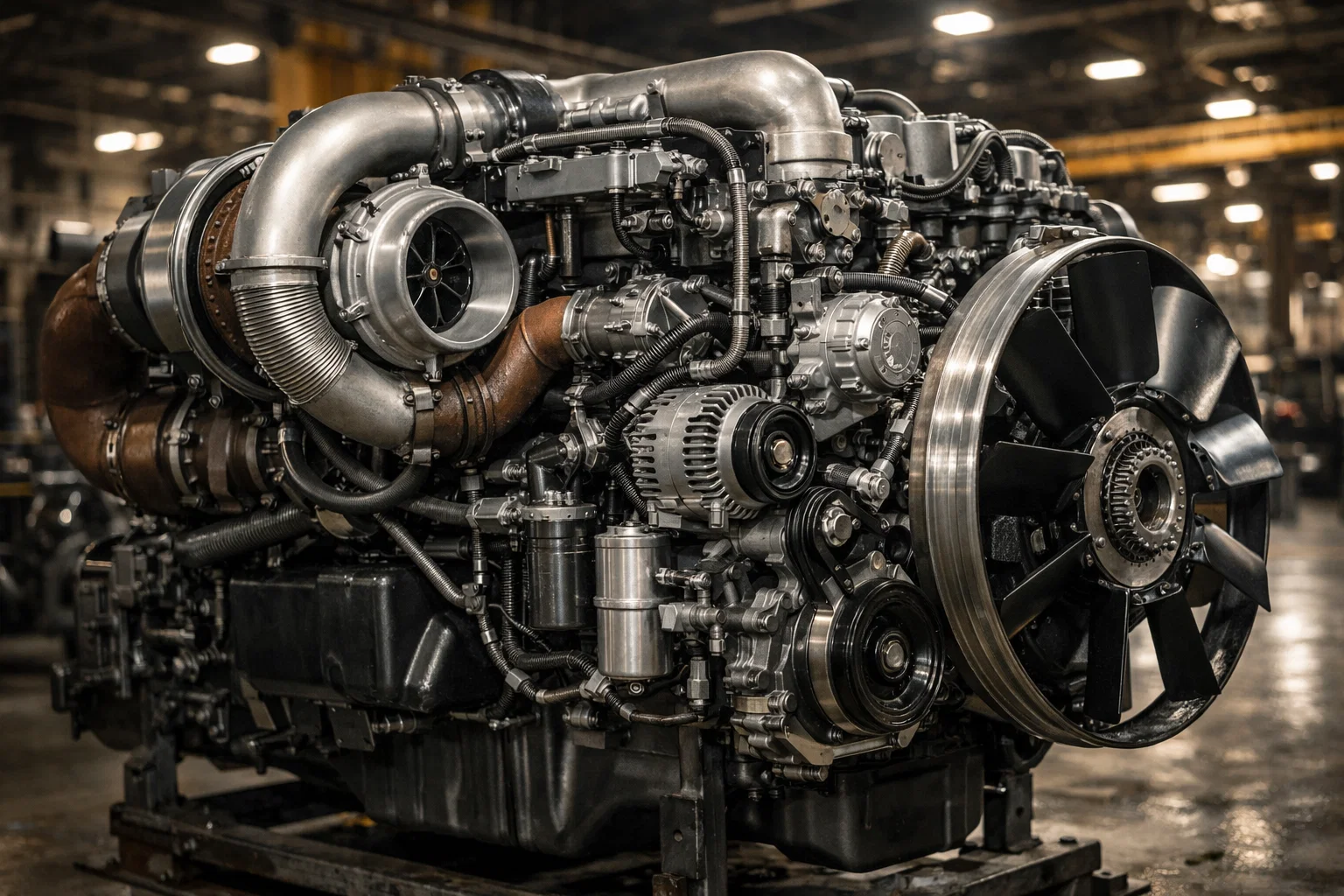
Turbocharging provides additional power. The turbine allows you to increase the efficiency of the engine and get the required traction without extreme speeds. At the same time, the main components of the power unit are made of more durable materials and are designed for long-term operation under increased loads.
Cooling and lubrication systems deserve special attention. In commercial diesels, they are designed with a large margin of safety. Oil pumps, radiators, and cooling channels are designed for continuous engine operation. Thanks to this, the temperature and oil pressure remain stable even under prolonged load, which has a positive effect on the engine life.
However, the service life of the engine is determined not only by mileage. In professional equipment, another indicator is often used — operating hours. The engine can operate for the same amount of time, but the wear will vary under different operating conditions.
For example, a car that is constantly moving on the highway operates in a more stable mode. At the same time, an engine that spends most of its time in city traffic experiences increased loads due to frequent stops, overheating, and insufficient cooling. That is why for passenger cars operated in large cities, it is recommended to reduce oil change intervals, even if the manufacturer allows large service intervals.

The quality of fuel and engine oil also has a huge impact on the durability of the engine. Low-quality diesel fuel with impurities can significantly accelerate the wear of the fuel equipment and cylinder-piston group.
The engine oils themselves for trucks differ from those used in passenger cars. They contain special additive packages designed for extreme loads and long engine operation. However, the use of such oils in passenger car engines is not always justified — their properties may not meet the requirements of a particular engine.
The phenomenon of "million-plus" engines is explained by a complex of factors. Truck diesels are initially designed for long-term operation under load, have a more durable design and operate in a gentle speed range.
For passenger cars, such resource indicators rarely become a priority, since their tasks and operating mode differ significantly. Nevertheless, understanding these principles allows you to extend the life of any engine. Regular maintenance, the use of high-quality fuel and oils, as well as compliance with the manufacturer's recommendations can significantly increase the life of even a regular passenger car engine.
Read more materials:
- Why car manufacturers choose a timing belt or chain
- Mopeds of the USSR that teenagers dreamed of
- Car crashed after theft: the position of the Constitutional Court of the Russian Federation
Комментарии