In engine engineering, there has long been a rule considered almost inviolable: the compression ratio is a constant value. This characteristic is determined by the geometry of the engine, namely the stroke of the piston from the bottom dead center to the top. Changing it during operation seemed impossible.
It was this limitation that forced designers to compromise for decades. At a high compression ratio (for example, about 14:1), the engine demonstrates good fuel efficiency and high efficiency, which is especially important in urban conditions. However, such engines do not combine well with supercharging: increased pressure can cause detonation — premature ignition of the mixture.
On the other hand, turbocharged engines require a reduced compression ratio (approximately 8:1) to avoid destructive processes in the cylinders. But in calm operating modes, such units are less economical and consume more fuel.
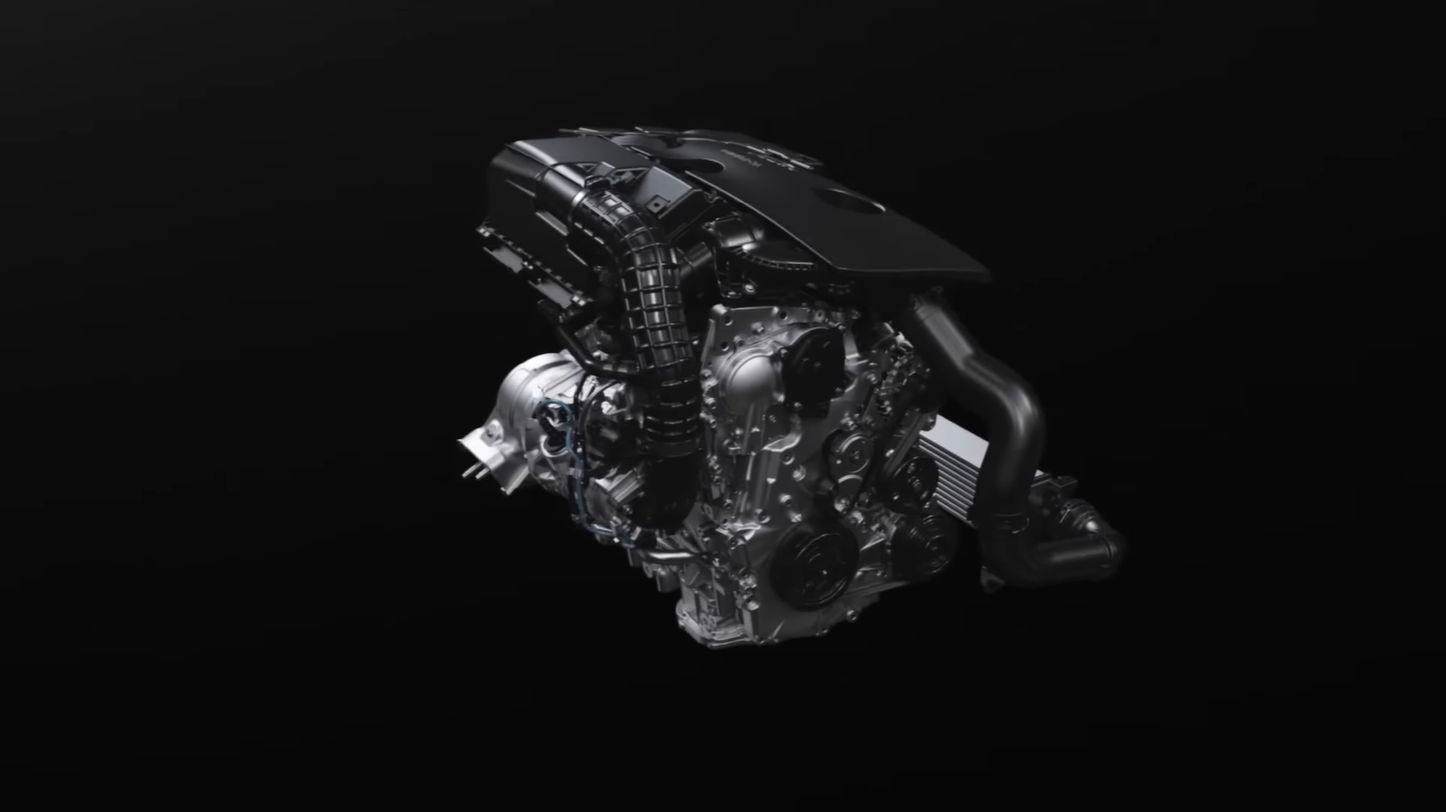
Engineers faced a fundamental task — to create an engine capable of adapting to operating conditions. The ideal solution seemed to be an engine that could change its geometry directly during operation.
The first attempts to approach this idea were made in the first half of the 20th century. In the 1920s, engineer Harry Ricardo experimented with laboratory setups where the upper part of the cylinder could move, changing the volume of the combustion chamber. However, such solutions remained exclusively research-oriented and were not suitable for mass production.
Decades later, engineers at Saab returned to the problem. In 2000, they presented the experimental project Saab SVC (Saab Variable Compression). The approach turned out to be radical: the engine was actually divided into two parts.
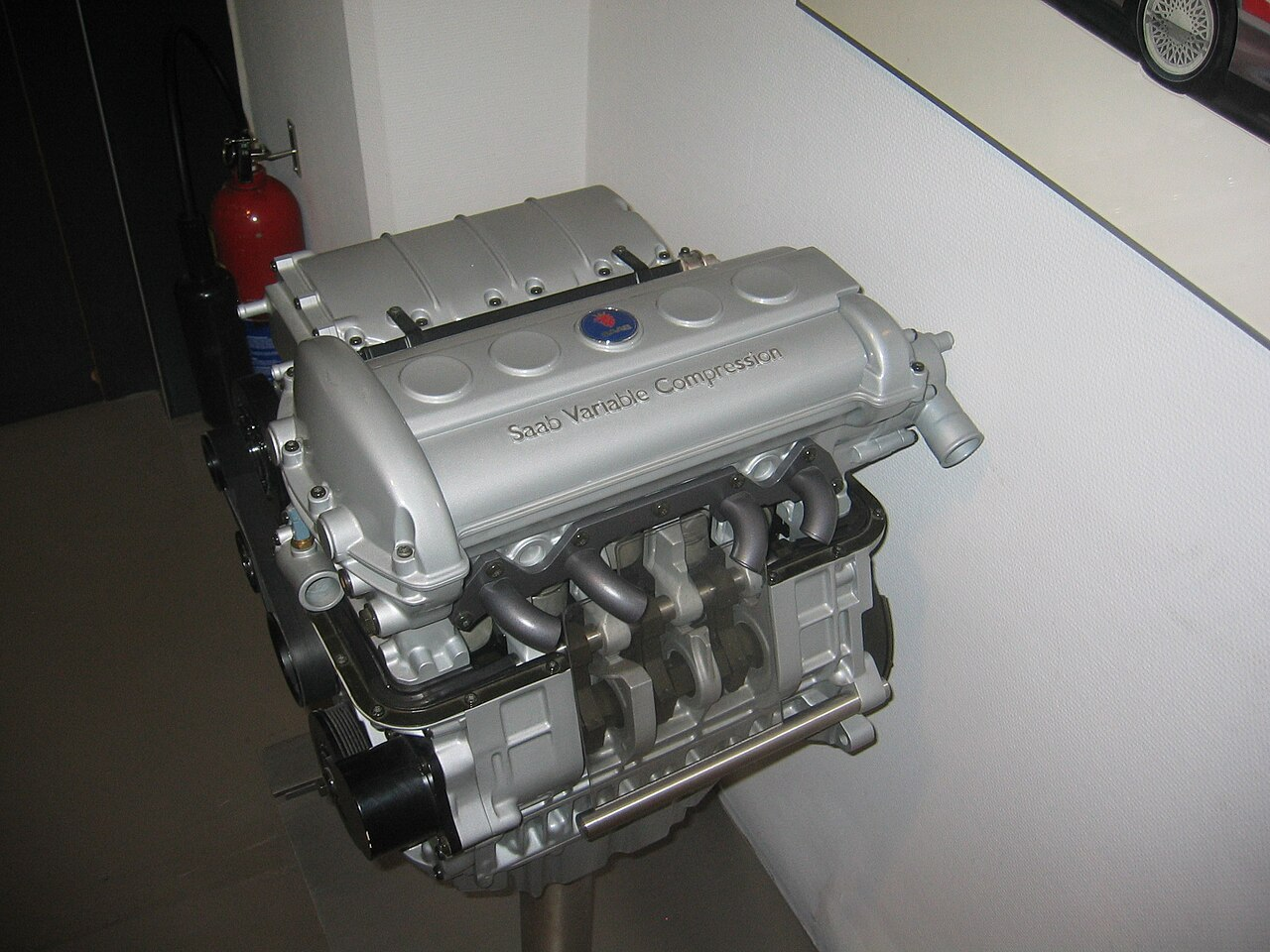
The upper part — the cylinder block with the head — was connected to the lower part (crankcase and crankshaft) via a hinge. Using a hydraulic mechanism, this structure could change the angle of inclination of the block. When the load increased, the top of the engine deflected, increasing the volume of the combustion chamber and reducing the compression ratio.
This solution made it possible to combine efficiency and power, but it turned out to be too complex and expensive for mass implementation. After Saab came under the control of General Motors, the project was closed.
It was only years later, when Nissan took it up, that the idea was put into practice. Work began in 1998 and lasted about two decades. The result was the VC-Turbo engine, first introduced in 2018 on the Infiniti QX50.

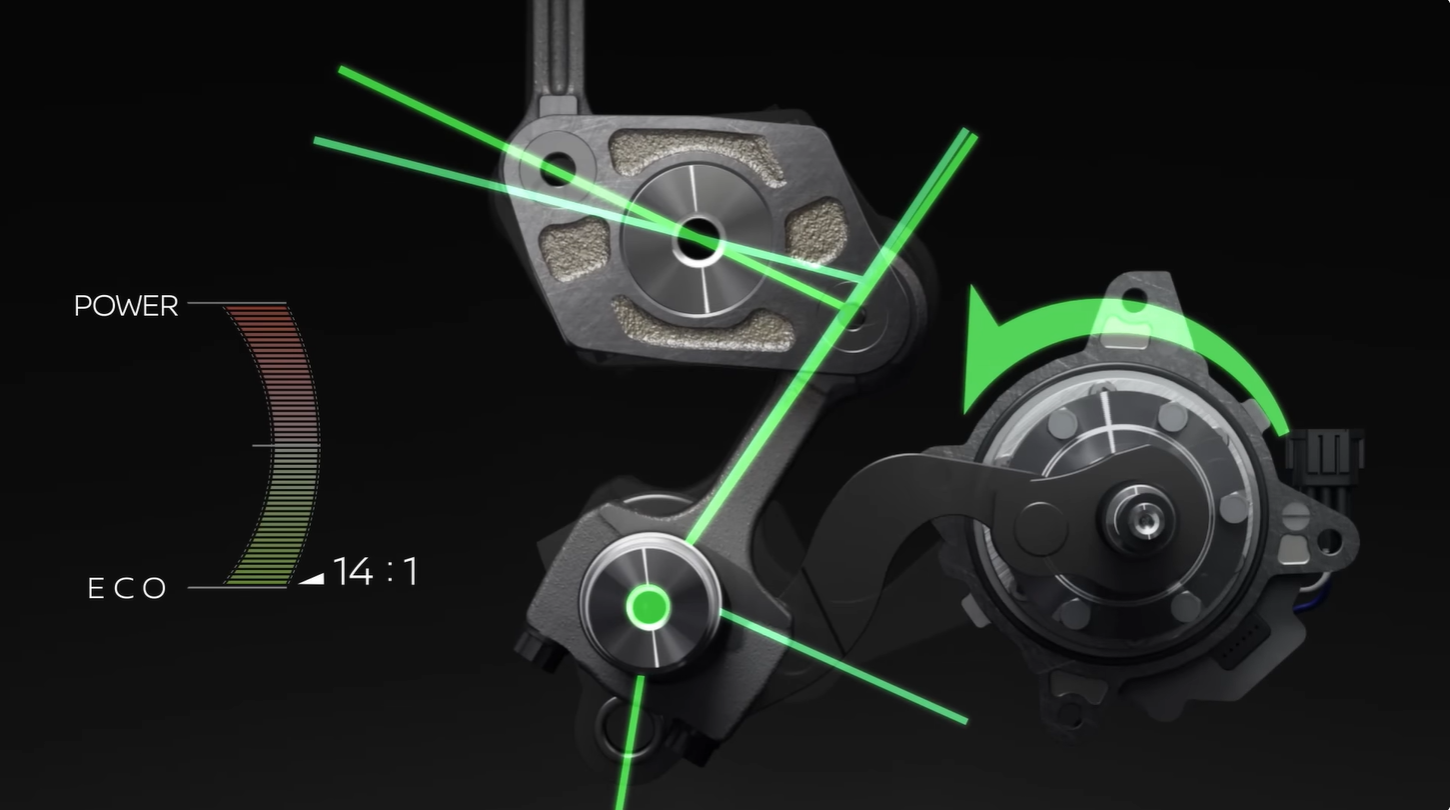
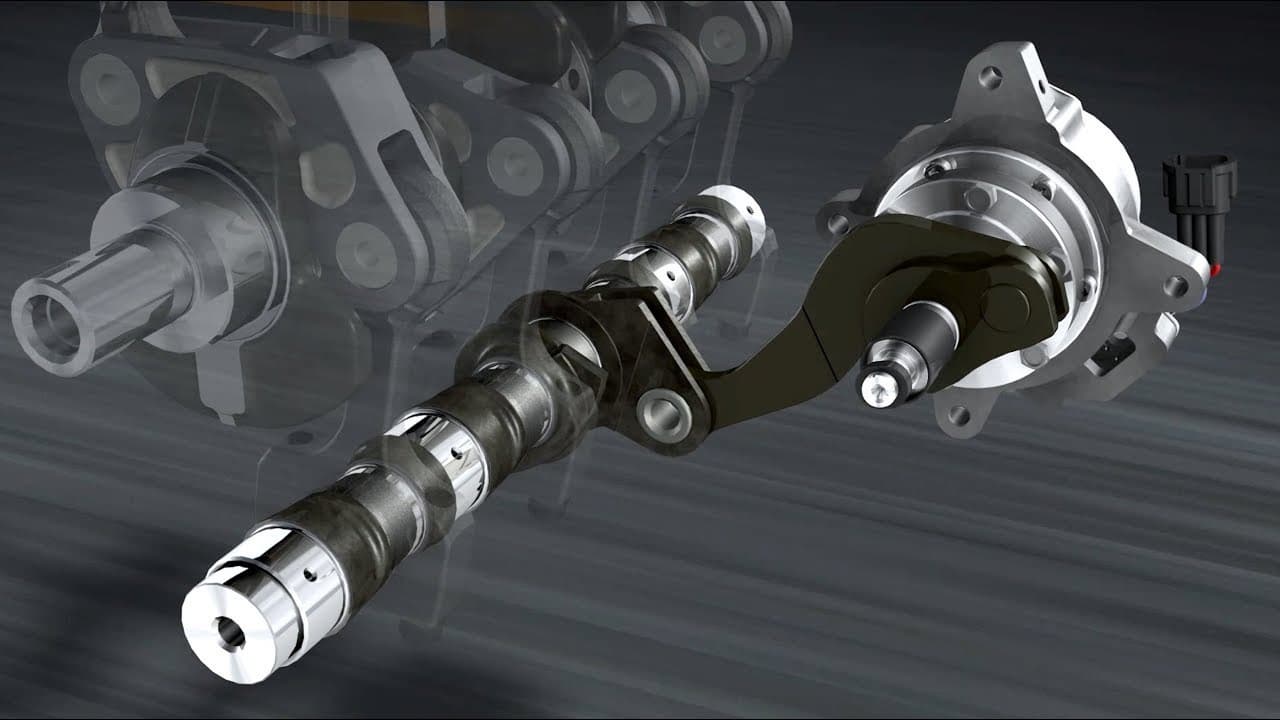
The designers took a different path: instead of changing the position of the block, they redesigned the kinematics of the connecting rod mechanism. A complex system of levers and connections was introduced into the engine.
Key design features:
- the connecting rod received an additional link, forming a kind of "joint"
- the piston is connected to the crankshaft via an intermediate rocker arm
- the position of this mechanism is regulated by a separate electric drive
Depending on the operating mode, the system changes the position of the piston at the top point. In calm conditions, it rises higher, providing a compression ratio of about 14:1. During sharp acceleration, the mechanism changes the geometry — the piston does not reach its previous height, and the compression ratio decreases to about 8:1, which allows the engine to combine efficiency and high output without the risk of detonation. Moreover, even the effective working volume changes slightly during operation.
However, such a complex design inevitably leads to a number of technical consequences. Increasing the number of connections and moving elements means increasing the load on the lubrication system and increasing the requirements for the quality of service.
Among the features of operation, we can highlight:
- increased number of plain bearings
- higher friction losses
- critical dependence on the quality and condition of the engine oil
Any deviations — insufficient oil level, the use of low-quality fluid, or failure to comply with maintenance intervals — can lead to serious damage. At the same time, repairing such an engine is extremely difficult: the accuracy of manufacturing and assembly requires specialized equipment and high qualifications.
Despite this, variable compression technology has proven its operability. VC-Turbo engines provide smooth traction and adaptive behavior in various driving modes, demonstrating the result of many years of engineering efforts.
Nevertheless, the emergence of this development coincided with a change in global trends in the automotive industry. Hybrid systems and electric power plants began to come to the fore, offering alternative ways to achieve efficiency and dynamics.
As a result, the variable compression engine can be seen as an important milestone in the history of the internal combustion engine — an example of how the persistence of engineers made it possible to overcome a fundamental limitation. This technology has become a kind of result of the long-term development of classic engines, demonstrating the limit of their evolution.
Read more materials:
- Is it worth overpaying for original spare parts
- How the Legacy advertising campaign with Bruce Willis helped the formation of Subaru and its global success
- Scuffing in cylinders: a verdict or repair?