You can get a flat tire anywhere: on a country road, in the forest, on a dirt road, or right near your house. It's good if you have a full-sized spare tire on hand. But in modern cars, more and more often, instead of a spare, there's a compact repair kit, the main element of which is repair plugs.
Despite the popularity of this repair method, there are still many myths surrounding it. Some drivers are sure that the plug hopelessly damages the tire, others consider it only a temporary measure, and still others are convinced that without special glue, such a patch won't last long.
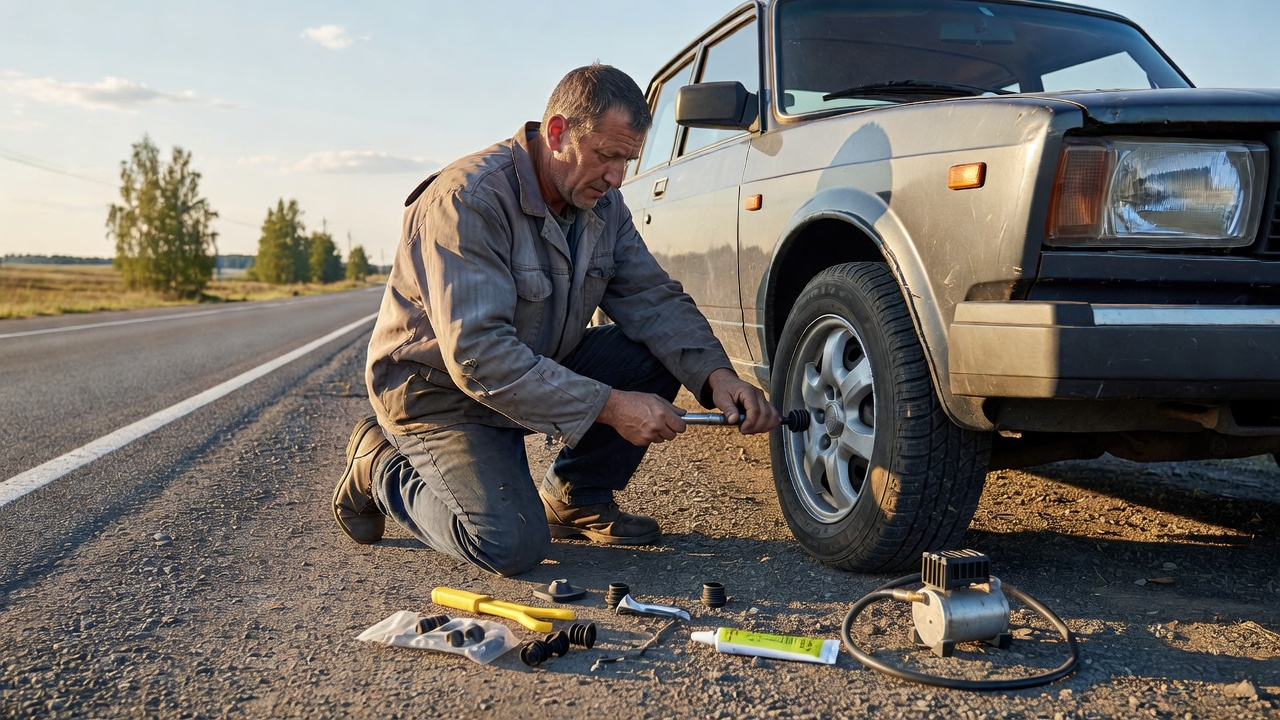
Let's figure out how true these statements are.
Is it true that a plug damages the tire?
Perhaps this is the most common fear among motorists.
Proponents of this version claim that when installing a plug, a special reamer damages the cord threads, which allegedly causes the tire to lose strength and soon become unusable. As a more correct solution, repair using a so-called "mushroom" is usually cited, which is installed after removing the wheel.
At first glance, such an argument seems convincing. However, in practice, the situation is not so clear-cut.
Many experts note that the difference between the two repair methods is significantly less than commonly believed. Moreover, there is an opinion that installing a "mushroom" in some cases may even be more traumatic for the tire's structure, as it requires additional operations with the inner part of the tire.
Therefore, the statement that a plug inevitably destroys the wheel is not true.
For most civilian cars, this repair method is considered quite safe. The only exceptions are usually specialized tires with a very high speed rating, which are installed on sports cars and operated in special modes.
Is glue mandatory?
Another common misconception is related to the glue from the repair kit.
Many drivers believe that it is what holds the plug inside the puncture. Therefore, the absence of a tube in the kit often causes real panic.
In fact, the purpose of the glue is completely different.
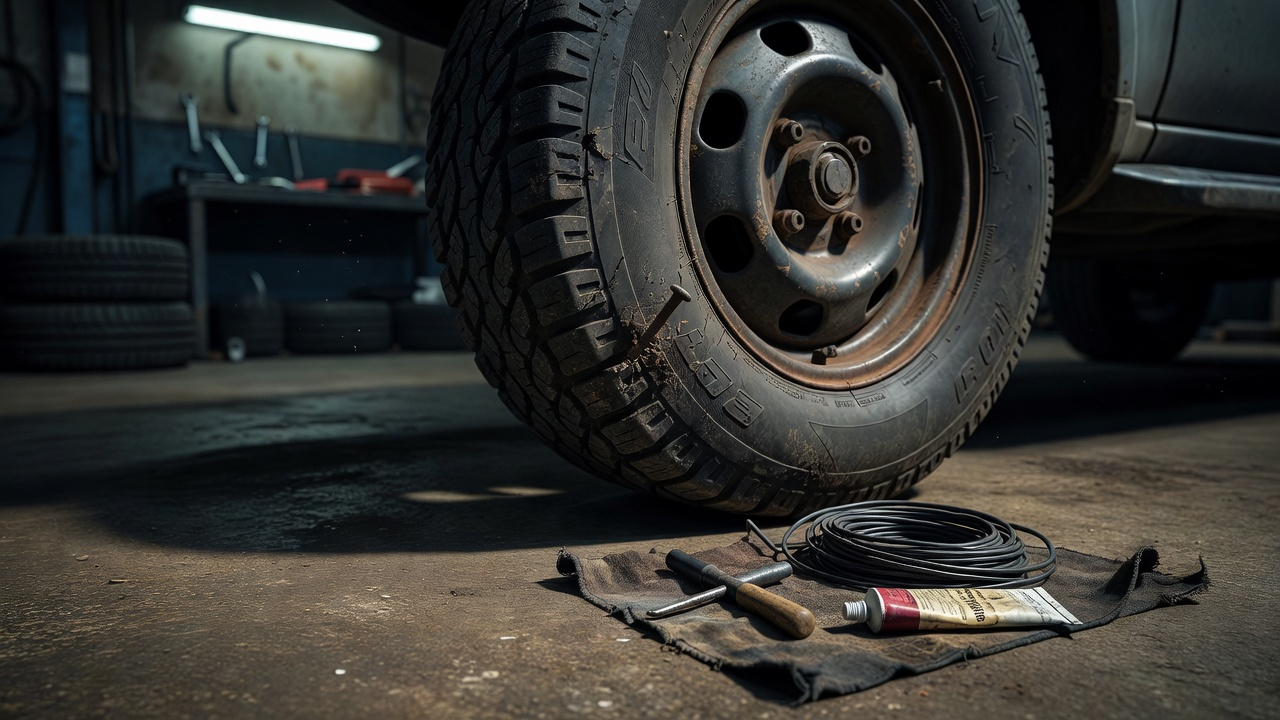
Its main task is to facilitate the installation of the plug into the hole. Simply put, it works as a lubricant, reducing resistance during installation.
If necessary, it can be replaced by:
- soapy water;
- water;
- other suitable lubricating compounds.
The plug itself is held inside the tire due to a different principle. After installation, the material expands and is tightly fixed at the point of damage. It is mechanical retention that ensures the tightness of the repair, not the adhesive composition.
Therefore, the absence of glue does not mean that repair becomes impossible.
Is it true that after using a plug, you need to immediately go to a tire shop?
Many motorists perceive a plug exclusively as a temporary solution that allows them to get to the nearest service station.
In practice, everything is a bit more complicated.
Indeed, professional repair using internal patches or "mushrooms" is considered a classic tire repair method for restoring a tire. However, this does not mean that a plug is intended exclusively for short-term use.
With proper installation, a quality plug can last a very long time.
Many drivers after such a repair:
- continue to operate the tire for several seasons;
- drive tens of thousands of kilometers;
- use the tire until the tread is completely worn out.
Manufacturers of such repair kits also do not indicate a mandatory requirement to immediately replace such a repair with another method.
Therefore, considering a plug exclusively as a temporary measure would be wrong.
Why is this repair method so popular?
The main advantage of a plug is its versatility and simplicity.
To eliminate a puncture, you do not need to:
- dismount the wheel;
- unmount the tire;
- look for a tire shop;
- perform subsequent balancing.
Everything you need usually fits in a compact kit that is easy to store in the trunk.
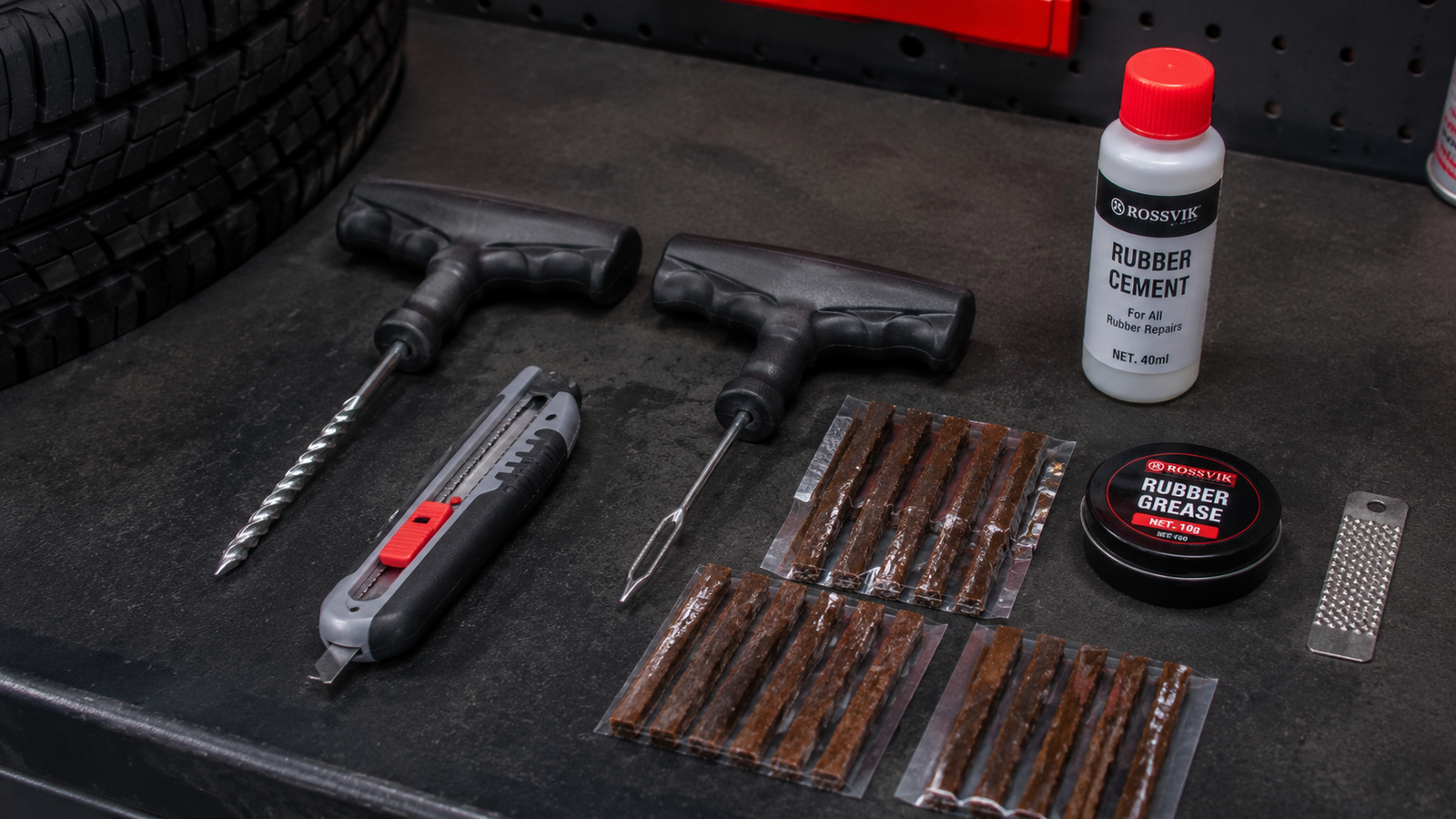
Only a few things are needed for repair:
- a tool for preparing the hole;
- a repair plug;
- lubricant;
- a knife for removing excess material.
It is thanks to this simplicity that the method has become so widespread among motorists.
It becomes especially valuable in situations where help is far away, and it is necessary to continue driving as quickly as possible.
In what cases does a plug really help?
It is important to understand that the possibilities of such repair still have their limits.
A plug works most effectively for tread damage caused by:
- nails;
- screws;
- thin metal objects;
- other small punctures.
In such situations, it allows you to quickly restore the tightness of the wheel and continue driving.
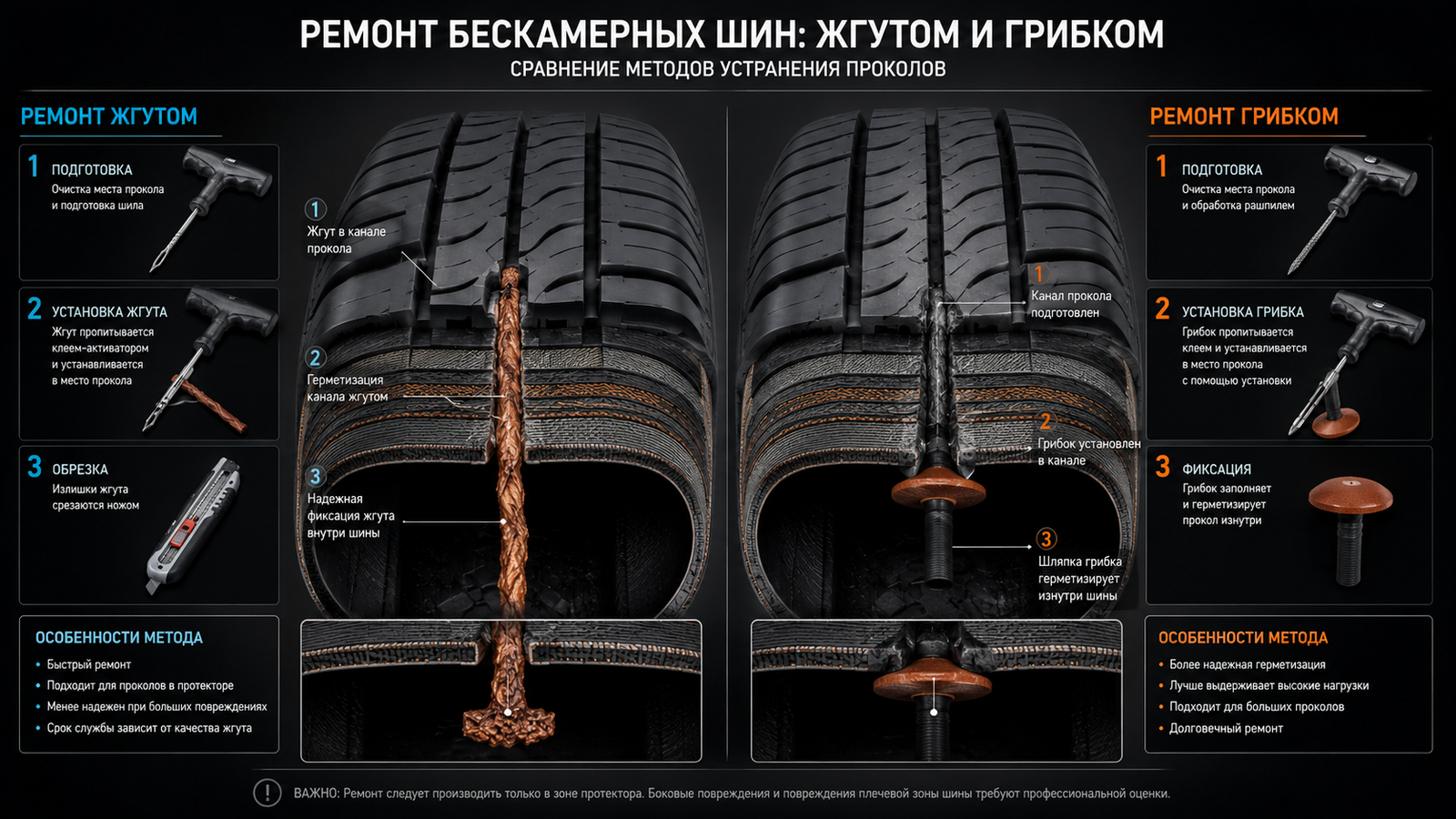
However, there are damages for which the use of a plug will not yield results:
- large rubber tears;
- sidewall damage;
- serious deformation of the tire carcass;
- cord destruction.
In such cases, more serious repair methods or complete tire replacement are necessary.
Why you should carry a repair kit with you
Stories that plugs ruin tires, require mandatory gluing, or are only suitable for a few kilometers are largely a consequence of old misconceptions.
In practice, a quality plug has a number of obvious advantages:
- does not require complex equipment;
- installs in minutes;
- allows you to perform repairs in almost any conditions;
- can last a long time after installation.
That is why a repair kit remains one of the most useful accessories in a car.
Of course, it cannot solve every wheel problem. But if it's a common tread puncture, a plug often turns out to be the fastest, most convenient, and most effective way to get the car back on the road.
Therefore, there will definitely be a place for such a kit in the trunk. But it's better to leave the numerous horror stories about its harm to those who have never used this simple and proven method of tire repair.
Read more materials:
- Five myths about paint protection film that people still believe
- Honda Element: a car that wasn't understood right away
- Intercooler: a small radiator that saves the engine
Комментарии