The mid-2000s were a time of bold automotive experiments. Manufacturers increasingly tried to combine the qualities of several classes in one model. Station wagons took on the image of SUVs, crossovers strived for a sporty character, and coupes transformed into practical family cars. The market was looking for new formats, and sometimes these searches led to very unusual results.
One of the most original projects of that time was the Magna Torrero Badlander. Today, this car looks like a concept ahead of its time, but in 2006, such an idea seemed too bold even for the automotive industry.
When a component manufacturer decided to build its own car
By the early 2000s, the Canadian company Magna was considered one of the world's largest suppliers of automotive components. Its products were used by dozens of well-known car manufacturers, but the company itself remained in the shadow of its clients.
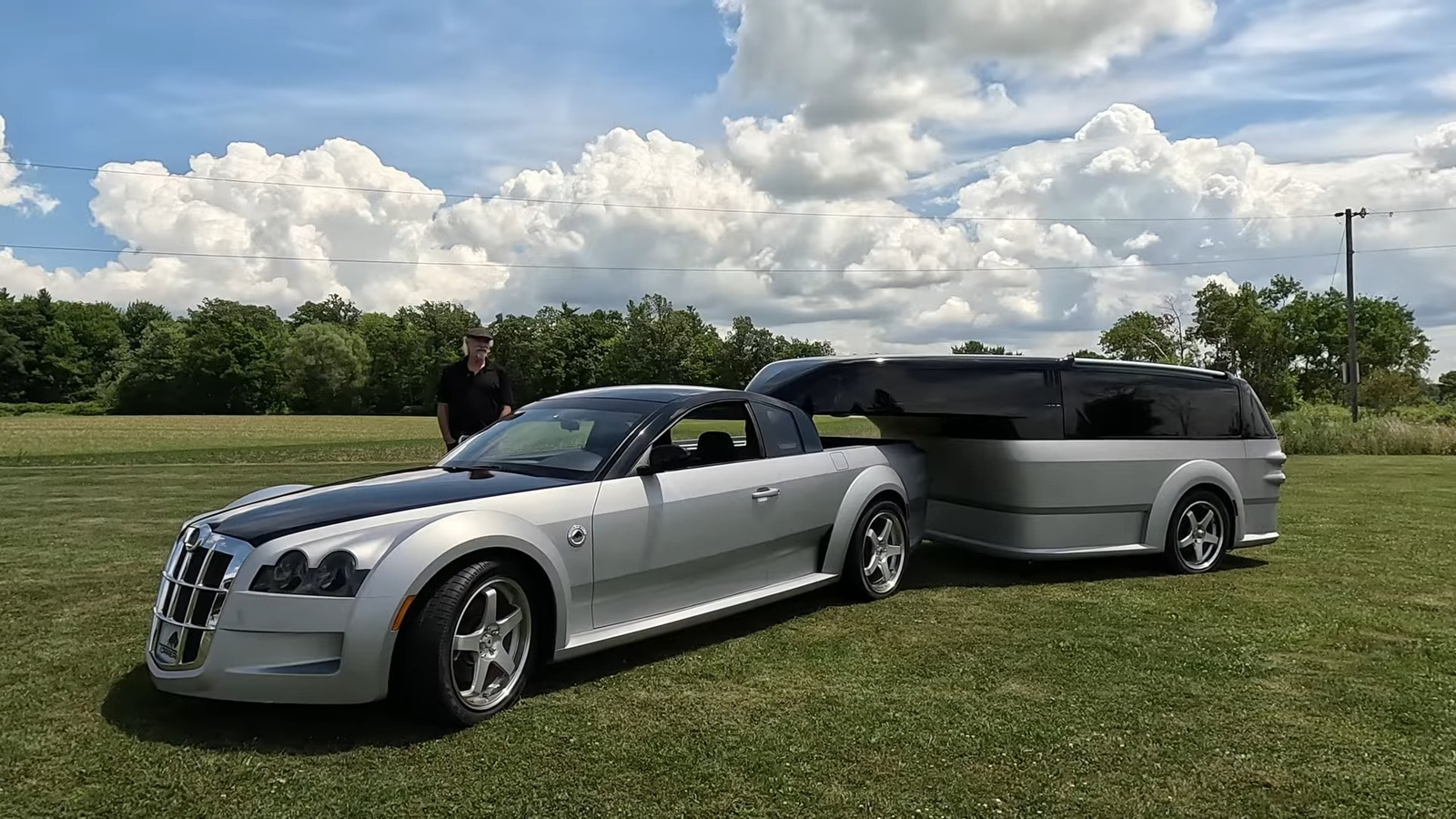
To demonstrate its engineering capabilities, Magna decided to abandon traditional presentations and create a full-fledged car. It was meant to prove that the company was capable not only of producing individual components but also of independently developing a modern car almost from scratch.
The idea came at a very opportune moment. It was then that interest in outdoor activities, travel, campers, ATVs, and boats began to grow rapidly. The car gradually ceased to be exclusively a means of transport and turned into a versatile tool for recreation.
The developers were faced with a difficult task – to create a car capable of combining several roles at once.
One car instead of several
Work on the project began not with the choice of platform or engine, but with the question: can a car be made that equally successfully replaces a coupe, a pickup, and a tow vehicle for a travel trailer?
Famous American designers Chuck Pelly and Geoff Teague were invited to develop the exterior.
The project took a long time to create. First, scale models appeared, then full-size clay mock-ups, after which designers spent several more months refining the body proportions.
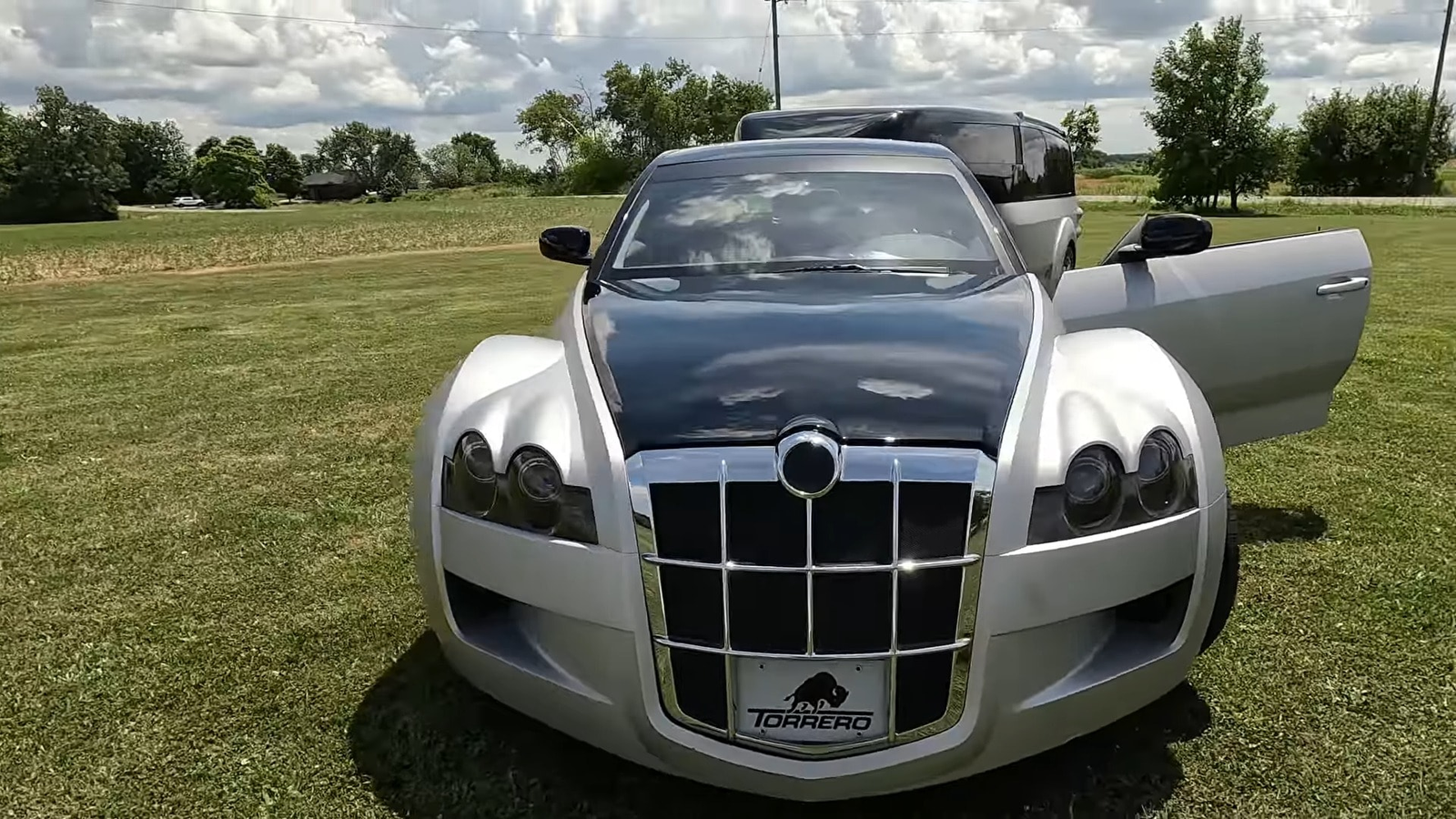
The result was a car that was difficult to classify into any existing category. It combined the dynamic silhouette of a coupe with the practicality of a pickup and looked more like a concept from a car show than a future production model.
American engineering under an unusual body
Despite its futuristic appearance, the technical part of the car was quite traditional.
The developers used the Dodge Magnum R/T platform as a basis, slightly increasing its wheelbase to achieve more harmonious proportions.
Under the hood was the well-known 5.7-liter HEMI V8 engine.
This engine provided the car with the powerful acceleration characteristic of American models and a recognizable sound. The powertrain was complemented by an all-wheel-drive system and a specially tuned exhaust system, emphasizing the engine's character.
However, the main advantage of the project was not the V8 at all.
A coupe that turned into a pickup
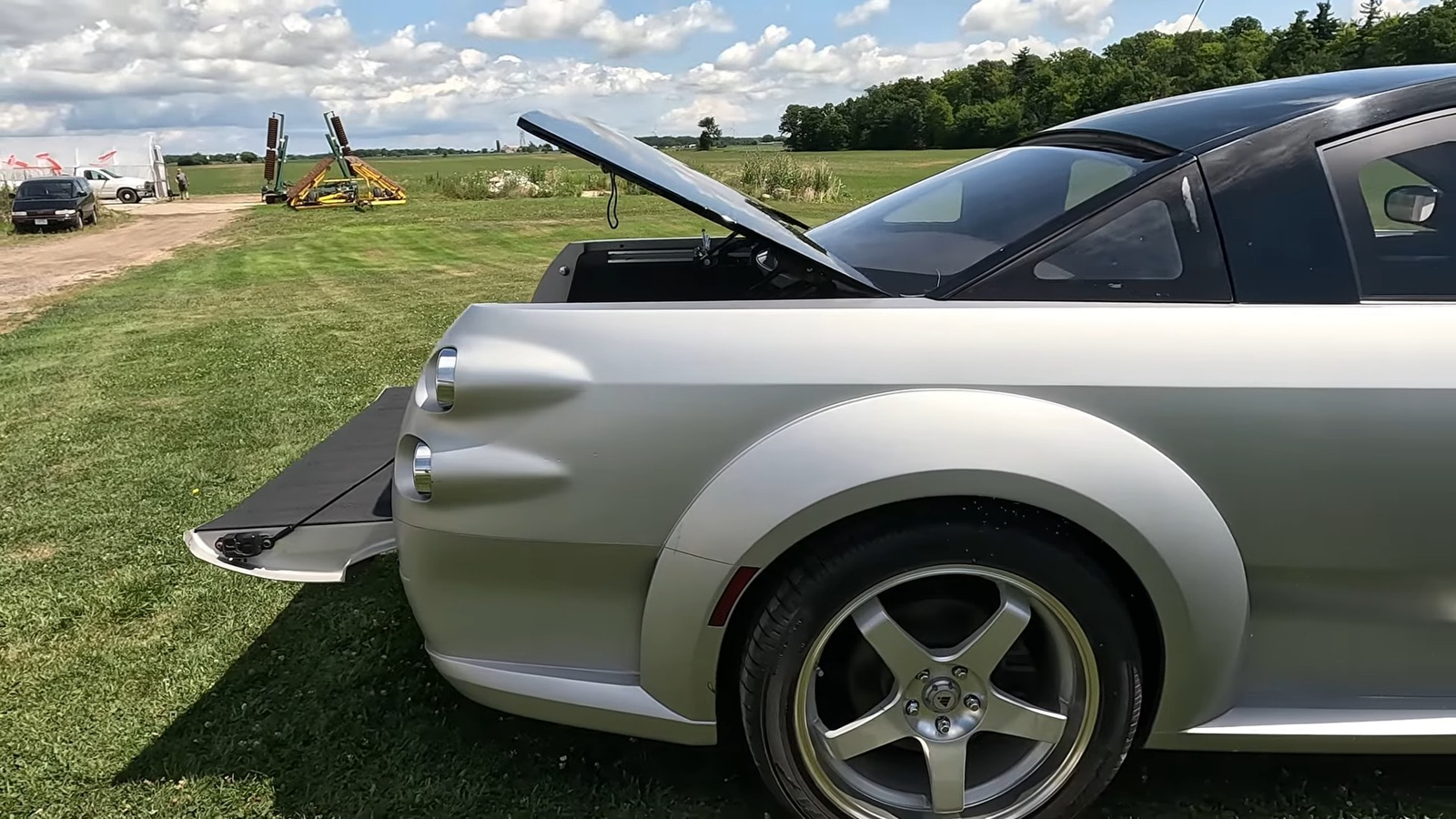
The most unusual feature of the Magna Torrero Badlander was its transformable body structure.
The car could change its configuration depending on the owner's tasks.
The design provided for:
- transformation of the rear part of the body;
- an opening cargo compartment;
- the conversion of a closed coupe into a kind of pickup;
- a removable glass roof that created the effect of an open car.
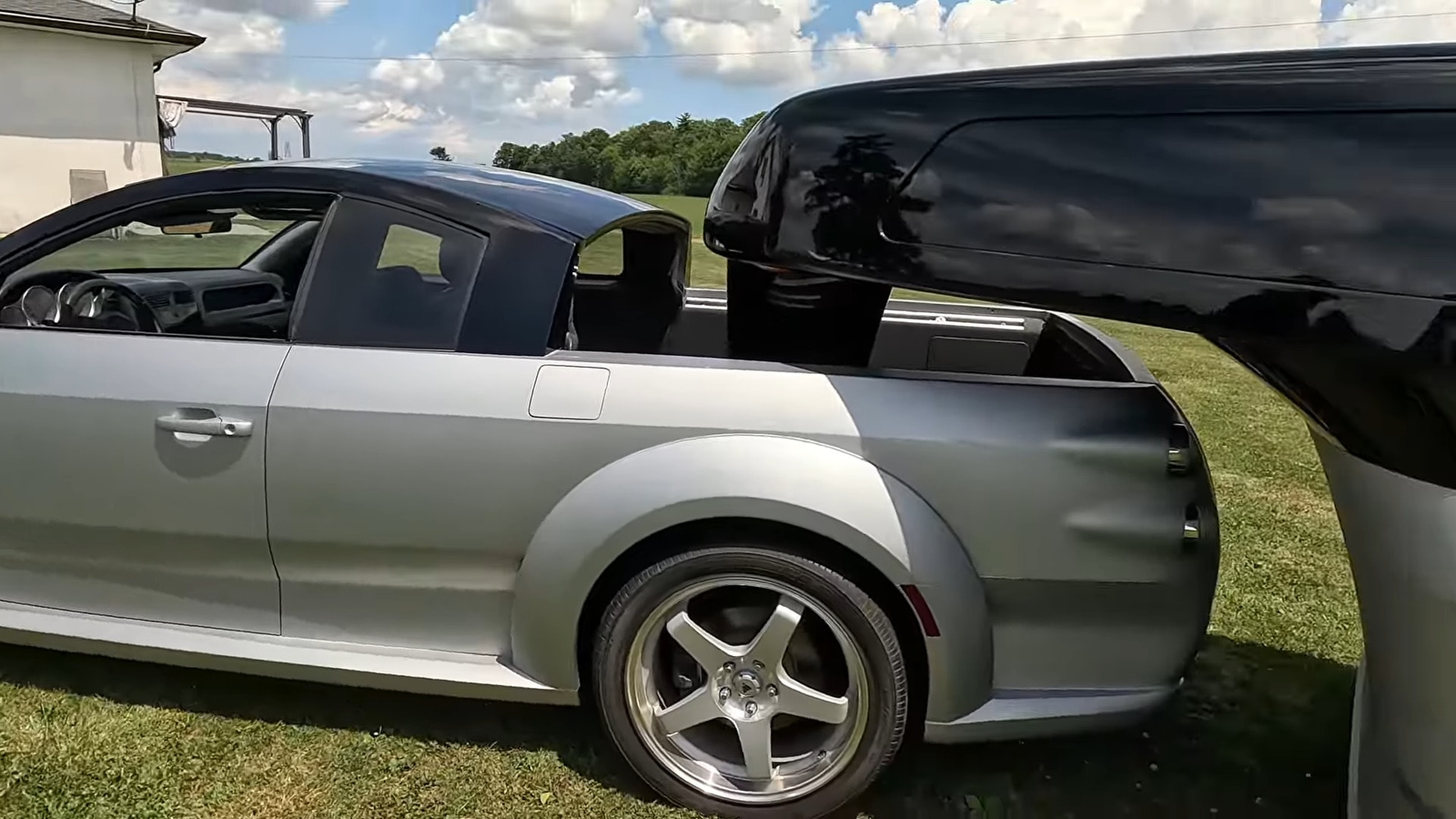
Today, such solutions are not surprising, but in 2006, such functionality looked very unusual.
In essence, the developers tried to combine several completely different cars in one body.
The most unusual part of the project was hidden behind the car
The specially designed travel trailer turned out to be no less original.
For the Magna Torrero Badlander, a "gooseneck" type camper was created, which was perceived not as a separate trailer, but as a logical continuation of the car.
It received:
- an electronic coupling system;
- the ability to control the mechanism directly from the cabin;
- its own electrical system;
- retractable supports for autonomous installation.
After installation, the camp turned into a full-fledged mobile base for recreation.
Today, such solutions are actively used in the segment of travel vehicles, but in the mid-2000s, they seemed almost fantastic.
In fact, Magna proposed a concept that only became in demand many years later.
Why the project never continued
The development of the car and trailer cost approximately 3 million dollars, which was a very significant sum for a demonstration project.
After completing the work, Magna hoped to interest one of the major car manufacturers who could bring the concept to mass production.
However, this did not happen.
There were several reasons:
- the market was not yet ready for such an unusual car format;
- the design itself seemed too complex;
- the concept combined too many different functions simultaneously.
As a result, the Magna Torrero Badlander remained a one-off.
The car was almost lost forever
The fate of most such concepts usually ends the same way – after their exhibition career, they are sent for disposal.
However, the Magna Torrero Badlander avoided this fate.
During a property sale, the car and the unique trailer were acquired by different owners. The project was literally divided into two parts, after which both disappeared from view for a long time, remaining in private collections and warehouses.
Collector reassembled the project
Years later, collector Robin James became interested in the unusual concept.
He tracked down the car and then managed to find the original trailer. After a long search, both parts of the project were reunited.
Today, the Magna Torrero Badlander is fully functional. Its odometer shows just over 500 kilometers, so the car is an almost untouched time capsule from the automotive experiments of the mid-2000s.
A concept that appeared ahead of its time
The story of the Magna Torrero Badlander is especially interesting today, as the travel vehicle market is experiencing a real boom.
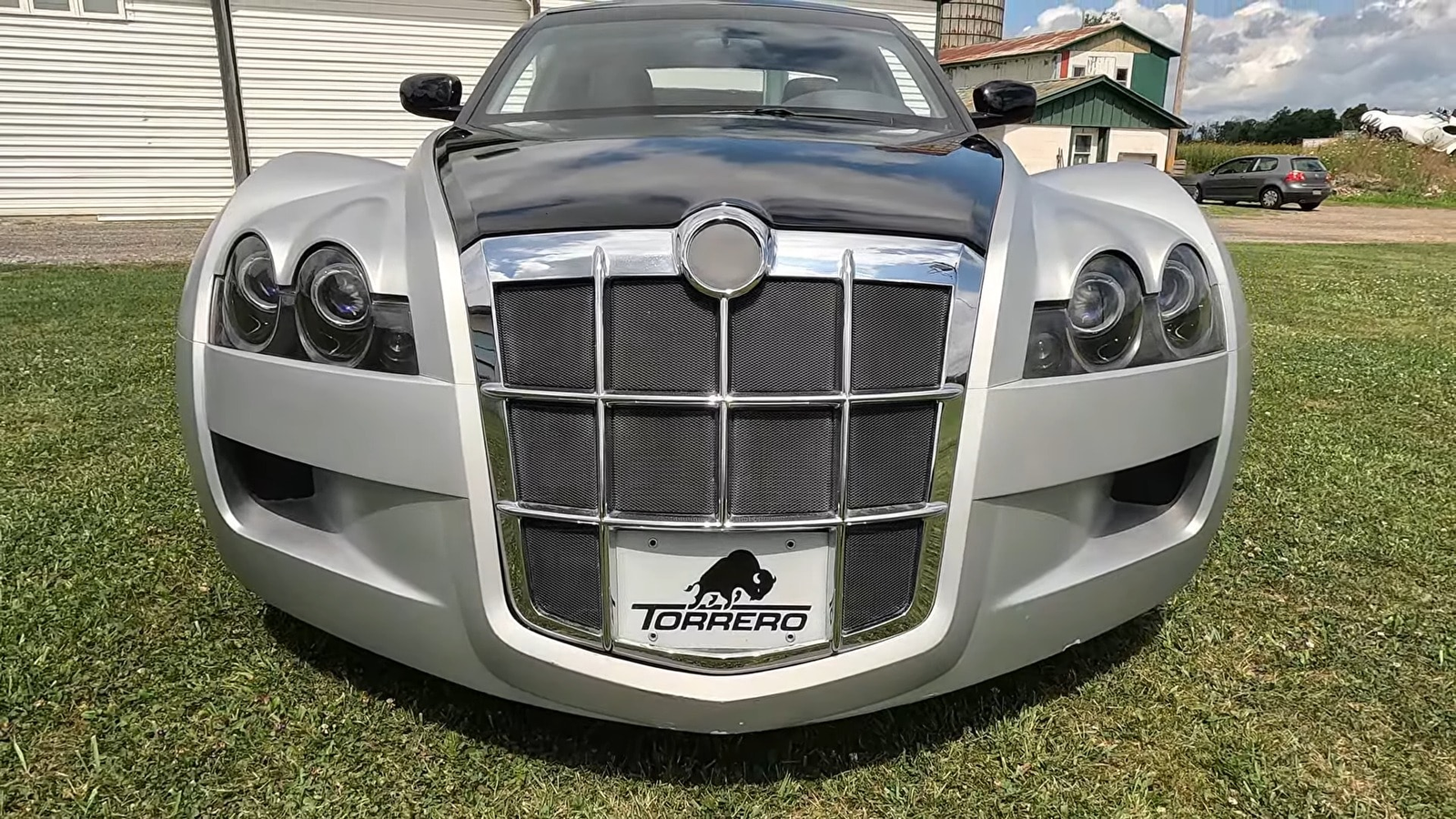
Campers, expedition pickups, vehicles for outdoor activities and travel have become one of the fastest-growing segments of the automotive industry. Manufacturers are actively developing this direction, offering new solutions for long-distance travel enthusiasts.
Against this background, it becomes obvious that Magna engineers, back in 2006, proposed an idea that later proved to be in demand by the market.
Perhaps the project appeared too early. Buyers of that time were not yet ready for a car capable of simultaneously performing the role of a coupe, a pickup, a tow vehicle, and a mobile tourist complex.
Today, the Magna Torrero Badlander is no longer perceived as an exotic experiment, but as one of those rare concepts that managed to look into the future of the automotive industry much earlier than most competitors.
Read more articles:
- VAZ-2116 "Silhouette": a sedan that could have changed AvtoVAZ
- New J.D. Power rating changed perceptions of Chinese cars
- A trip for 300 rubles can end in a lawsuit for 1.5 million: what you need to know about carsharing