Translated with AI from the Russian original.
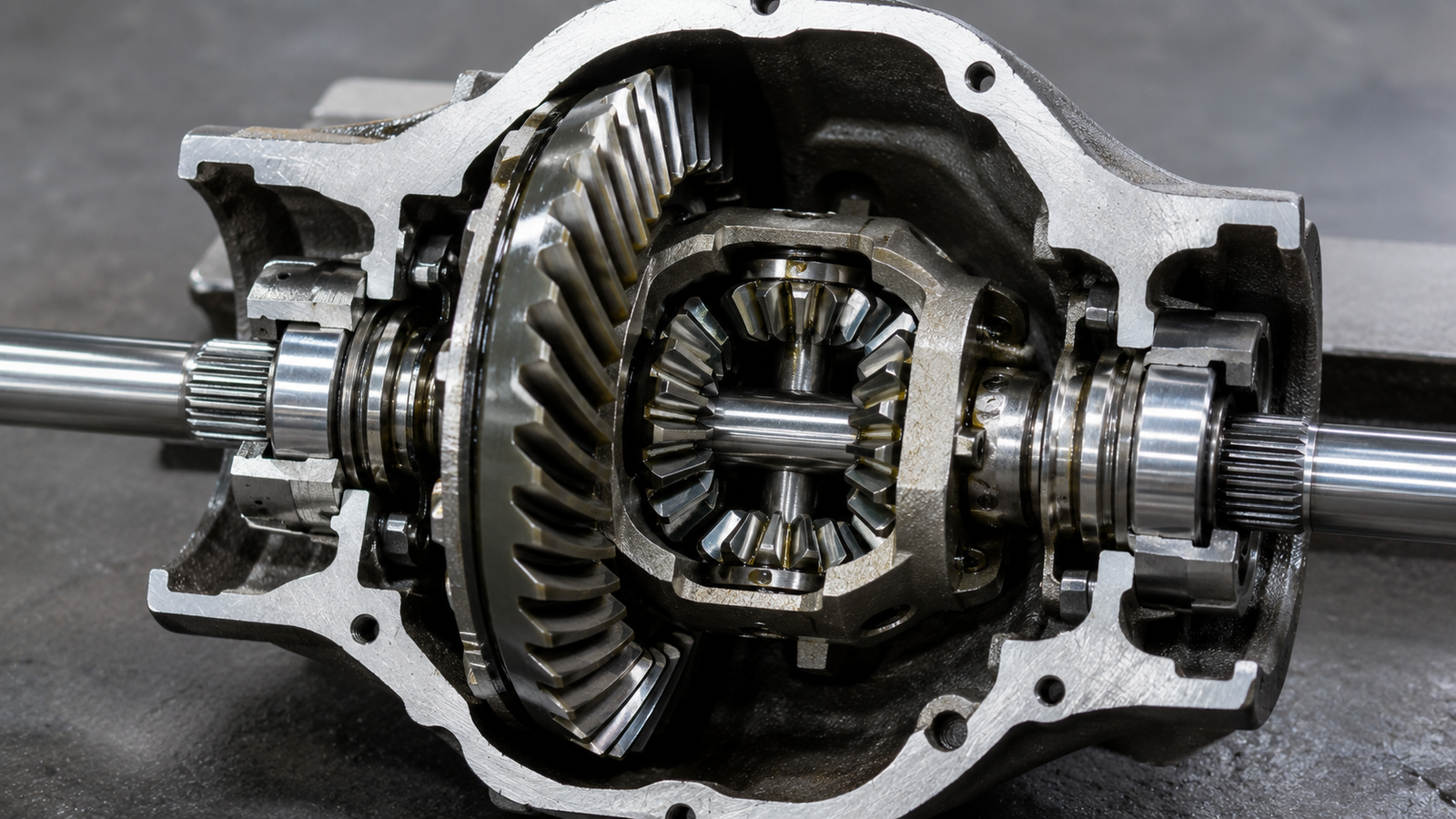
The differential is one of the most important elements of a car's transmission. It allows the drive wheels to rotate at different speeds when cornering, reducing stress on the transmission and preventing accelerated tire wear.
However, some car owners deliberately deprive the mechanism of this function by welding the internal gears together. This solution is known as "welding" the differential and is most often used in motorsport or on specially prepared vehicles.
Why a car needs a differential
When driving in a straight line, both drive wheels travel the same distance.
The situation changes in a turn.
The outer wheel travels a longer path, so it must make more revolutions than the inner wheel in the same amount of time.
If both half-shafts are rigidly connected, one of the wheels will inevitably start to slip, as it will physically be unable to rotate at the required speed.
This will lead to several consequences:
- increased tire wear;
- additional loads on the transmission;
- worsened vehicle handling.
The differential is used precisely to solve this problem.
How the mechanism works
The differential is located inside the final drive of the drive axle.
It receives torque from the driveshaft and distributes it between the half-shafts.
Small gears — planet gears — play the main role in the mechanism's operation.
When driving in a straight line, they practically do not rotate.
When the car enters a turn, the planet gears begin to redistribute revolutions between the half-shafts, allowing each wheel to rotate at its own speed.
The driver does not participate in the mechanism's operation — everything happens automatically.
What happens after welding
When the differential is welded, the planet gears are excluded from operation, and the axle gears are welded together.
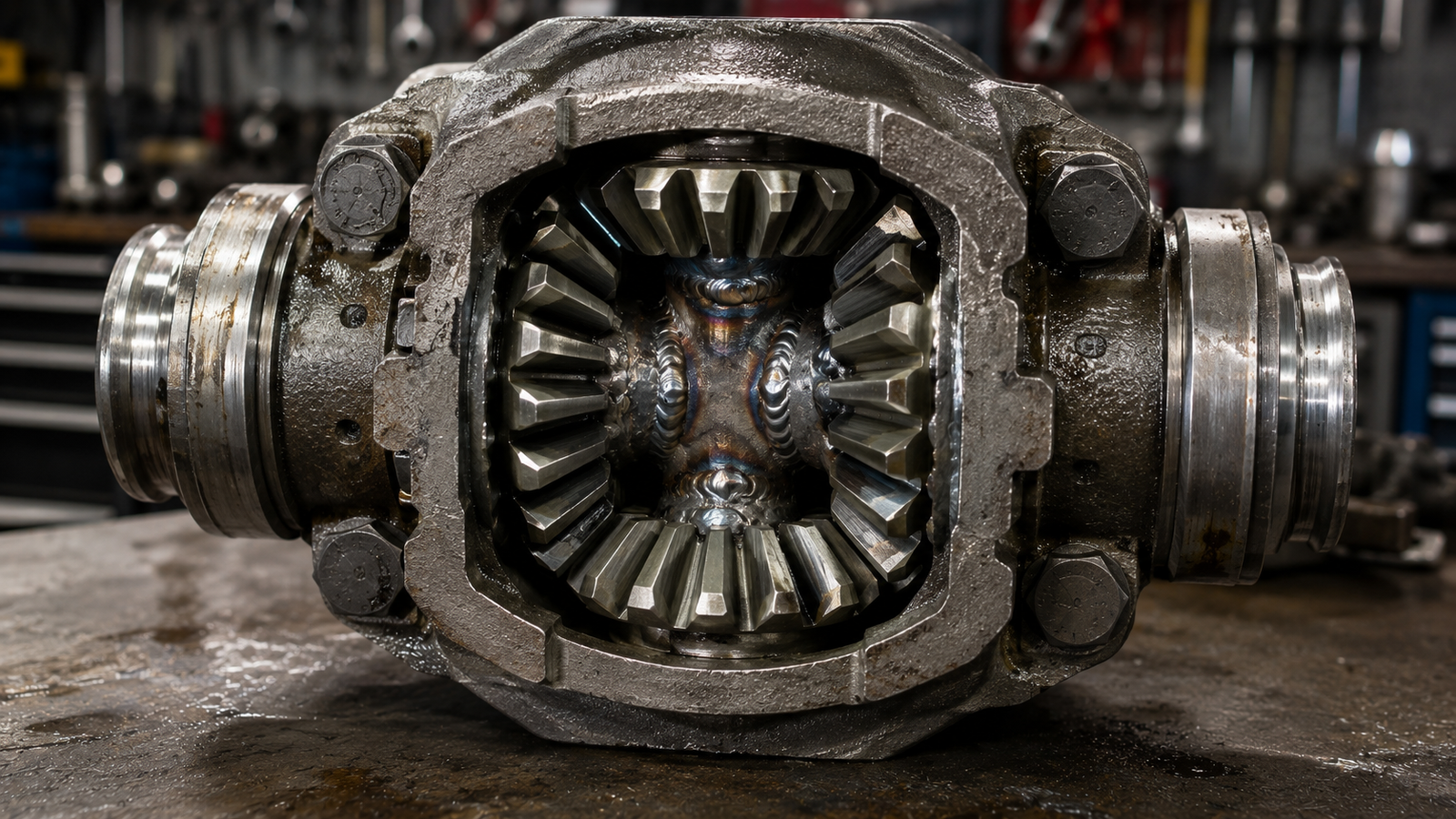
After such a modification, both half-shafts become a single rigid mechanism.
Regardless of driving conditions, both wheels always rotate at the same angular velocity.
In fact, the car loses its differential function.
A similar solution also exists in factory execution.
In motorsport, a spool is used — a solid part that initially rigidly connects the half-shafts without welding.
Why the differential is welded
Drifting
The most common reason is the car's participation in drifting competitions.
With an open differential, traction can be redistributed to the wheel that has lost grip on the road.
This makes it more difficult to keep the car in a controlled skid.
A rigid connection of the half-shafts provides:
- more predictable behavior;
- stable maintenance of the skid;
- equal torque transfer to both rear wheels.
In addition, welding is significantly cheaper than buying a sports limited-slip differential.
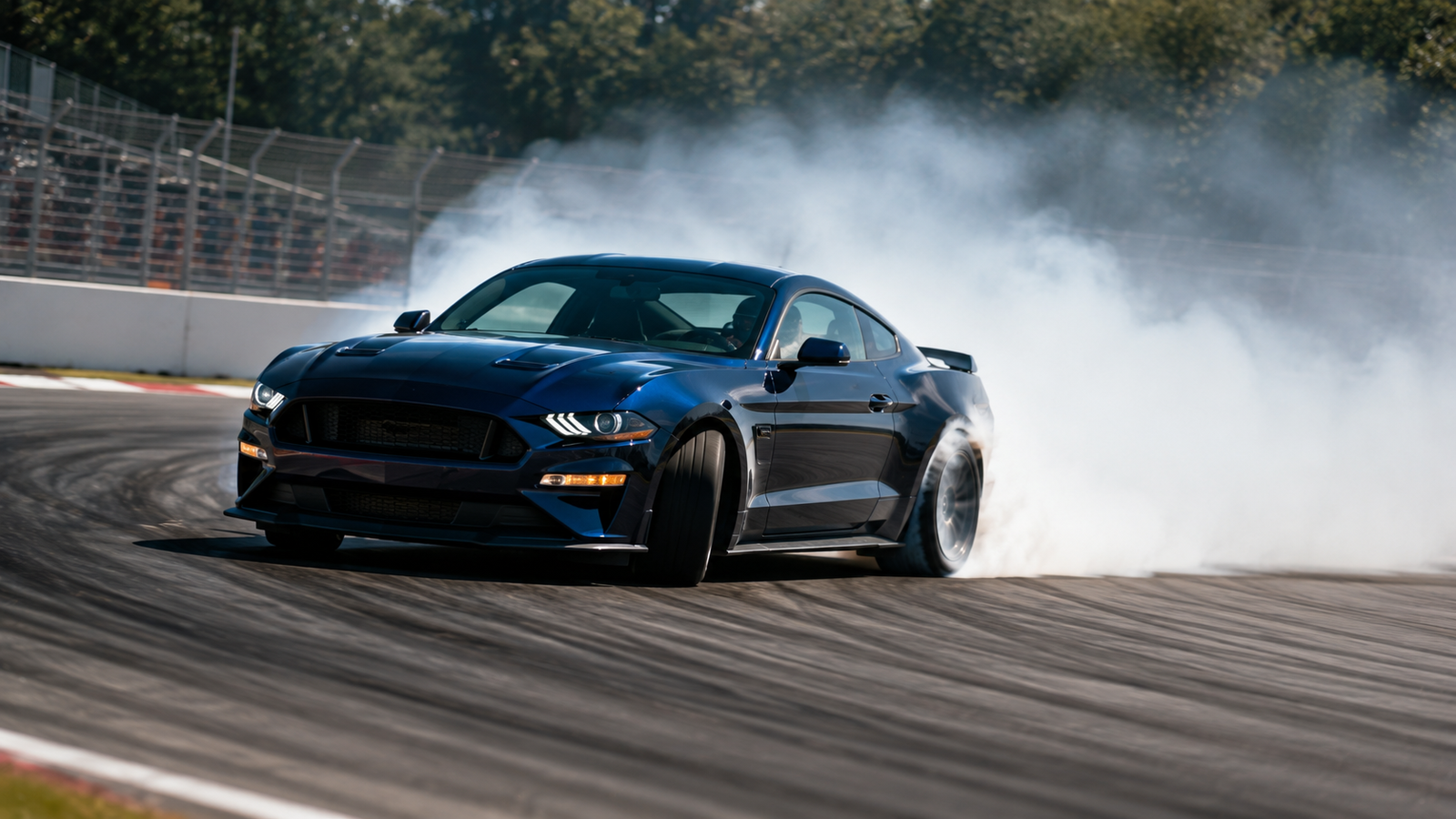
That is why beginner drifters often choose this option for car preparation.
Off-road
Rigid locking also helps when driving on difficult surfaces.
For example, if one rear wheel is on ice and the other is on dry asphalt, an open differential will direct most of the torque to the wheel with less resistance.
As a result, it will uselessly spin, while the second wheel will receive almost no traction.
With a welded differential, both wheels continue to receive the same torque regardless of the level of grip.
For this reason, some off-road enthusiasts use two sets of final drives:
- with a welded differential — for winter and mud;
- with a standard mechanism — for summer operation.
Drag racing
Another area of application is acceleration competitions.
Rigid torque transfer to both drive wheels at once helps to more effectively realize engine power during startup.
That is why spools have long been used in professional drag racing.
Before the advent of ready-made parts, a similar effect was achieved precisely by welding the internal elements of the differential.
In addition, similar solutions are found on some dirt oval tracks, where the difference in driving trajectory is compensated by installing tires of different diameters on one axle.
What disadvantages appear
The advantages of rigid locking are accompanied by serious compromises.
During a turn, the inner wheel is forced to rotate at the same speed as the outer one.
Since it cannot travel a shorter trajectory, constant slipping occurs.
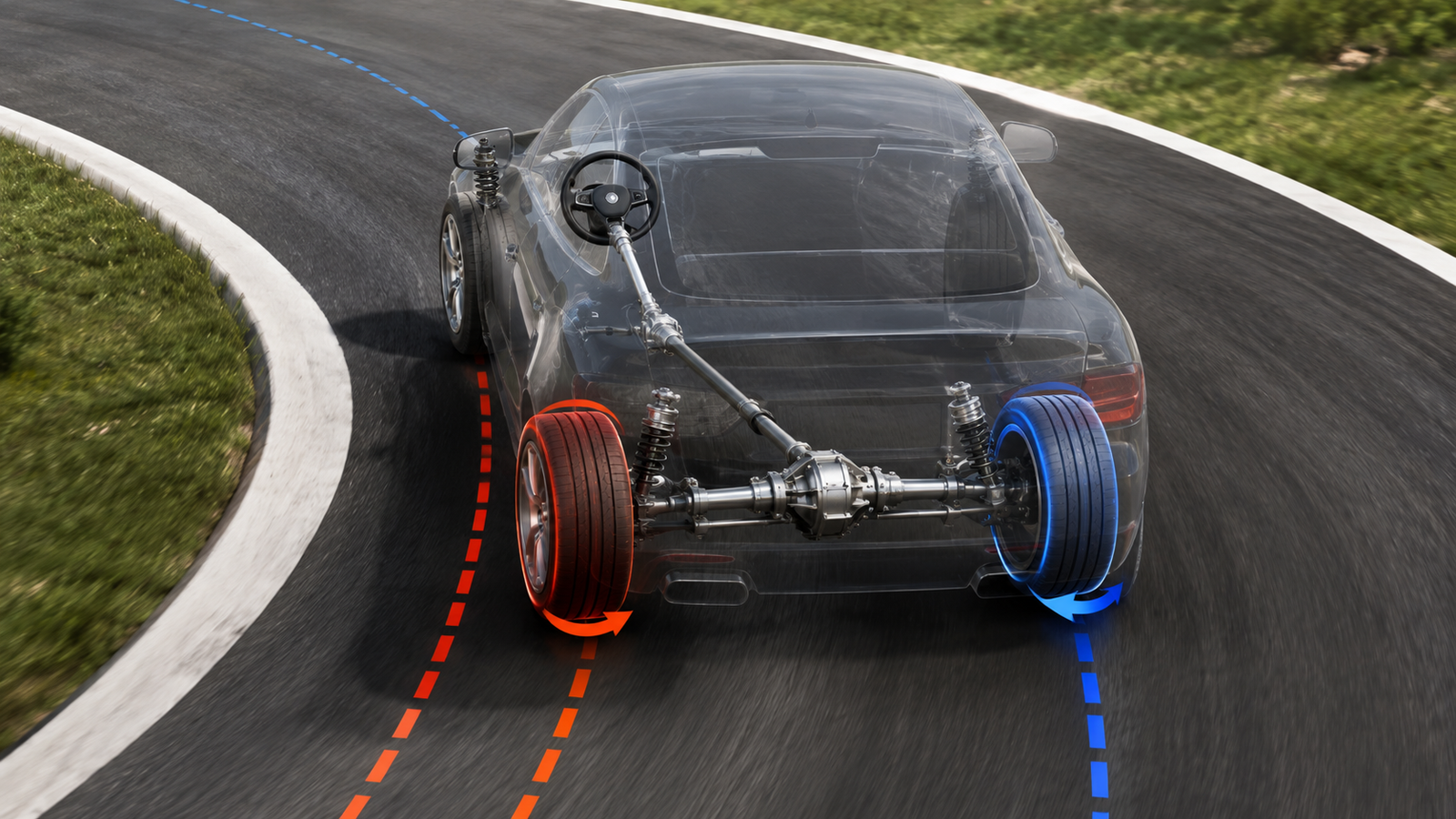
This leads to several consequences:
- accelerated tire wear;
- increased steering effort;
- additional load on transmission components;
- worsened handling;
- increased tendency of the car to skid.
The disadvantages are especially noticeable when operating on public roads.
Part of the tire grip on the road is spent on forced slipping, so the margin of lateral grip in turns decreases.
On rear-wheel drive vehicles, this increases the likelihood of the rear axle breaking away.
In addition, owners of cars with a welded differential often note the appearance of extraneous noises, squeaks, and impacts in the axle area when the wheels are fully turned.
The reason is that the transmission begins to operate in conditions for which it was not originally designed.
To reduce the resulting loads, it is recommended to avoid sharp turns of the steering wheel and to take turns along a smoother trajectory.
How a limited-slip differential differs
An alternative to welding is a limited-slip differential (LSD).
The main difference lies in the principle of operation.
During normal driving, such a mechanism is practically no different from an open differential and allows the wheels to rotate freely at different speeds.
Locking occurs only when one of the drive wheels begins to slip noticeably.
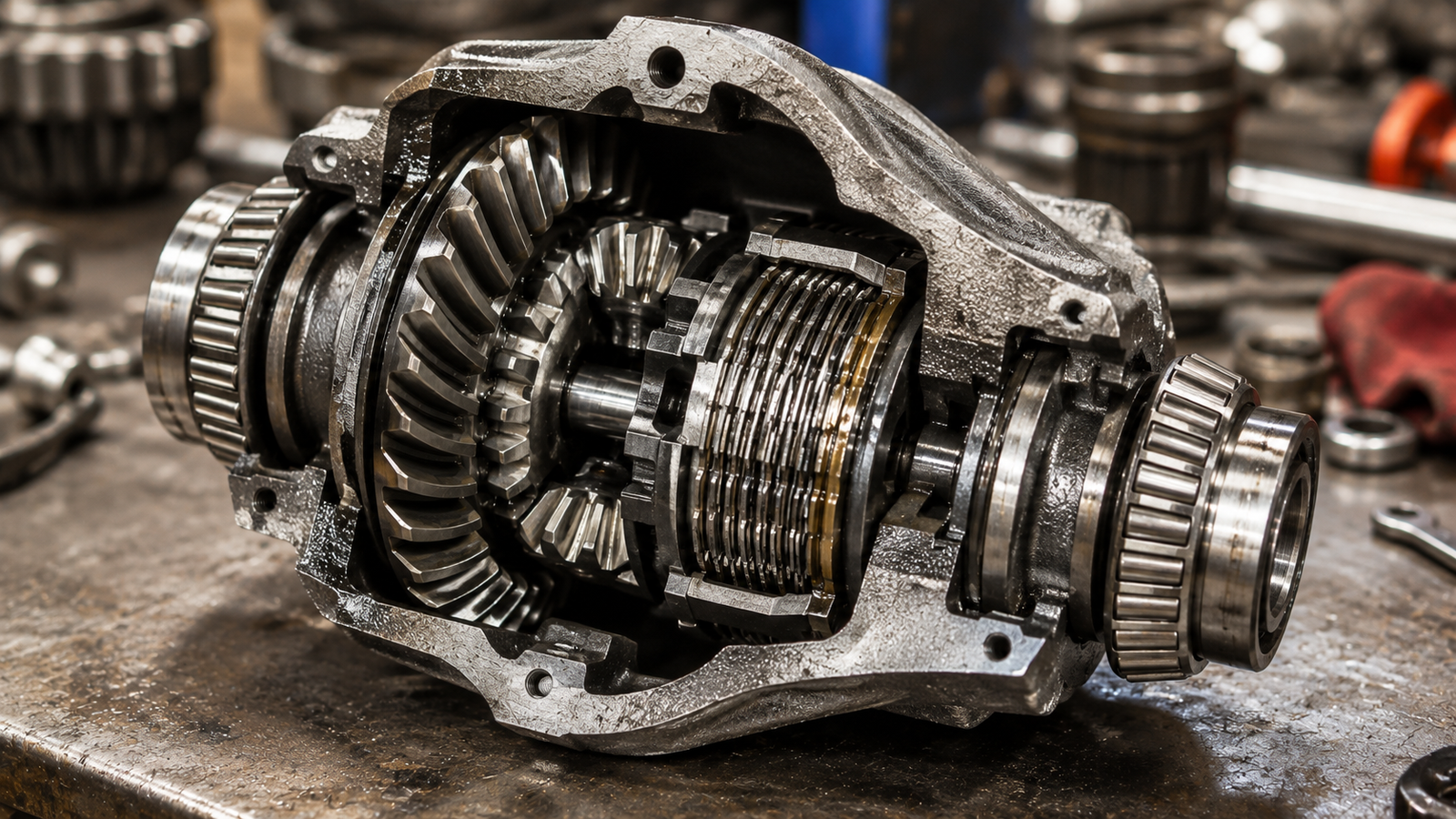
Depending on the design, this can be achieved using:
- viscous coupling;
- friction disc pack;
- worm gear mechanism like Torsen.
Thanks to this, a limited-slip differential combines improved off-road capability and sports performance with much more comfortable behavior in everyday use.
That is why for cars regularly driven on public roads, LSD is considered a significantly more versatile and safer solution than a fully welded differential.
Read more materials:
- How to quickly clean old fasteners before assembling a car
- Resin on the car: why you can't postpone cleaning
- Why hydraulic lifters knock and what the driver should do