In summer, many drivers try to leave their cars in the shade of trees so that the interior heats up less. However, after just a few hours, sticky resin drops, bud marks, or other plant contaminants often appear on the car body. At first glance, they seem harmless, so many postpone washing until the next weekend.
This very waiting becomes the main mistake.
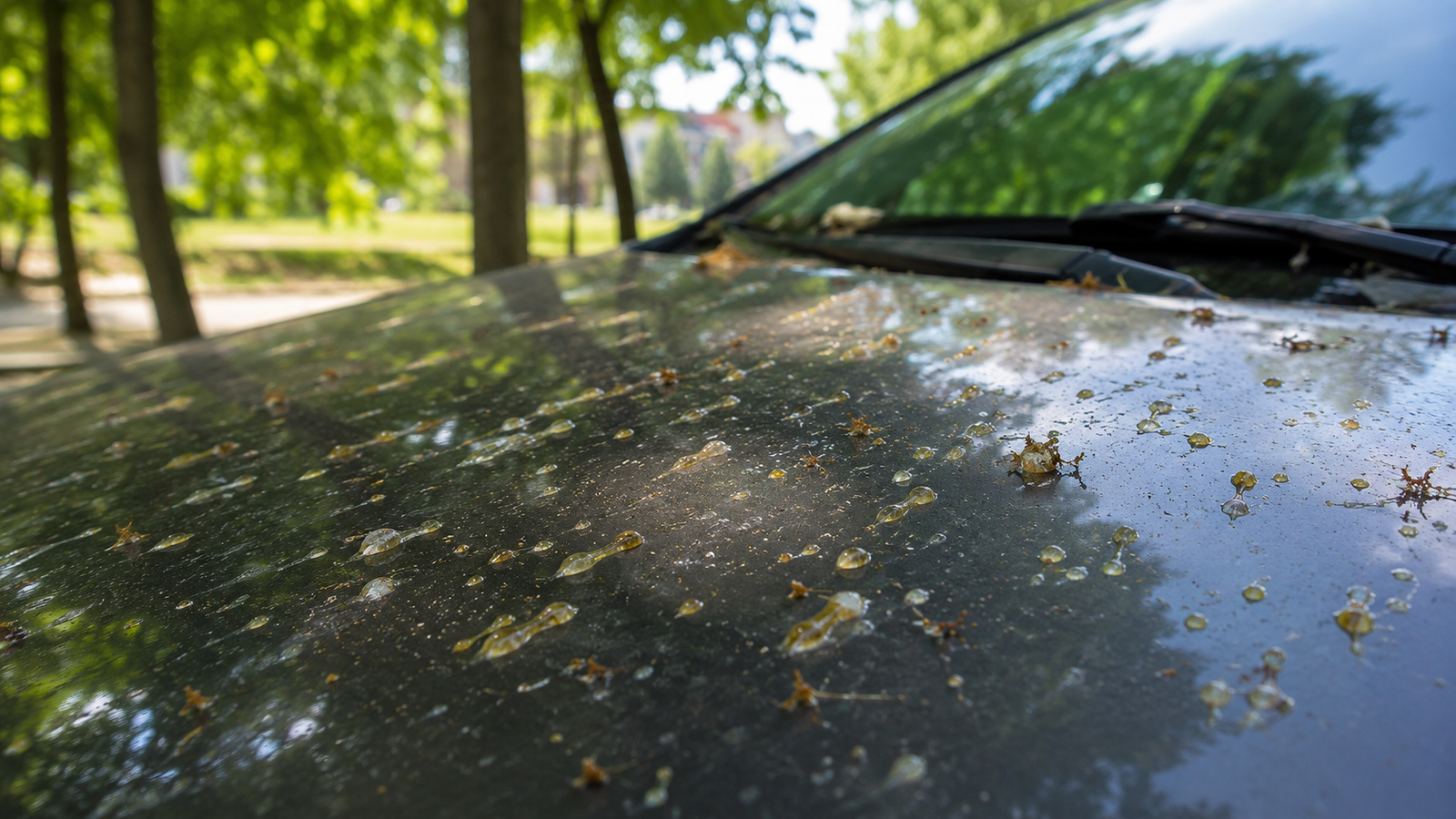
Under the influence of high temperatures, tree resin gradually interacts with the paintwork, penetrating the top layer of varnish. The longer the contamination remains on the surface, the higher the probability of noticeable defects appearing, which can no longer be removed by simple washing.
Why Tree Resin is Dangerous
Resin from linden, poplar, coniferous, and some other trees contains natural resins, essential oils, and organic acids.
On a heavily heated car body, these substances become more active and begin to affect the paintwork.
In summer, the car's surface, especially dark-colored ones, can heat up to 60–70 °C, so even a few hours can be enough to make removing contamination significantly more difficult.
If cleaning is delayed, the following consequences are possible:
- dulling of the paintwork;
- appearance of yellow or gray spots;
- loss of original shine;
- necessity of abrasive polishing;
- in severe cases — localized repainting of the part.
That is why experts recommend removing resin immediately after its detection.
Preparing the Car Body for Cleaning
A common mistake is to immediately start rubbing off the contamination.
Before treatment, the car must be thoroughly washed to remove sand and road dust from the surface.
Even the smallest solid particles can leave many micro-scratches on the varnish if you start rubbing the stain without pre-washing.
After that, it is advisable to completely dry the car body.
Most cleaners work much more effectively on a dry surface.
In addition, it is recommended to perform cleaning in the shade or indoors. On hot metal, compounds evaporate faster and do not have time to fully act on the contamination.
What Products Are Suitable for Resin Removal
There are several ways to safely clean the car body.
Specialized Cleaners
Automotive resin and bitumen stain removers are considered the safest option.
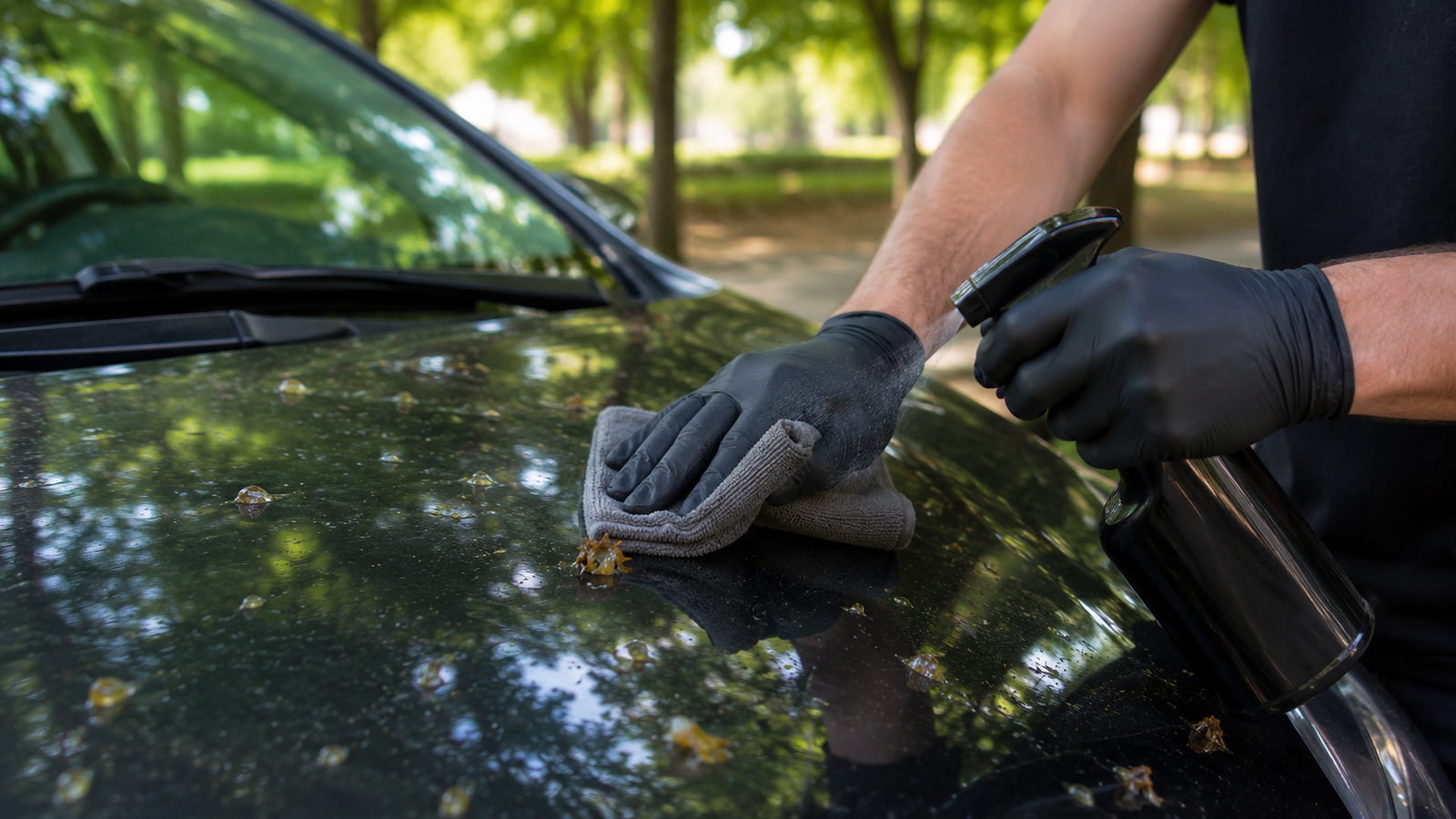
Such compounds are specially designed to work with paintwork and, if instructions are followed, effectively dissolve tree resin without damaging the varnish.
If there are traces of bitumen, glue, and tree resin on the car at the same time, it is more convenient to use universal cleaners for such contaminants.
Isopropyl Alcohol
One of the most effective household remedies.
For cleaning, you need to:
- moisten a microfiber cloth with alcohol;
- apply it to the contamination for 30–60 seconds;
- wait for the resin to soften;
- carefully remove the contamination without strong pressure.
WD-40
This compound is also capable of softening fresh tree resin due to the solvents it contains.
After treatment, the car body must be thoroughly washed with car shampoo.
White Spirit
It can be used, but it should be done with extreme caution.
It is important not to apply excessive force during cleaning and to thoroughly remove any residue of the product after finishing the work.
Vegetable Oil
Only suitable for fresh contamination.
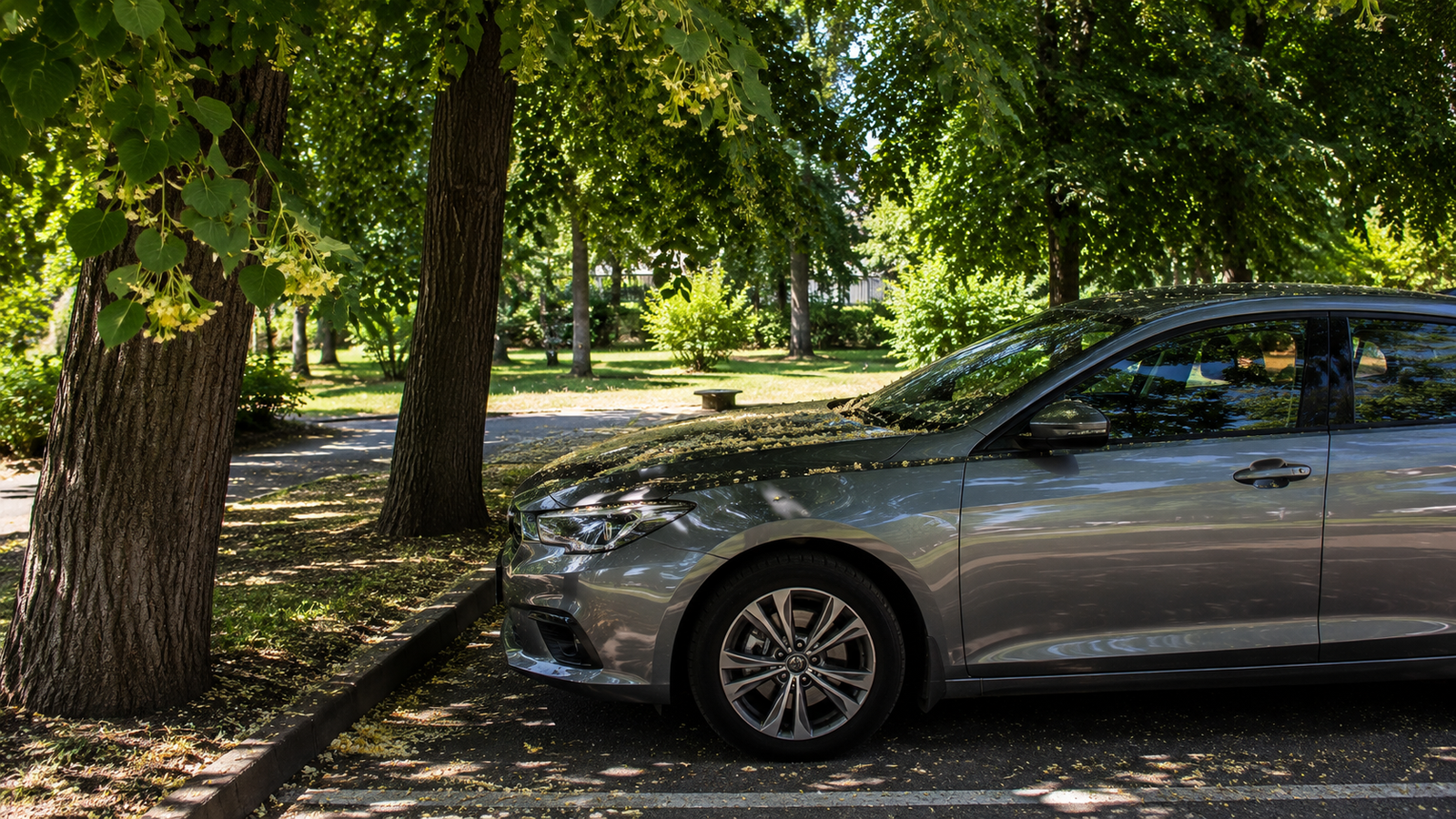
It helps soften the resin, but after treatment, a greasy film remains on the surface, which must be completely removed with car shampoo.
Correct Cleaning Sequence
To avoid damaging the paintwork, it is recommended to follow this order of actions:
- Thoroughly wash the car.
- Completely dry the car body.
- Apply the chosen cleaner to the stain or microfiber cloth.
- Wait 30–120 seconds for the resin to soften.
- Carefully remove the contamination with a soft microfiber cloth.
- Repeat the procedure if necessary.
- Rinse off any residue with water and car shampoo.
- After treatment, apply protective wax or another protective coating.
The main rule is not to try to mechanically wipe off the resin, but to first completely dissolve it.
What Mistakes Most Often Damage the Varnish
In many cases, damage appears not because of the resin itself, but because of improper cleaning.
It is absolutely not recommended to:
- rub the stain with a dry cloth;
- use metal scrapers, knives, and other sharp objects;
- use acetone, solvents 646, 647, and similar aggressive compounds;
- use harsh sponges and abrasive materials;
- clean a car body heated by the sun;
- mix different cleaners together.
Any of these mistakes can lead to scratches or damage to the paintwork.
If the Resin Has Already Dried
When contamination has been in the sun for several days, ordinary treatment may not be enough.
In such cases, a specialized cleaner is used first.
If this is not enough, automotive clay (Clay Bar) is additionally used to remove ingrained particles.
If dull areas or marks remain on the varnish after cleaning, light abrasive polishing is usually required.
In case of more serious damage to the coating, it is better to entrust the restoration to specialists.
How to Reduce the Risk of Resin Appearance
It is impossible to completely exclude such contamination, but it is quite realistic to significantly reduce the likelihood of its appearance.
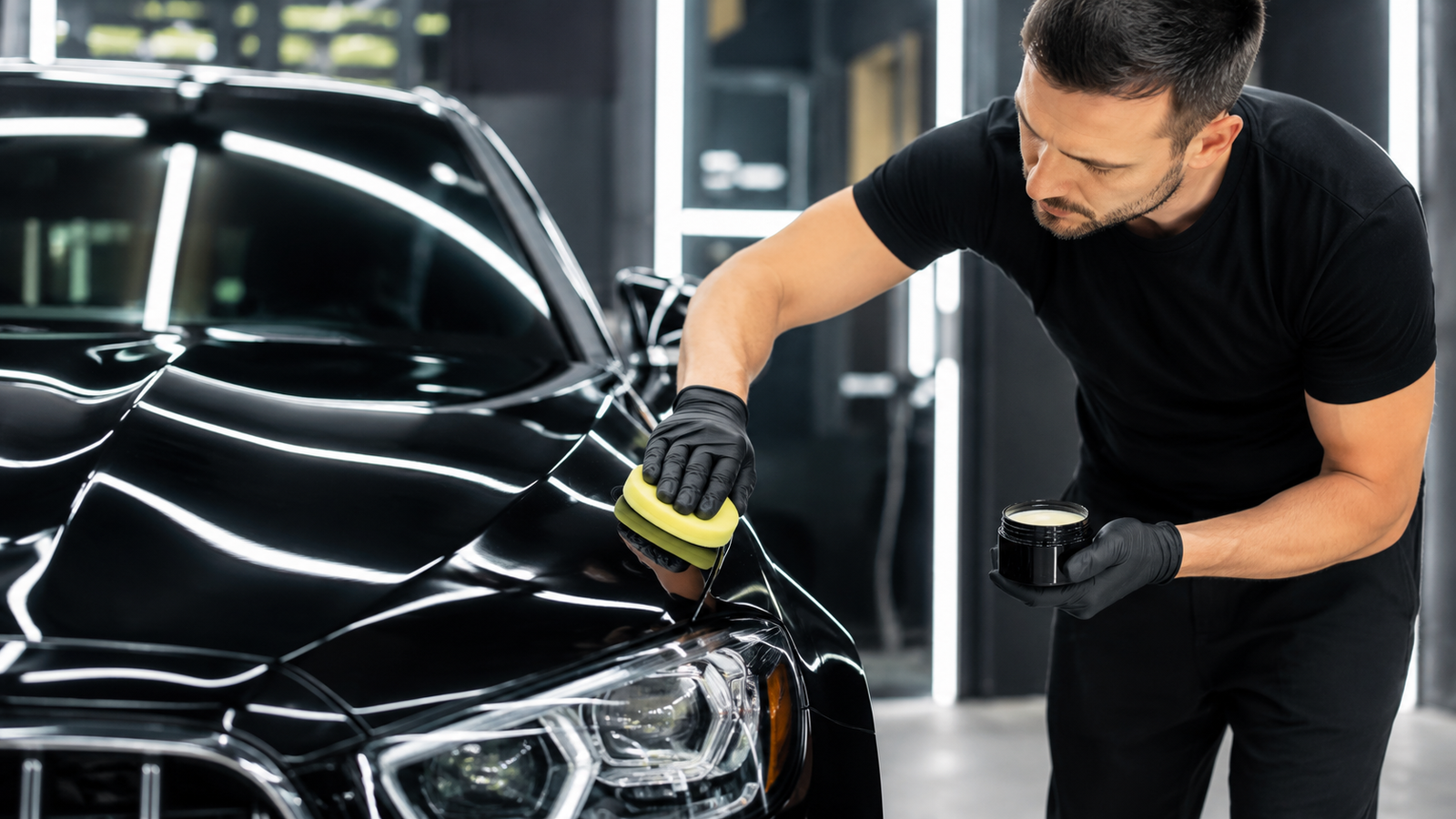
For this, it is recommended to:
- if possible, do not park under linden, poplar, and coniferous trees;
- regularly inspect the car body in hot weather;
- remove fresh resin immediately after its detection;
- use protective coatings.
Additional protection is provided by car wax, liquid glass, and ceramic coatings.
They do not prevent tree resin from getting on the car, but they reduce its adhesion to the paintwork. Thanks to this, contaminants are removed much easier and less often leave marks on the car body.
Read more articles:
- Why Hydraulic Lifters Knock and What a Driver Should Do
- Three Wheels Instead of Four: The History of Toyota i-Road
- Is Imported Gasoline Better Than Russian?