Translated with AI from the Russian original.
The Alfa Romeo 164, which debuted in 1987, is considered one of the most iconic models in the modern history of the Italian brand. However, in addition to the production sedan, several unusual cars were created based on it, the existence of which not all brand fans are aware of. Among them are a fire pickup, a racing prototype with a V10 engine, and two striking concept cars.
One of the most unusual projects was the Alfa Romeo 164 Vigili del Fuoco, developed for the Balocco test track. The car was intended to accompany high-speed tests and respond quickly to possible incidents during testing. It was created by the Alfa Romeo Reparto Esperienze engineering division, which had previously built special fire versions of other models of the brand.
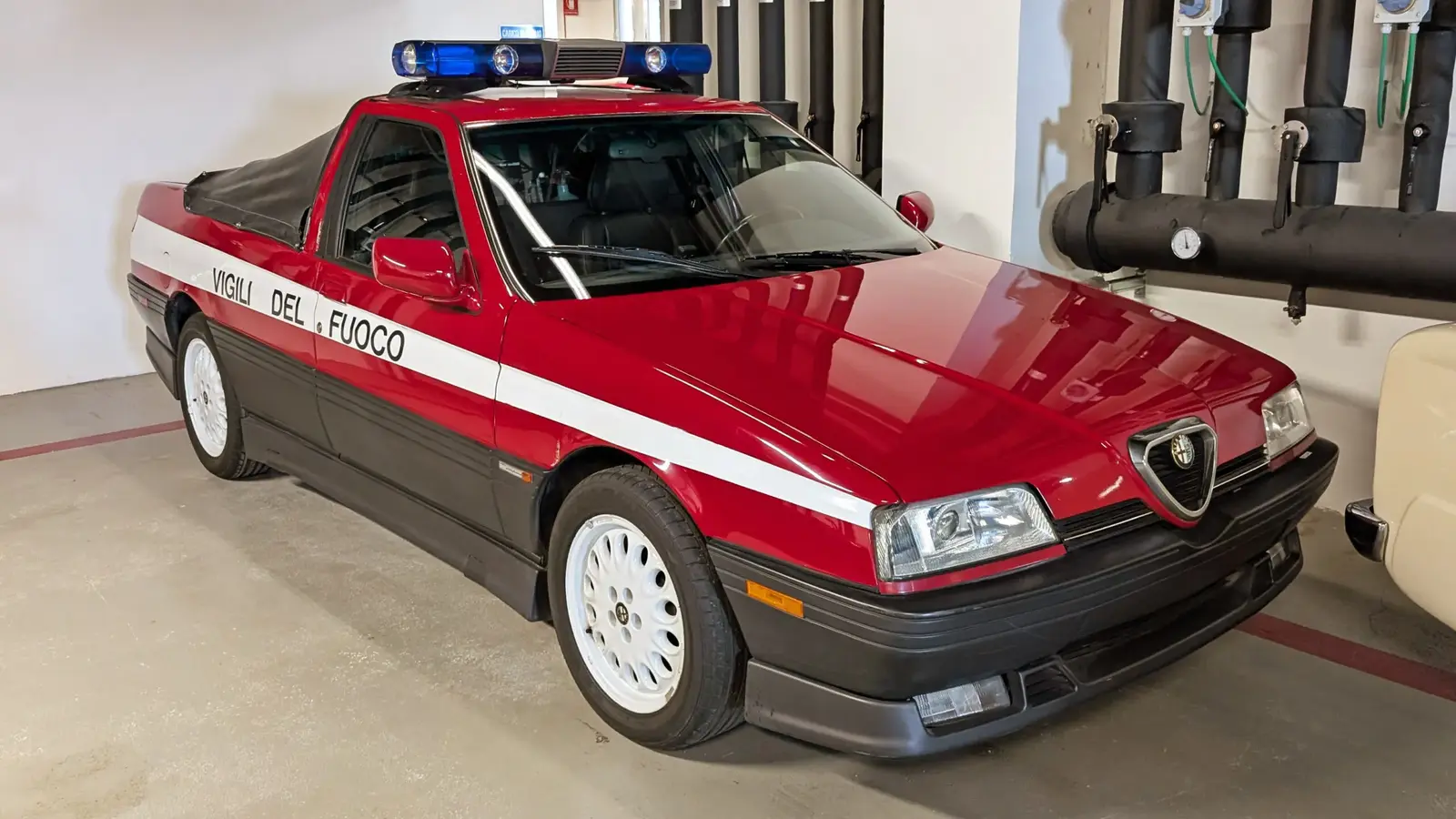
The all-wheel-drive 164 Quadrifoglio 4 modification with a 3.0-liter V6 engine producing 229 hp was used as the basis. To accommodate the fire-fighting equipment, the rear part of the roof was cut off, turning the sedan into a two-door pickup. Pumps and fire hoses were placed in the cargo compartment, covered by a special aerodynamic fairing. The car also received flashing lights and the signature red color of the fire service. After its service, the only example was transferred to the Alfa Romeo museum.
Equally impressive was the Alfa Romeo 164 ProCar project, created in 1988 for the ProCar series, which the International Automobile Federation (FIA) planned to hold as a support race for Formula 1 stages. The championship never took place, but the built car has survived to this day.
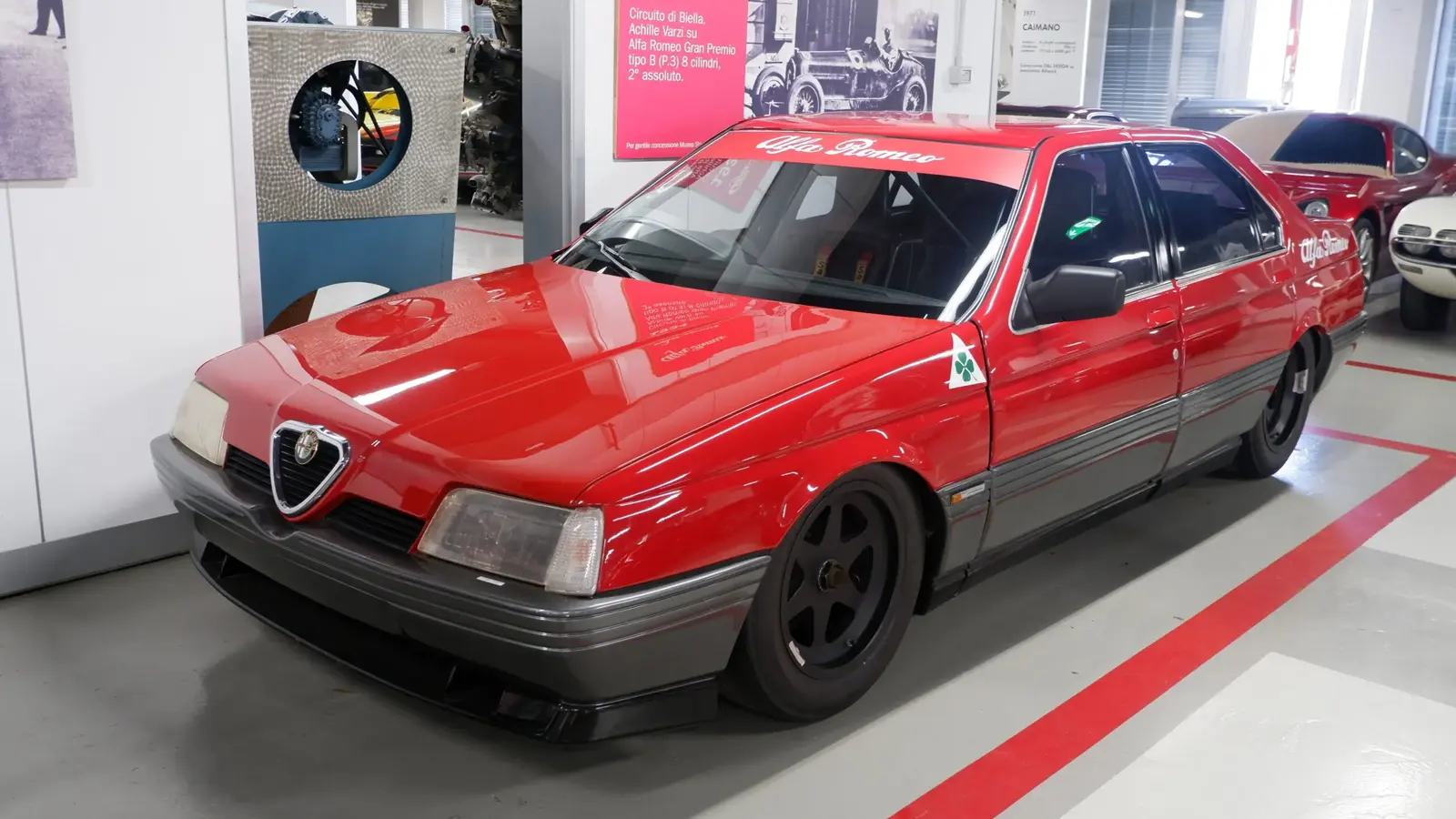
Outwardly, the prototype resembled a regular Alfa Romeo 164, but technically it had almost nothing in common with it. The car received a Brabham-developed carbon chassis weighing only 750 kg, and behind the seats was a naturally aspirated 3.5-liter V10 engine, originally created for the Ligier Formula 1 team. Its output reached 620 hp. Despite the cancellation of the ProCar series, the car managed to debut in front of the public during the 1988 Italian Grand Prix in Monza.
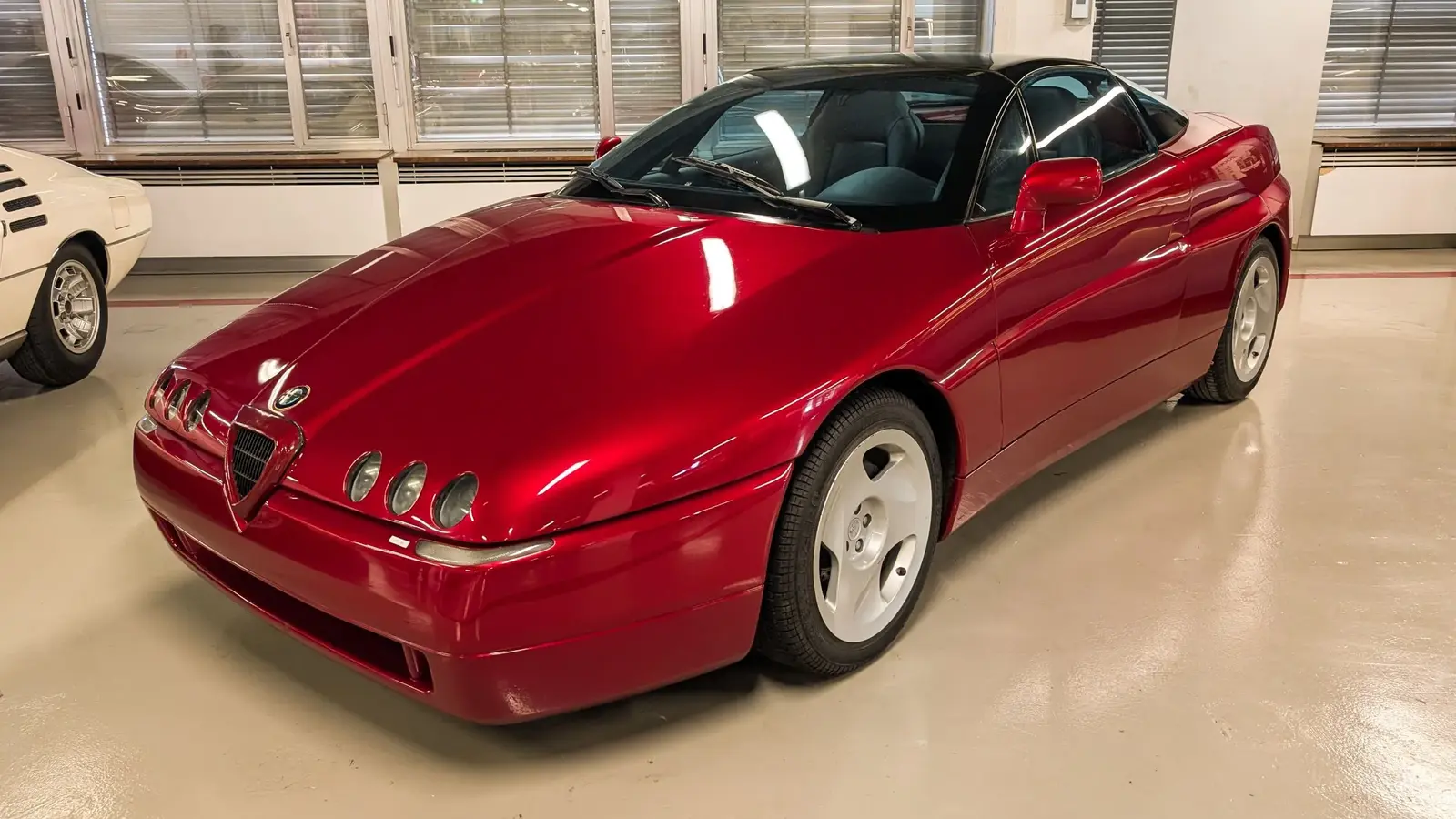
The Alfa Romeo 164 platform also formed the basis for several concept cars. In 1991, the Proteo was presented, created under the direction of designer Walter de Silva. The concept combined coupe and convertible features thanks to a folding glass roof, used a shortened sedan platform, all-wheel drive, and a four-wheel steering chassis. Later, its design solutions were reflected in the production Alfa Romeo GTV and Spider.
Another experiment was the Scighera concept, developed by Italdesign in 1997. The car received an aluminum body, a mid-engine layout, a 3.0-liter twin-turbo V6 engine with 400 hp, and an all-wheel-drive system based on solutions from the Alfa Romeo 155. The project was conceived as the basis for road and racing versions of a supercar, but it never went into mass production.
The Alfa Romeo 164 itself was produced from 1987 to 1997. The model, designed by Pininfarina, used a platform created jointly with the Saab 9000, Lancia Thema, and Fiat Croma, and ended its career, giving way to the Alfa Romeo 166 sedan. Despite its executive car status, the 164 became one of the most unusual platforms in the brand's history, giving rise to several unique projects.
Read more materials:
- Why motorists weld the differential and what dangers it poses
- Identical cars, different fuel consumption: what's the reason
- How to quickly clean old fasteners before assembling a car