In temporary storage warehouses of the Far East, one can periodically observe an unusual picture: a car body, engine, gearbox, suspension, and other components of a single vehicle undergoing customs clearance separately from each other.
According to documents, these are independent consignments of goods. However, after all procedures are completed, the parts can once again become part of a single car.
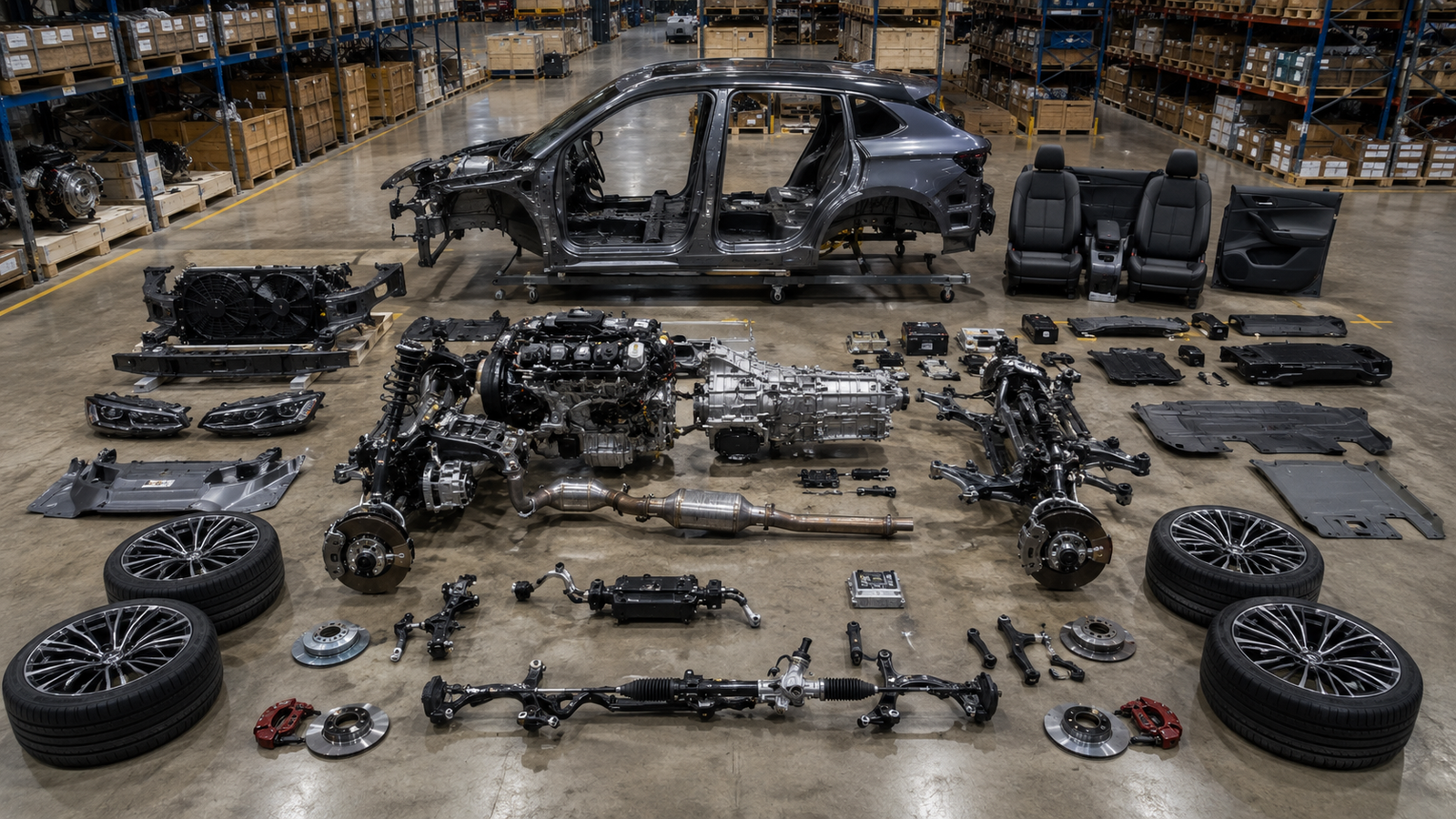
This method of import is called a "constructor".
Why cars are imported in parts
The main reason lies in the procedure for calculating customs payments.
A fully assembled car is cleared as a vehicle, and the duty amount is calculated according to the rules established for finished cars.
If the body, engine, transmission, and other units are declared separately, they are cleared as spare parts.
Different customs tariffs apply to different categories of goods, so the total amount of payments can vary significantly.
It is this difference that has made the separate import scheme economically attractive.
What a "constructor" represents
When using the "constructor" scheme, the car is completely disassembled into large units even before import.
Typically, the following are transported separately:
- body;
- engine;
- gearbox;
- suspension elements;
- electrical equipment;
- other large units.
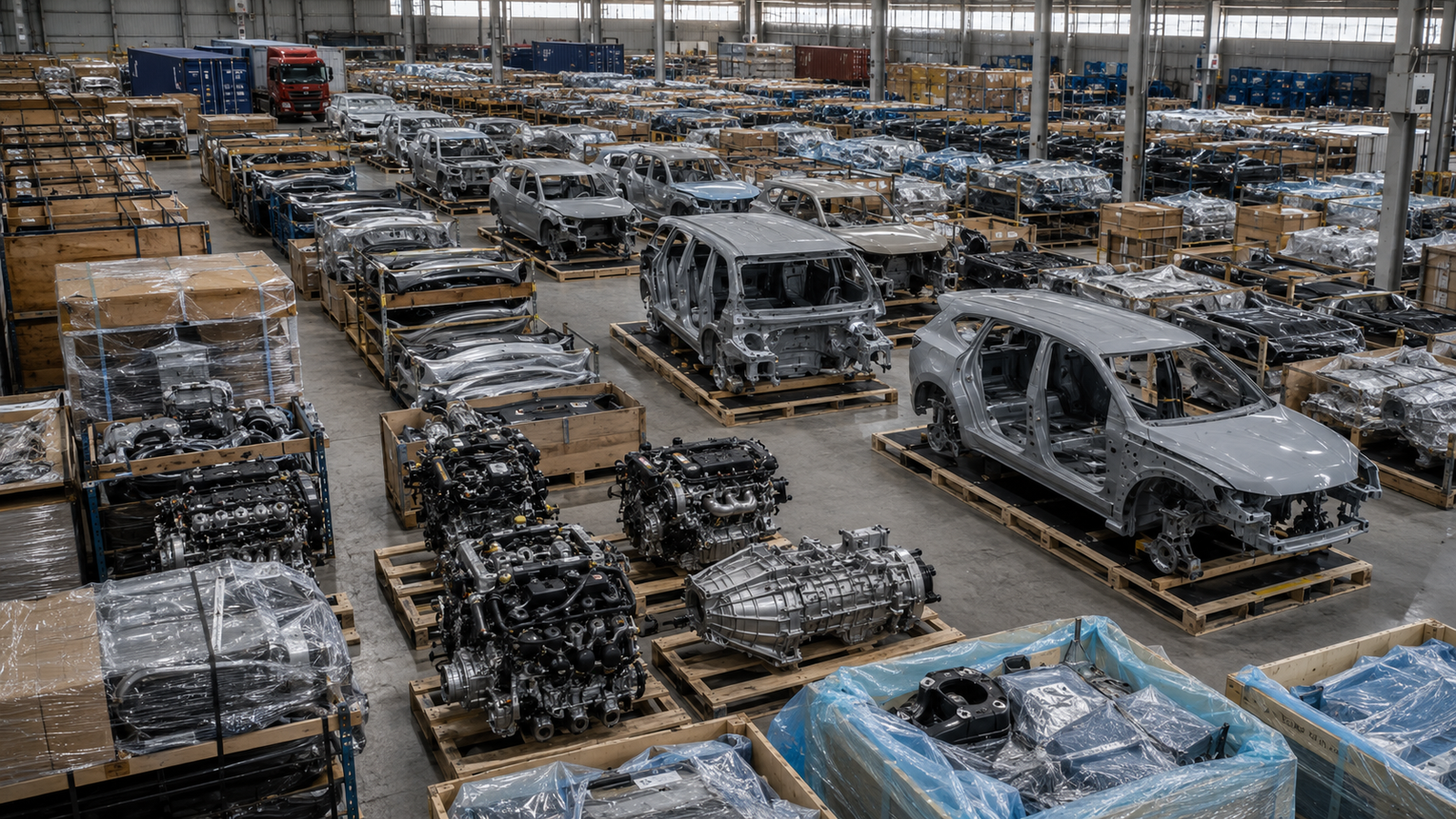
After customs clearance, all parts are reassembled into a single car.
At the same time, the body itself retains its factory geometry and is not subjected to cutting.
How a "constructor" differs from a "cut car"
The main difference lies in the condition of the body.
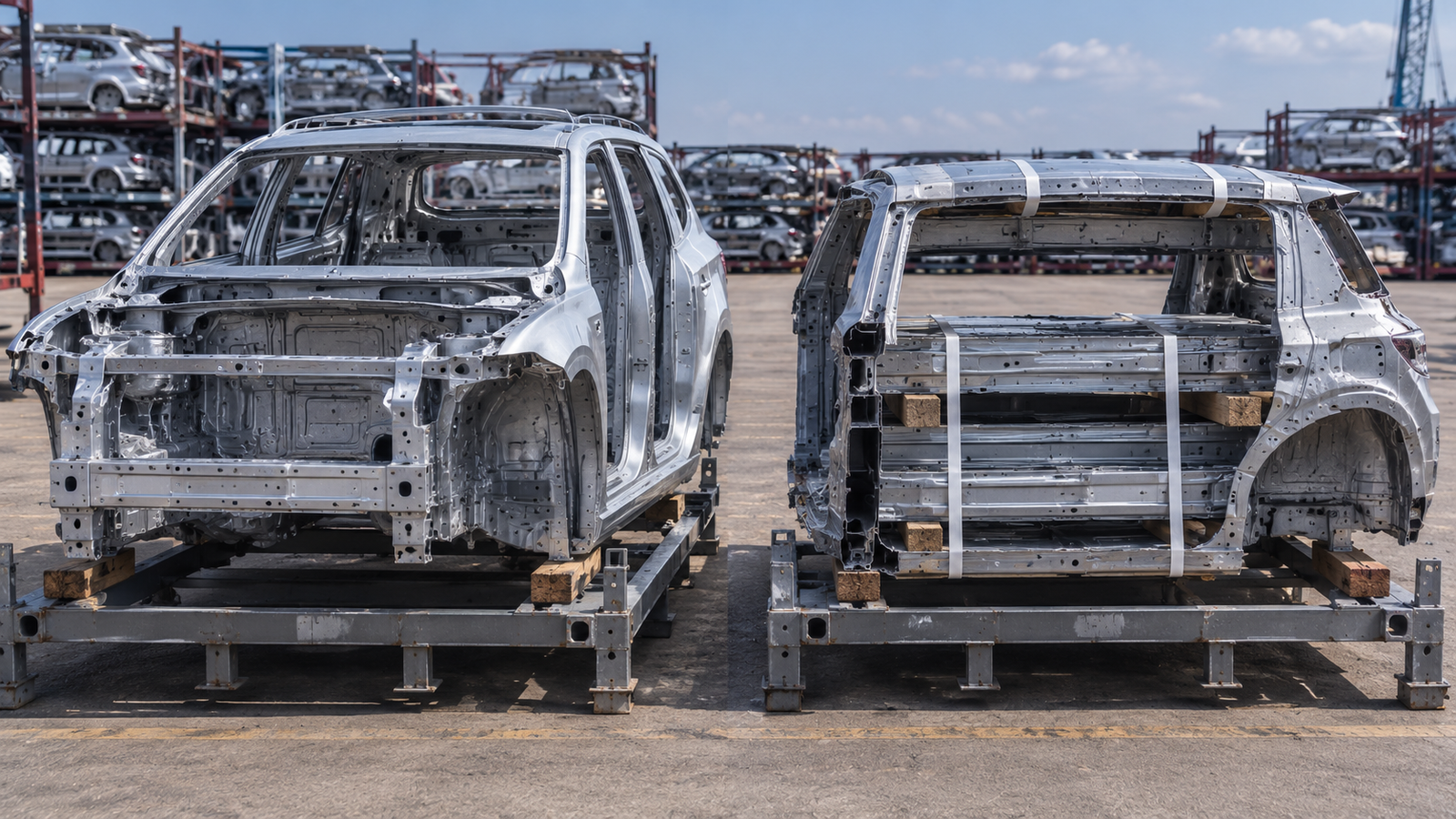
When imported under the "constructor" scheme, it is transported whole.
The load-bearing structure of the car remains unchanged.
A "cut car" involves cutting the body into several parts for transportation.
The cut lines pass through the elements of the power frame, after which the body has to be re-welded.
Even with high-quality repair, it is impossible to fully restore the original stiffness characteristics of such a structure.
That is why cut cars are more often considered not as full-fledged transport, but as a source of spare parts.
Why "cut cars" continue to be bought
The main buyers of cut cars are owners of similar vehicles who need original components.
Most often, they acquire:
- body elements;
- interior parts;
- transmission units;
- suspension;
- power units.
Using a cut body to restore a car is significantly more difficult both technically and legally.
What difficulties arise during customs clearance
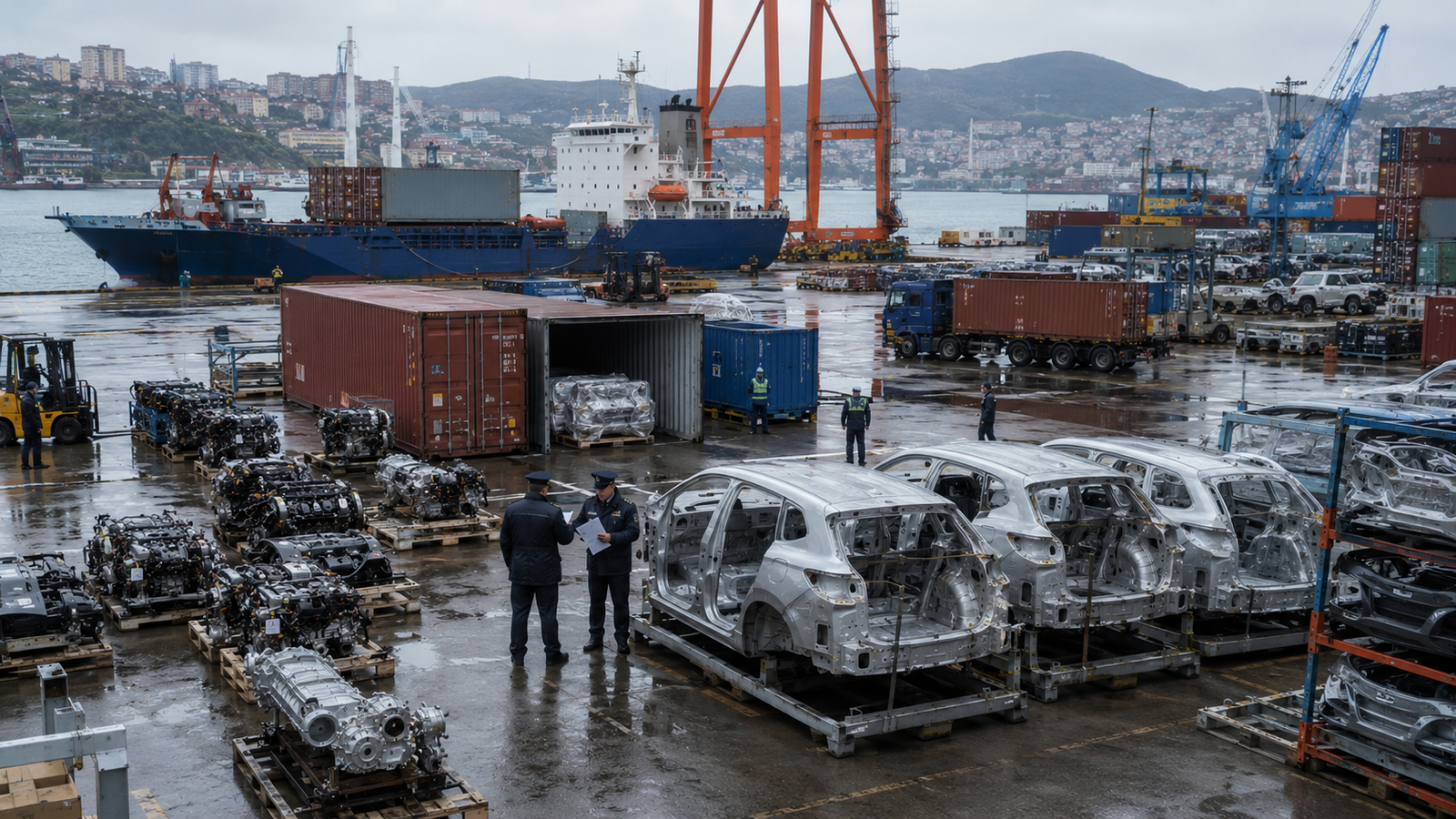
Separate import significantly increases the volume of documents.
Instead of one declaration, several are processed.
For each unit, it is necessary to prepare:
- a separate declaration;
- an invoice;
- documents confirming the value;
- other documents provided for by customs regulations.
Any errors or discrepancies can lead to delays in the clearance of individual units.
As a result, delivery times increase, and additional costs can significantly reduce the expected savings.
Is it possible to register such a car?
After clearance, all units can be reassembled into a single car.
However, the possibility of its state registration depends on the specific situation, the history of the vehicle, and current legislative requirements.
In recent years, registration rules have been significantly tightened.
In most cases, units imported as spare parts do not acquire the status of a vehicle after assembly.
Separate legalization options are possible only in cases provided by law, for example, when replacing the body of a registered car in compliance with the established procedure, conducting necessary examinations, and making changes to registration documents.
In all other situations, operating a car that does not meet registration requirements may entail a ban on participation in road traffic and the application of measures provided by law.
Why the scheme remains in demand
The economic attractiveness of the scheme has changed significantly after the revision of the duty calculation procedure for car bodies.
Previously, a minimum customs payment applied to them, which noticeably reduced the benefit of separate import.
After the abolition of this restriction, the duty began to be calculated as a percentage of the customs value without a fixed lower limit.
As a result, when importing expensive cars, the difference between clearing a whole car and its units again became very significant.
For cars costing several million rubles, potential savings can reach very significant amounts.
The "constructor" scheme exists primarily due to the peculiarities of customs payment calculation.
It allows reducing the costs of importing a car, but at the same time significantly complicates document processing and creates additional legal risks.
Therefore, when choosing this import method, it is necessary to consider not only the possible savings, but also the time costs, clearance costs, and restrictions associated with subsequent registration and operation of the car.
Read more materials:
- The history of GAZ-2308 "Ataman": an ambitious project ahead of its time
- What cars are chosen in Russia, Belarus, and Kazakhstan
- How to clean the throttle body yourself in 20 minutes
Комментарии