The throttle body regulates the amount of air entering the engine. Its operation directly affects idle stability, the car's response to accelerator pedal input, and the correct functioning of the engine management system.
Over time, oil deposits, dust particles, and products from the crankcase ventilation system accumulate on the internal surfaces of the throttle assembly. Gradually, these form a thick coating that impairs the throttle's operation.
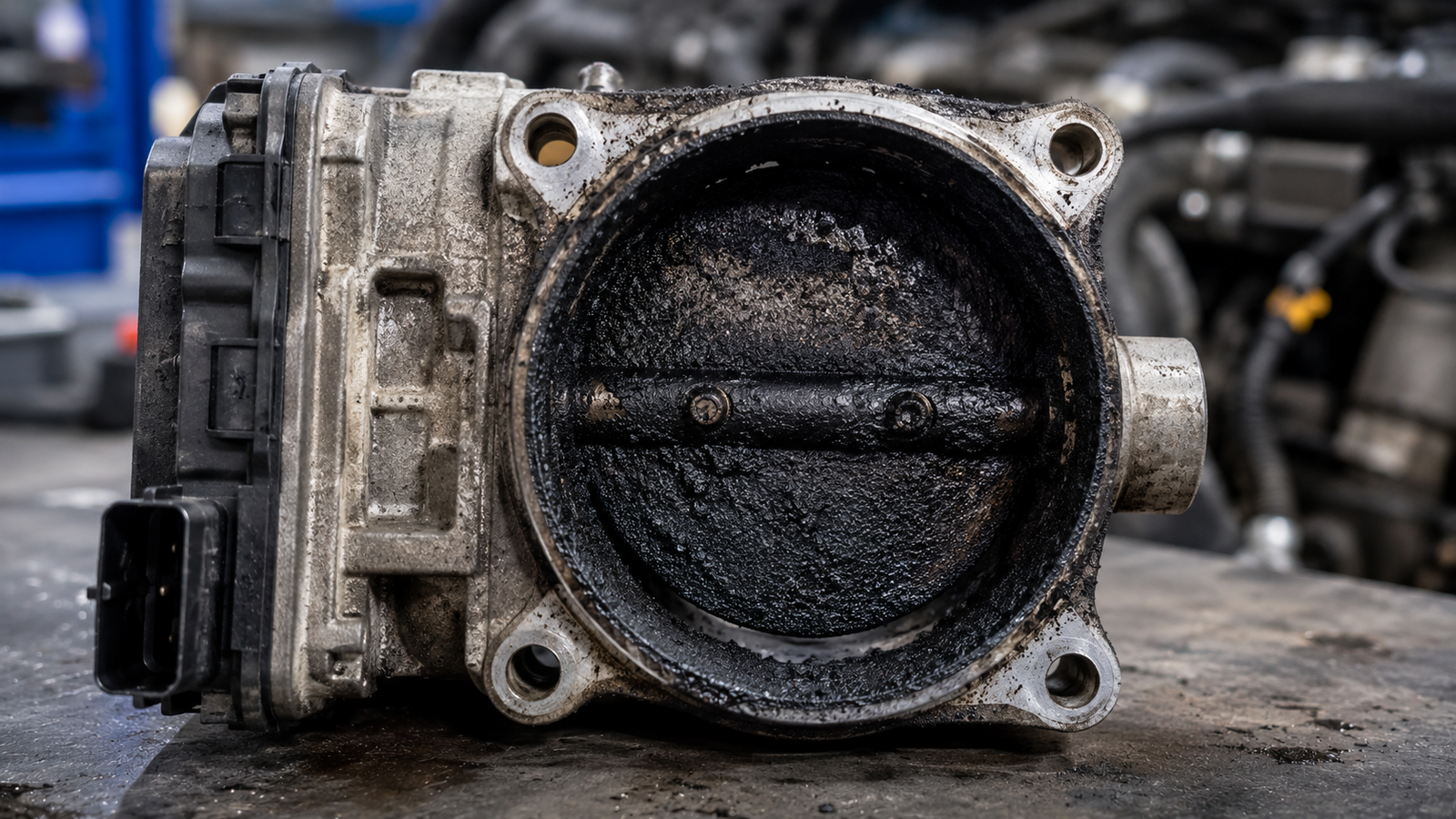
As a result, the electronic control unit starts to adjust the air supply, and the engine may run erratically.
Why the Throttle Body Gets Dirty
The main sources of contamination are:
- oil vapors from the crankcase ventilation system;
- dust particles that have passed through the air filter;
- combustion products;
- natural oil deposits in the intake system.
Contamination appears particularly quickly in cars that are mostly driven in the city.
Frequent cold starts, short trips, and prolonged engine idling accelerate carbon buildup.
Main Signs of Contamination
Several symptoms can indicate the need for cleaning:
- unstable idle speed;
- engine periodically stalls after stopping;
- worsened throttle response;
- jerking when starting to move;
- a slight increase in fuel consumption;
- difficult engine starting.
It should be noted that similar symptoms can also be related to other malfunctions, so cleaning does not always guarantee a solution to the problem.
What You Will Need for the Job
For most cars, you will need to prepare:
- a specialized throttle body or intake system cleaner;
- a screwdriver or socket wrench to loosen the air duct clamp;
- lint-free wipes or a soft cloth;
- cotton swabs for hard-to-reach areas;
- protective gloves.
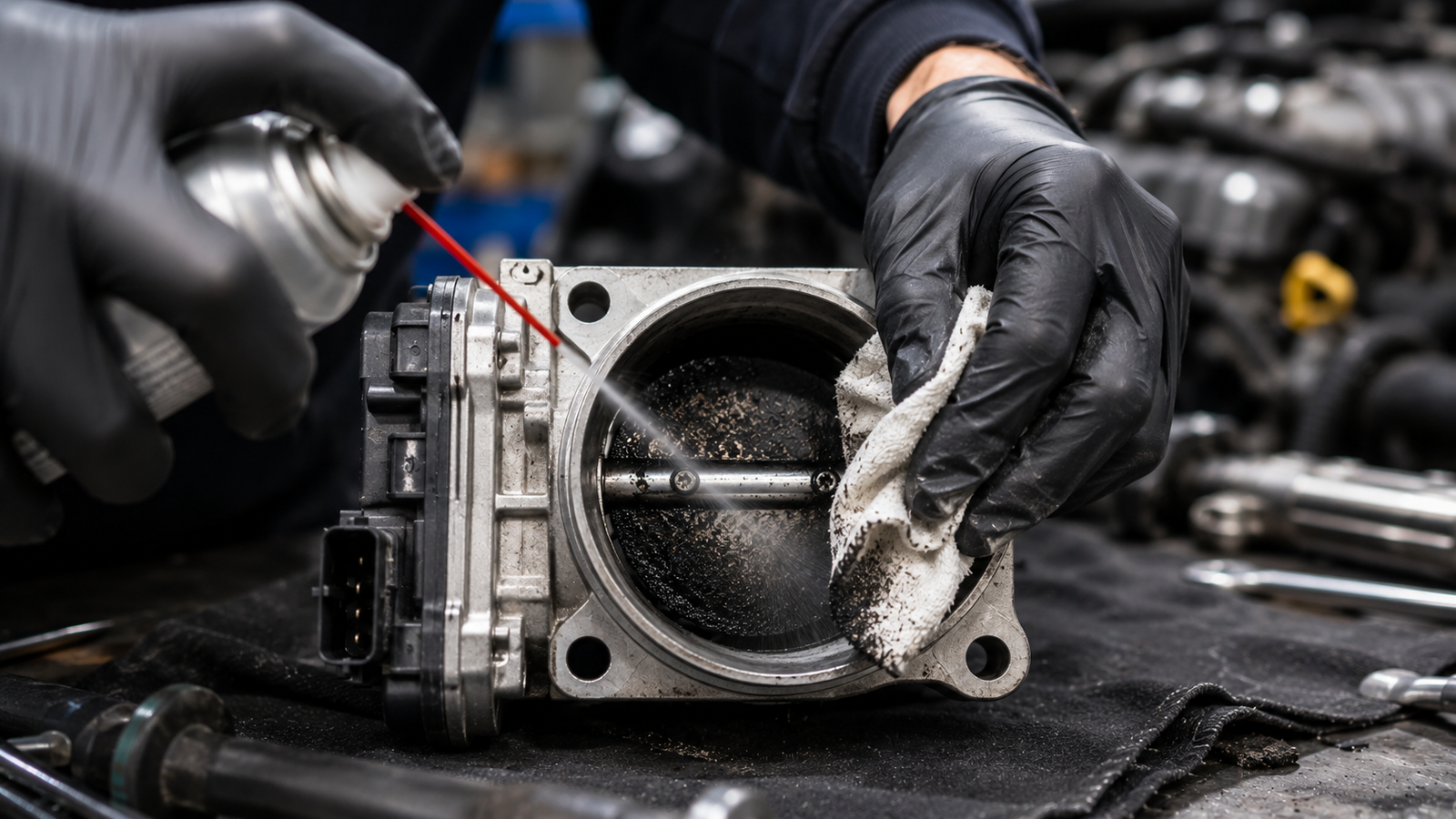
When choosing a cleaner, it is advisable to use formulations specifically designed for throttle assemblies and compatible with plastic parts and rubber seals.
Step-by-Step Instructions
Step 1. Prepare the Car
Turn off the engine and wait for it to cool down.
This will prevent burns and ensure more effective cleaner operation.
Step 2. Access the Throttle Body
Loosen the air duct clamp and remove the hose, gaining access to the throttle body.
After that, carefully inspect the inner surface of the housing.
Step 3. Assess the Degree of Contamination
Most often, a dark oily coating is clearly visible on the edge of the throttle plate and the inner walls.
This is most often the cause of unstable idling.
Step 4. Apply Cleaner
Spray the product evenly onto the inner surface of the housing and the throttle plate itself.
Leave the compound on for several minutes according to the manufacturer's instructions.
During this time, the contaminants will soften.
Step 5. Remove Carbon Deposits
Gently wipe the surface with a soft cloth.
If necessary, the treatment can be repeated several times.
Cotton swabs are convenient for cleaning hard-to-reach areas.
Metal objects and abrasive materials should not be used, as they can damage the protective coating of the housing.
Step 6. Clean Both Sides of the Throttle Plate
If the car's design allows for manual opening of the throttle plate, this should be done strictly in accordance with the repair manual for the specific model.
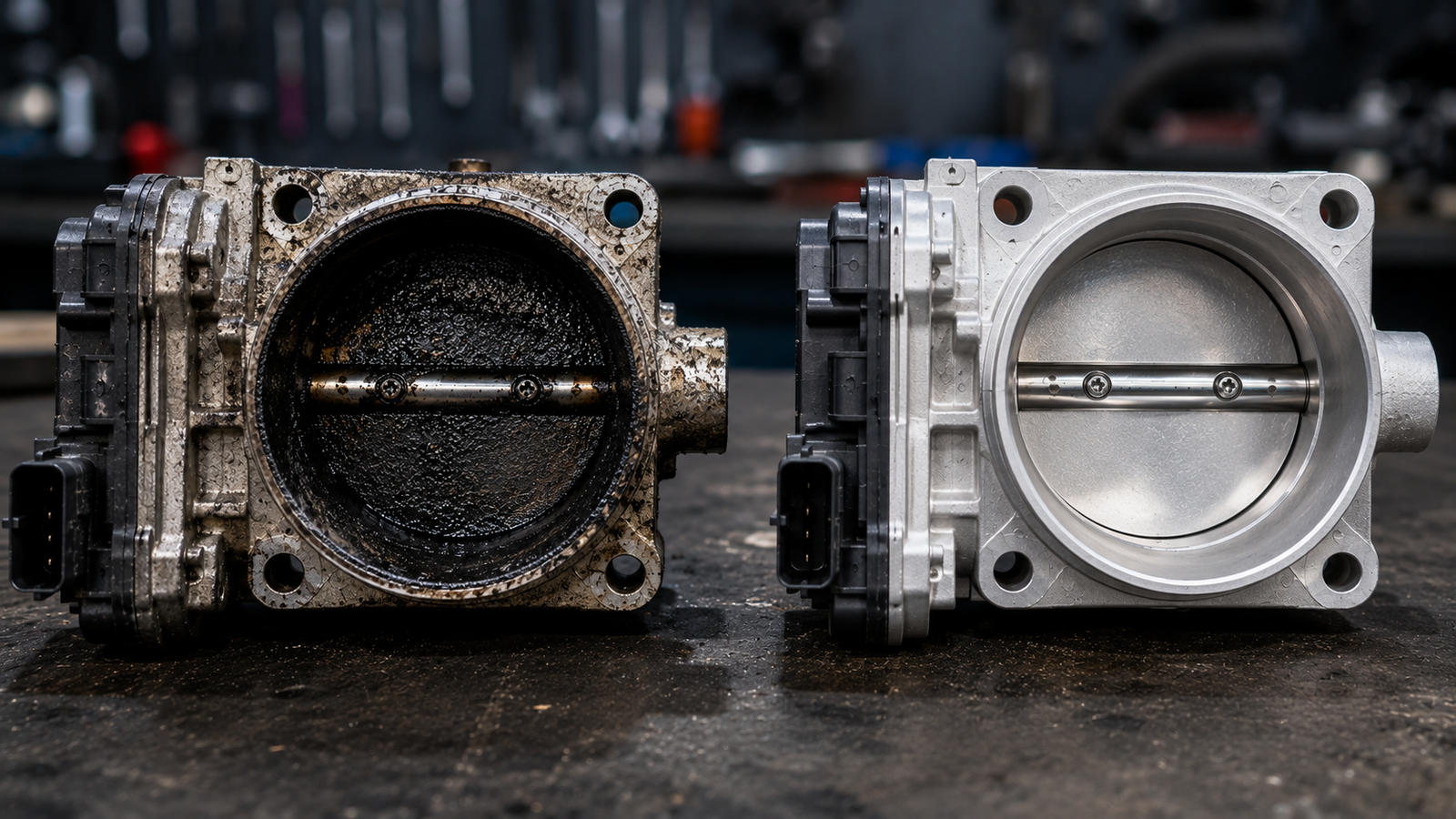
On many modern cars with electronic drive, it is not recommended to forcibly move the throttle plate unnecessarily, so as not to damage the mechanism.
Step 7. Reassemble the System
Reinstall the air duct.
Check the correct installation of the hoses and the tightness of all clamps.
Air leaks after assembly can cause new engine operating problems.
Step 8. Start the Engine
After assembly, start the engine and let it run for a few minutes.
On some cars, the electronic control unit automatically adapts the throttle body position.
Sometimes, full adaptation requires several trips or a special procedure provided by the manufacturer.
What Not to Do
During maintenance, it is recommended to avoid common mistakes.
Do not:
- use gasoline, acetone, and aggressive solvents;
- clean the throttle plate with metal brushes and screwdrivers;
- allow cleaner to get on the mass air flow sensor;
- disassemble the electronic throttle drive unnecessarily;
- disconnect cooling system hoses if they are connected to the throttle body housing.
Failure to follow these recommendations can lead to additional repairs.
When to Contact a Service Center
DIY cleaning doesn't always help.
Professional diagnostics will be required if:
- after cleaning, the idle remains unstable;
- the Check Engine light comes on;
- electronic throttle body adaptation is required;
- play in the shaft or mechanical damage to the assembly is found;
- contaminants cannot be removed without complete disassembly.
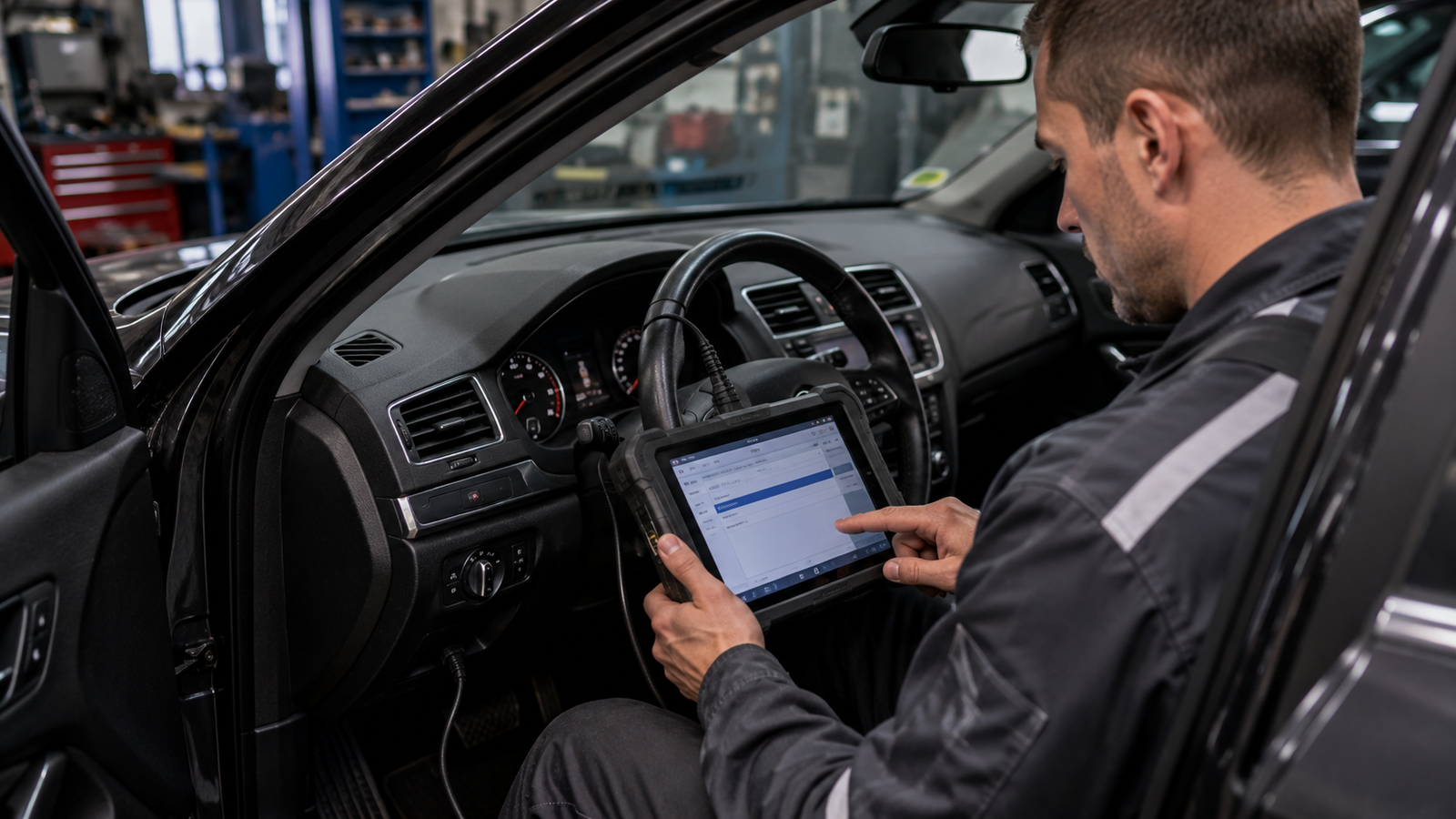
In addition, similar symptoms can be caused by malfunctions of sensors, the crankcase ventilation system, injectors, or air leaks in the intake tract.
Is It Worth Cleaning It Yourself?
For most cars, throttle body cleaning is one of the most accessible maintenance operations.
With minimal experience, it takes about 20–30 minutes and requires only a few simple tools.
In many cases, after removing contaminants, the engine starts to idle more stably, throttle response improves, and jerking when starting to move disappears.
If, however, no changes occur after cleaning, it means that the cause of the malfunction should be sought in other elements of the engine management system, and full diagnostics are indispensable.
Read More Articles:
- Cylinder Head Gasket Fails: 5 Dangerous Symptoms
- Why Drivers Weld Their Differentials and How Dangerous It Is
- Same Cars, Different Fuel Consumption: What's the Reason?
Комментарии