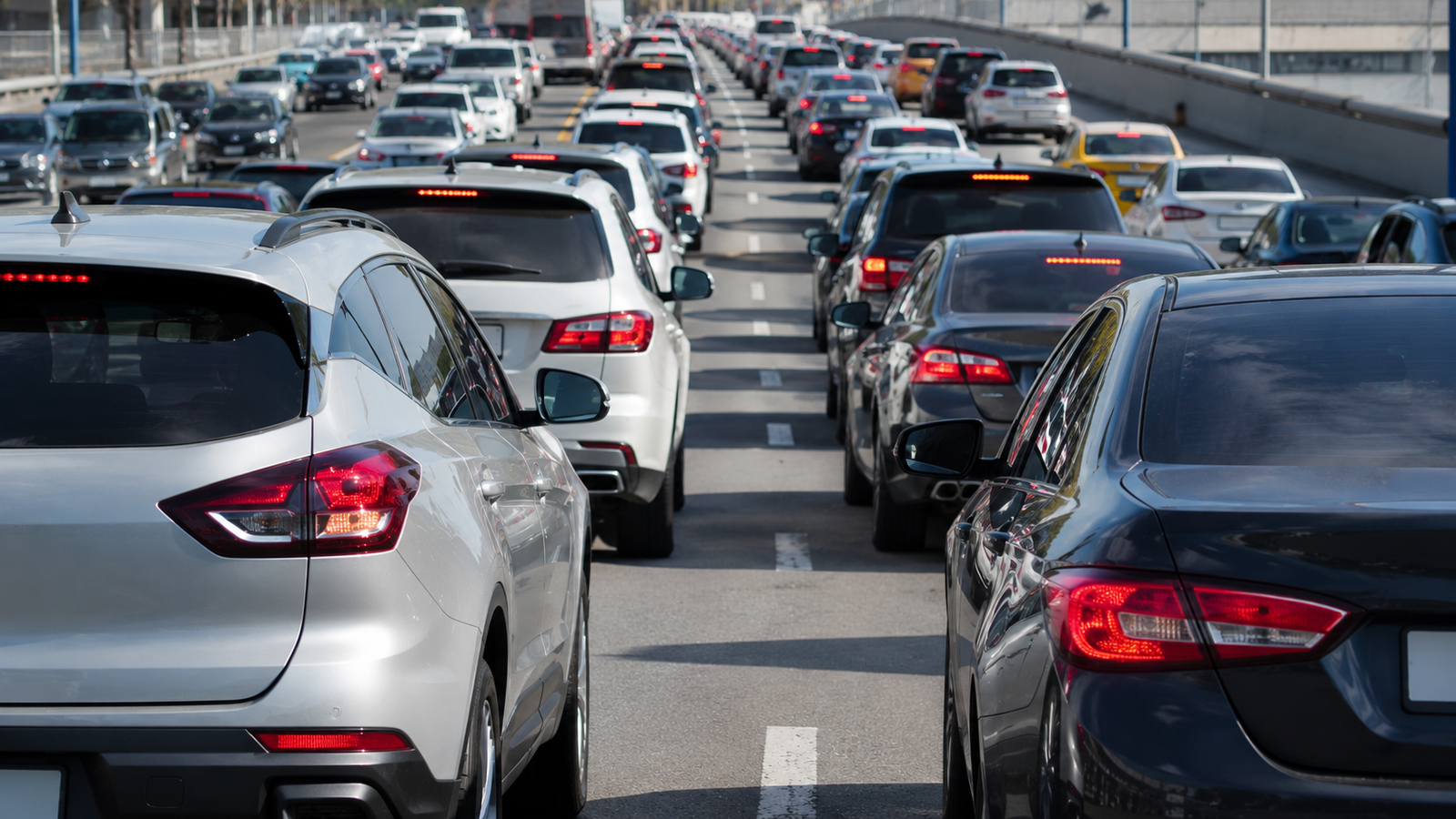
Many drivers have noticed that after a long standstill in a traffic jam, there is noticeably less fuel in the tank, even though the car has covered a very short distance during that time. Sometimes the consumption is comparable to a trip on a highway that is several times longer. At first glance, this seems illogical: the speed is minimal, the engine is not working at its limit, but gasoline disappears as if the car was moving under high load all the time.
In fact, the explanation is quite simple. The fact is that driving on a free road and driving in dense city traffic create completely different operating conditions for the engine. That is why fuel consumption in a traffic jam turns out to be significantly higher than many motorists expect.
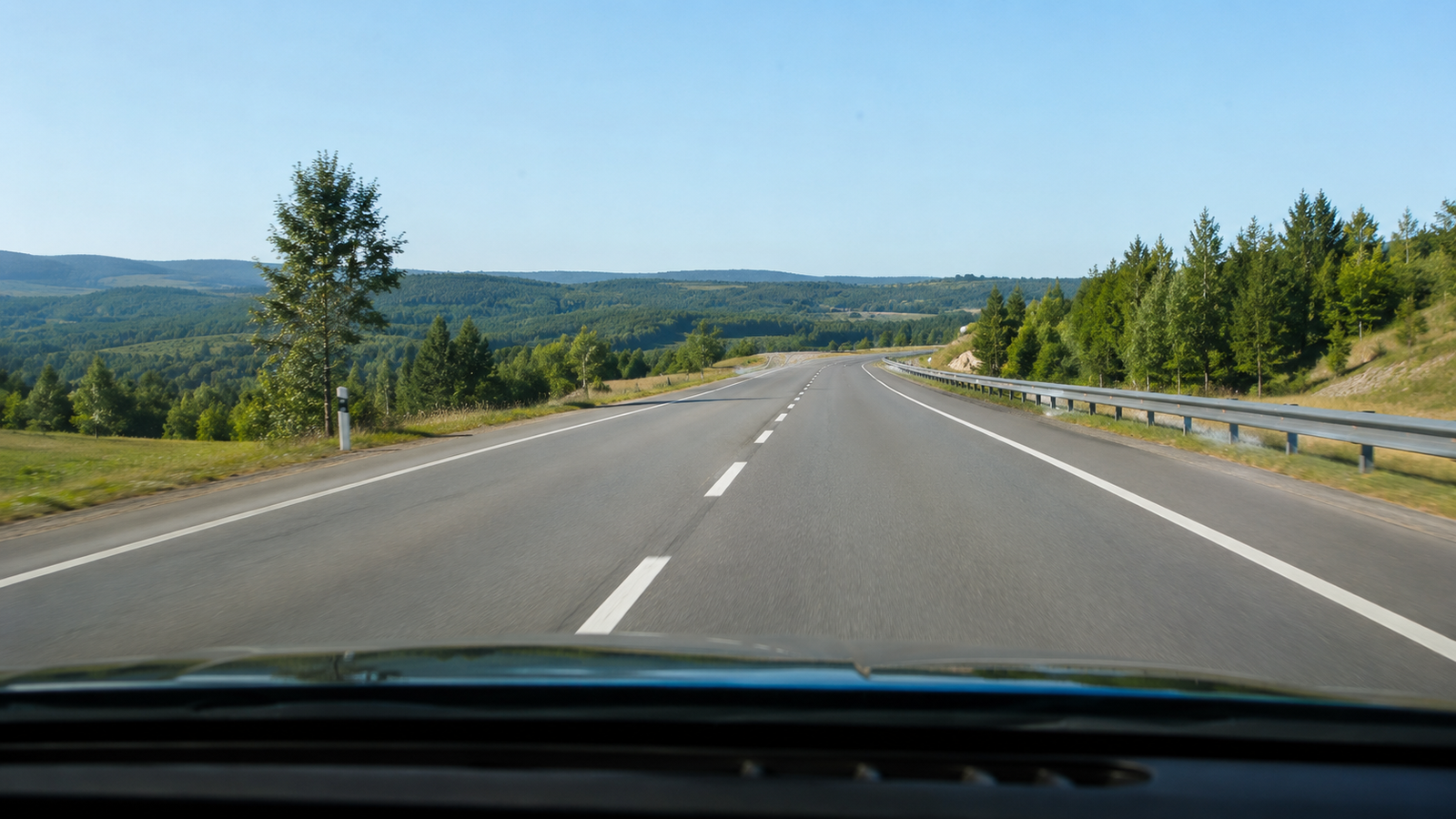
On the highway, the car moves uniformly most of the time. The engine operates in a stable mode, revolutions practically do not change, and the throttle valve is open to a constant value. This mode is considered the most efficient for a gasoline engine. Its efficiency averages about 20–25%, so a significant part of the fuel energy inevitably turns into heat and is spent on internal losses. However, at a constant speed, even this relatively small share is used as rationally as possible.
There is also the most economical speed mode. For most passenger cars, it is approximately 90 km/h when driving on a flat road without strong headwind. At this speed, air resistance does not yet have a serious impact, and the engine operates in a rev range where torque is most effectively realized. In a traffic jam, such conditions do not arise: the car is either stationary or moving slowly in first or second gear, and the engine constantly operates far from the optimal mode.
The common belief that slow driving automatically means less fuel consumption is not always true. This principle works only up to a certain limit. If the speed is too low, lower gears have to be used, which causes the engine to make more revolutions per kilometer of travel. As a result, more fuel is consumed, despite the low speed of movement.
The main feature of traffic jams is the constant change in driving modes. The car repeatedly starts from a standstill, then stops, slowly moves forward, and then stops again. Each new acceleration requires significantly more energy than maintaining the already gained speed. Everything is explained by inertia: to set the stationary mass of the car in motion, the engine has to do additional work. When driving on the highway, accumulated inertia, on the contrary, helps save fuel.
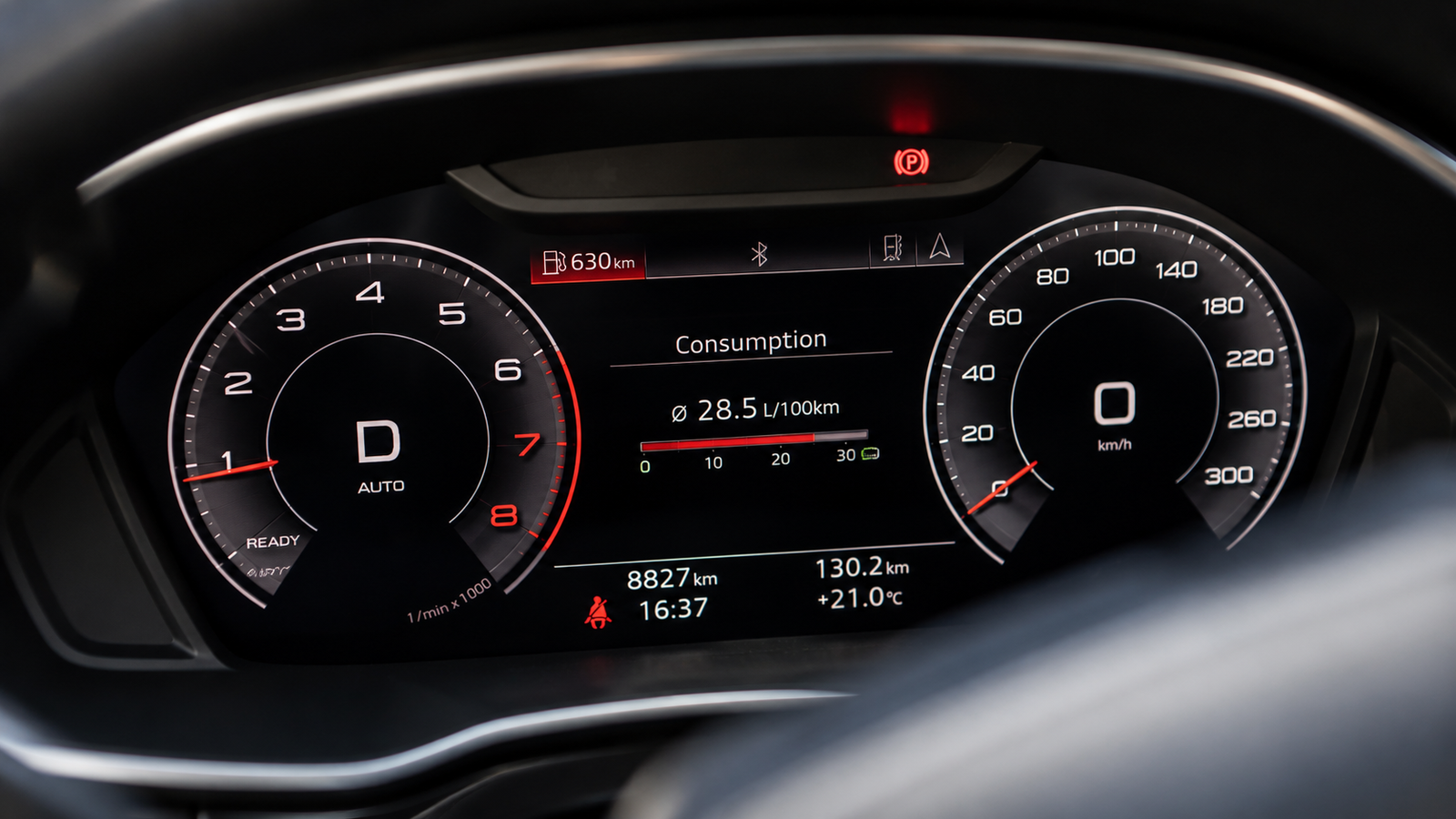
Additional consumption is also created by the engine's idling. Even when the car has completely stopped, the engine continues to consume gasoline. Usually, the revolutions are in the range of 700–900 rpm, and an engine with a volume of 1.6–2.0 liters consumes approximately 0.8–1.0 liters of fuel per hour of operation without movement. The odometer at this moment hardly changes, but fuel continues to be consumed. As a result, an hour spent in a dense traffic jam can consume more gasoline than during a calm trip on the highway for a distance of about twenty kilometers.
Do not forget about the automatic transmission. Most cars with automatic transmissions use a torque converter, which, when driving at low speeds and frequent stops, operates with slippage, converting part of the energy into heat. On the highway, where the gear has already stabilized, such losses are minimal. In dense city traffic, the torque converter is almost constantly under load.
The engine's temperature regime also has a separate impact, especially in winter. Until the coolant reaches operating temperature, the electronic control system uses a richer fuel mixture, compensating for insufficient gasoline evaporation in cold cylinders. On a free road, the engine quickly warms up, while in a traffic jam, this process can continue almost throughout the entire trip, especially if the cabin heater is working simultaneously.
As a result of the combination of all these factors, urban fuel consumption is usually 20–40% higher than highway consumption. In conditions of dense traffic jams in large cities, the difference can reach approximately 50%. And this is not about laboratory manufacturer data, but about actual consumption, which is displayed on the car's onboard computer.
The situation is further aggravated by several factors:
- air conditioner or climate control operation, since at idle, the compressor requires relatively more engine power, and in hot weather, an hour of air conditioner operation in a traffic jam can increase consumption by approximately 1.5–2 liters;
- use of electrical equipment — headlights, multimedia system, heated seats and windows, since the generator is driven by the engine, and with minimal mileage, the impact of this load becomes significantly more noticeable;
- sharp accelerations, frequent lane changes, and intensive braking, which do not allow the engine to operate in the most economical mode.
It is impossible to completely eliminate excessive fuel consumption in traffic jams, but it is quite realistic to reduce it.
Several simple recommendations can help with this:
- maintain a sufficient distance to move smoothly and stop less often;
- do not turn off the engine during short stops if the car is not equipped with a start-stop system, but during a long wait, for example, before a closed railway crossing, it makes sense to turn off the engine;
- in winter, do not warm up the engine to operating temperature solely at idle, but start moving at low revs, allowing it to reach operating mode faster;
- choose a route in advance taking into account the traffic situation, since a small detour on a free road is often more economical than a long standstill in a traffic jam;
- service the car in a timely manner, because a clogged air filter, worn spark plugs, and unstable idle speed especially increase consumption in urban mode;
- turn off unnecessary electrical consumers if it does not affect safety and comfort.
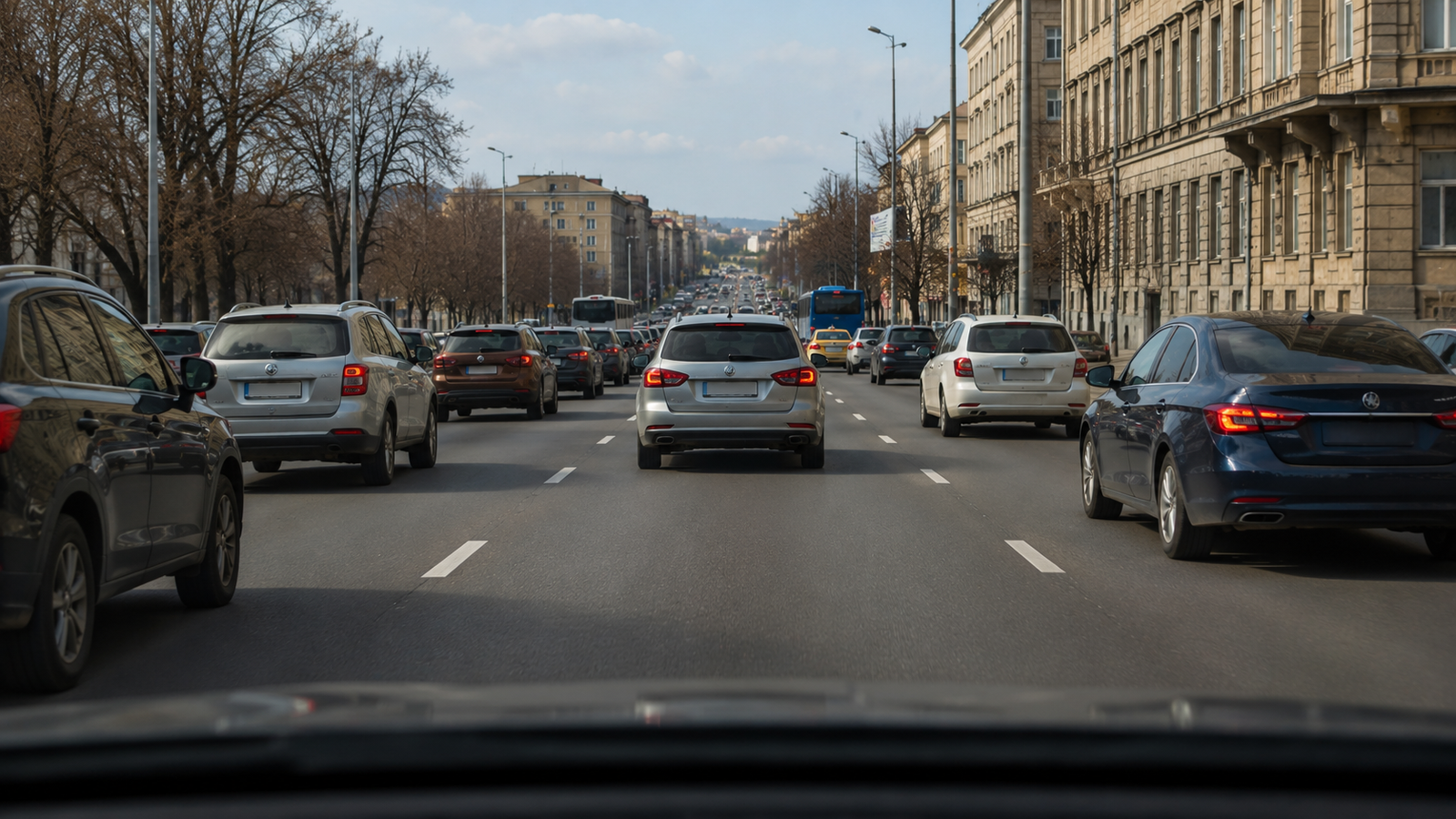
Increased fuel consumption in a traffic jam is explained by quite specific physical processes, and not by the features of any particular engine. Frequent accelerations and decelerations, prolonged idling, loss of inertia, features of torque converter operation, and prolonged engine warm-up add up to an additional 20–40% consumption, and in the most difficult conditions can increase it by approximately half.
At the same time, some of the reasons are under the driver's control. A smooth driving style, maintaining distance, competent route planning, and good technical condition of the car help significantly reduce fuel consumption even in dense city traffic. It is impossible to completely eliminate the difference between highway and traffic jams, but it is quite realistic to significantly reduce it.
Read more materials:
- Volkswagen Scirocco: how a people's brand created its first sports coupe
- Why plastic louvers were installed on the rear window of "Zhiguli"
- Toyota tested off-road: what the new RAV4 Woodland is really capable of
Комментарии