The authors of The Fast Lane Car YouTube channel conducted a series of off-road tests of the new Toyota RAV4 Woodland to find out how much its capabilities match the image of an active lifestyle vehicle. The tests showed that the hybrid crossover can confidently overcome difficult dirt sections, but serious off-road remains not its element.
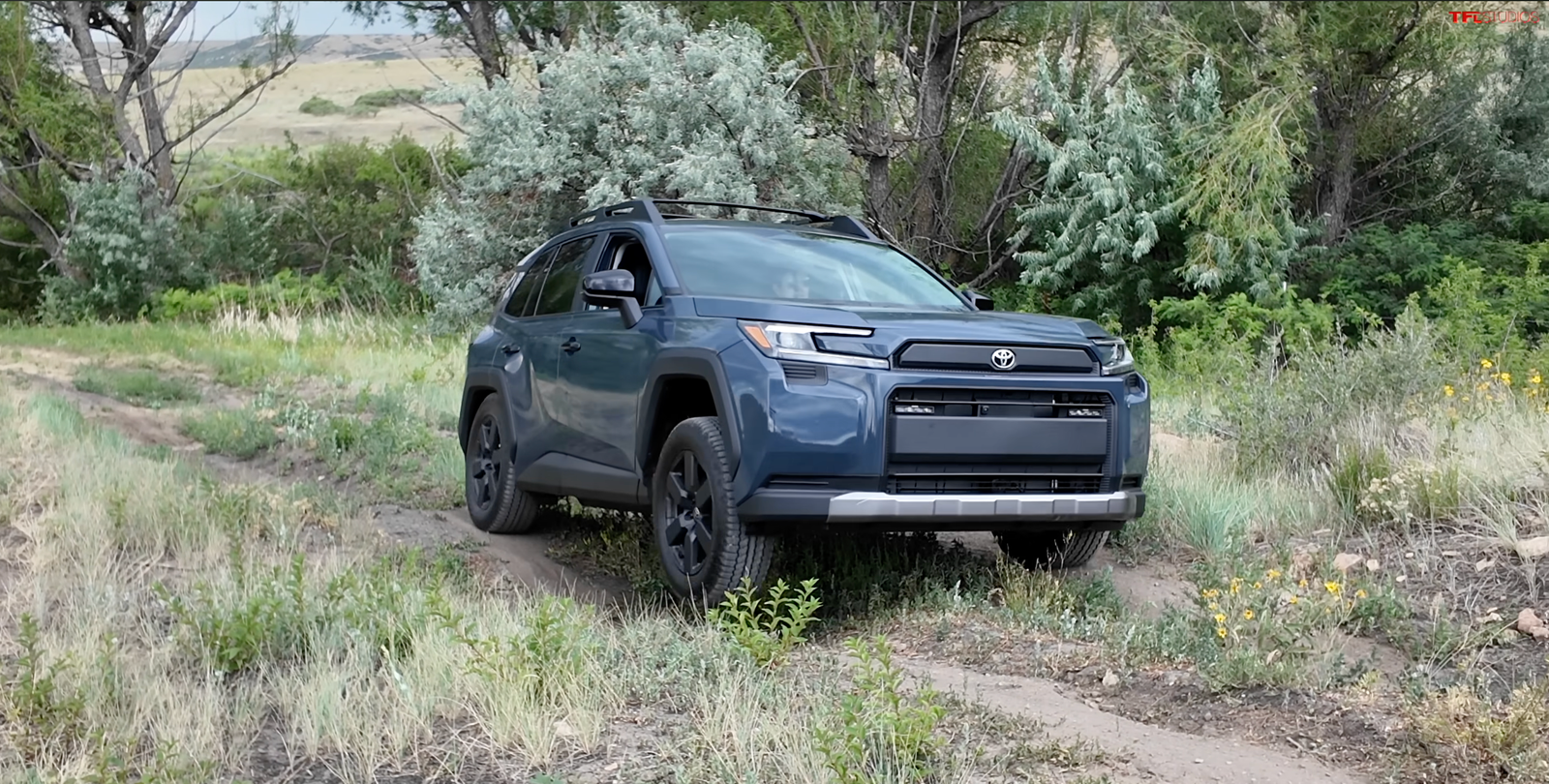
The main feature of the hybrid RAV4's all-wheel drive is the absence of a traditional driveshaft. The front wheels are driven by a gasoline engine and an electric motor, while the rear axle is rotated by a separate 54 hp electric motor. The total output of the power plant reaches 236 hp.
During tests using rollers simulating loss of traction, the crossover failed to pass one of the most difficult exercises. In a situation where only one wheel maintained traction, the electronics could not transmit enough torque to it. Two factors influenced the result: an open differential and a relatively low-power rear axle electric motor.
However, real off-asphalt tests proved to be significantly more successful. The Woodland version received 8.5 inches (about 216 mm) of ground clearance and 18-inch Dunlop Grandtrek off-road tires. After activating Trail Mode, the stabilization system more effectively redistributed traction between the wheels, allowing the car to confidently overcome deep ruts and sections with uneven surfaces.
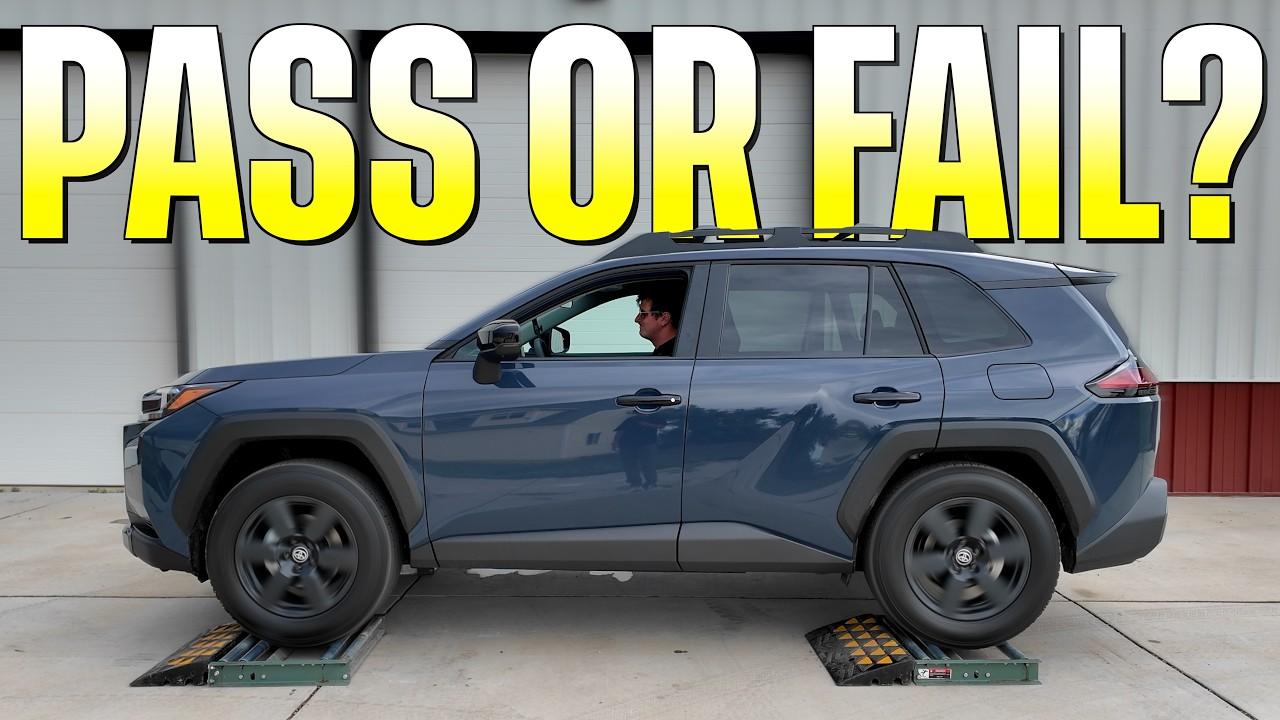
At the same time, the nature of the all-wheel drive remains predominantly front-wheel drive. On ascents, the car "pulls" more with its front wheels than "pushes" with its rear wheels. In addition, the RAV4 lacks a low-range gear and differential locks, which are essential attributes of full-fledged SUVs like the Toyota 4Runner or Jeep Wrangler.
As a result of the tests, the authors concluded that the Toyota RAV4 Woodland cannot be called a vehicle for heavy off-road. However, for trips on forest roads, dirt routes, broken country roads, and travel to remote campsites, its capabilities are more than sufficient.
Read more articles:
- VAZ-2107: a car that proved to be more durable than its own successors
- Why round holes are drilled in new asphalt
- Why cars are imported to Russia in parts and what a "constructor" is
Комментарии