In summer, the interior of a car left in direct sunlight can quickly turn into a real "oven." Many drivers use sunshades, placing them under the windshield, but not everyone is sure if such accessories actually help. Tests show that they do have an effect, although its magnitude directly depends on the design, material, and installation method.
As early as 1988, American researchers compared the effectiveness of a regular cardboard screen and reflective foil shades. During the tests, the car was in direct sunlight, and the air temperature inside the cabin rose to about 66 °C, while the surface of the dashboard heated up to 93 °C.
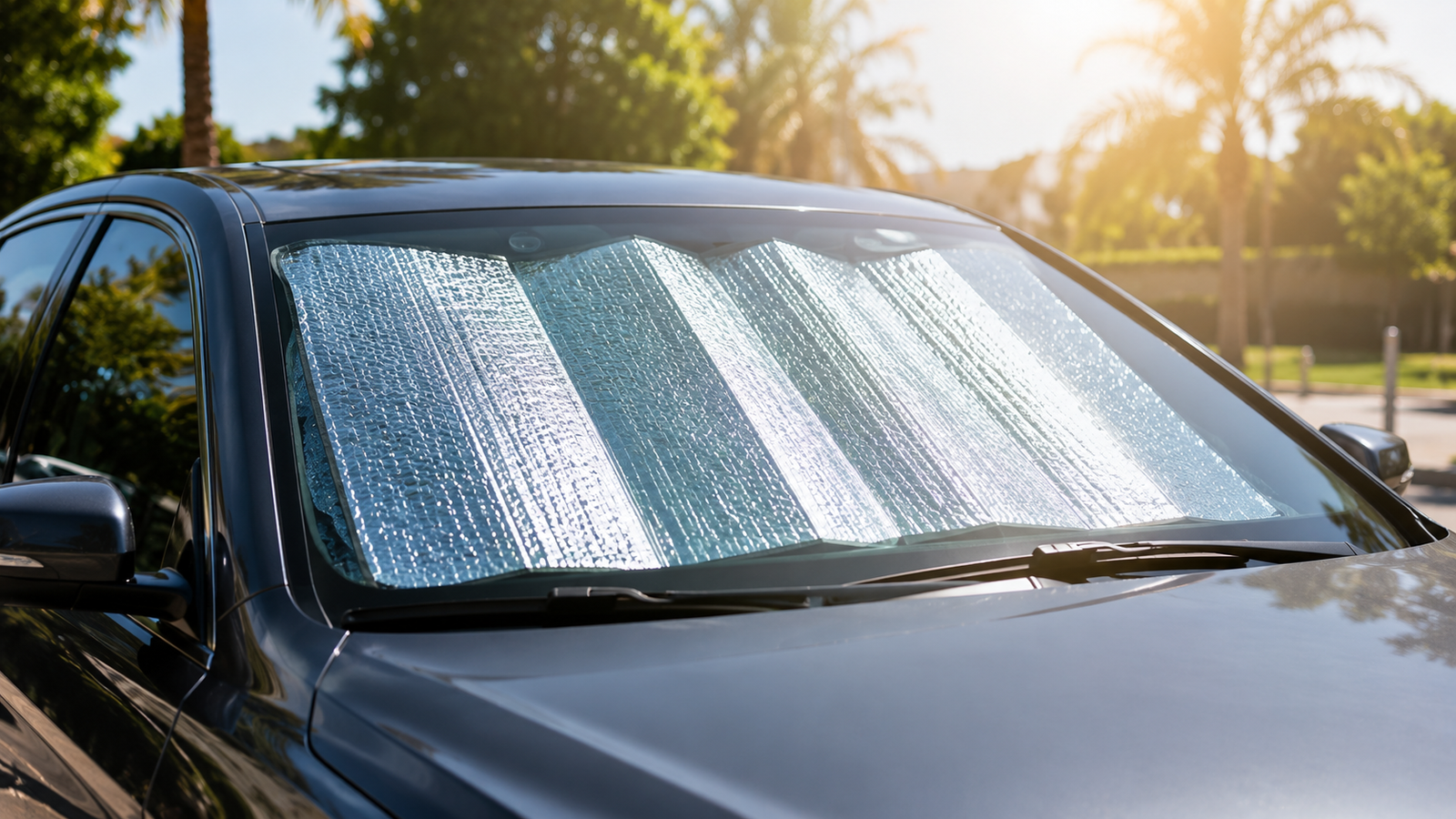
The results were quite revealing. The cardboard screen reduced the air temperature in the cabin by about 8 °C, and the dashboard heating decreased by almost 22 °C. The foil shade proved even more effective: it cooled the air in the cabin and the steering wheel more significantly, and also further reduced the dashboard temperature by several more degrees.
A sunshade does reduce car heating, but its effectiveness depends on several factors.
Why an external screen works better
The maximum effect is provided not by an internal screen installed under the windshield, but by external protection. The reason is simple: it reflects solar radiation before the glass has a chance to heat up and transfer heat inside the car.
This was the conclusion reached by researchers from Malaysia. During the tests, an external sun visor was used, which significantly reduced the heating of the dashboard. During the tests, its temperature decreased from approximately 88.6 °C to 75.4 °C.
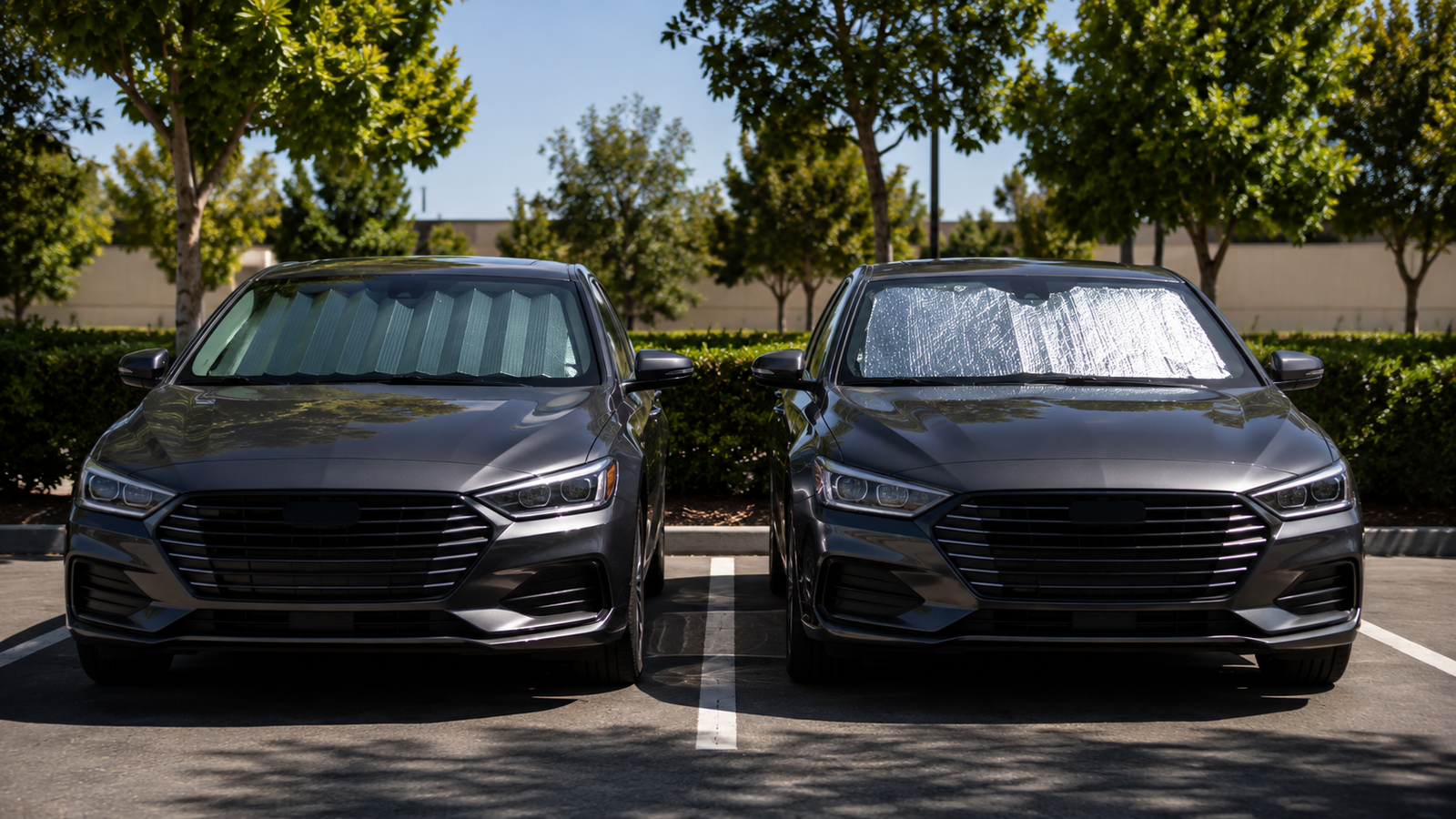
A similar result was obtained by specialists from the German automobile club ADAC. Their tests showed that external protection cools the interior significantly more effectively than most other methods. In particular, the air temperature inside the car decreased from approximately 52.8 °C to 43 °C. In addition, the external reflective screen proved more effective than a similar accessory installed inside the cabin.
Body color also matters
The rate of car heating is influenced not only by the presence of a sunshade. The body color also plays an important role.
ADAC tests showed that a black car heats up significantly more than a white one in direct sunlight. The surface temperature of a dark body reached approximately 65 °C, while for a white car it was about 44 °C. Accordingly, the air inside a car with dark paint also became noticeably hotter.
It turns out that even identical cars under identical conditions can heat up differently solely due to body color.
The simplest way to reduce temperature
Despite the effectiveness of sunshades, the most effective way to protect a car from overheating remains parking in the shade.
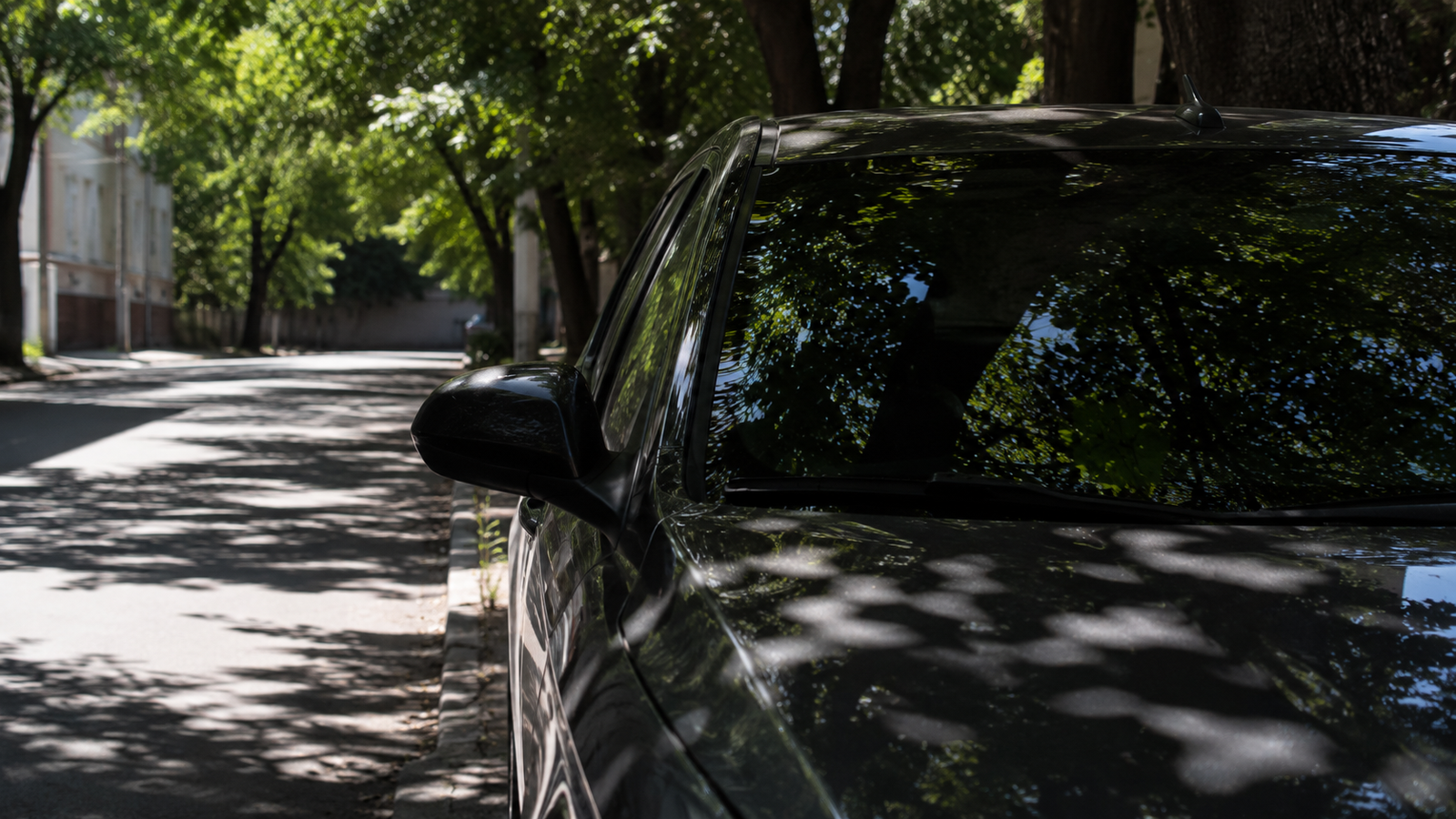
This solution offers several advantages at once:
- reduces the air temperature inside the cabin;
- reduces the heating of the dashboard, steering wheel, and seats;
- reduces the time required for the air conditioner to cool the car.
There's another plus. The less the cabin heats up, the lower the load on the climate system after starting the engine. This helps reduce fuel consumption, as intensive air conditioning, especially in hot weather, significantly increases fuel consumption.
Why overheating is dangerous
A heavily heated interior is not just a matter of comfort. In a closed car, the air temperature and internal surfaces can very quickly reach dangerous levels.
The following heat up particularly strongly:
- steering wheel;
- dashboard;
- interior trim elements;
- seats
Even in relatively moderate weather, the temperature inside a parked car can rise to a level where there is a risk of heatstroke. Such conditions pose the greatest danger to children.
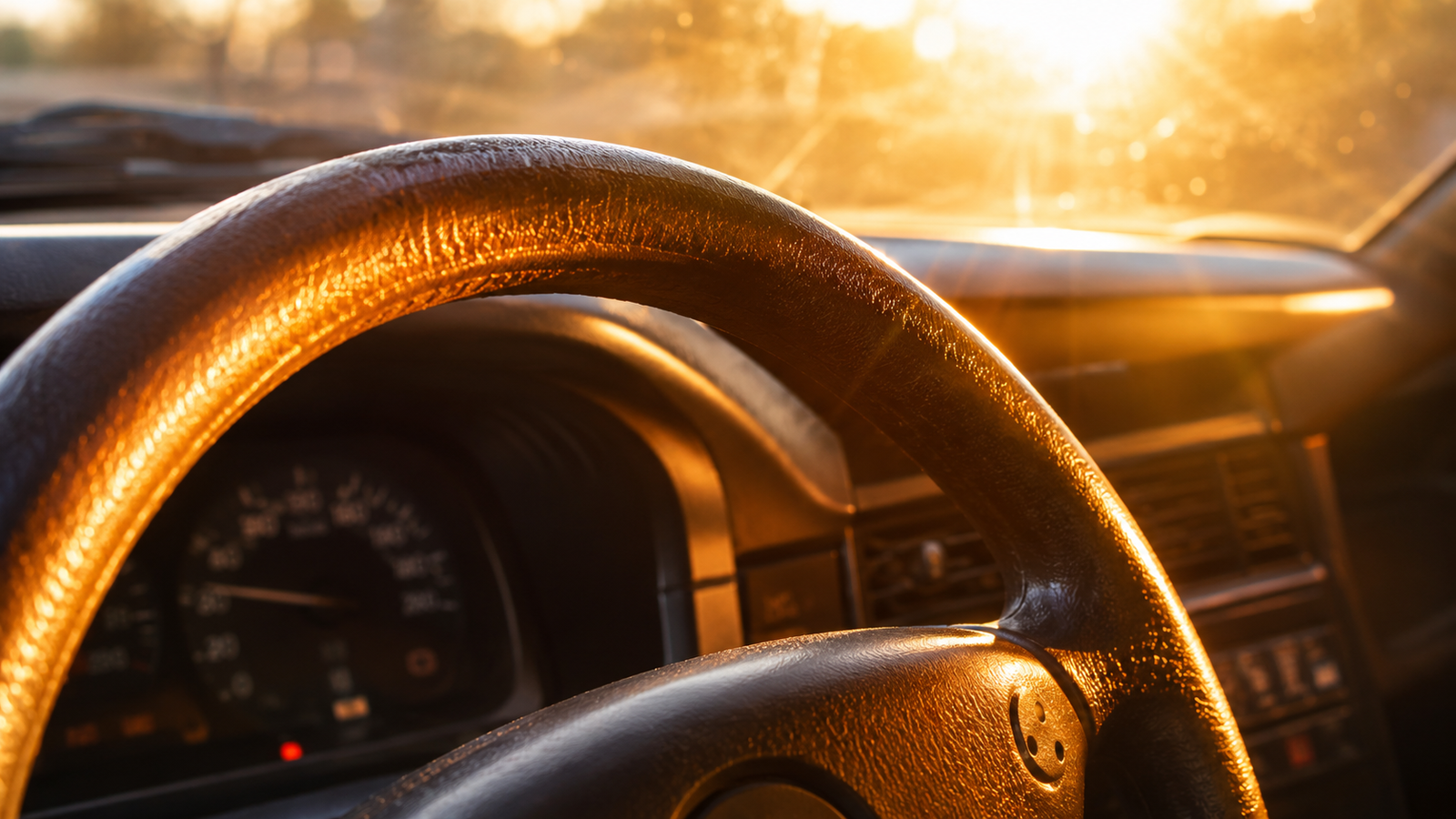
Therefore, the use of a sunshade cannot be considered solely as a means of increasing comfort. In certain situations, it becomes an additional safety measure.
Ultimately, studies show that sunshades do help reduce cabin heating. However, the maximum effect is achieved when using external reflective screens. The choice of parking spot and the car's body color also play an important role. If it is possible to leave the car in the shade and additionally use an external sunshade, the temperature in the cabin will be noticeably lower than when using only an internal shade.
Read more materials:
- How the American Dodge Tradesman ended up in service with authorities in the USSR
- How the Skoda 706 RT became a "workhorse" in the Soviet Union
- KAZ: Rise, Fall, and New Life of the Kolkhida Plant
Комментарии