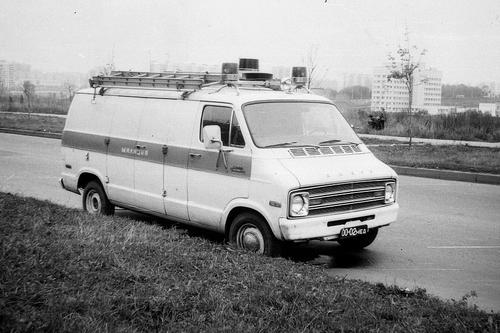
Despite limited contacts between the Soviet Union and capitalist states, cooperation in certain areas continued. This also applied to law enforcement agencies, whose representatives regularly participated in meetings, experience exchange, and specialized events. One of the most unusual outcomes of this interaction was the appearance of an American Dodge Tradesman van in the possession of the Soviet police, whose story turned out to be quite extraordinary.
How Soviet Militsiya Changed
In the 1970s, the Soviet militsiya (police) was undergoing a period of large-scale modernization. It was then that service vehicles received their familiar livery with a lemon-colored body, a blue stripe, and an emblem on the doors. At the same time, the vehicle fleet was actively being updated.
The core of the new vehicles consisted of:
- "Zhiguli" family cars;
- various "Moskvich" models;
- service "Volgas," considered the most prestigious.
Specialized vehicles were also used. Duty units operated the UAZ-452, known as the "Bukhanka," and RAF minibuses were used for laboratories and special communications. Despite their reliability and sufficient capacity, they were significantly inferior to foreign counterparts in terms of technical equipment.
International Exhibition "Krimtekh-74"
The opportunity to get acquainted with modern foreign developments arose in 1974. By order of the Minister of Internal Affairs of the USSR, Nikolai Shchelokov, a specialized exhibition "Krimtekh-74" was organized, dedicated to forensic technology.
Representatives from 13 states participated in the event, most of which belonged to the capitalist bloc. A total of 69 companies presented their developments, demonstrating equipment that often had no analogues in the Soviet Union.
Among the exhibits were:
- Xerox copiers;
- modern speech recording devices;
- equipment that became the prototype of facsimile communication;
- advanced cameras;
- other equipment intended for forensic investigations.
Of particular interest were cars equipped with mobile forensic laboratories. The exhibition showcased Ford Transit, Mercedes-Benz sedans, Volkswagen Passat, Volkswagen Transporter, and other models.
Why the Dodge Was Remembered More Than Others
Although almost every car presented had its own story, the most famous exhibit was the Dodge Tradesman.
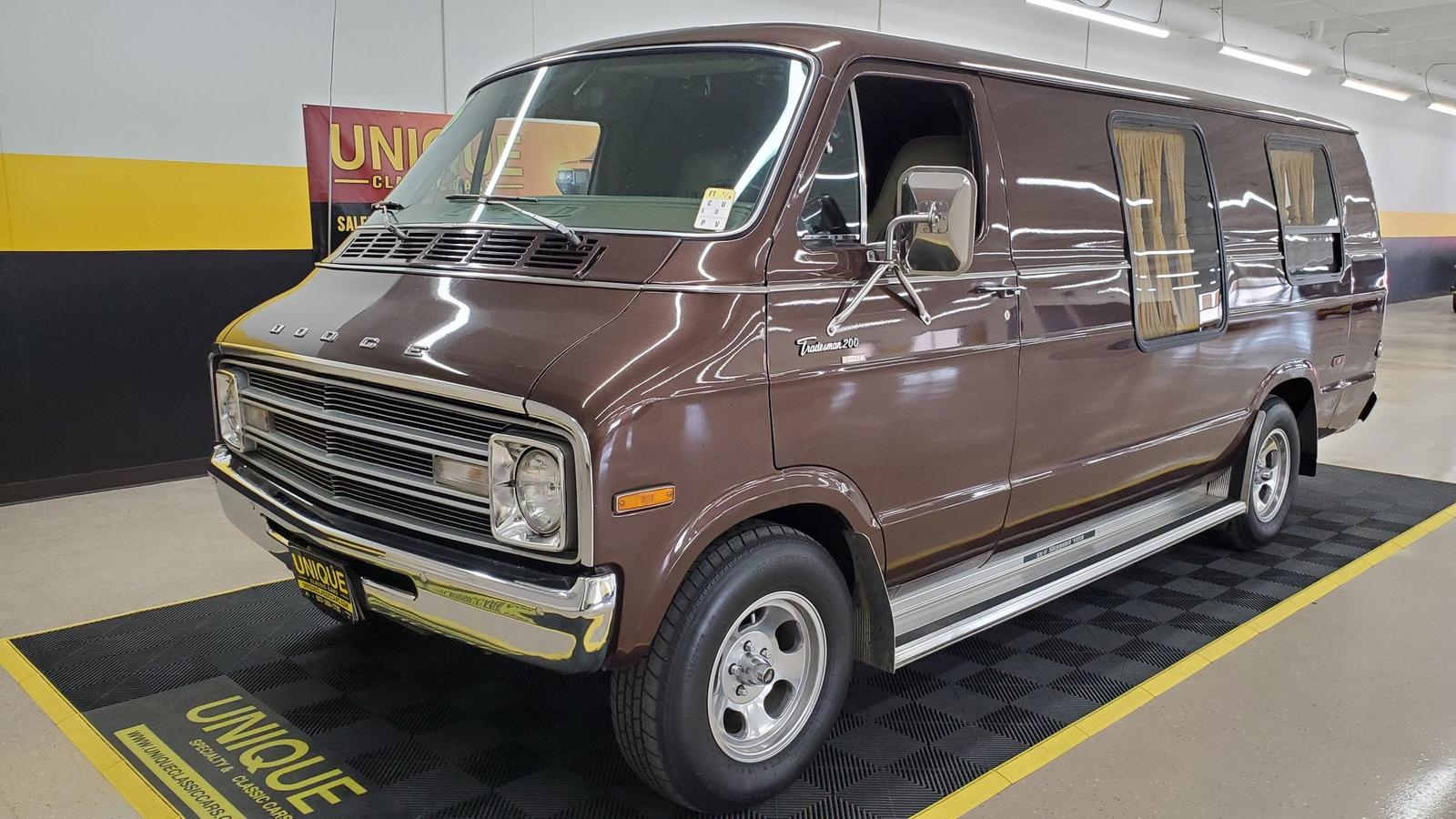
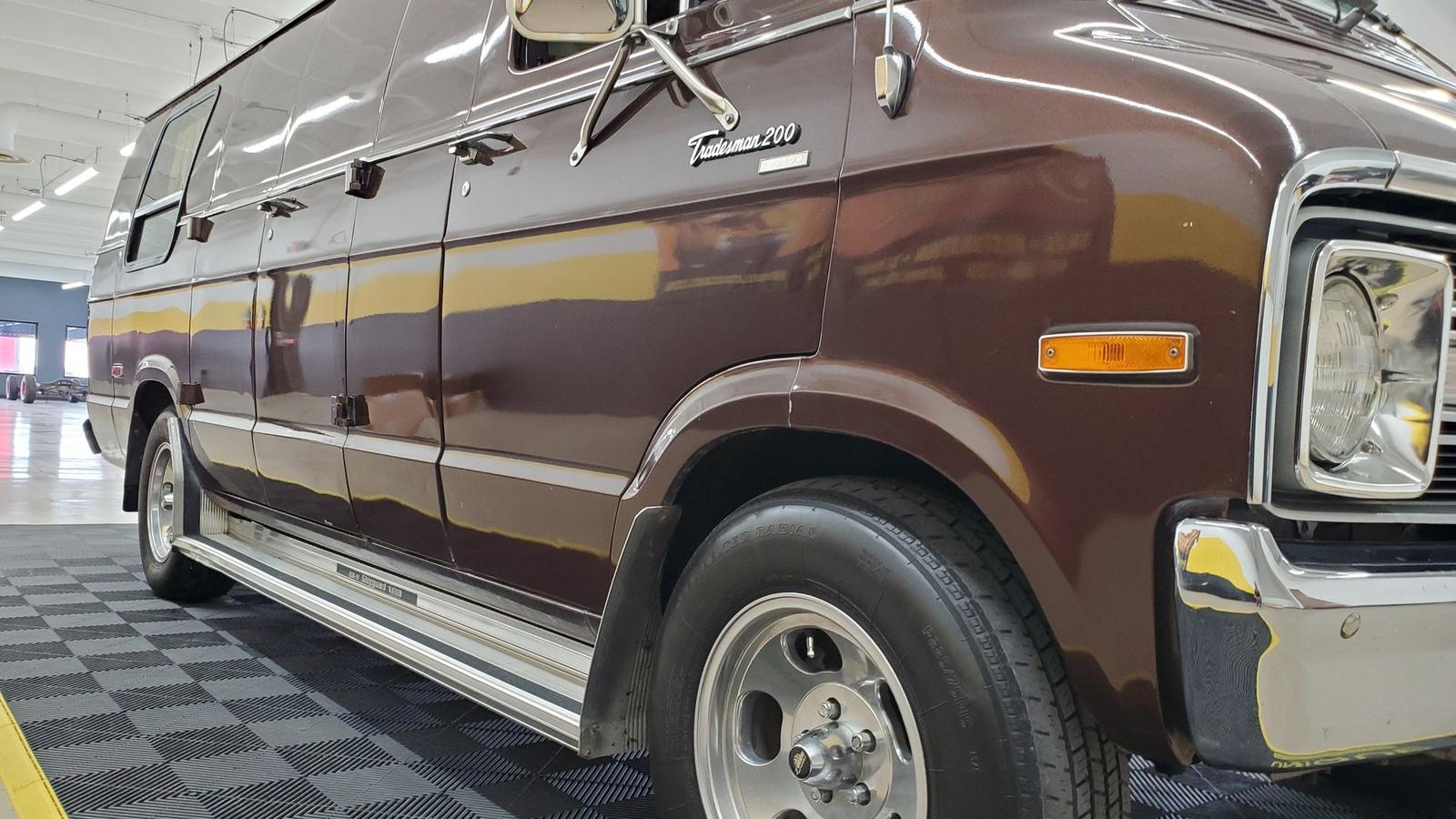
In North America, this model had long been considered iconic. It largely contributed to the development of the culture of travel in converted vans. The car featured a body-on-frame construction, a spacious interior, powerful V8 engines, and extensive possibilities for individual customization, which led to the formation of an entire tuning industry around it.
It was the robust construction and large internal volume that made the model a convenient basis for a mobile forensic laboratory. An Austrian company was responsible for preparing this version, which presented the car at the exhibition.
The van received state-of-the-art equipment for its time, including:
- equipment for recording and transmitting information;
- devices for searching and securing material evidence;
- special storage systems for forensic equipment.
What Happened After the Exhibition
After the end of "Krimtekh-74," most of the presented cars did not leave the Soviet Union. The leadership of the Ministry of Internal Affairs decided to purchase the exhibits to use them in practical work and simultaneously study the technical solutions applied by foreign manufacturers.
This decision proved beneficial to both sides. Foreign companies did not have to organize expensive return transportation of the equipment, and the Soviet militsiya received modern specialized vehicles at its disposal.
The Dodge Tradesman was a particularly notable acquisition. Thanks to its unusual appearance, the American van invariably attracted attention on the roads. In addition, in the late 1970s, the car was used during the filming of training films intended for the training of forensic specialists.
Legacy of "Krimtekh-74"
The exhibition was one of the first instances where Soviet specialists could thoroughly familiarize themselves with modern Western cars and specialized equipment.
A few years later, international cooperation continued. During preparations for the 1980 Olympics, the Soviet Union purchased relatively large batches of foreign cars. It was then that service Mercedes-Benz and BMW cars, painted in the traditional lemon-blue color scheme of the Soviet militsiya, appeared on the streets of Moscow.
The story of the Dodge Tradesman became one of the most unusual episodes of this period. The American van turned out to be not a museum exhibit, but a full-fledged service vehicle that was used in practical work and helped to get acquainted with the advanced forensic technologies of its time.
Read more materials:
- Why plastic louvers were installed on the rear window of "Zhiguli"
- Toyota tested off-road: what the new RAV4 Woodland is really capable of
- VAZ-2107: a car that turned out to be more durable than its own successors
Комментарии