Serial production of the Skoda 706 RT began in 1957. The abbreviation RT stood for Rekonstruovaný Trambus — "reconstructed cab-over-engine truck." The introduction of a new cab significantly reduced the overall length of the vehicle without sacrificing the size of the cargo platform. This made the truck much more convenient for operation on narrow city streets, construction sites, and winding roads in Czechoslovakia.
Under the cab was an inline six-cylinder diesel engine with a displacement of almost 11.8 liters. Depending on the version, the engine developed about 160 horsepower, which was considered a very high figure for the late 1950s. Maximum torque was achieved at relatively low RPMs, so the truck confidently started even with a fully loaded trailer. These good traction qualities later became one of the reasons for the model's high popularity among Soviet drivers.
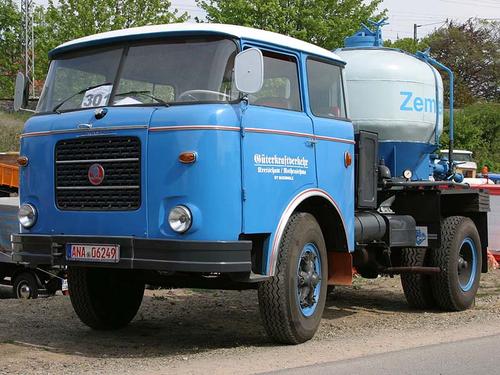
The engine design was simple. It was equipped with a mechanical high-pressure fuel pump and lacked complex electronics. This allowed most malfunctions to be fixed on the road using a standard set of tools, which was very important when working far from major repair facilities.
The vehicle was equipped with a five-speed manual gearbox. Some modifications also had a two-speed splitter, which significantly expanded the range of gear ratios. This solution facilitated driving on long ascents and simultaneously helped save fuel when driving on high-speed highways.
The gross vehicle weight of the road train exceeded 20 tons, and the maximum speed reached approximately 80 km/h. By the standards of its time, the truck was considered quite fast and well-suited for intercity transportation.
During development, special attention was paid to the strength of the structure. The front and rear suspensions received semi-elliptical leaf springs designed for serious overloads, and the frame had a significant margin of safety. Thanks to this, the vehicle confidently withstood operation even on roads with poor surfaces.
Another notable advantage was the all-metal cab. Compared to many Soviet trucks of the late 1950s, it looked significantly more modern. The high seating position provided excellent visibility through a large panoramic windshield, and the controls were conveniently located.
How the Skoda 706 RT appeared in the USSR
The model's popularity quickly spread far beyond Czechoslovakia. Trucks began to be supplied not only to socialist countries but also to the Middle East, African states, and some Western European countries.
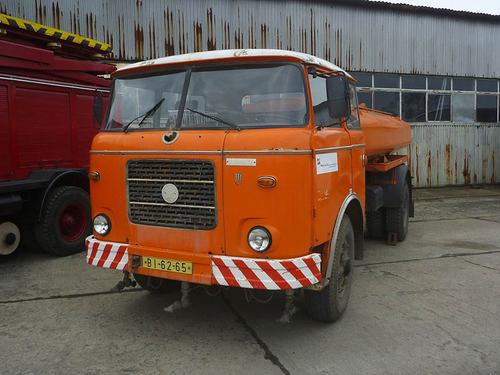
The Soviet Union also showed serious interest in the new machine. During this period, factories, power plants, roads, and new cities were actively being built, so the need for heavy trucks constantly grew. Domestic production was insufficient, and some equipment was purchased from countries participating in the Council for Mutual Economic Assistance.
The first batches of Skoda 706 RT arrived in the USSR in the late 1950s and early 1960s. Specialists immediately noted the high quality of the vehicles. Noted were:
- neat assembly;
- high-quality paintwork;
- durable metal;
- reliability of main units.
An additional advantage was that the car was originally designed for intensive daily operation. The first years of use showed a high margin of safety for most components. The trucks confidently endured severe frosts, bad roads, and harsh operating conditions.
Several years after the start of deliveries, the Skoda 706 RT became a familiar part of the Soviet vehicle fleet. The machine successfully competed with domestic counterparts, and in terms of reliability and comfort, often surpassed many of them.
Where Czechoslovak trucks were used
The vehicles were supplied to motor transport columns of the Ministry of Automobile Transport, construction organizations, foreign trade enterprises, and large industrial associations. Most often, they worked as flatbed trucks and semi-trailer tractors.
The scope of application was very wide. The machines transported:
- building materials;
- industrial equipment;
- rolled metal products
- timber
- containers
- various types of industrial goods.
The powerful diesel engine allowed confident towing of heavy semi-trailers even on long ascents.
The Skoda 706 RT played a particularly significant role in international transportation. It became one of the first foreign models to regularly operate on routes between the Soviet Union, Czechoslovakia, Poland, Hungary, Bulgaria, and the GDR. It was behind the wheel of these vehicles that many Sovtransavto employees first began making trips on European roads.
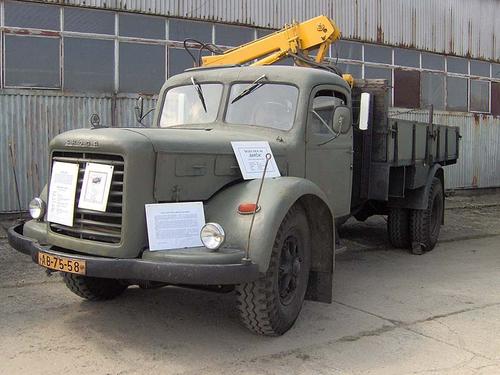
The trucks were also widely used domestically. They could be found at the construction sites of hydroelectric power plants, metallurgical enterprises, chemical plants, and new cities. The machines worked in Siberia, the Urals, Kazakhstan, and the Far East. The strong frame and reliable suspension allowed the equipment to be confidently operated even where asphalt roads were absent for tens of kilometers.
The model's fuel efficiency is also worth noting. Despite an engine volume of almost 12 liters, the average fuel consumption was usually about 30 liters per 100 kilometers, although specific values depended on the load and road conditions. For a heavy truck of the late 1950s and 1960s, this figure was considered very decent, and operating costs were lower than many Soviet gasoline-powered vehicles.
What was appreciated about the Skoda 706 RT cab
In drivers' recollections, the cab is most often mentioned. After working on ZIL-164, MAZ-200, or early KrAZs, the Czechoslovak truck was perceived as a significantly more modern machine.
The high seating position provided excellent visibility, and drivers quickly got used to the vehicle's dimensions. The driver's seat had adjustments, and gear shifting required significantly less effort. Thanks to this, even after a long working day, fatigue was felt much less.
Another important advantage was a full-fledged sleeping berth located behind the seats. For Soviet trucks of that time, such equipment was extremely rare. During intercity and international trips, it became possible to rest fully, which was especially appreciated by drivers who spent several days on the road.
The effective heating system also proved to be very useful. While in the cabs of many domestic vehicles, it remained cold for a long time after the engine started in winter, here the heater quickly created a comfortable temperature even in severe frosts.
A lower noise level was also noted. Despite the engine being located directly under the cab, it was noticeably quieter inside than in many Soviet trucks of the same period.
Reliability, time-tested
With timely maintenance, the engine easily covered hundreds of thousands of kilometers without major overhauls. For cars of that time, such a resource was considered very high. Serious malfunctions occurred relatively rarely, and most repair work was performed without the use of complex equipment.
The build quality also received high marks. The metal panels were well-fitted, the doors closed tightly, and the body's resistance to corrosion often surpassed that of some Soviet counterparts.
What remains of the Skoda 706 RT
Production of the family continued for almost three decades. During this time, over 150,000 vehicles of various modifications were produced. For Czechoslovak automotive industry, the Skoda 706 RT became one of the most successful heavy trucks of the 20th century.
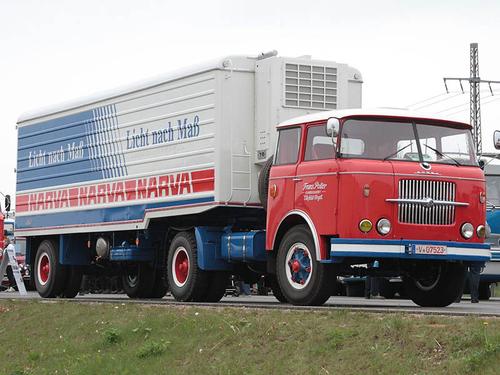
Even after the appearance of more modern models, many vehicles continued to operate in the Soviet Union for many years. Some vehicles remained in operation until the end of the 20th century, confirming their reputation as reliable and durable equipment.
Today, the Skoda 706 RT is already considered a classic of commercial transport. Surviving examples can be found in museums, private collections, and at retro vehicle festivals. This model became one of the most recognizable symbols of Czechoslovak truck manufacturing and managed to leave a significant mark in the history of Soviet road transport.
Read more materials:
- KAZ: rise, fall, and new life of the Kolkhida plant
- Why a car "eats" a tank in city traffic jams
- Volkswagen Scirocco: how a people's brand created its first sports coupe
Комментарии