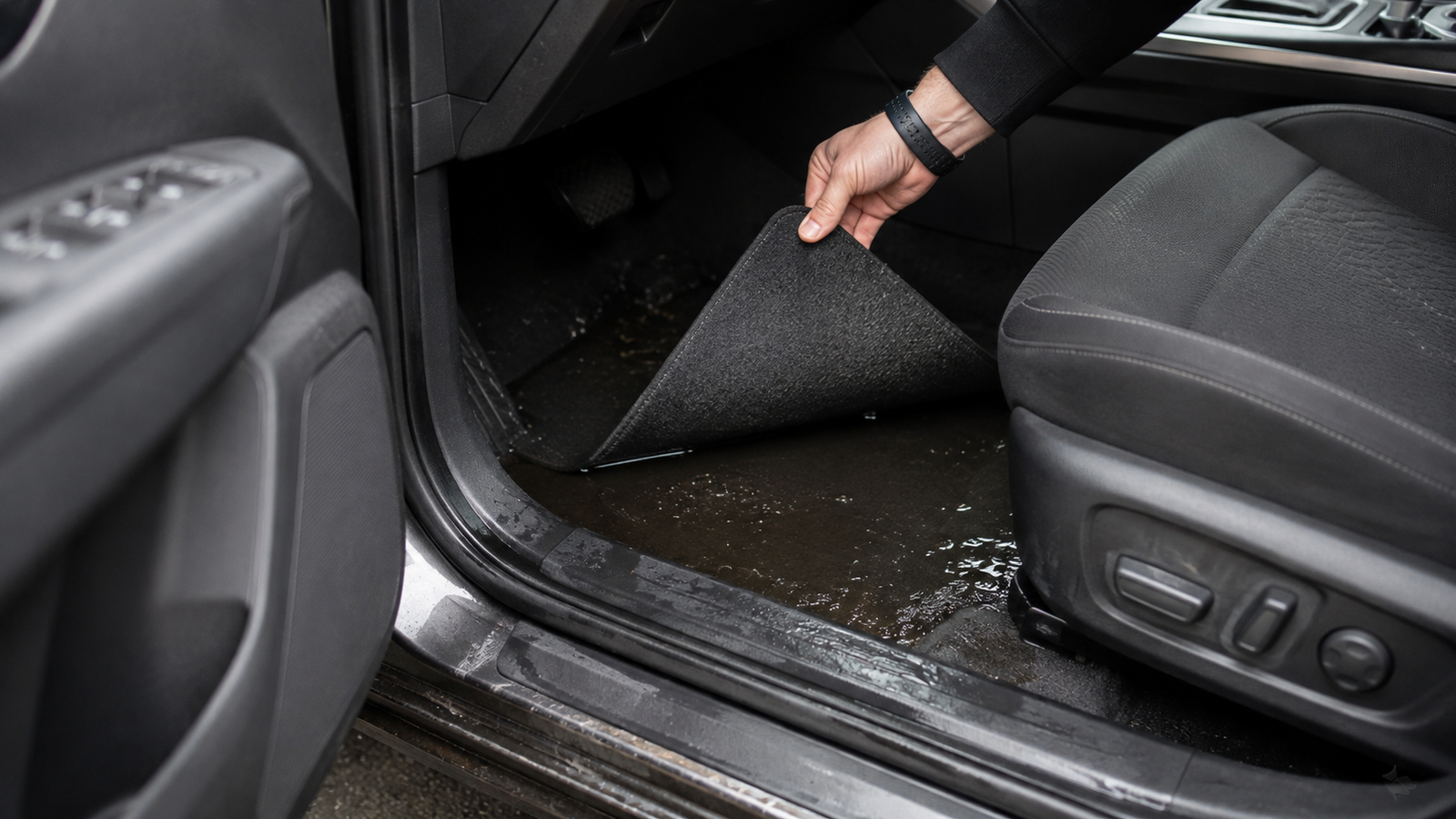
After heavy rain, many drivers unexpectedly find moisture under the floor mats or hear a characteristic gurgling sound inside the doors when braking and turning. In such a situation, the first suspicion usually falls on damaged sealing rubber. However, in practice, the reason is often completely different. In most cases, water enters the body exactly as intended by the designers, and the problem arises because it cannot escape through clogged drainage holes.
If the drainage channels are cleaned in a timely manner, the problem can often be solved in just a few minutes. The main thing is to do the job correctly, as an unsuccessful attempt to clear the blockage can lead to much more expensive repairs.
Why water ends up inside the doors
Car doors are not completely sealed. During rain or washing, some water inevitably gets inside through the glass seal and technological gaps in the upper part of the door. This is a normal design feature.
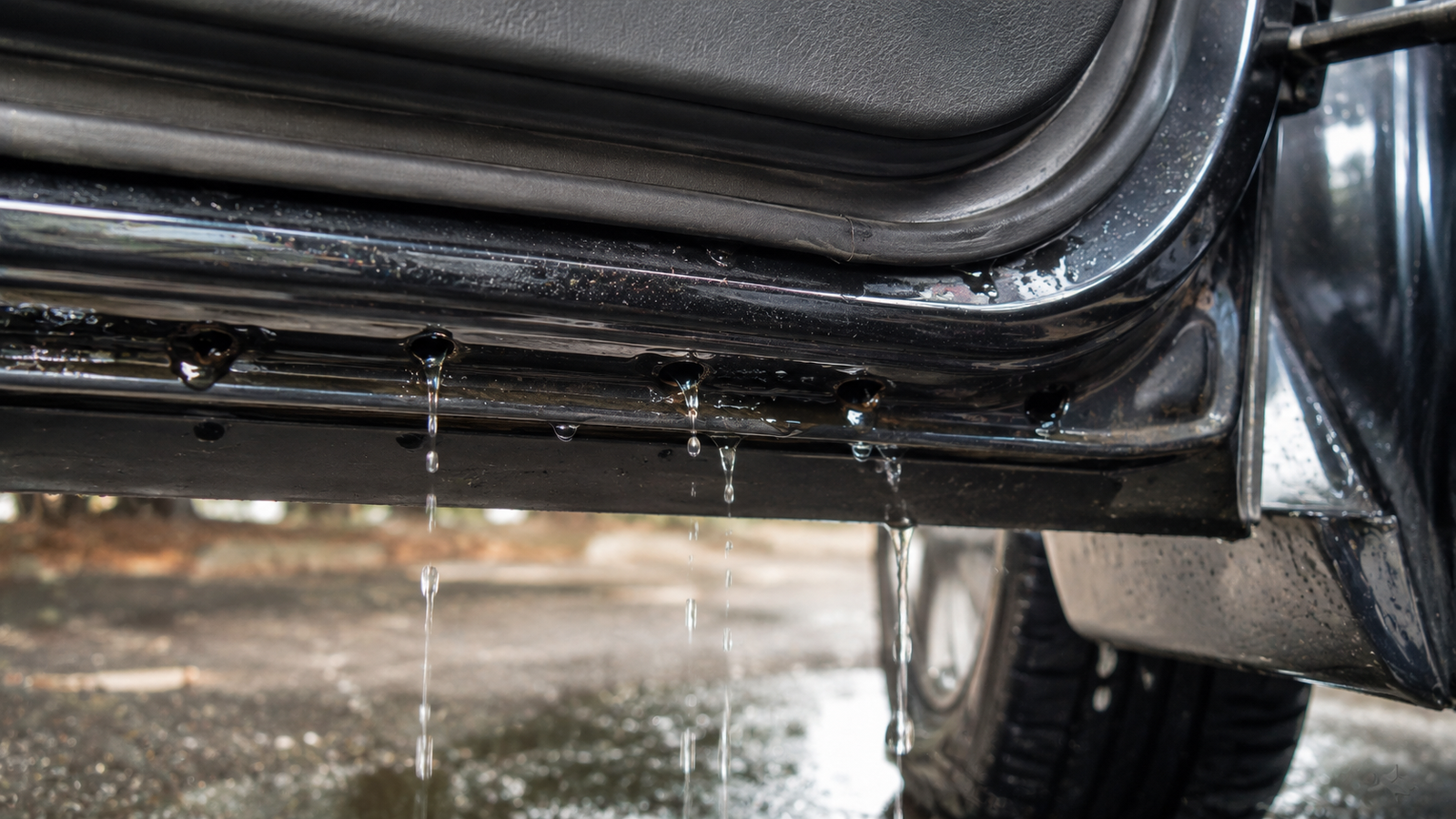
Special drainage holes are provided at the bottom of the door to drain moisture. Water should flow freely out through them.
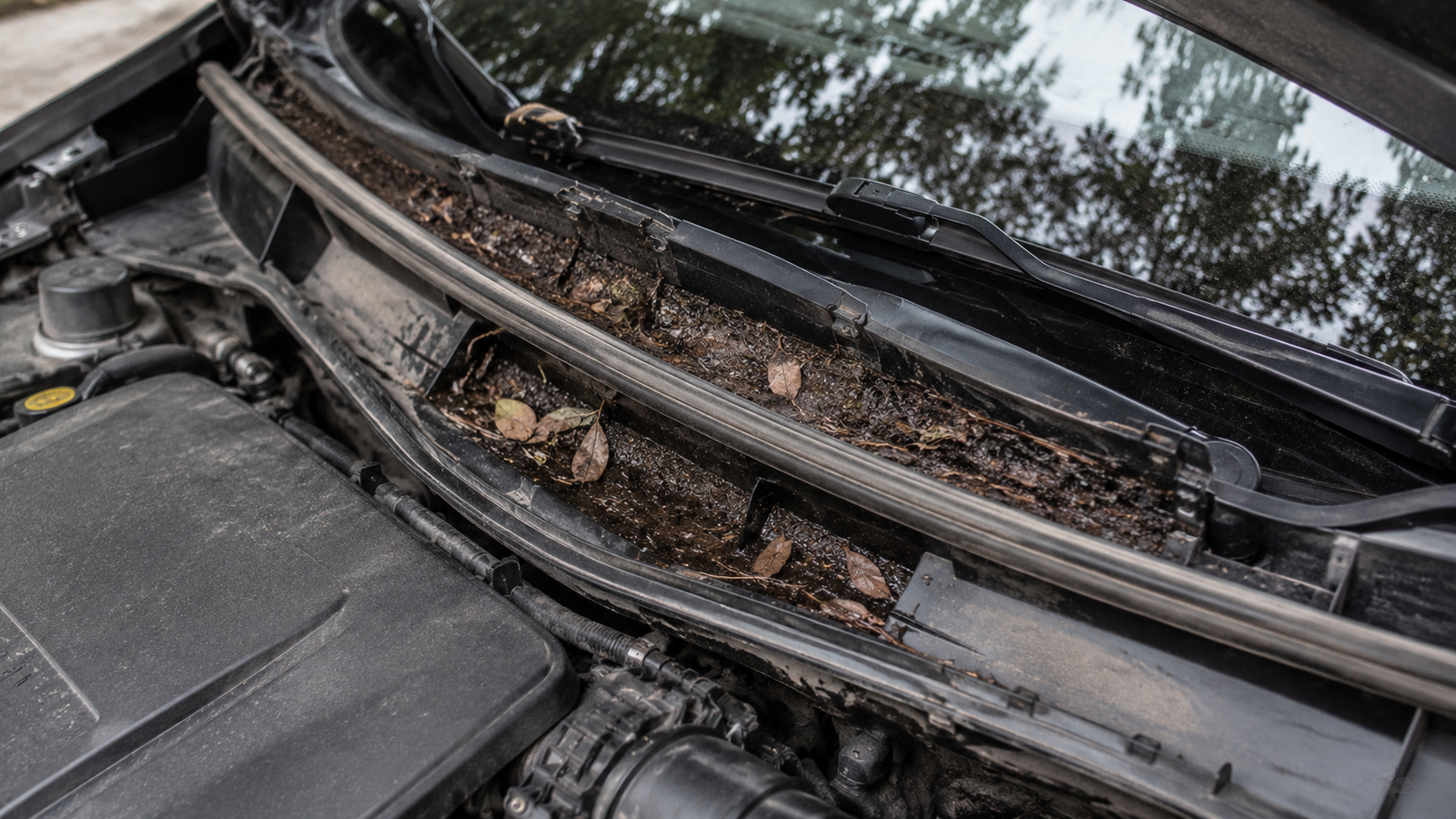
Water drainage is organized on the same principle in other parts of the car. After rain, water flows under the plastic trim at the base of the windshield, known as the cowl, and then exits through special drainage channels.
In addition, drainage holes are provided:
- in the sills;
- in the trunk compartment;
- in the sunroof frame, if the car is equipped with one.
When one of these channels is blocked, water begins to accumulate inside the body cavities. As a result, it gradually finds another path and can get under the carpet or into the footwell.
Why drains get clogged
The most common causes of blockages are leaves, poplar fluff, sand, and road dirt. Over time, all of this forms a dense plug that prevents normal water drainage.
There is also a less obvious reason. During anti-corrosion treatment of internal cavities, special protective compounds are used. Over time, part of this coating can drain and block the drainage holes with a viscous mass, which cannot always be removed by ordinary flushing.
Sometimes the cause of water ingress is indeed the seals. Over time, the rubber can dry out, deform, or lose elasticity. If the problem does not disappear after cleaning the drains, the condition of the seals should be checked separately.
Why you shouldn't use metal objects
Many people try to clear a blockage with a screwdriver, wire, nail, or other rigid metal object. At first glance, this method seems the simplest, but it is precisely this method that can cause serious damage to the car.
The inner surfaces of doors and drainage channels are protected by paintwork and an anti-corrosion compound. Sharp metal easily damages this protective layer.
Even a small scratch inside a closed cavity becomes a favorable place for corrosion to develop. Moisture regularly gets there, and ventilation is practically absent, so rust develops imperceptibly and remains hidden for a long time.
The consequences can be much more serious than a simple accumulation of water. Constant dampness can lead to:
- the appearance of corrosion inside the door;
- damage to power window mechanisms;
- the formation of mold and an unpleasant odor in the cabin.
When traces of rust become visible from the outside, the internal elements of the body often have already suffered serious damage.
Why it's better to use nylon fishing line
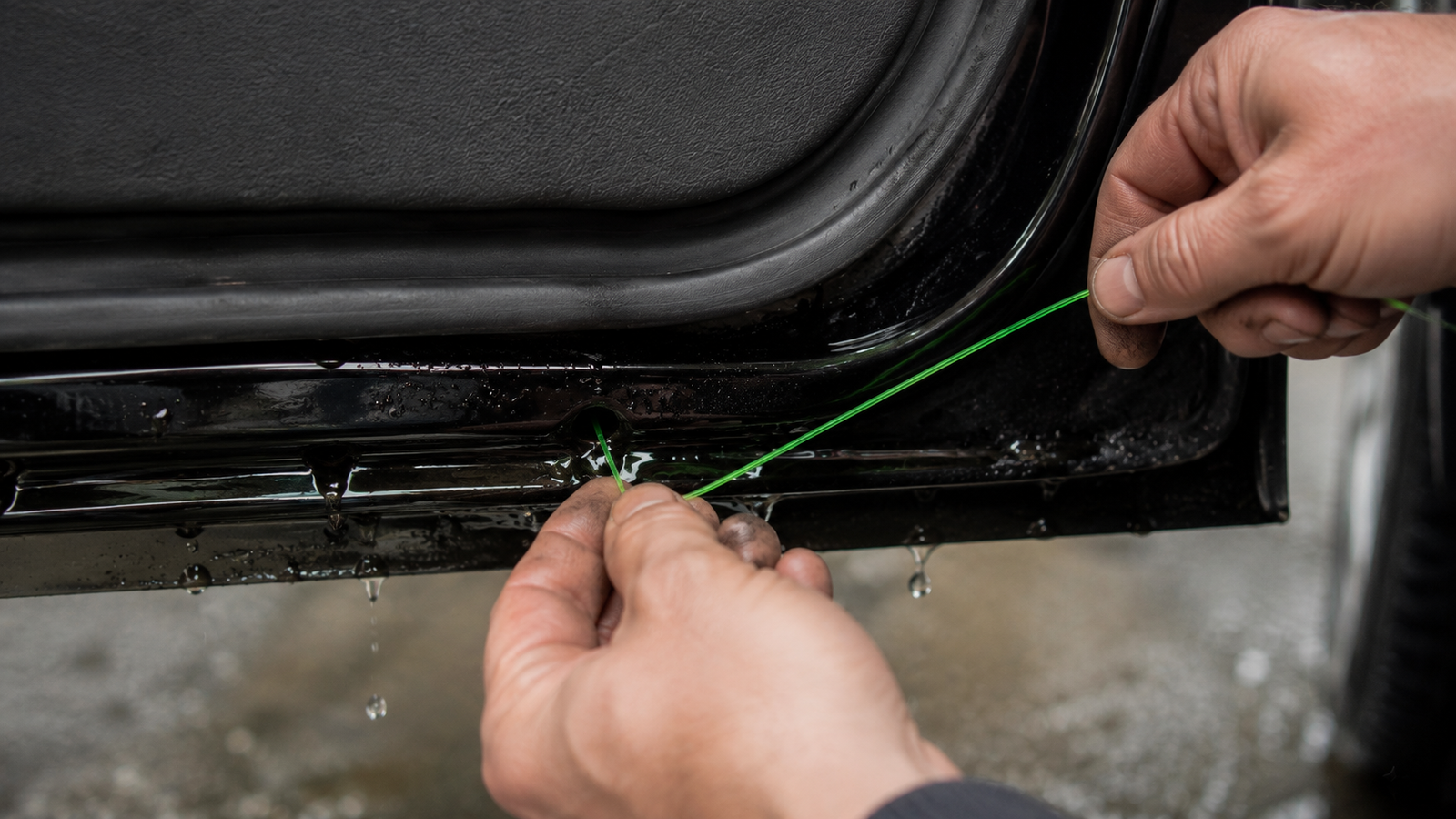
Ordinary nylon fishing line for a garden trimmer is much better suited for safe cleaning of drainage holes.
Its advantages are obvious:
- sufficient rigidity to break up the dirt plug;
- flexibility, allowing it to pass through curved channels;
- no risk of damaging metal and protective coating.
An optimal line diameter is considered to be 2–3 mm. A thinner one may be too soft, and a thicker one simply won't fit into the hole.
How to properly clean the drain
The entire procedure takes only a few minutes.
The sequence of actions is as follows:
- prepare a piece of fishing line about 30–40 cm long;
- carefully insert it into the drainage hole;
- break up the formed plug with smooth back and forth movements;
- do not apply excessive force, allowing the line to gradually move along the channel.
After removing the blockage, water usually starts flowing out almost immediately.
Then it is recommended to flush the channel with clean water to remove residual dirt.
If the cause of the blockage was hardened anti-corrosion compound, you can use water with a small amount of car shampoo or carefully blow compressed air through the channel. It is important not to use too high pressure so as not to damage the plastic elements of the system.
Where are the drainage holes located?
On most cars, they are located in the following places:
- at the bottom of each door;
- under the plastic cowl trim at the base of the windshield;
- inside the sills;
- in the trunk compartment.
In many cases, drainage holes are covered with special rubber valves.
Their task is to let water out and at the same time prevent dirt from getting in.
If water still accumulates after cleaning, it is worth checking the condition of such a valve. It may have lost its shape, come unstuck, or been damaged. It is better to replace a faulty element immediately, otherwise the drain will quickly become clogged again.
How to avoid the problem recurring
Simple prevention helps to completely prevent such situations.
It is enough to clean the drainage channels twice a year:
- in autumn, after the leaves have fallen;
- in spring, when the car has already survived winter operation with reagents.
This procedure significantly reduces the risk of water appearing in the cabin and helps protect the body from hidden corrosion.
If, after self-cleaning, water continues to accumulate, the cause may be more serious. Sometimes the problem is related to damage to the drainage tube, incorrect installation of individual parts, or other malfunctions that cannot be eliminated without disassembly. In such cases, it is better to show the car to specialists to avoid further body damage and expensive repairs.
Read more materials:
- How the VAZ 1.8 engine was created and why it needs a new place for the number
- Why tractors have much larger rear wheels than front wheels
- Land Cruiser 70: an SUV that outlived dozens of generations of cars
Комментарии