Today, the location of the fuel filler flap is almost always predictable: it's on one of the rear fenders and opens by pressing a button or pulling a lever from inside the cabin. However, in the middle of the last century, designers often abandoned conventional solutions. For striking design, better weight distribution, or layout features, the fuel filler was hidden so skillfully that finding it without instructions was difficult even for an experienced motorist.

Such experiments were particularly active in the USA and Western European countries in the late 1950s and early 1960s. At that time, a car's appearance was considered one of the main factors for commercial success, so designers tried to hide any elements that disrupted the smooth lines of the body.
American Cars: Fuel Tank Behind the Taillight
In the late 1950s, the American market experienced a true boom in large passenger cars. Even mid-range models were impressive in size and equipped with fuel tanks of 70–80 liters.
Engineers faced a difficult task: to place such a tank without reducing trunk volume or occupying cabin space.
One of the most unusual solutions was applied to the Oldsmobile 88.
The fuel filler was located in the left rear fender, but it was impossible to see. Access was only available after the owner flipped up the decorative chrome trim of the taillight and then unscrewed the fuel cap.
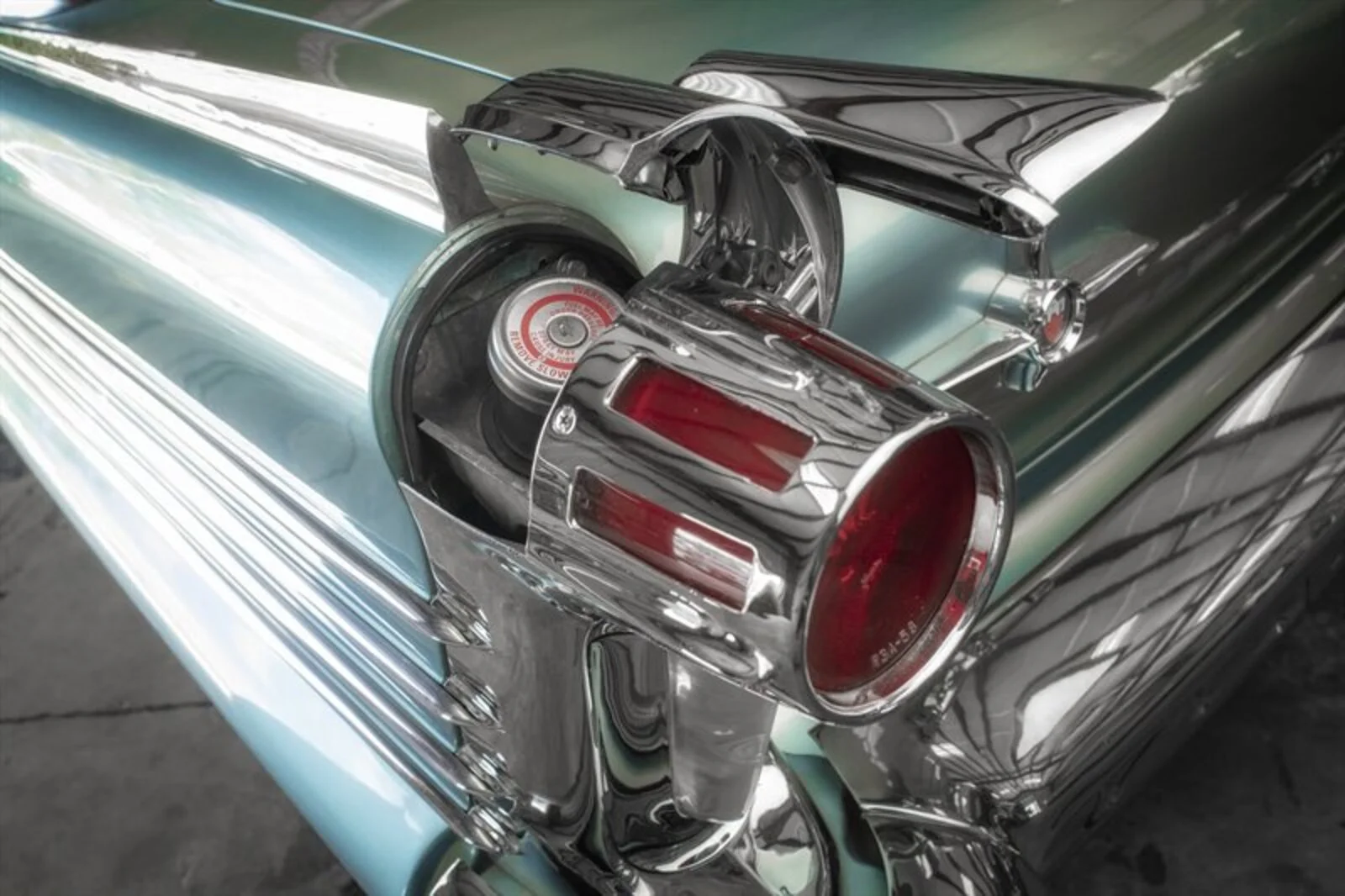
A similar scheme was used by the creators of the Chevrolet Bel Air.
Here, the tank was also located in the left rear fender, but the refueling process was simpler. It was enough to rotate the taillight by about 45 degrees, after which access to the filler neck was opened.
Jaguar XJ: Two Fuel Tanks
British engineers proposed their own version of a hidden refueling system.
The Jaguar XJ, produced from 1968 to 1992, used two fuel tanks located in the rear fenders.
However, the filler necks were not behind the lights, but on both sides of the body at the base of the rear window.
This solution looked very unusual and emphasized the originality of the design, although it was difficult to call it practical.
Skoda 1000 MBX: Emblem Instead of Fuel Cap
One of the most original engineering solutions was found in the Skoda 1000 MBX.
The small Czechoslovak car had a rear-mounted engine, like the "Zaporozhets" or Volkswagen Beetle. To achieve a more even weight distribution between the axles, the fuel tank was placed at the front.
The fuel filler neck looked even more interesting.
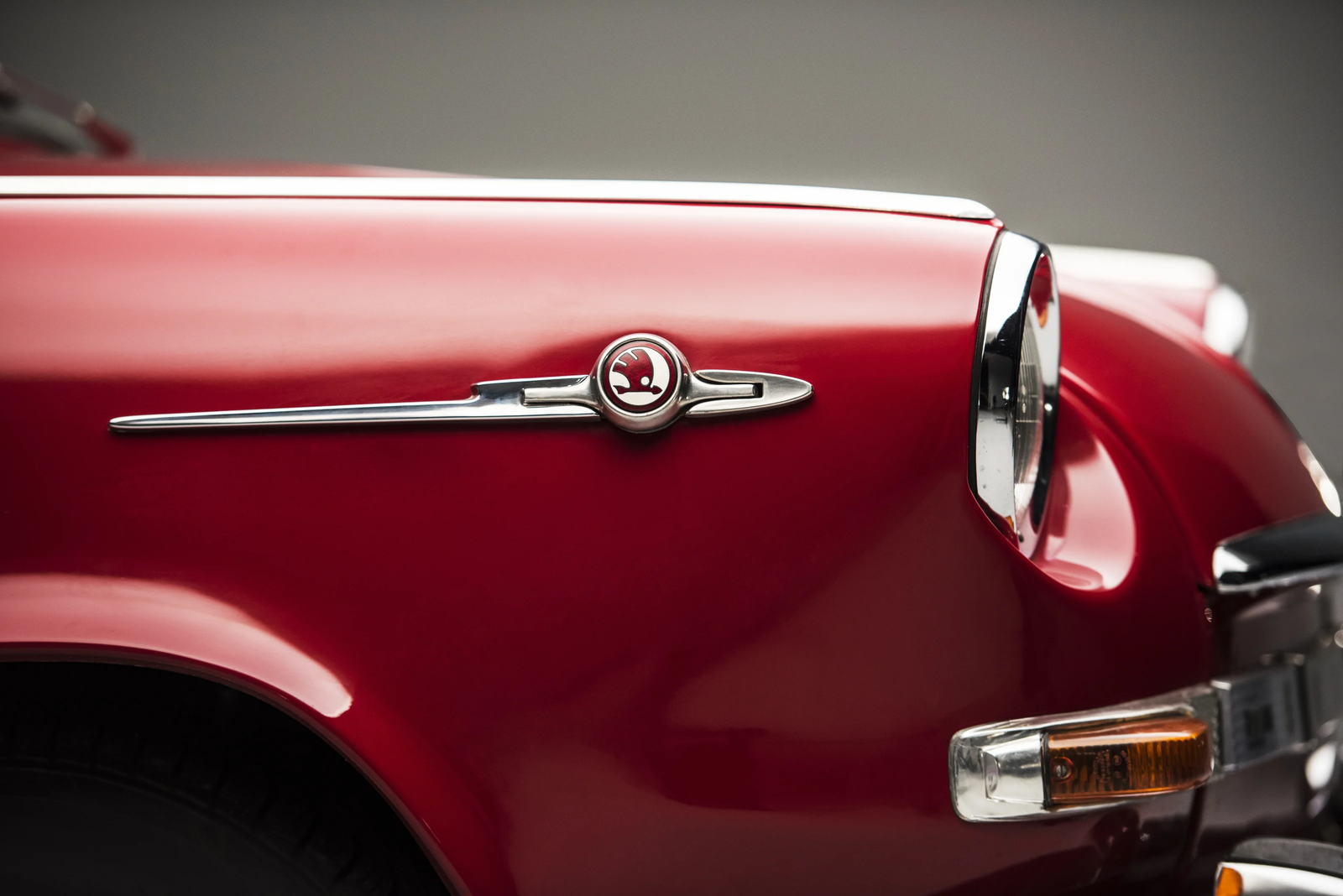
It was located on the front fender, and the cap was completely hidden by the Skoda emblem. From the outside, it was impossible to guess that the filler neck was hidden under the logo.
Trabant 601 and Smart Roadster Surprised in Their Own Ways
The Trabant 601 received an equally unusual design.
The compact car from the GDR was equipped with a two-stroke engine, so before refueling, gasoline had to be mixed with engine oil.
At the same time, the fuel tank itself was located directly above the engine.
Such a solution was unusual even by the standards of its time.
The creators of the Smart Roadster used a completely different approach.
Due to the car's very compact size, engineers found it difficult to find a place for a traditional fuel filler neck.
As a result, it was placed at the base of the rear body pillar, which also served as a protective roll bar.
Moskvich: Refueling Through the License Plate
An unusual scheme was also used in Soviet cars.
In Moskvich-408, Moskvich-412, and later Moskvich-2140 models, the fuel filler neck was located at the rear of the body above the bumper.
However, it was impossible to see it immediately.
To access the fuel cap, the owner first had to open the trunk. After that, the license plate could be flipped up, behind which the filler neck was hidden.
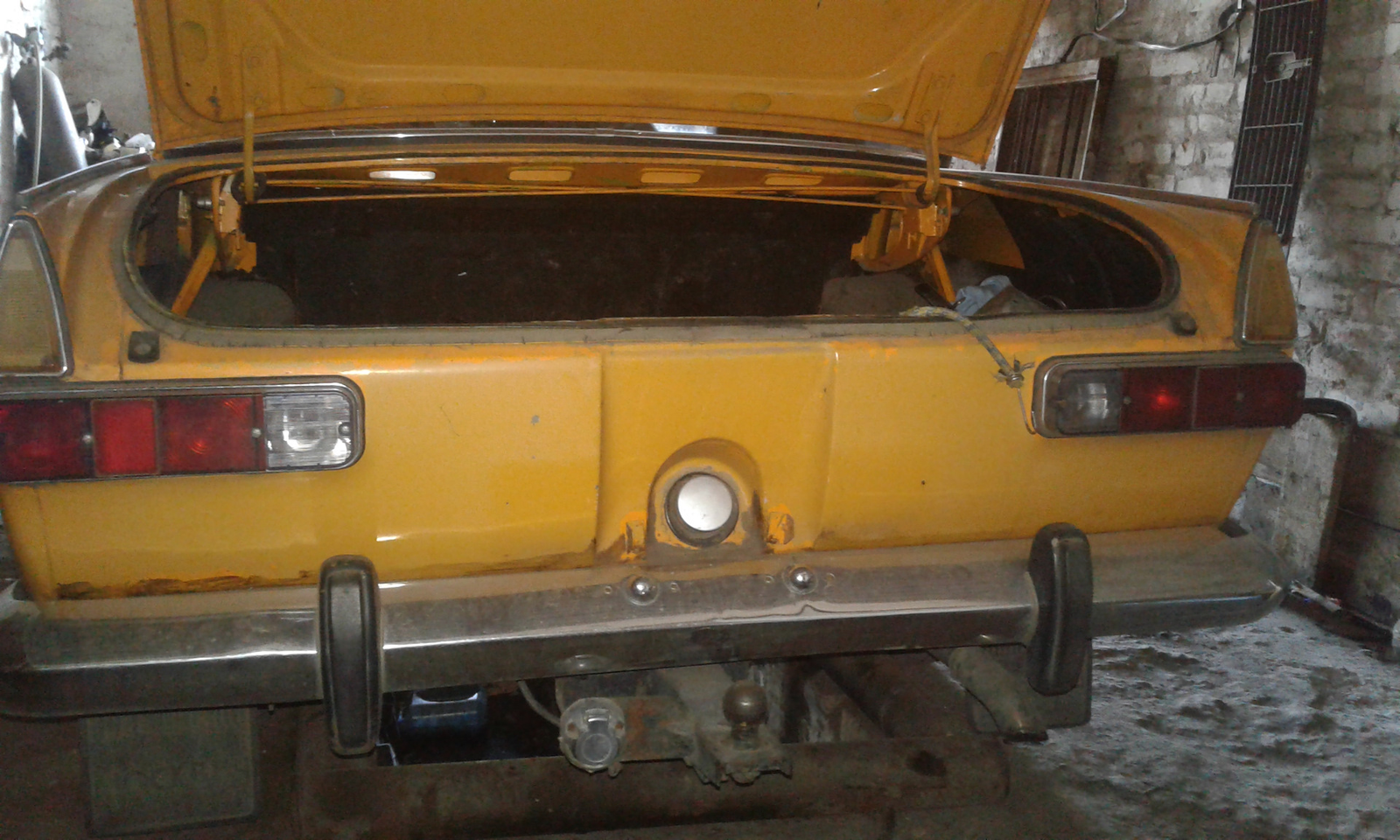
This solution simultaneously protected the tank from unauthorized access and maintained the car's neat appearance.
Why Such Solutions Were Abandoned
Over time, hidden fuel tanks practically disappeared.
There were several reasons:
- safety requirements became stricter;
- ease of use standards increased;
- body designs changed;
- unified requirements for the placement of fuel system elements appeared.
Modern cars almost always have a fuel filler flap on one of the rear fenders. This location is considered the most convenient for both the driver and manufacturers.
Nevertheless, cars from the middle of the last century still remain a vivid example of how bold engineering experiments were. In pursuit of harmonious design and original layout, designers hid fuel filler necks behind lights, emblems, and even license plates, turning a simple refueling into a kind of ritual.
Read more materials:
- The history of the VAZ X1 concept, which anticipated the era of minivans
- How the VAZ 1.8 engine was created and why it needs a new place for its number
- Why tractors have much larger rear wheels than front ones
Комментарии