If you look at modern crossovers, almost all of them use independent suspension. However, among classic off-road vehicles, solid axles are still very common.
At first glance, it seems strange: the automotive industry has been improving suspensions for decades, yet a design that appeared long before modern crossovers is still in demand. The reason is simple – the axle has qualities that are especially valuable where the asphalt ends.
How Independent Suspension Differs from a Solid Axle
The main difference lies in the connection between the wheels on the same axle. With independent suspension, each wheel moves almost independently of the body. If one wheel hits a pothole or runs over an obstacle, the other is not obliged to follow its movement. This is why independent suspension allows for more precise control over wheel position, better filtering of minor bumps, and more predictable vehicle behavior at high speeds.
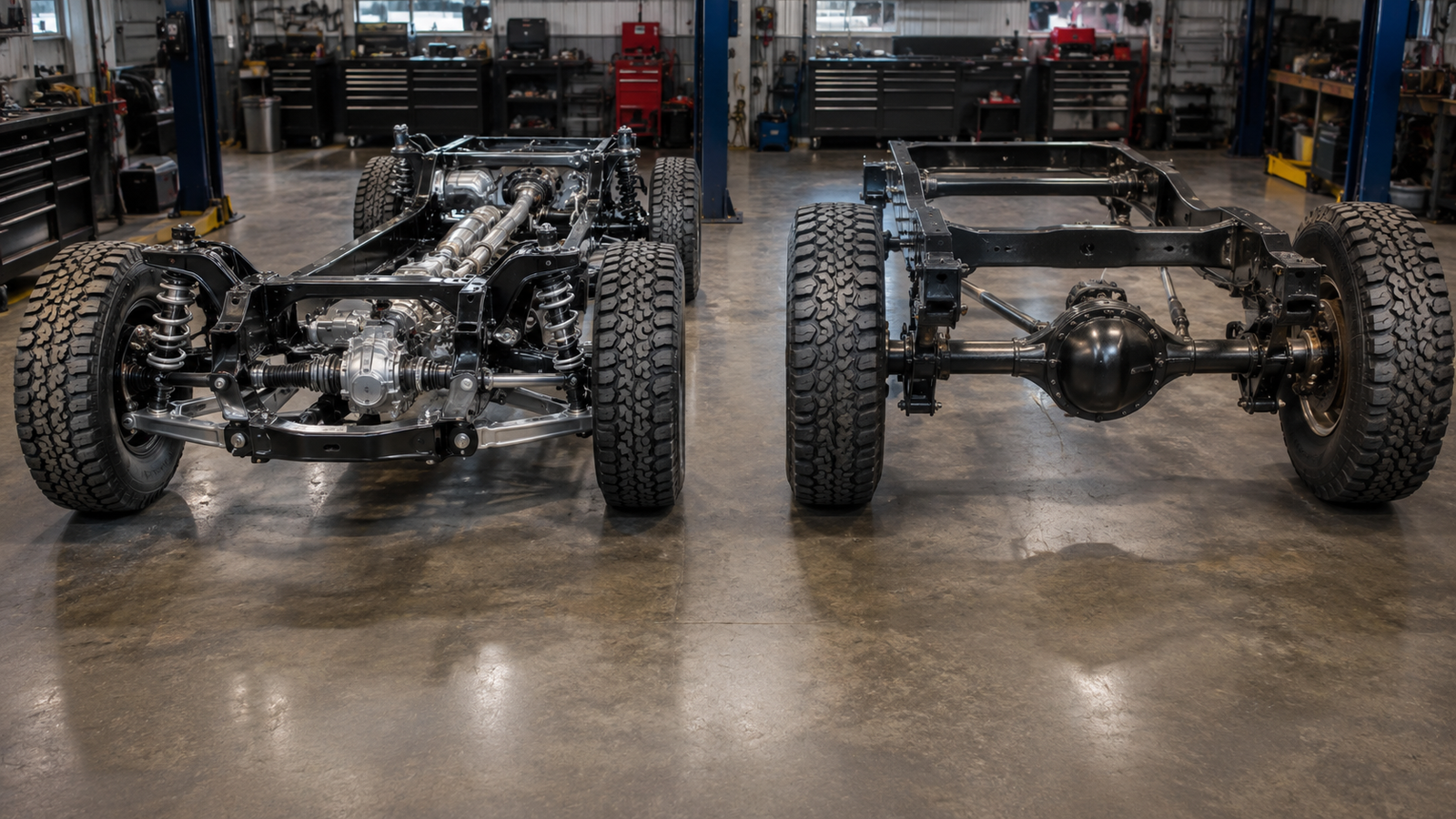
Depending on the design, MacPherson struts, double wishbones, multi-link schemes, and other solutions can be used here. With a solid axle, both wheels are connected by a rigid beam. If one wheel lifts, for example, onto a rock, it moves the second wheel with it. From a comfort perspective, this is more of a disadvantage. But in serious off-road conditions, such an interconnection can be an advantage.
Why Engineers Don't Give Up on Axles
The main advantage of a solid axle is its strength. Here, the drive, differential, and half-shafts are combined into a single structure capable of withstanding large impact and torsional loads. This is especially important for vehicles that regularly operate on heavy off-road terrain, carry cargo, or tow trailers.
The second advantage is large suspension travel and good articulation. When one wheel is on a high obstacle, the axle allows it to move significantly relative to the body, while maintaining contact of the second wheel with the ground. For rocky terrain, deep ruts, and diagonal articulation, this is of great importance. This is why seriously prepared off-road vehicles still often use axles today.
There is another plus – structural simplicity. A well-designed axle does not require a large number of separate links and joints, and many of its elements are relatively easy to maintain and repair.
But the Axle Has a Serious Disadvantage
Strength and articulation come at a price. The main problem is the large unsprung mass. Along with the wheel, the heavy differential, half-shafts, and other axle elements move up and down.
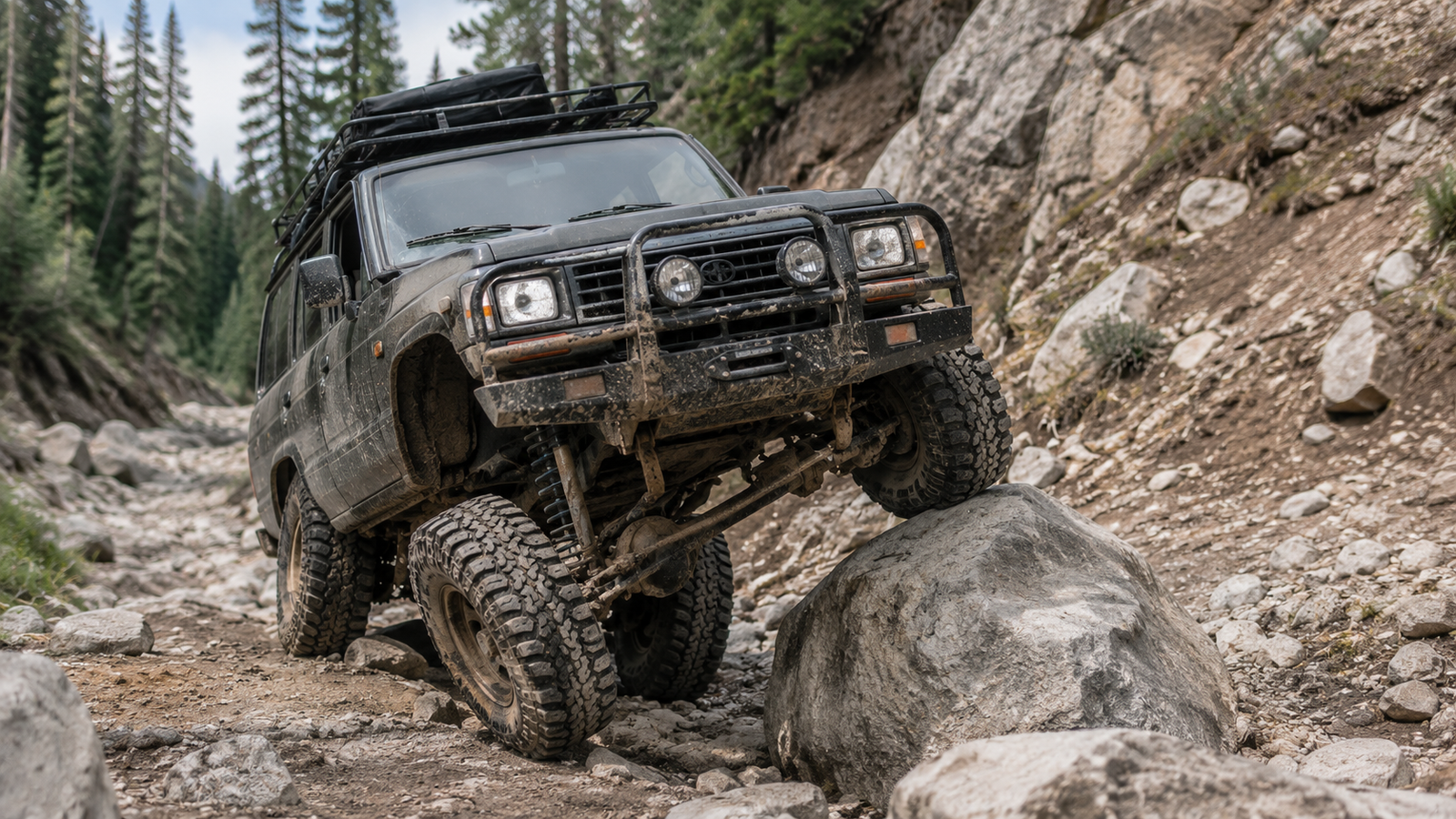
The greater the unsprung mass, the harder it is for the suspension to quickly absorb small bumps. On a normal road, this affects ride comfort and the ability of the wheels to constantly maintain contact with the surface.
There are also consequences for handling. A classic off-road vehicle with axles usually requires more effort from the suspension and steering to ensure stable behavior at high speeds. In turns, such a car can also lean more. Therefore, for a car that spends most of its time on asphalt, independent suspension is usually more rational.
Why the Axle is Especially Good Off-Road
On a broken road, the advantages begin to swap places. Imagine an off-road vehicle climbing a high rock with one wheel. A solid axle allows this wheel to lift, while maintaining the connection between the wheels of the axle. With proper suspension tuning, this helps the vehicle maintain traction longer.
In addition, the axle differential is located in a single rigid housing. It can be protected from impacts by massive protection, and the design itself is designed for significant loads.
With independent suspension, the drive of each wheel is organized more complexly: CV joints, half-shafts, links, and separate mounting elements are used. All this allows for excellent handling, but increases the number of parts that need to be protected from extreme loads. This is why in heavy off-roading, the question often isn't "what's more modern?" but "what's simpler and more reliable in specific conditions?".
Portal Axles: When Ordinary Ground Clearance is Not Enough
A separate type is the portal axle. In such a design, the wheel axle is located below the center of the main gear due to additional wheel-end reduction gears. As a result, the axle housing itself can be raised higher relative to the ground.
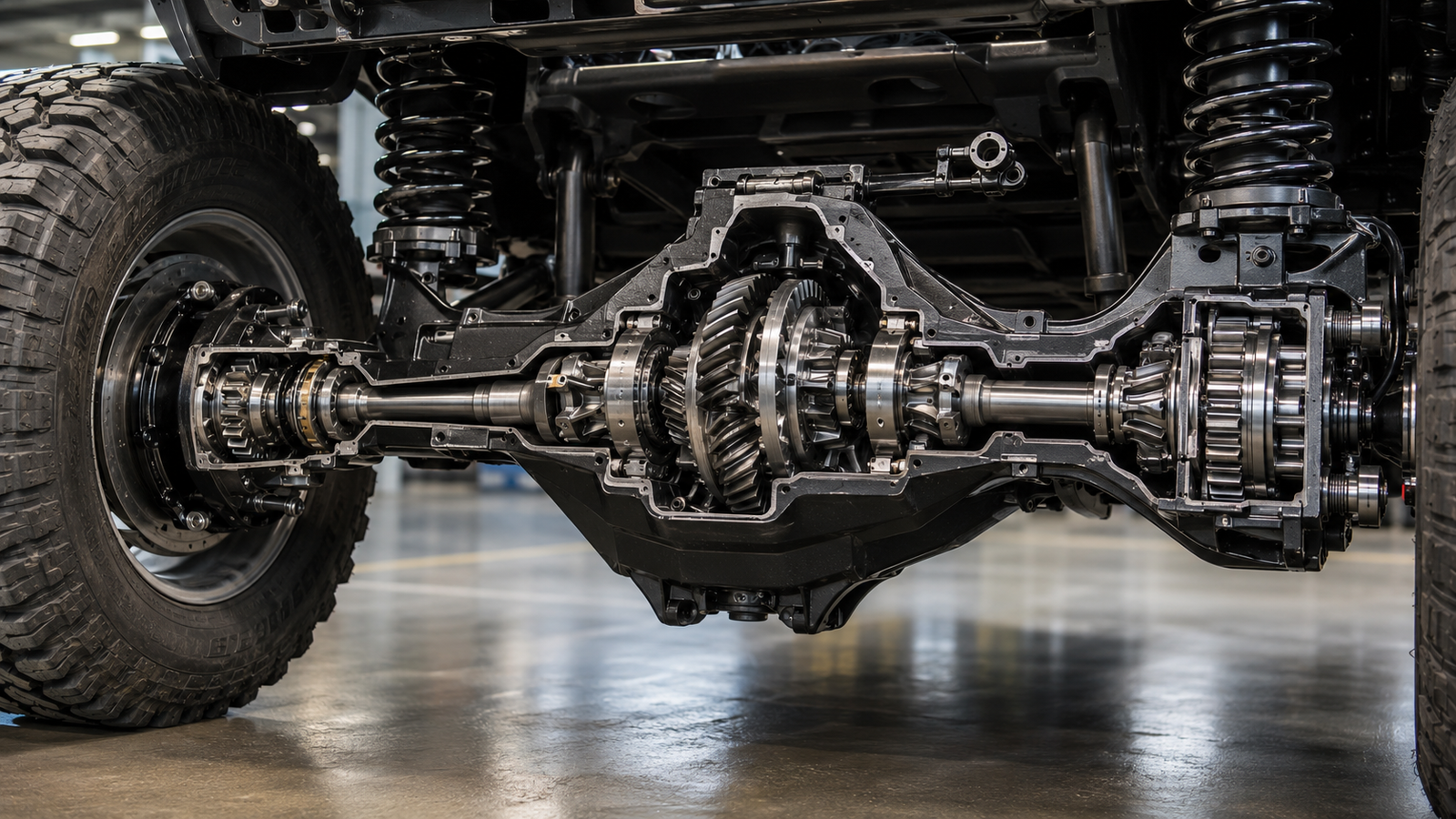
This allows for a significant increase in ground clearance under the differential without installing huge wheels. The trade-off is additional mass, cost, and complexity of the design. Therefore, portal axles are mainly used on military, special, and extreme off-road vehicles.
So, is Independent Suspension Always Worse?
Of course not. On asphalt, the situation is almost the opposite. Independent suspension allows each wheel to better adapt to the road surface, reduces unsprung mass, and gives engineers more opportunities to tune handling. The car becomes more comfortable, more stable at high speeds, and usually handles better in turns.
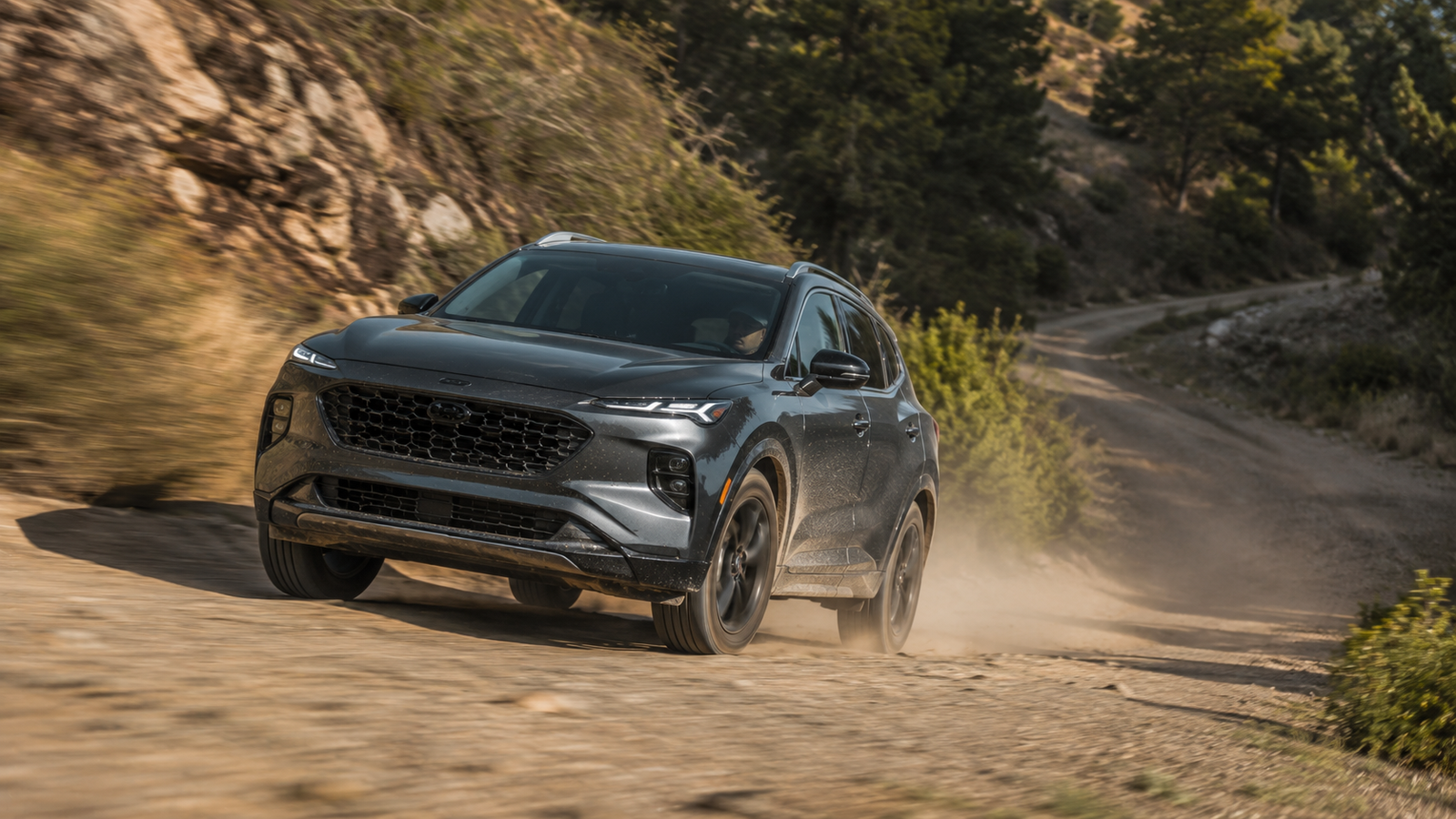
This is why modern crossovers almost universally use independent suspension. They do not need to constantly withstand loads typical of trophy raids, and the advantages of comfort and handling are much more important. But some modern off-road vehicles show that the presence of axles does not at all mean poor behavior on asphalt.
Why Axles Still Haven't Disappeared
There is no universal winner in this debate. For city and highway driving, independent suspension is usually preferable. It provides better comfort, less unsprung mass, and more precise vehicle behavior.
For heavy off-road conditions, solid axles retain significant advantages. They are strong, relatively simple, well-suited for large suspension travel, and capable of withstanding significant loads. This is why engineers are not completely abandoning this design.
A solid axle may look archaic compared to modern multi-link suspensions, but its task is completely different. Where comfort on the highway is more important, it loses. But where the car needs to crawl slowly over rocks, articulate in deep ruts, and withstand large impact loads, the old design still proves surprisingly relevant.
Therefore, the question "what's better – an axle or independent suspension?" only makes sense after clarifying the main point: where exactly should the car be driven?
Read more materials:
- Why an automatic car moves by itself when you release the brake
- Why a timing belt in oil turned out to be a failure
- Ford Crestline: a car with a window in the hood