Cars of the 1950s have long become a separate page in the history of automotive design. They can be judged differently in terms of beauty, but many models of that era are now perceived as true style icons. Collectors hunt for rare and unusual specimens, despite the fact that the cars themselves seem extremely simple by today's standards: large sizes, whimsical body shapes, and luxurious interiors for their time.
Similar solutions would later appear many times in the automotive industry. But what distinguishes cars of that era is what modern passenger cars often lack — bright charisma and the designers' willingness to embody the boldest ideas. One such car was the 1954 Ford Crestline. Even for an experienced fan of classic American cars, it has a lot to offer.
What makes the Ford Crestline unusual
To a modern motorist accustomed to cheap plastic, pseudo-carbon, imitation natural wood, and heated seats, the Ford Crestline might seem like just an old and clumsy car. The car is indeed large and heavy to drive, but its appearance remains impressive even decades later.
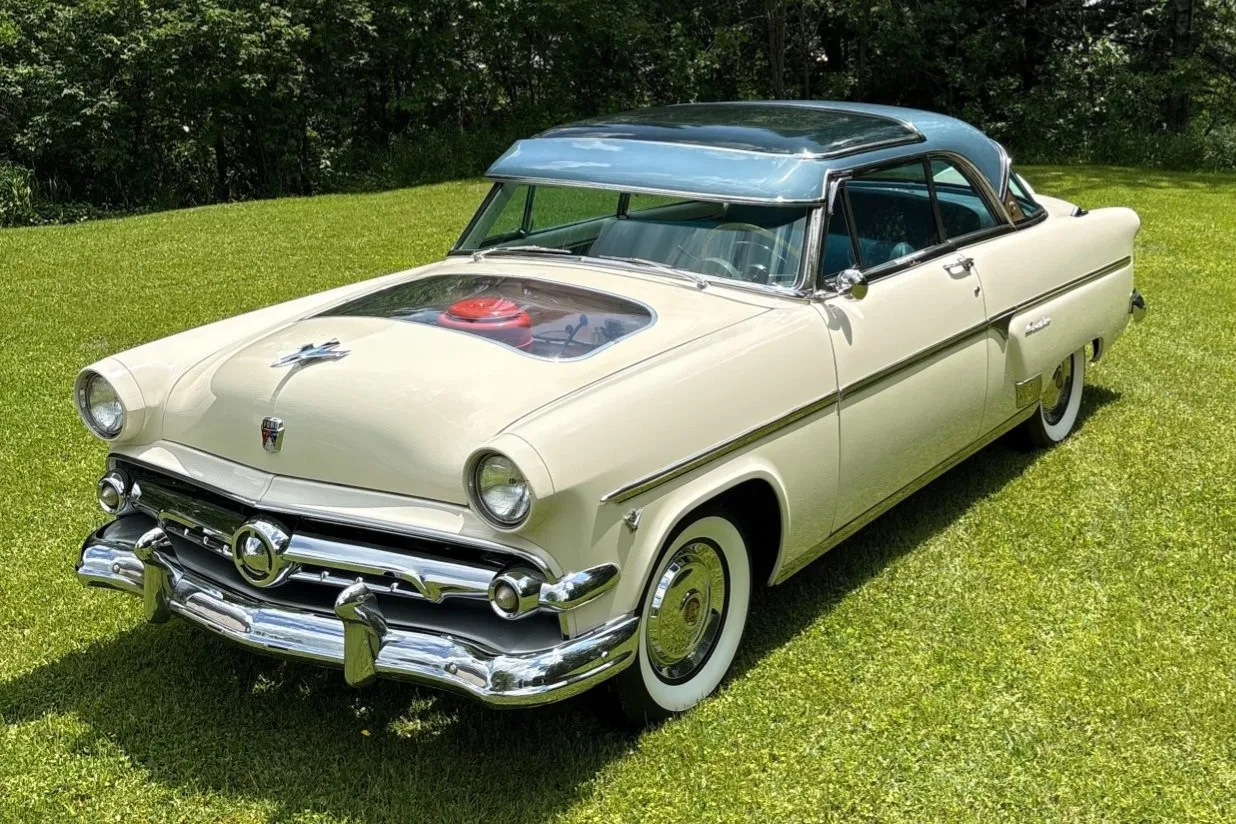
Experts classify the Crestline's design as a transitional period — from the aerodynamic styling of the 1940s to the "rocket" style characteristic of the next decade. This is especially noticeable in the body details.
On the hood, for example, there is a figurine resembling the swift silhouette of an airplane, directly referencing the aesthetics of the dawning jet age. The abundance of chrome is combined with massive bumpers and striking spoked wheels. The front end looks both strict and swift, and the bloated external fenders and massive hood typical of previous generation cars have given way to a more integral form.
It was the combination of such details that turned the 1954 Ford Crestline into an object of interest for collectors. Surviving cars continue to be sought after in abandoned car junkyards and storage facilities. Found specimens are restored and then put up for sale. Interest in these cars continues to grow.
The new engine was not the only novelty
The main feature of the Ford Crestline engine was not so much its design as how the car's creators decided to present the new power unit to buyers.
Initially, the model was equipped with a Flathead V8 239 engine. This was a 3.9-liter engine with a side-valve design, which was already considered outdated. Its power was 110 hp.
Ford needed a new engine — more modern and powerful, with a new carburetor and overhead valves. In 1954, such an engine appeared. It was the V8 Y-Block 239 with a displacement of 3.9 liters and a power of 130 hp, equipped with a single two-barrel carburetor.
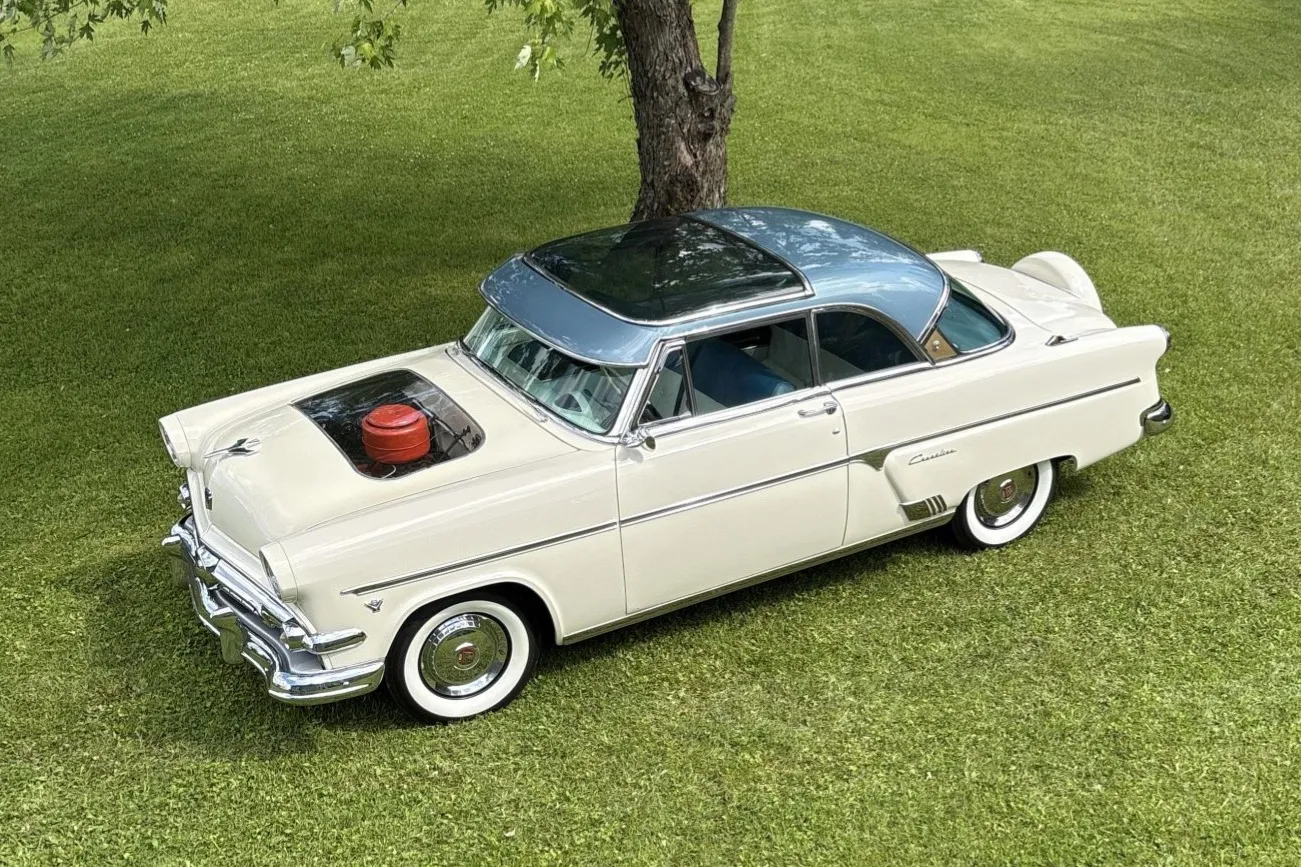
The engine's design had a peculiar shape, yet it proved to be powerful and reliable enough to be used not only in Ford passenger cars but also in the company's trucks.
For police cars, there was a boosted version. It received a four-barrel carburetor and developed up to 160 hp.
However, Ford faced another challenge. Buyers needed to be convinced that the new engine was indeed a modern development, and not just another engine under the hood.
How Ford came up with showing the engine
The company could have relied on a conventional advertising campaign. Instead, Ford marketers chose a much more unusual way to demonstrate the advantages of the new engine. The solution turned out to be so original that it was later cited in advertising textbooks.
Engineers installed a plexiglass window in the hood. Now, a potential buyer could look at the engine directly through the hood and see for themselves that the car was equipped with a new overhead-valve power unit.
However, the transparent hood was not originally intended for ordinary production cars. It was installed exclusively on demonstration vehicles that Ford sent to its dealers.
The workflow was simple:
- the dealer received a car with a transparent hood;
- the visitor could see the new engine without opening the hood;
- before selling, the glass hood was supposed to be replaced with a regular metal one;
- after replacement, the car was supposed to look like a standard Ford Crestline.
This system was called the Glass Roof Demonstrator Hood.
The exact number of hoods with windows produced is unknown. According to various estimates, there were no more than several hundred. Given that Ford's dealer network numbered thousands of centers, this is a very small number.
However, the replacement of the transparent hood before sale did not always happen in practice. Formally, the demonstration part should have been removed, but some owners preferred to leave everything as it was.
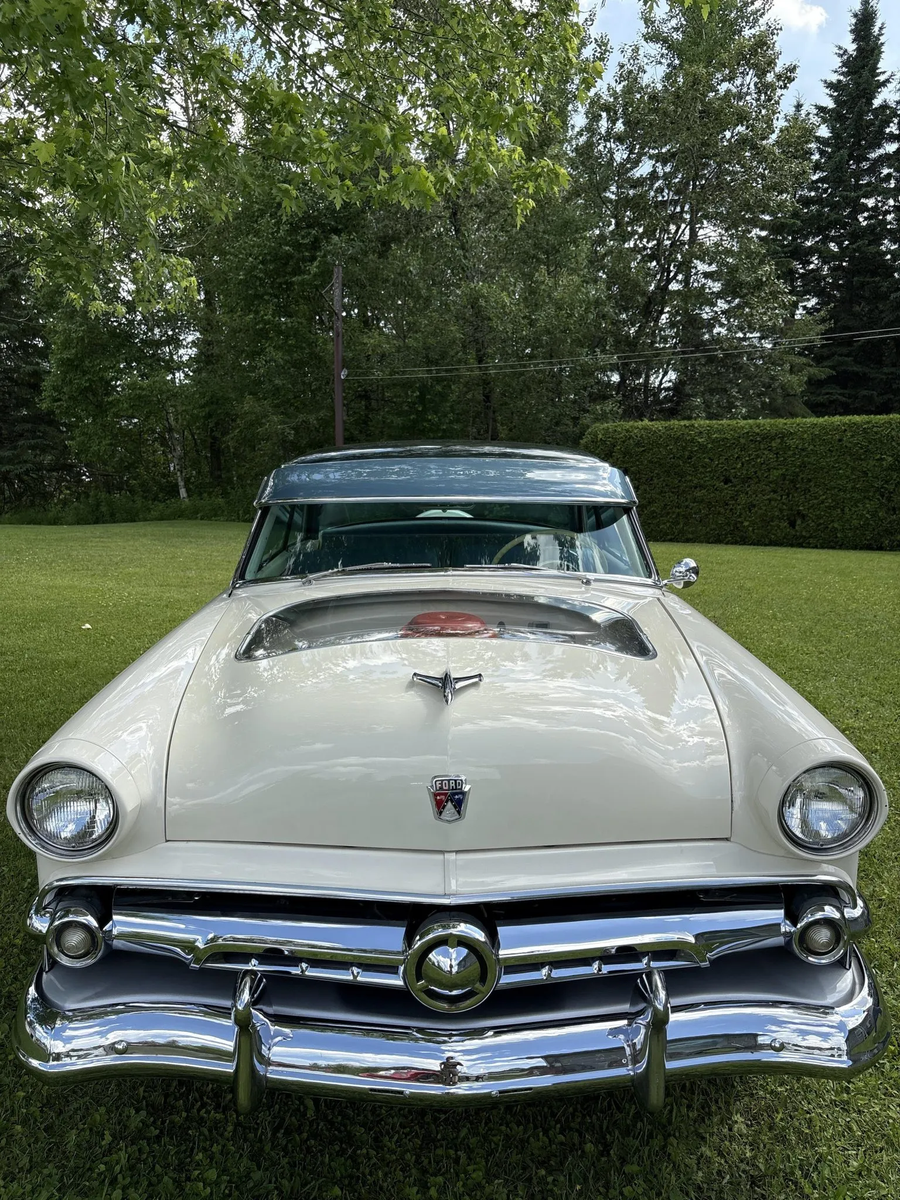
As a result, more than a hundred Ford Crestlines retained the original window into the engine compartment. It is these cars that are considered particularly rare among restored models today.
A curious situation arose: an advertising trick, originally created only to attract buyers' attention to the new engine, eventually turned into a distinctive feature of collectible specimens.
And if today, among the many restored Ford Crestlines, one is looking for a truly rare version, the main distinguishing feature will be that very hood with a window through which the engine can be seen.
Read more materials:
- Multicar: how a small "cart" from the GDR outlived its country
- How ELM327 actually learns engine parameters
- Toyota Mark II: why it is still loved