Turbo lag refers to a situation where a turbocharged engine does not respond to a sudden press of the accelerator pedal with an immediate increase in thrust. The driver expects acceleration, but the engine initially only gradually gains speed, and only after some time does it begin to actively accelerate the car. In other words, there is a delay between pressing the pedal and the appearance of full thrust – that very turbo lag.
During acceleration, the turbine and compressor must provide the cylinders with an additional amount of air. This allows the engine to quickly increase output. The compressor itself would generally cope with such a task, albeit with certain delays and losses. But the turbine is limited by the peculiarities of its own drive: that is why the characteristic effect of turbo lag is associated with gas turbine supercharging systems.
What They Try to Replace the Turbine With
Designers have long used various methods to bypass the delay in turbocharging operation. One option is common on many American supercharged engines: the compressor receives mechanical drive directly from the crankshaft, usually via a belt. The scheme is quite primitive, but for a short 10-second run, its capabilities are quite sufficient.
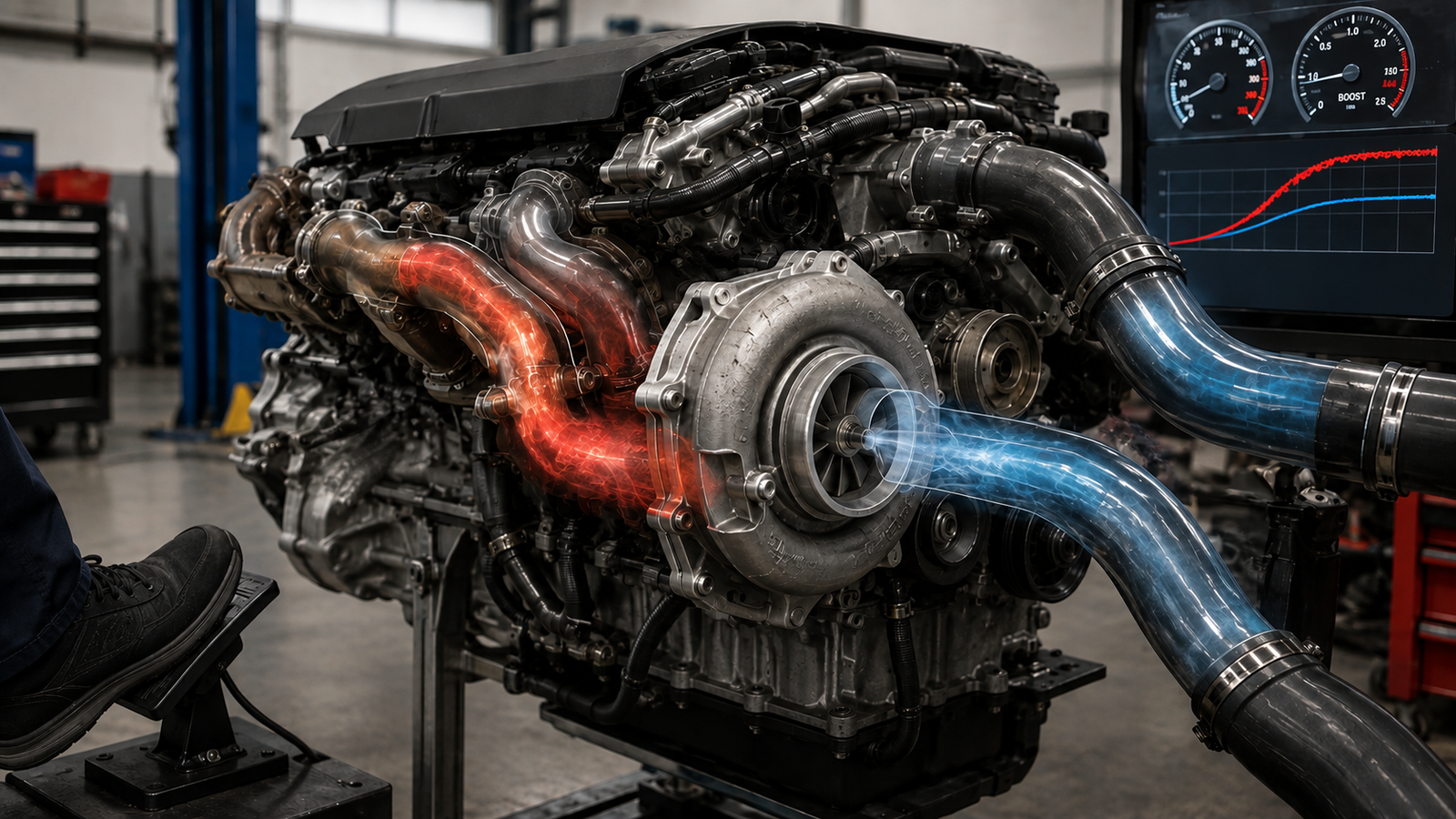
Another option is at the opposite end of the scale – the compressor is driven by a powerful high-speed electric motor, usually DC.
Both solutions have an obvious advantage: turbo lag is practically absent. However, such a result is never completely free. The mechanical drive takes useful energy from the crankshaft, and the electric one consumes the charge of powerful batteries. At the same time, a significant part of the exhaust gas energy is effectively lost, which reduces the overall efficiency of the engine.
Why the Thrust Dip Occurs
The cause of turbo lag is hidden in the design of the turbine itself. In its simplest form, a gas turbine consists of a rotor with fixed blades. A diffuser is located around them, and a nozzle apparatus is installed at the point of flow supply. Its blades are arranged essentially similarly, but oriented in the opposite direction.
Both the nozzle apparatus and the turbine rotor blades have a certain angle relative to the direction of gas flow. Moreover, this angle is different for each element.
Precise tuning of characteristics allows reducing the power dip in several speed ranges. But such work requires serious costs. The development and production of turbines with variable blade geometry remain expensive and technologically complex tasks, so not all manufacturers can afford such a design.
As a result, instead of deep turbine optimization, a narrower operating range is often chosen. The manufacturer tunes it so that within approximately 2000–3500 rpm, the engine provides acceptable thrust, fuel efficiency, and a service life of at least 200,000 km.
At lower speeds, the characteristic "dip" occurs. For many manufacturers, this range is considered transitional, so the mechanics' operation is not optimized in it. There may be enough exhaust gases, but the turbine is not yet able to effectively use their energy.
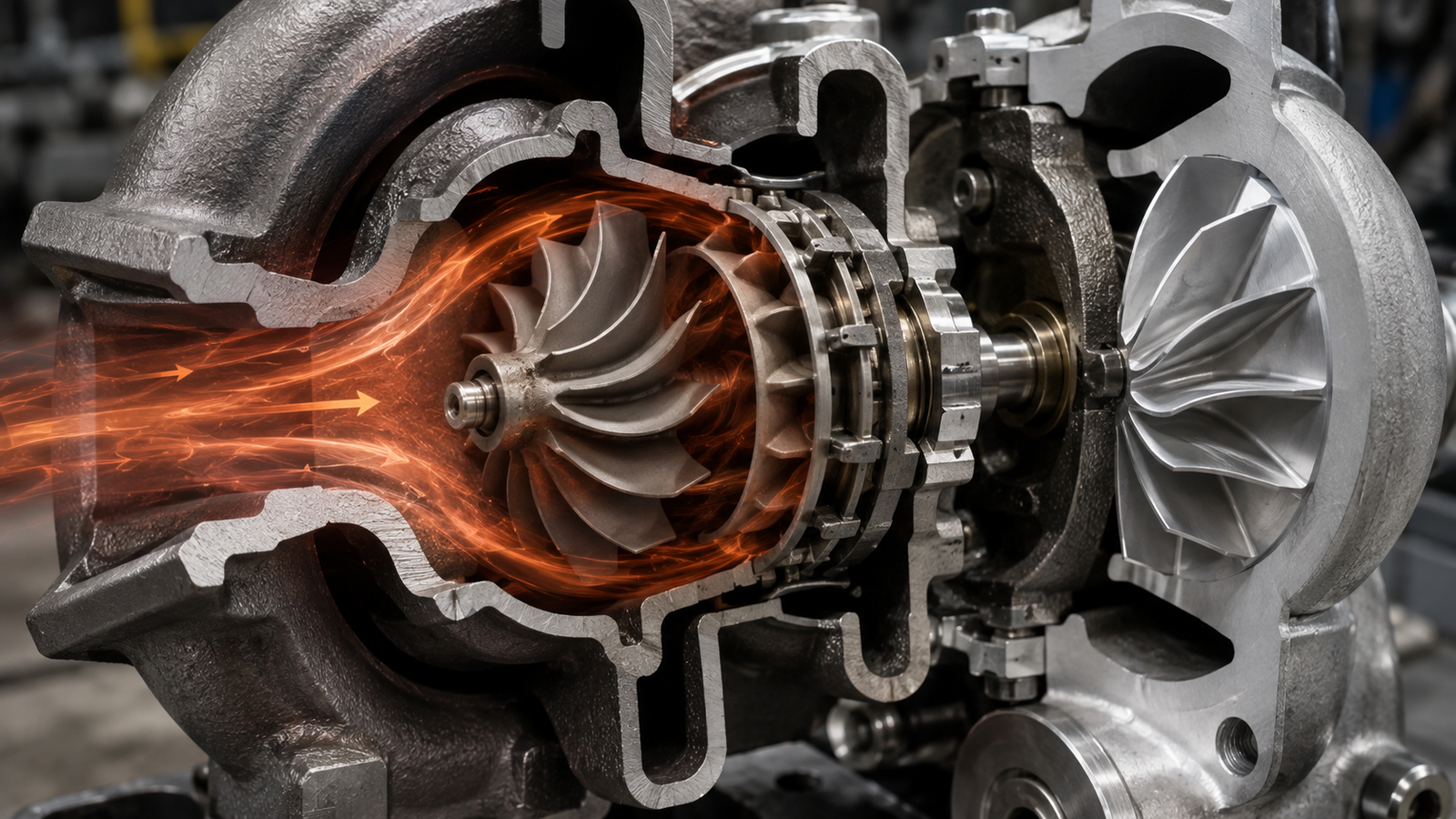
The problem also lies in the blade geometry: they are designed for significantly higher flow speed and temperature. For the turbine to start operating in its effective range, it must first be spooled up. And the heavy turbine wheel has noticeable inertia, so it is impossible to instantly change its rotational speed.
How Manufacturers Combat Turbo Lag
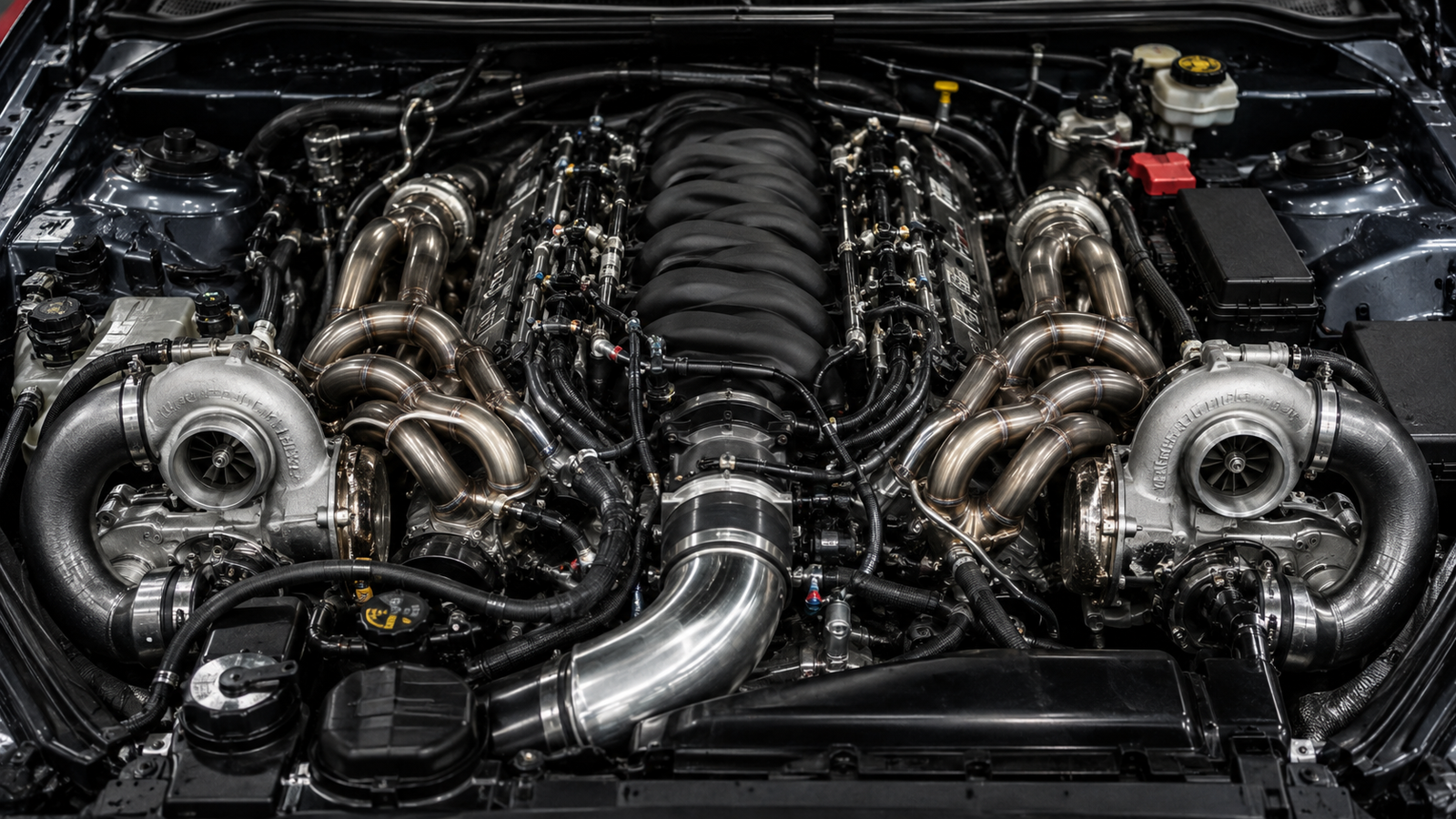
The most well-known option is to install two turbines instead of one. Such systems are called Bi-Turbo or Twin-Turbo. On a V-engine, for example, one turbine can be placed on each cylinder bank. The parallel scheme is considered quite simple and effective and is especially convenient where compactness and rational layout are important.
Another option is Sequential Twin Turbo, which is a sequential scheme with a small and a large turbine. They do not work simultaneously in the same mode, but are sequentially connected to the engine's operation. One well-known example of such a solution is the Toyota 2JZ-GTE engine.
Among modern solutions, turbines with an electric booster have also become widespread. Such a system practically eliminates thrust dip, but requires a large amount of electricity. Therefore, such a design is especially suitable for cars with a hybrid powertrain.
There is also a more common way to combat turbo lag – changing the firmware settings of the electronic control unit. At the moment of the dip, the injection system increases fuel supply to the combustion chamber and thereby changes the composition of the exhaust gases.
As a result, the exhaust stream contains more unreacted products of gasoline decomposition – CO and H₂. They are capable of almost instantly increasing the power acting on the turbine. But such a solution has a serious downside:
- accelerated coking of pistons and piston rings;
- increased risk of catalyst burnout.
Therefore, software-based turbo lag combat can provide a quick effect, but is accompanied by an additional load on the engine and exhaust system.
Variable Geometry – More Complex, But More Effective
For a full-fledged fight against thrust dip, more complex mechanics are required: rotating blades of the rotor and an adjustable nozzle apparatus. Such a design allows changing the turbine's operating parameters depending on conditions and more effectively using the energy of the gas flow.
Such technology is used by a number of leading engine manufacturing companies. In particular, Porsche was the first to use variable turbine geometry on a gasoline engine – in the 911 Turbo model.
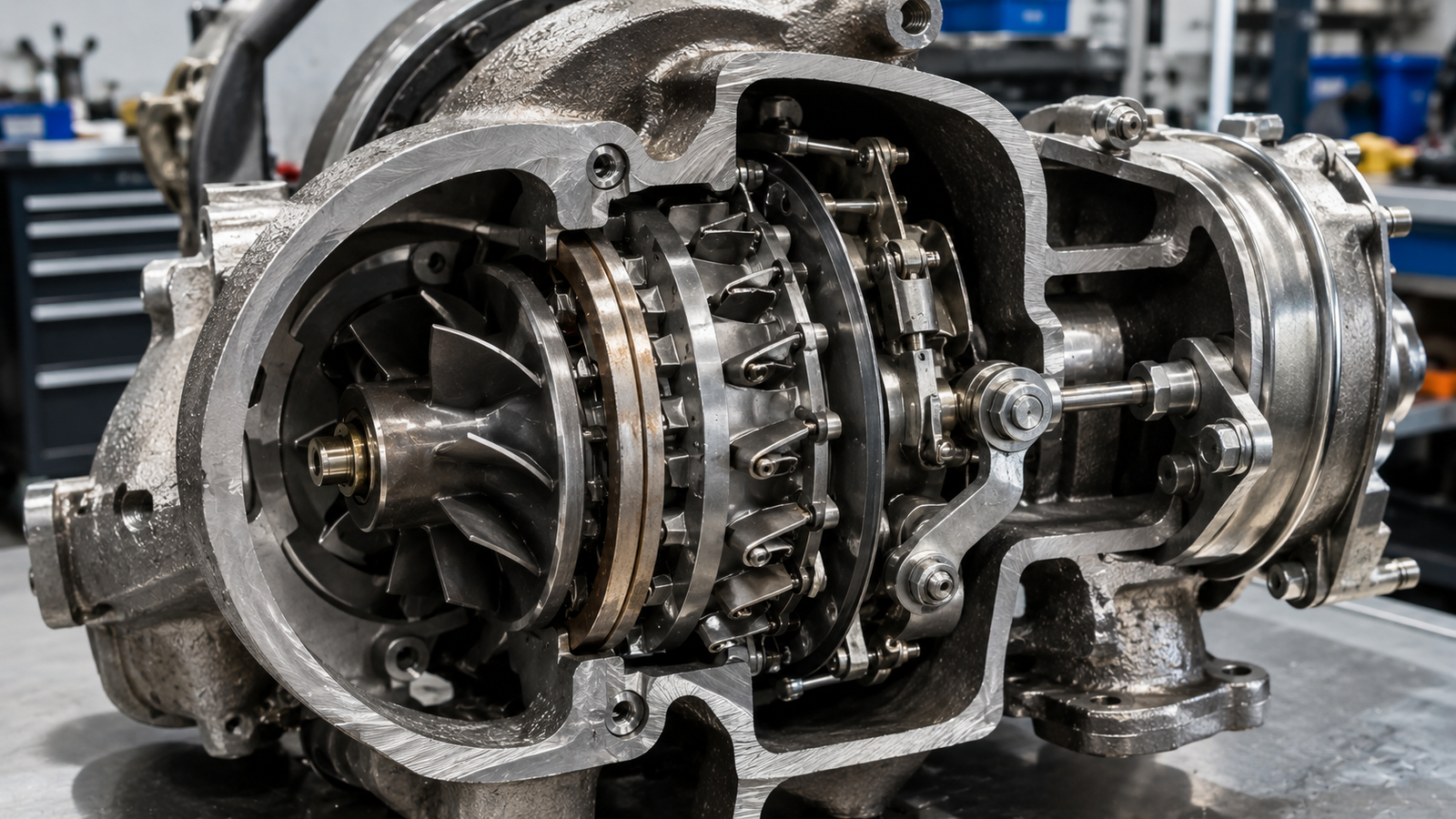
However, efficiency comes at the cost of complexity. Such a turbine is more expensive and difficult to manufacture, and its development requires specialists of the appropriate level. The staff has to include about a dozen qualified and experienced engineers related to aviation turbine construction.
But the costs for such a design, as noted in the original description, pay off handsomely.
Read more materials:
- Ford Crestline: A Car with a Window in the Hood
- Frame vs. Monocoque: Which Body Lasts Longer
- Volvo P1900 and P1800: An Unusual History of Sports Cars