Translated with AI from the Russian original.
In the Soviet Union, the color of industrial machinery was rarely determined solely by the tastes of the designer or factory manager. For mass-produced goods, solutions were sought that simultaneously met production requirements, were economically viable, and provided the necessary durability.
Therefore, the characteristic blue color of many Soviet tractors also did not appear by chance.
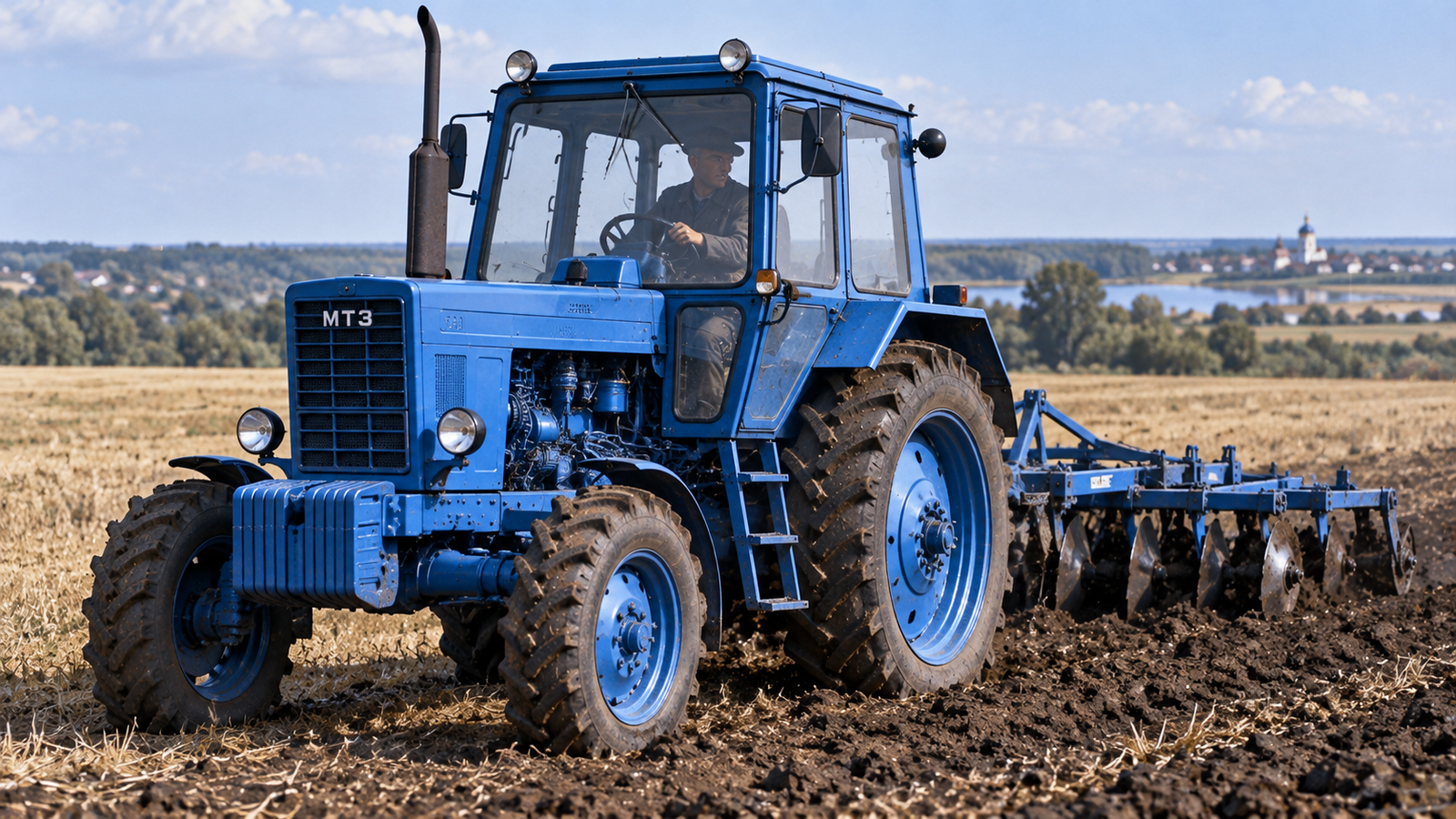
At the same time, there was no single color for all agricultural machinery. Grain harvesters were predominantly red, large "Kirovets" tractors were yellow, and tracked DTs were also often red. However, wheeled tractors, including the particularly recognizable MTZs, are most often associated with blue.
Why tractors were not made red
Red in Soviet agricultural machinery was already practically occupied. It was traditionally used for grain harvesters and fire trucks, so for "classic" wheeled tractors, they tried to choose a different color scheme.
However, export machines could look different. For foreign deliveries, a red and white color scheme was used, among others. Blue turned out to be convenient for several reasons at once.
Against such a background, small external defects that inevitably appeared on the equipment during operation became less noticeable. Scratches, dents, traces of corrosion, and oil stains would be more conspicuous on lighter or brighter coatings.
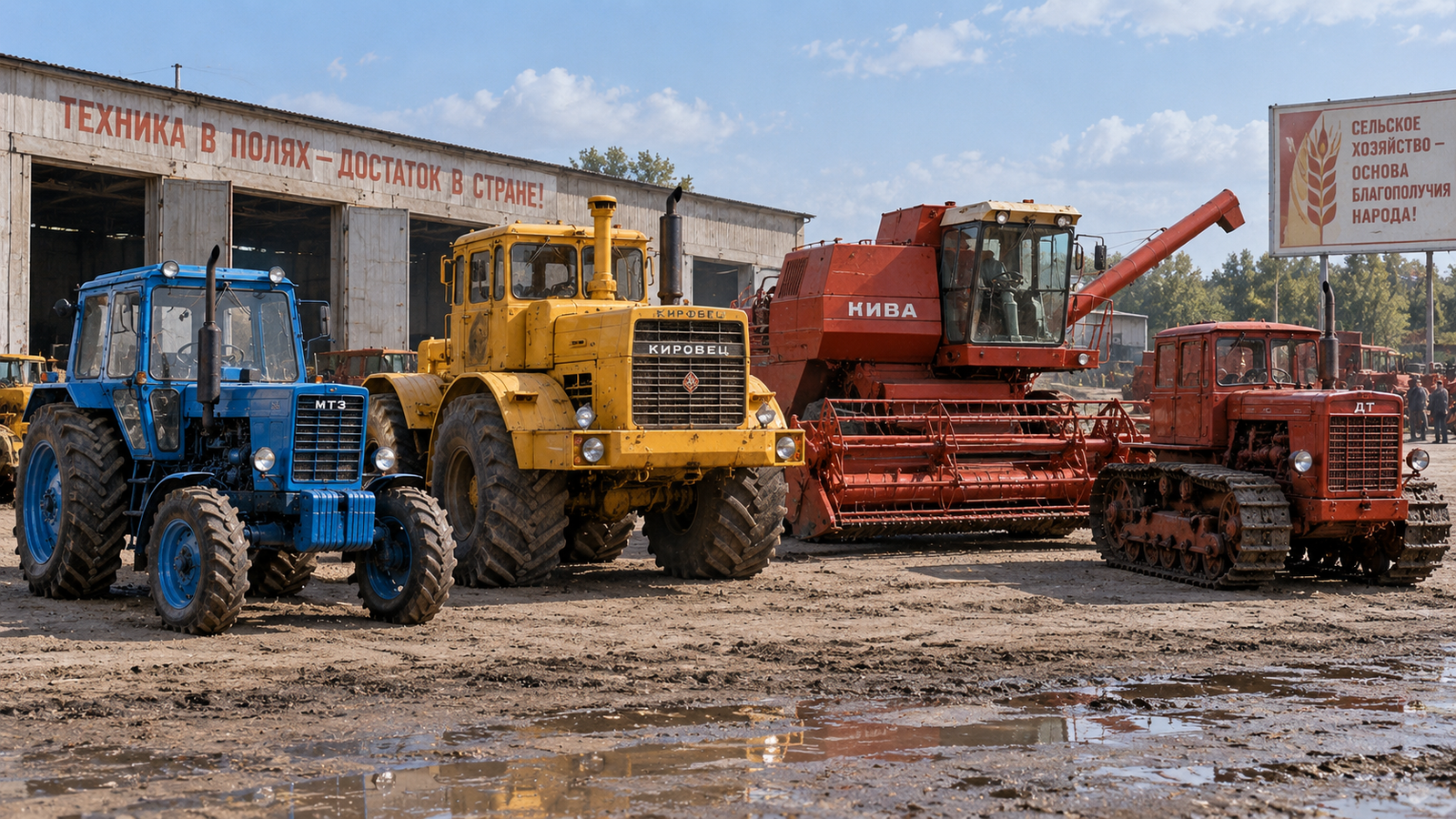
Of course, blue paint could not hide serious damage upon close inspection. But from a distance, a tractor with such a coating retained a neat appearance longer. For a machine that spent most of its life in the field, this was a quite practical advantage.
The price of pigment also mattered
There was also a very material reason for choosing blue. Blue pigment was among the affordable and relatively inexpensive options for enamel production. For the huge volumes of agricultural machinery production, the cost of paint and varnish materials was of great importance.
In a planned economy, any reduction in production costs was an important factor. An even greater saving was allowed by the limited number of colors used. When one or more standard color options were used for mass-produced equipment, it was easier for the factory to organize production.
Sorting of parts and quality control were simplified; there was no need to constantly separate components by a large number of shades. Color affected not only the appearance of the finished tractor but also the organization of production itself.
Why cobalt gave such a blue
Various pigments were used in paint production. Among the most famous metal compounds were lead and titanium whites, cinnabar, and chromium oxide. Cobalt oxide was also used to obtain a bright blue hue.
Cobalt pigment had properties that were particularly well suited for agricultural machinery. Such a coating sufficiently withstood:
- ultraviolet radiation;
- high temperature;
- moisture;
- frost;
- atmospheric precipitation.
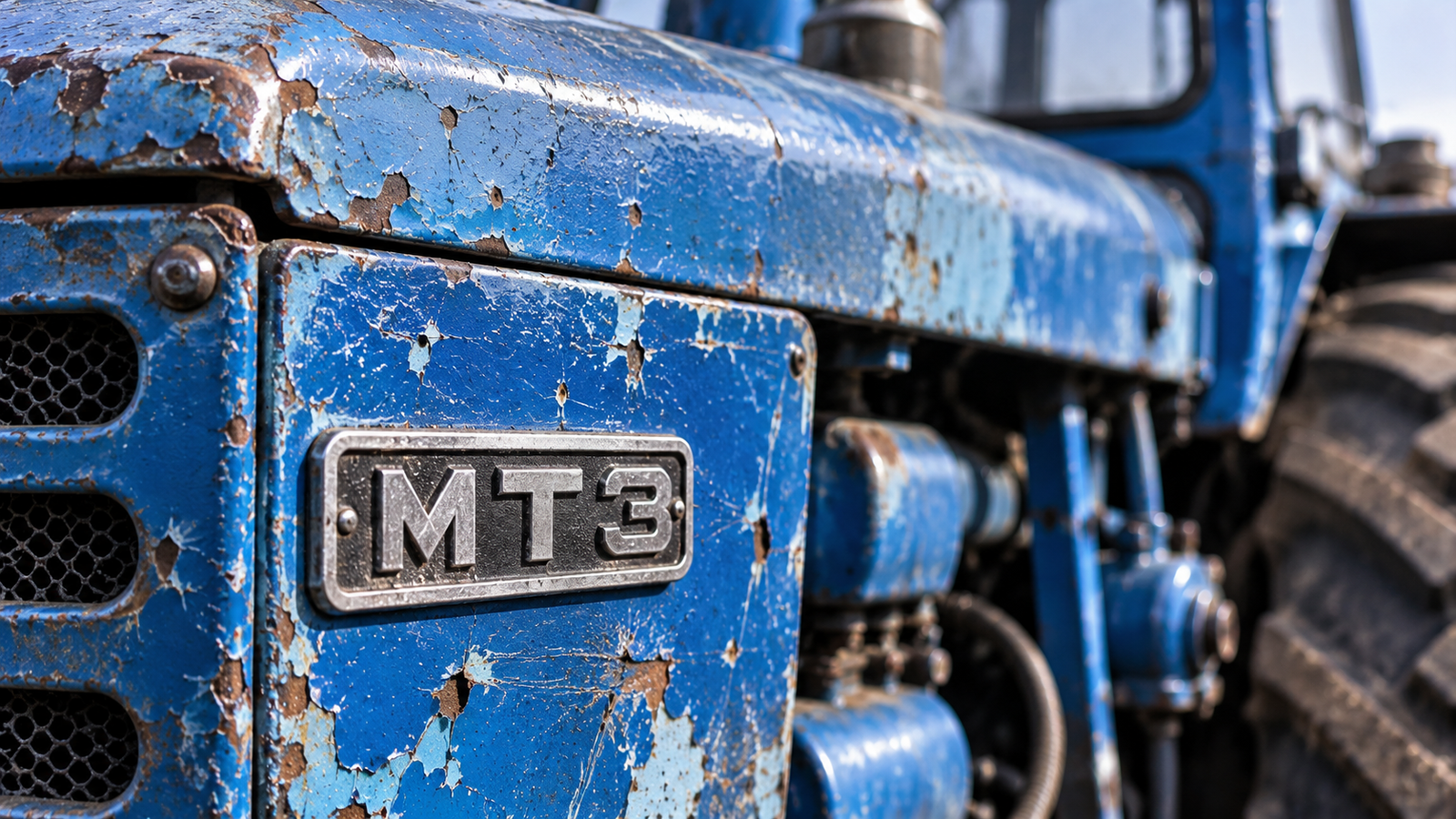
For a tractor that is constantly outdoors and operates in various weather conditions, this set of characteristics was very successful. However, this technology also had features directly related to paint production.
Why the paint had to be heated
Penta phthalic varnish was used in the manufacture of tractor enamels. Cobalt pigment was characterized by increased oil absorption and therefore required a sufficiently large amount of binder material.
Such paint could be applied under certain technological conditions. Before use, the material was preheated, and special equipment designed for automated coating application was used for painting. As a result, the factory received a sufficiently durable paint and varnish layer, but its initial shade was not eternal.
Where did the old tractors get their blue color from?
For approximately the first five years, the coating retained its original appearance. Then the process of fading of the organic component of the paint began.
Over time, the mineral part of the coating remained predominantly on the surface of the cladding - a filler of titanium white with a small amount of cobalt oxide. As a result, the original rich blue gradually lightened.
Thus, a tractor that left the factory with a blue paint job could acquire a noticeably lighter blue hue after several years of operation. This is why many people remember old Soviet tractors not as rich blue machines, but precisely as light blue.
What has changed in modern paints
Today, the technology for producing tractor enamels has changed. Expensive and scarce cobalt is practically not used in modern blue pigments. Instead, pigments based on organic copper compounds are used.
Such compositions allow the original shade to be retained for a long time and resist the effects of ultraviolet light and high temperatures well. The binders have also changed.
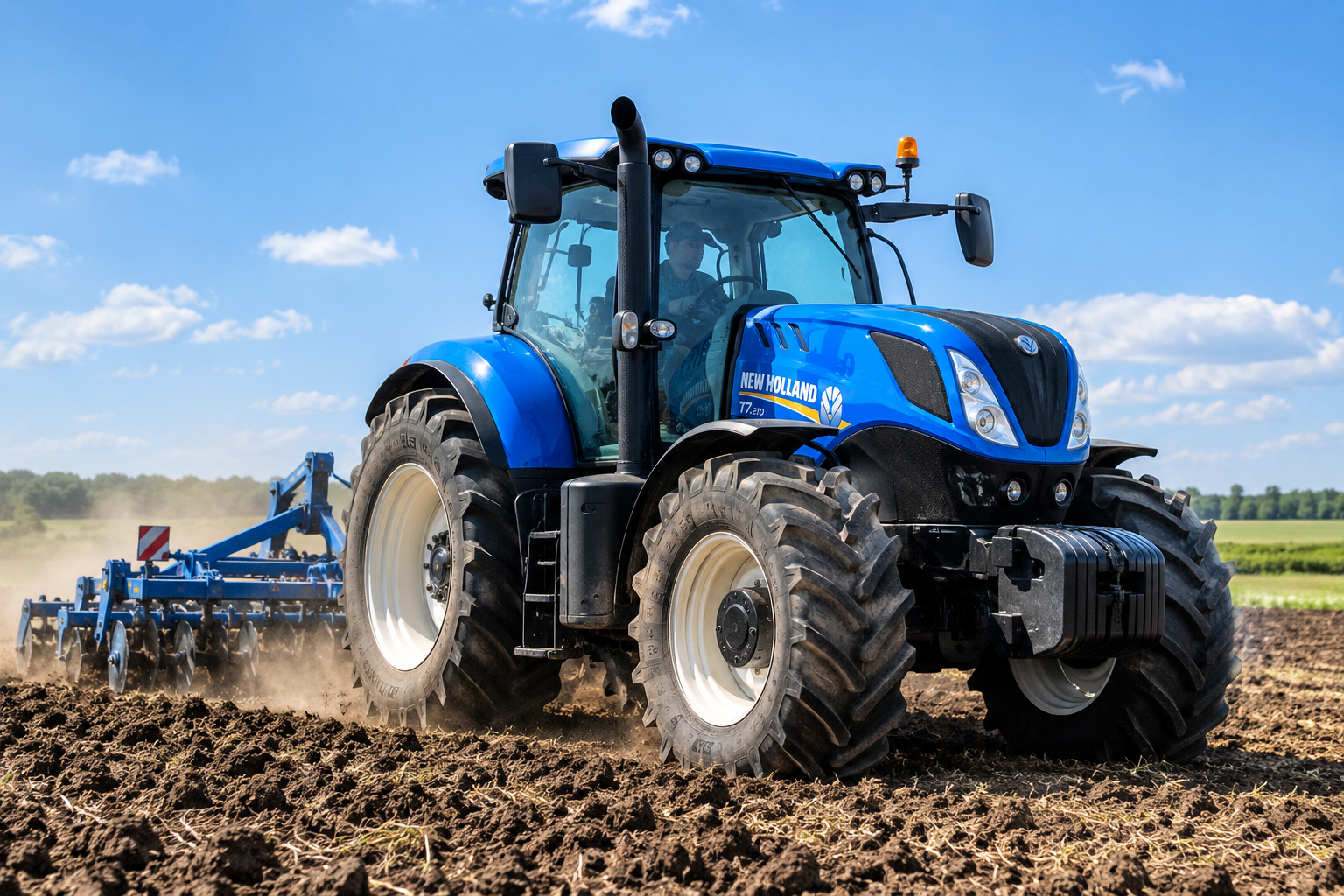
If earlier penta phthalic varnishes were widely used for tractor coatings, modern paint and varnish materials for agricultural machinery are often created on a silicate or polyurethane base.
Their task is no longer just to give the machine a recognizable color. Modern coating must maintain saturation throughout the tractor's service life and withstand environmental influences.
It turns out that the familiar blue color of the Soviet tractor appeared due to several factors at once. The choice was influenced by production features, material costs, the ability of the coating to hide minor operational defects, and the pigment's resistance to external influences.
And the famous light blue shade of old machinery is largely the result of the natural aging of that very blue coating.
Read more materials:
- How 4WD differs from AWD and which drive to choose
- Air recirculation: benefits, risks, and rules of use
- Why you can't "pump" the brake on a car with ABS