For an automotive brand, the highest degree of success is when its name ceases to be just a name and becomes a designation for an entire phenomenon. This happened with "Xerox," "Pampers," "Scotch," "Thermos," and "Jeep." In the automotive world, there's a similar case: the Volkswagen Golf gave its name to an entire class of cars.
Formally, this segment is called the C-segment. But in Germany and many other countries, it has long been customary to call it Golf-Klasse – the "Golf class." At the same time, the Golf itself was not the first car with such a layout and was far from always the absolute sales leader.
Moreover, throughout the model's history, competitors appeared several times who managed to temporarily surpass it in sales. One of them is particularly well known to Russian motorists.
Golf didn't invent this class
Today, the recipe for a compact European car seems obvious: a transversely mounted small engine, front-wheel drive, five doors, and a length of approximately four meters. However, Volkswagen was not the first to assemble a car using this formula.
As early as 1964, Fiat's Italian division – Autobianchi – introduced the Primula. Then came the Fiat 128. That is, long before the Golf's debut in 1974, the European market already knew cars of a similar format.
However, they were not yet perceived as a separate mass class. The cars existed but did not possess the combination of popularity, practicality, and commercial success that later made the Golf a benchmark for the entire segment.
For Volkswagen, the new model was not so much another premiere as a necessary salvation.
The Beetle needed a replacement
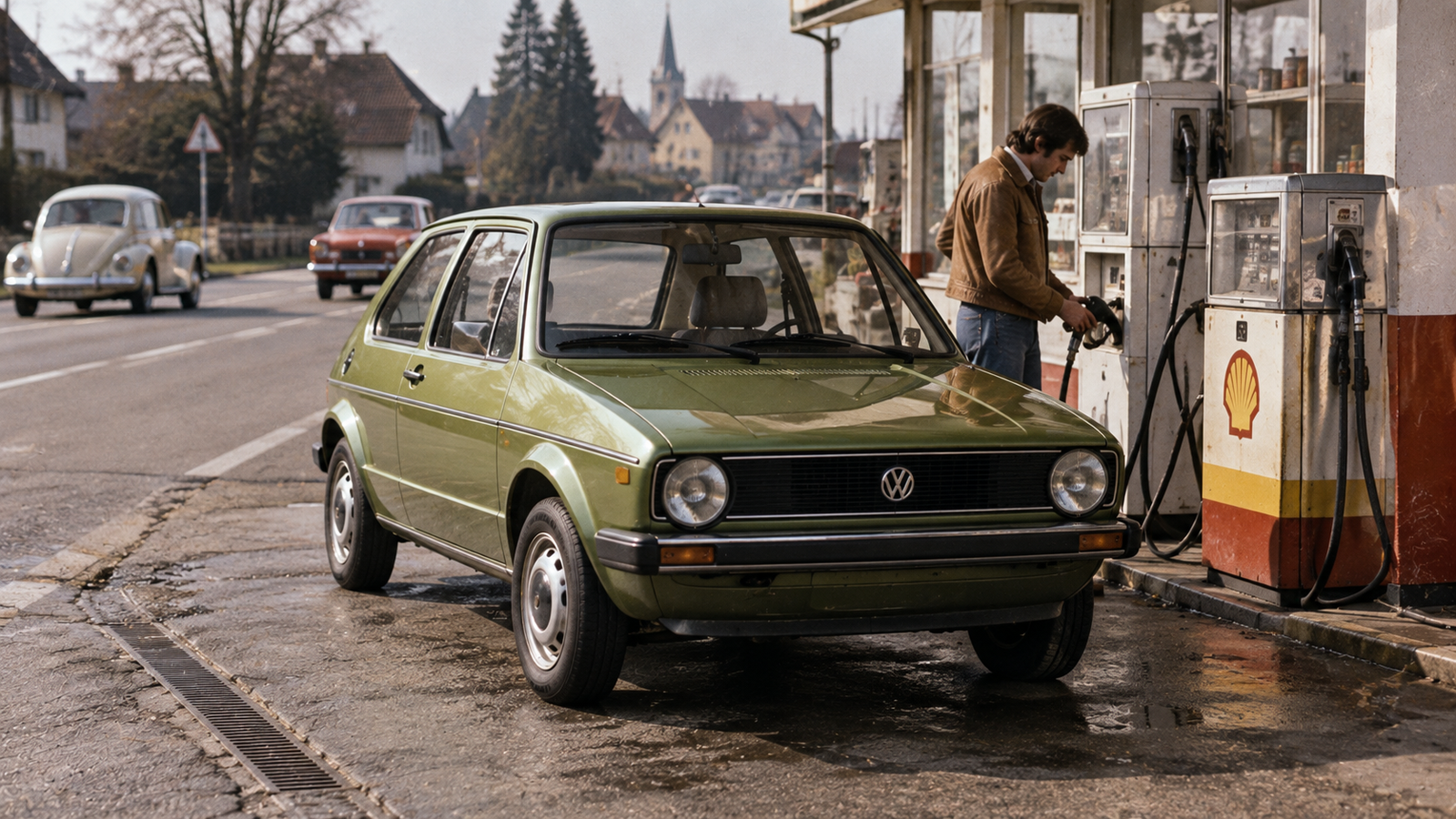
By the early 1970s, Volkswagen had been selling the Beetle – the legendary "Bug" – for over a quarter of a century. But the car was gradually becoming outdated. The rear-engine layout and air cooling were no longer meeting the demands of the time.
The new car had to be built on a completely different philosophy. The engine was placed at the front, cooling became water-based, and the drive was front-wheel. The body was designed by Giorgetto Giugiaro of Italdesign.
The result was so successful that Volkswagen sold a million cars in the first two years alone.
The German press quickly appreciated the novelty. The segment, which used to be rather boringly called the "lower middle class," received a new unofficial name – Golf-Klasse. And it proved so enduring that in Germany, it is still used even in official statistics.
Why Golf specifically
The model's success is explained by several circumstances at once.
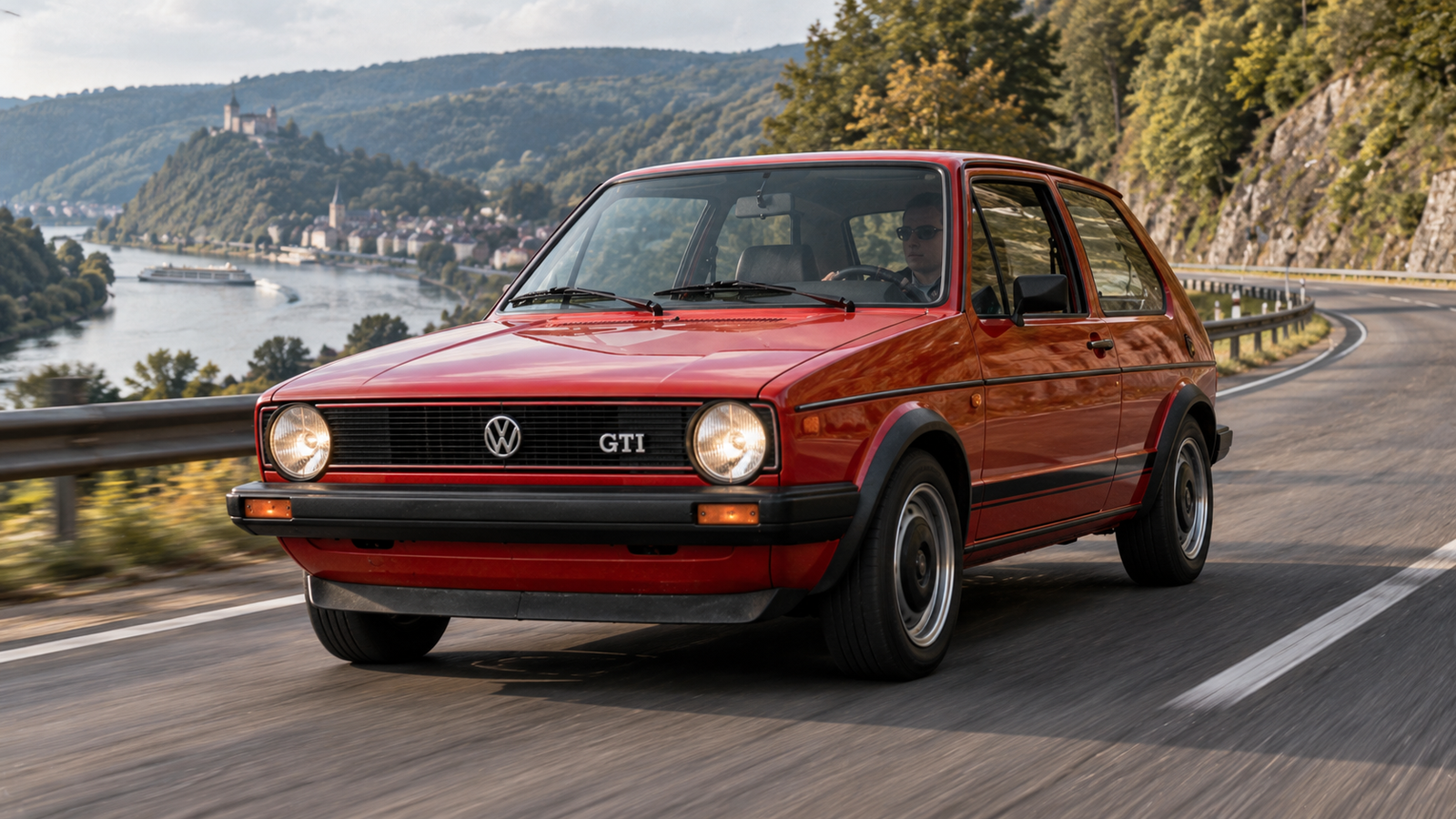
Firstly, the timing of the premiere was exceptionally fortunate. The Golf was released in May 1974 – just six months after the start of the oil crisis. Europe suddenly received a powerful incentive to save fuel, and the new Volkswagen precisely met this demand.
The car weighed only about 800 kg, and the most affordable versions were equipped with 1.1 and 1.5-liter engines.
Secondly, the Golf turned out to be extremely rational. With a length of about 3.7 meters, the designers managed to provide a spacious interior for its class, a trunk, and a folding rear seat. A significant part of the body length effectively contributed to the interior space.
Thirdly, the design played its role. Giugiaro did not try to make the car ultra-fashionable. The result was a restrained and harmonious body that looked modern but was not meant to quickly become outdated.
And finally, Volkswagen had the largest dealer network in Europe. A good car became accessible to a huge number of buyers.
Golf started setting the rules of the game
After a successful start, Volkswagen did not limit itself to a conventional compact model.
In 1976, the Golf GTI appeared – a car that effectively made the "hot hatchback" a mass phenomenon and brought the idea of a sports car to the affordable compact segment.
In the same year, the diesel Golf D debuted. The diesel engine ceased to be perceived exclusively as a solution for commercial vehicles and began to become a normal option for a compact passenger car.
Three years later, in 1979, the Golf Cabriolet appeared. For quite a long time, it remained the best-selling open-top car in the world.
And from 1983, the Golf practically topped European sales rankings every year. Over the next four decades, it had to cede first place only seven times.
The first serious blow came from Fiat
One such defeat occurred in 1997. Then the Fiat Punto surpassed the Golf in European sales: 588 thousand cars against 503 thousand.
Formally, the Punto belonged to a lower class and competed more with the Volkswagen Polo than directly with the Golf. However, Volkswagen's problem was obvious: the third generation Golf had been produced since 1991 and by the mid-1990s began to noticeably age, including in its dimensions.
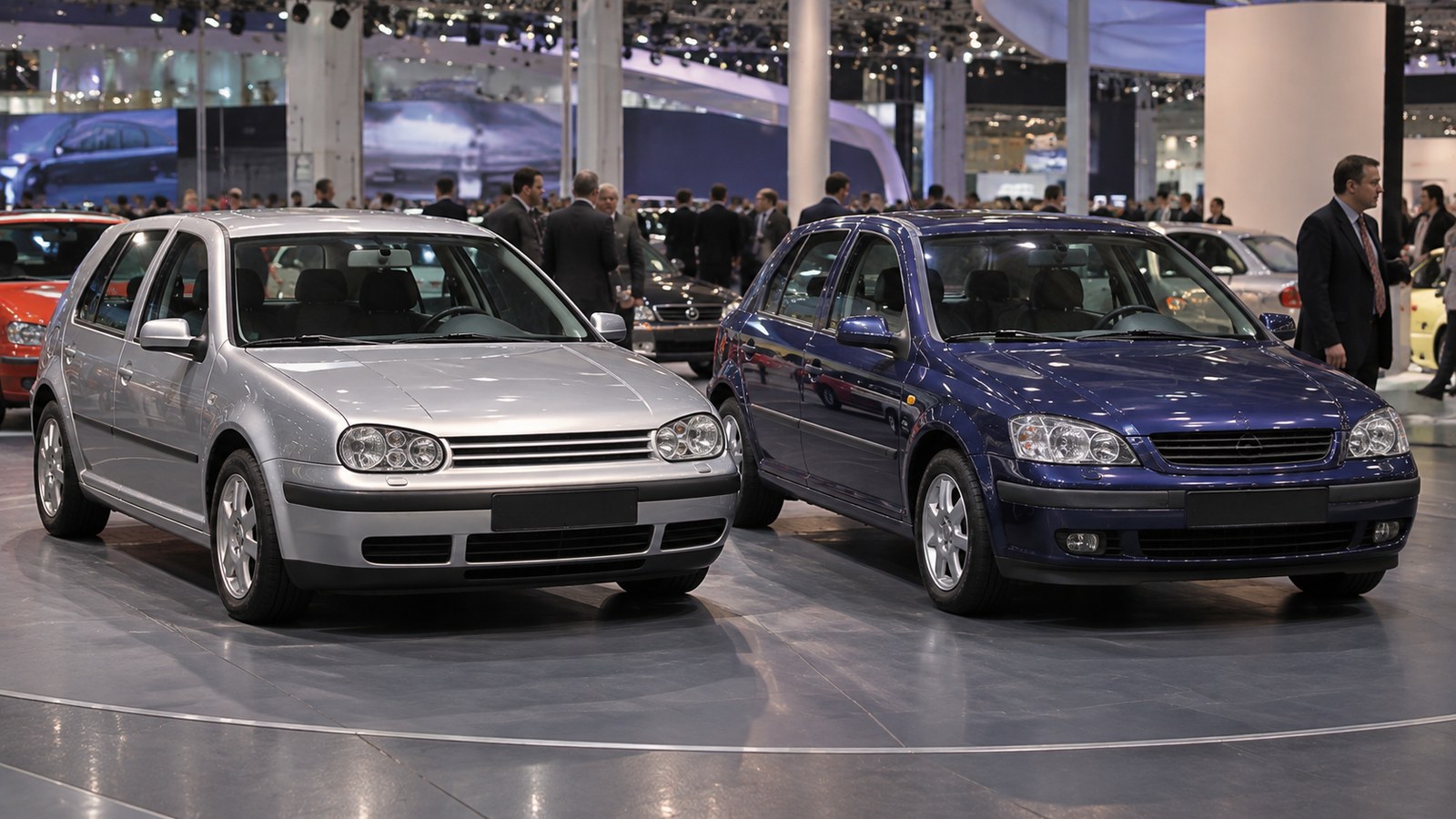
The response followed quite quickly. Already in September 1997, at the Frankfurt Motor Show, Volkswagen presented the Golf IV.
It was with this model that the concern decided to raise the bar for compact car quality even higher.
Piech decided to make the best hatchback
Ferdinand Piech, who headed Volkswagen in 1993, played a key role. His task for the engineers was formulated extremely ambitiously: to create the highest quality hatchback in the world.
The Golf IV received soft plastics, chrome elements, smoothly retracting ceiling grab handles, and a large amount of equipment that was previously not associated with a compact car.
This emphasis on build quality became one of the main features of the fourth Golf.
The model also became the first in the world with ISOFIX mounts and one of the first in its class to receive headlights with clear diffusers.
Bob Lutz, the legendary top manager of Chrysler and General Motors, spoke about the scale of Piech's demands. Congratulating the head of Volkswagen on the new model, he drew attention to the almost perfect body panel gaps. In response, Piech explained his approach to production: the requirement was to achieve three-millimeter gaps across the entire body within six weeks, otherwise, those responsible for bodywork would lose their jobs.
Astra was almost unnoticed – and then it won
It is curious that at the same Frankfurt Motor Show in 1997, another very strong player in the C-segment premiered – the new Opel Astra.
It had a galvanized rigid body, a chassis developed with Lotus, a wide range of engines, and seven body types.
In terms of characteristics, the car looked very convincing. But against the backdrop of the Golf IV presentation, the public practically paid no attention to the Astra.
However, Opel still managed to take revenge.
The next generation Astra, indexed H, became the only C-segment car that managed to surpass the Golf in European sales. In 2005 and 2006, the Astra took the top spot.
The reason was partly the Golf itself: the design of the fifth generation turned out to be less successful for the market than Volkswagen had expected.
But the most serious challenge to the Golf came from a completely different direction.
Ford Focus: Escort's failure turned into success
In 1990, Ford introduced the fifth-generation Escort. The car turned out to be so unsuccessful that the company had to repeatedly modernize it throughout its eight years of production.
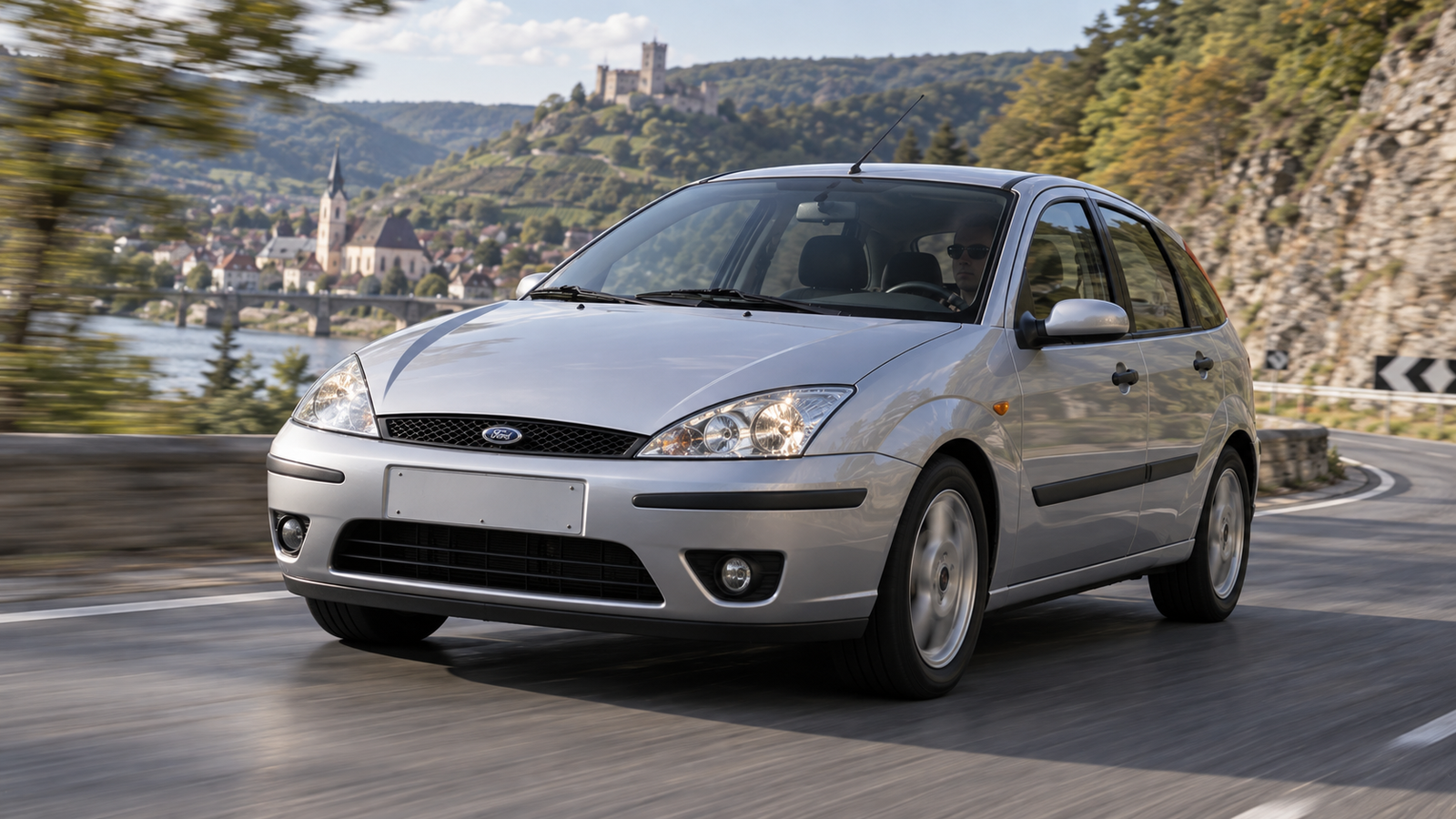
Outdated engines, poor handling, and boring design sharply contrasted with Ford's reputation as a manufacturer of cars with good value for money. The successor needed not just to replace the Escort. It had to be a real event. And so it was.
In the second half of the 1990s, Ford of Europe, under the leadership of design director Claude Lobo, formed a new design philosophy called New Edge. Instead of familiar smooth forms, rounded surfaces intersected by sharp edges appeared. The car looked bold and resembled a concept car.
Engineers placed no less emphasis on handling. The Focus received a multi-link Control Blade rear suspension on a steel subframe, and ABS became standard equipment on all versions.
Shortly before the premiere, Jay Mays, a specialist who previously worked at Audi and Volkswagen, joined Ford as the new Vice President of Design. According to legend, he tried to soften the Focus's overly radical appearance, but there was practically no time left for this.
The new Focus surprised Europe
Ford kept the car's name a secret almost until the very end. Journalists expected the company to continue using the Escort name, but after the problems of the previous generation, Ford decided to end this thirty-year history.
Fusion and Jazz were considered as options, but the final choice was made by the head of the concern, Jacques Nasser. He decided only at dinner on the eve of the opening of the 1998 Geneva Motor Show.
The reaction to the Focus was exactly what Ford wanted. Some considered the car frankly ugly, others saw a real revolution in it. There were practically no indifferent people.
In 1999, the Focus received the title "Car of the Year in Europe." In one year, the model sold 472 thousand units and took fifth place in the overall European sales ranking.
In Russia, Golf was not the main one
In Europe, the name Golf has become practically synonymous with the C-segment. But the Russian story unfolded differently.
In July 2002, the Ford plant in Vsevolozhsk began operations. It was the first full-cycle production facility in Russia wholly owned by a foreign car concern. The first model on its assembly line was the Focus.
Already in 2003, the enterprise produced 17,586 cars, and this was enough for the Focus to become the best-selling foreign car in Russia. It surpassed the long-time leader Daewoo Nexia.
Its popularity was so high that the waiting list for a new car stretched up to five months. The plant had to switch to round-the-clock operation in three shifts.
The Focus held the title of the most popular foreign car in the Russian market for almost ten years. The second generation was even more successful.
Even in the 2020s, the Focus repeatedly became the best-selling foreign car in the Russian used car market, according to "Autostat Info."
The golden age of the C-segment ended
The scale of popularity of compact hatchbacks is especially evident from European sales in the late 1990s. In 1999, four out of the top five cars belonged to the C-segment: Golf, Astra, Megane, and Focus. The only representative of another segment among them was the Renault Clio.
A golden era was dawning for the C-segment. But at the same time, this was a period that later turned out to be the last great flourishing of traditional compact hatchbacks.
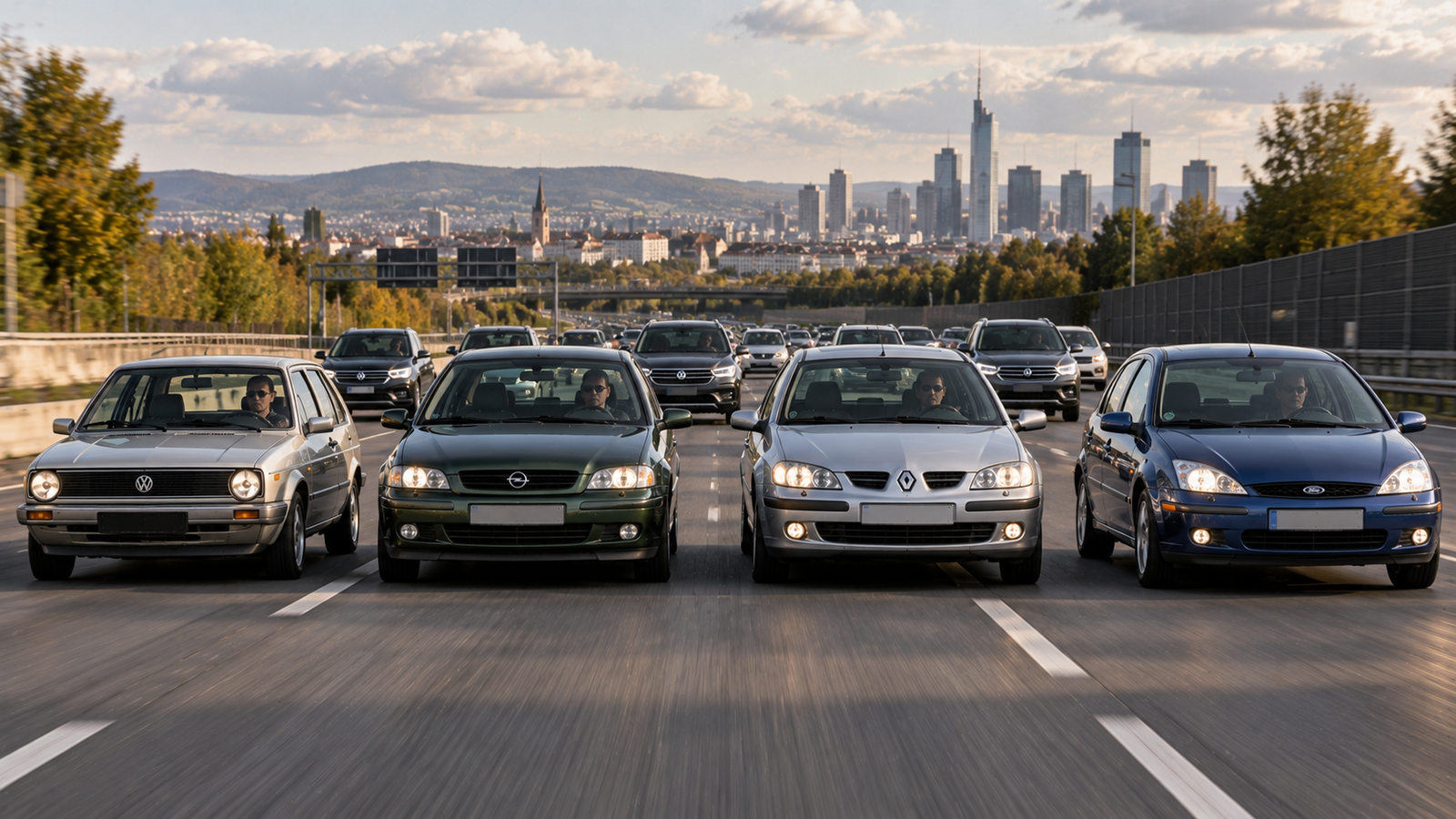
In 2008, such cars occupied about 36% of the European market. Today, their share is approximately 14%.
Crossovers took the main part of the lost market.
The Golf itself, however, proved more resilient than many classmates. The total circulation of the model has already exceeded 37 million cars.
A curious historical paradox emerges. The Golf once did not invent the very format that later received its name. It simply turned out to be the first car that so successfully combined practicality, economy, design, quality, and mass accessibility that it became a benchmark itself.
Now, the "Golf class" itself is gradually shrinking. And if the trend continues, the name that once designated an entire army of compact European cars truly risks one day remaining almost for a single model – the Volkswagen Golf itself.
Read more materials:
- Why the engine chokes during acceleration
- Diesel in Russia: why demand for it continues to fall
- PHEVs turned out to be dirtier: what real-world operation showed
Комментарии