The Russian automotive industry is accustomed to explaining the high cost of new models by the complexity of development, localization of components, and the need to create its own technologies. In the case of "Atom," such argumentation indeed has a basis.
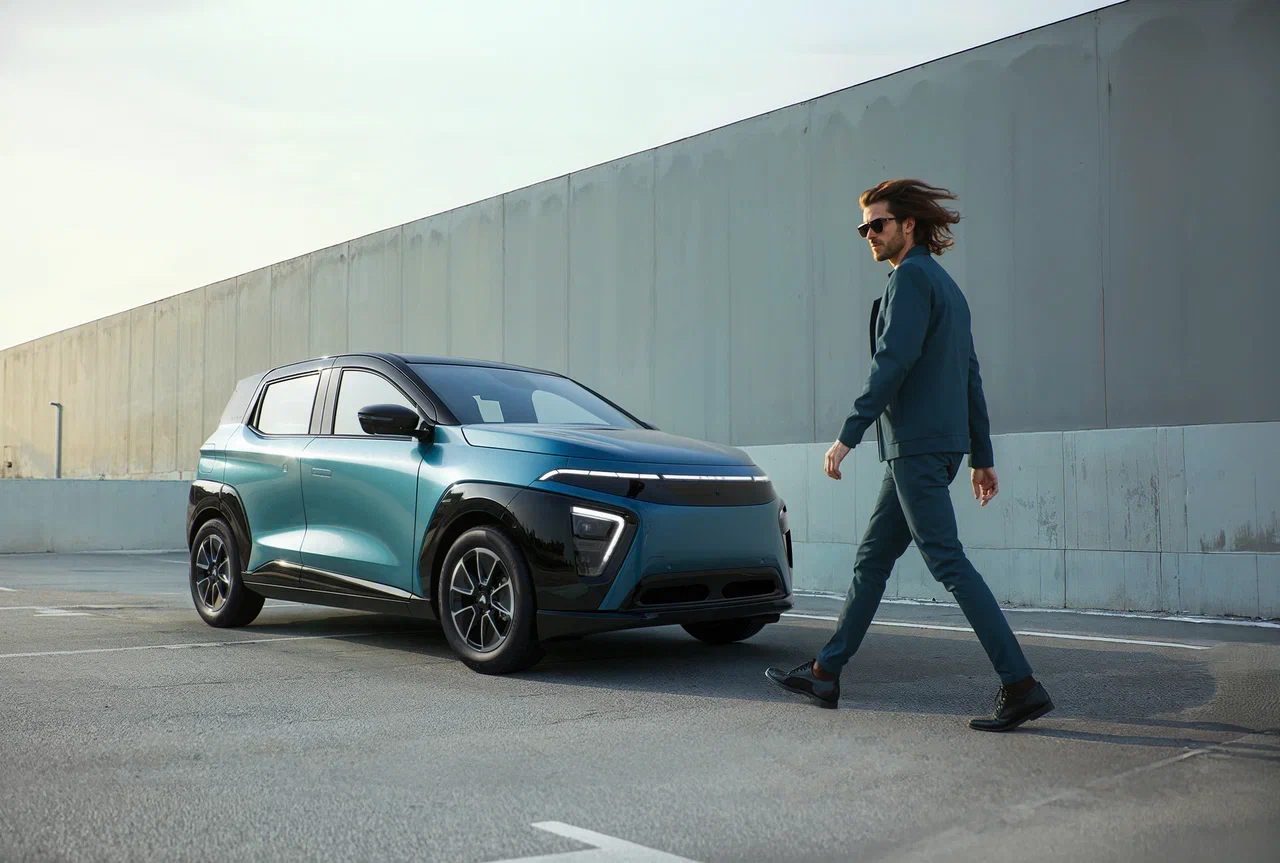
This is not an electric car built on a ready-made platform of an existing machine. The project received its own architecture, a separate electronic system, and a high declared level of localization. The manufacturer also bet on an unusual body design and a digital interface.
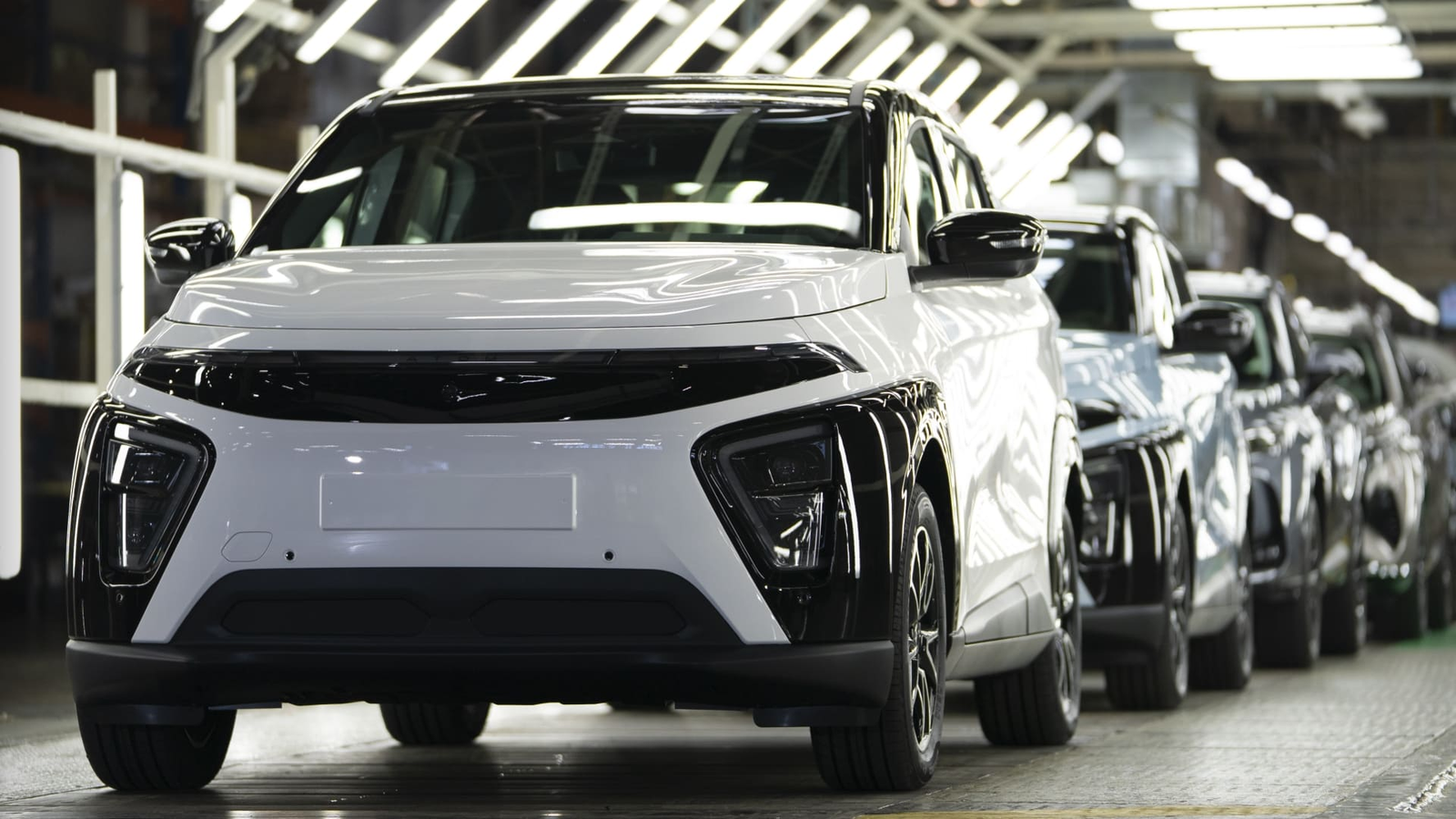
However, by the time the car went into production, the market situation had changed. On September 16, 2026, "Atom" began mass production at the "Moskvich" plant. The enterprise is equipped with a full-cycle line, including welding, painting, anti-corrosion treatment, assembly, and calibration of electronic systems. The planned pace at the start is up to 20 cars per shift, with subsequent volume increases.
At the same time, the Russian market for pure electric vehicles remains very small. In 2025, 12.5 thousand new electric vehicles were sold, which is 30% less than in 2024. The share of BEVs decreased from 1.1% to 0.9%. This is where the main question for "Atom" arises: how easy will it be to turn a technically independent project into a mass-produced car at a price of 3.98 million rubles?
Own platform and large battery
In terms of design, "Atom" indeed differs significantly from most familiar Russian passenger cars. The car's length is 3995 mm, and the wheelbase is 2635 mm. The car received rear-wheel drive and a traction battery with a capacity of 77 kWh.
The manufacturer claims a range of up to 500 km, and charging from 20 to 80% takes about 30 minutes. The current project website also indicates the possibility of replenishing the range by 100 km in approximately 8 minutes. Acceleration to 100 km/h is currently stated at 7 seconds. The main characteristics are as follows:
- length — 3995 mm;
- wheelbase — 2635 mm;
- drive — rear;
- battery — 77 kWh;
- range — up to 500 km;
- acceleration to 100 km/h — 7 seconds;
- charging from 20 to 80% — about 30 minutes.
With a length of less than four meters, a 77 kWh battery looks quite large. This helps achieve a high declared range but simultaneously increases the car's weight and cost. That is why the passport 500 km alone is not enough to assess the car's practicality.
What happens to the range in winter
For the Russian market, what matters more is not the record figure in the technical specifications, but the car's behavior in normal operation. The range will depend on temperature, driving speed, heater and air conditioner operation, road conditions, and driving style. This is especially important in winter. An electric car should not just travel 500 km in the calculated cycle, but maintain an acceptable mileage at negative temperatures and be able to quickly replenish energy.
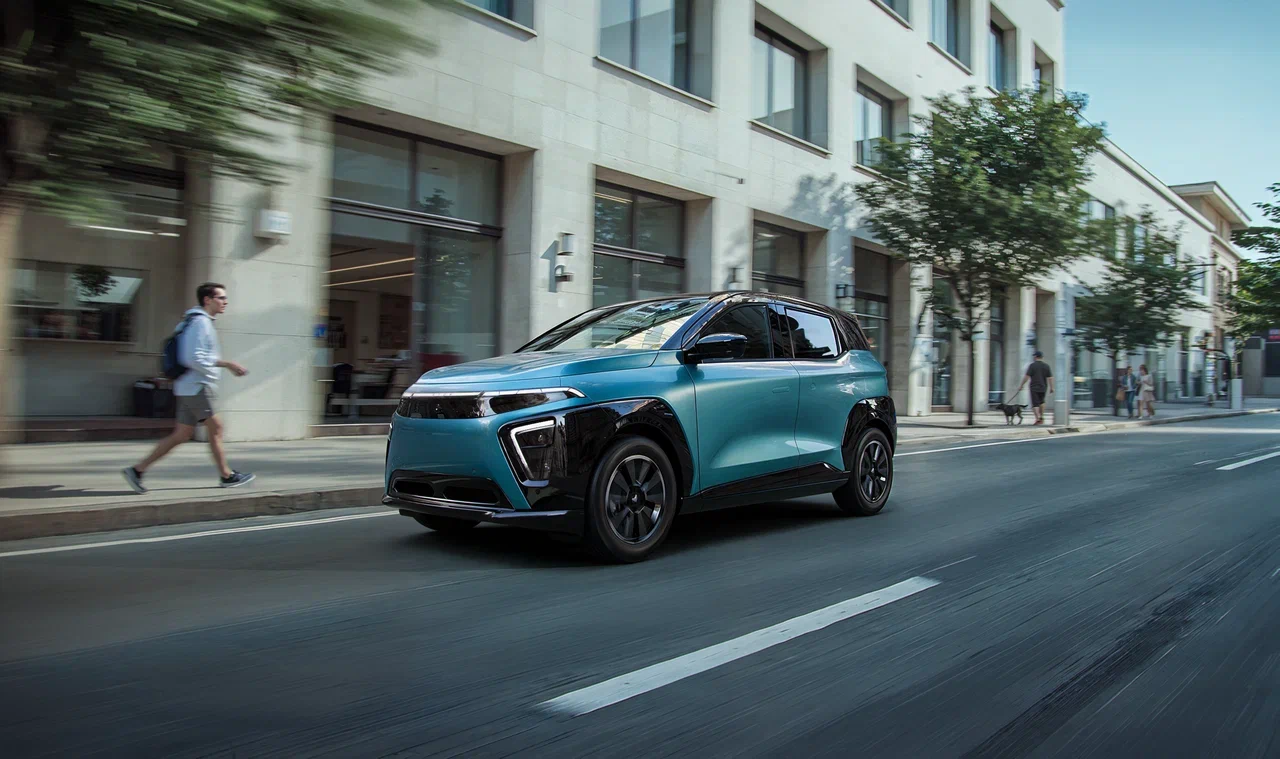
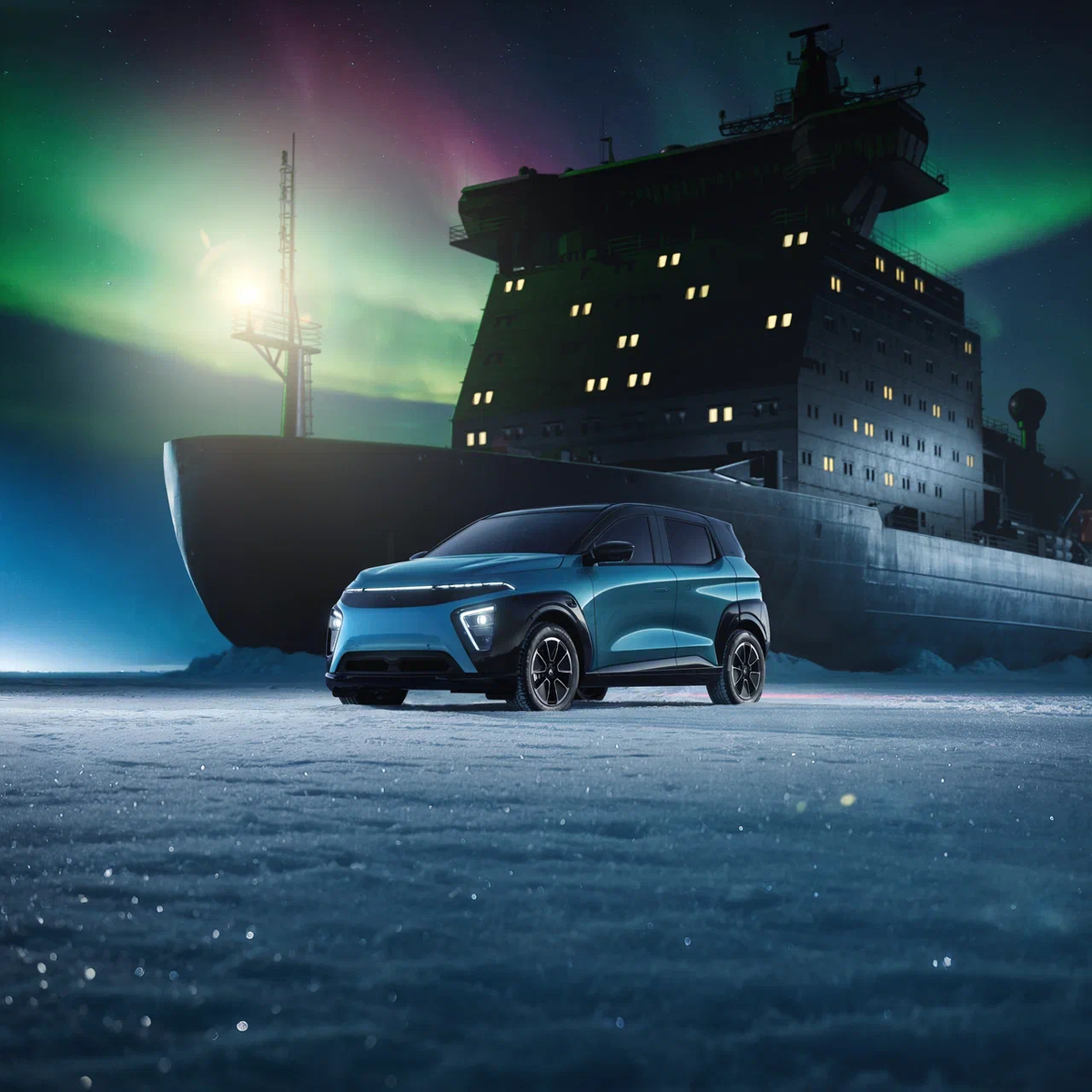
"Atom" provides a thermal management system for the traction battery, as well as heated seats, steering wheel, windows, mirrors, nozzles, and wiper areas. The manufacturer specifically emphasizes the car's adaptation to the Russian climate. However, the final picture will only be given by real operation. The WLTC passport figures themselves do not answer the question of how many kilometers the car can travel in winter on the highway at high speed with the heating on.
"Atom" bets on a digital interior
The most unusual part of the project is not the powertrain, but the interface. The manufacturer calls the car an "electric gadget car." The main functions are moved to the digital environment, and the steering wheel has a built-in display. It is complemented by a head-up display, voice assistant, mobile application, and its own operating environment "Atom OS." This approach changes the very concept of automotive ergonomics.
In a conventional car, a multimedia malfunction can mean that the driver has lost some entertainment or information functions. In "Atom," the digital system becomes much more closely linked to human-car interaction. Hence, an additional requirement arises: the software must work stably not as a separate gadget, but as part of the car's basic control.
That is why journalists' comments on pre-production models, related to touch controls, element play, and trim quality, are important. But here it is important to keep a caveat: it was a pre-production car, so these observations cannot be automatically transferred to production cars. The official production "Atom" is now positioned precisely as a digital car: a steering wheel with a screen, information projection on the windshield, a voice assistant, and control of individual functions via an application are part of the model's concept.
Body without a B-pillar
Another feature is the absence of a central pillar between the front and rear doors. The rear doors open against the direction of travel. This scheme facilitates access to the cabin and is especially interesting for cars planned for use in taxis and corporate fleets.
But structurally, such a solution is more complex than a conventional body. When the central pillar disappears, some of the functions for ensuring rigidity have to be transferred to other body elements – sills, door openings, and reinforcements.
"Atom" has passed mandatory certification tests. ECE R94 crash tests checked a frontal impact at 56 km/h, and ECE R95 provided for a side collision at 50 km/h. The manufacturer reports that target indicators for passenger protection, preservation of living space, and battery protection were achieved.
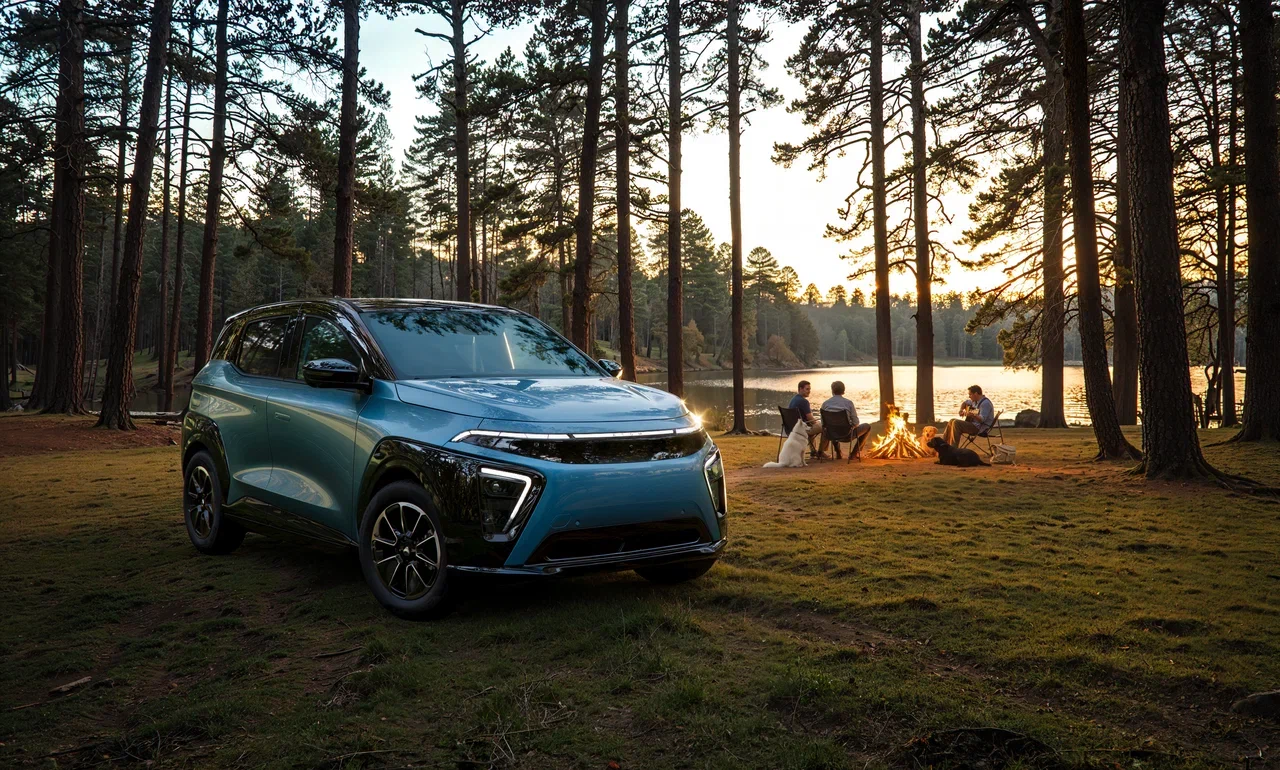
This is an important result for the car's market entry. But a certification crash test and an independent comparative safety assessment are different things. The presence of mandatory certification itself does not mean leadership in passive safety.
The Russian market for "Atom" is very small
This is where the car's technical merits clash with economics. Throughout 2025, 12.5 thousand new electric vehicles were sold in Russia. In the first half of 2026, 4606 cars were sold, which is 4.7% more than in the same period of 2025. However, the share of BEVs in the new car market was only 0.6%. At the same time, another segment – plug-in hybrids – is growing much faster.
From January to June 2026, 30,730 new PHEVs were sold in Russia. This is 132% more than a year earlier, and the share of such cars reached 5% of the market. The difference is significant:
- pure electric vehicles in the first half of the year — 4606 cars;
- plug-in hybrids — 30,730 cars;
- BEV share — 0.6%;
- PHEV share — 5%.
That is, the Russian buyer now significantly more often chooses a car that allows the use of electric traction, but at the same time retains an internal combustion engine. For "Atom," this is a fundamentally important feature of the market.
Price almost 4 million rubles
The recommended price for "Atom" is currently 3,980,000 rubles. The manufacturer simultaneously indicates the possibility of reducing the actual cost of the first batch of cars to 3,055,000 rubles if the conditions of the preferential car loan and subsidy program are met.
It turns out that there is a significant difference between the nominal price and the potential price for an eligible buyer. But to evaluate the car, it is more important to look at the recommended cost, since the subsidy depends on the current state conditions and parameters of a specific transaction.
And here a difficult situation arises for "Atom." A car less than four meters long is offered for almost four million rubles. At the same time, its main competitor is not only other electric vehicles. The buyer can compare "Atom" with gasoline cars, conventional hybrids, and PHEVs, which allow not to depend solely on charging infrastructure.
Competition is no longer about the mere presence of an electric motor
When electric vehicles first began to appear on the mass market, the presence of an electric powertrain itself was a significant advantage. Now the situation has changed. The buyer compares several parameters at once:
- car cost;
- range;
- charging speed;
- efficiency;
- software operation;
- service availability;
- cost of ownership;
- residual value.
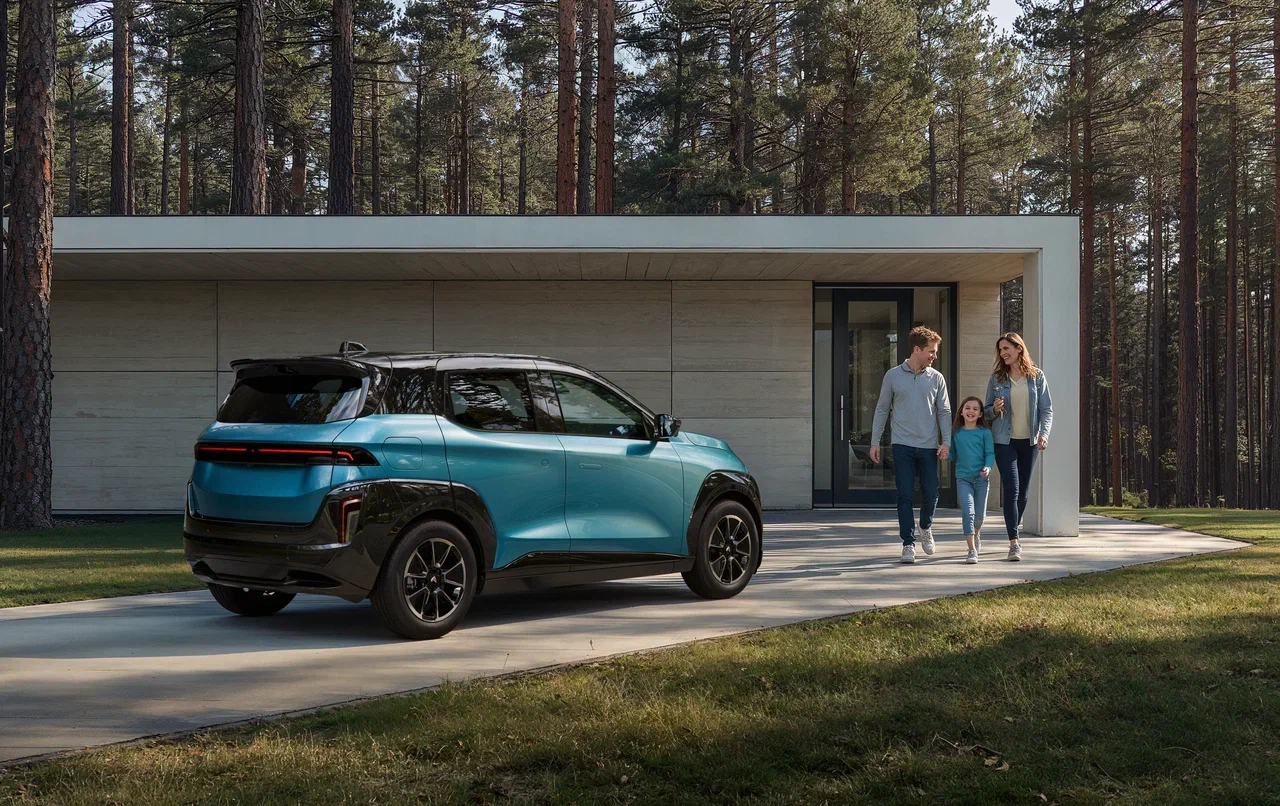
This is where "Atom" finds itself in a much more complex competitive environment than it might have seemed at the development stage.
In the world, electric vehicles have long ceased to be a rare technological novelty. In China and other major markets, manufacturers compete not for the mere fact of producing BEVs, but for platform efficiency, battery cost, charging speed, software functions, and the price of the finished car. For the Russian project, this means that technological independence itself is no longer a sufficient argument for the buyer.
Large battery – both a plus and a problem
77 kWh for a compact car is a serious indicator. On the one hand, a large battery allows for a significant range. On the other hand, it adds weight and cost. For a car about four meters long, this is especially noticeable.
A peculiar vicious circle emerges: to ensure a long range, a large battery is required; a large battery increases cost and weight; a high price limits the circle of buyers; and a small market does not allow easy compensation of costs with large production volumes. At the same time, the real efficiency of "Atom" will still be determined not only by battery capacity, but also by energy consumption in different conditions.
Software becomes a separate part of the project
"Atom" has another feature – its own digital ecosystem. The project's public materials mention the use of the Russian PLM platform "SARUS" during development. However, it is important not to confuse it with the car's user operating environment. The PLM system is designed to manage the lifecycle of an industrial product. The automotive operating environment is responsible for user interaction with the car.
The very fact of using domestic engineering software is important from the point of view of technological independence of development. But at the same time, it shows the scale of the task. The creators have to solve several complex problems simultaneously:
- develop an automotive platform;
- create an electric powertrain;
- integrate electronic systems;
- ensure user interface operation;
- establish production;
- create service infrastructure.
Global manufacturers, with whom "Atom" has to compete, have been refining many of these processes for several generations of electric vehicles.
Serial production is just the beginning
Now "Atom" is no longer a concept or an experimental project. On September 16, the car officially went into mass production at the "Moskvich" plant. The production line includes welding, painting, anti-corrosion treatment, assembly, and calibration of electronic systems. The plan is to gradually bring production up to about 20 cars per shift. This means that a completely new stage begins for the project.
When creating a prototype car, the main thing is to prove that the technical solution works. In serial production, it is necessary to prove something else: that it can be consistently produced, serviced, and sold. That is why the start of the conveyor does not remove the main questions about the project, but transfers them from the engineering plane to the market plane.
For whom "Atom" may be especially interesting
The manufacturer itself considers the car not only as personal transport. The official website separately highlights solutions for business. This is logical from the point of view of the Russian market.
If a private buyer is not yet in a hurry to switch to pure electric traction, corporate fleets can provide a more predictable operating mode. A car operating in a taxi or carsharing service covers a large mileage daily, which means the advantages of electric drive are used more intensively.
That is why commercial versions can become one of the important directions of the project. But here another question arises: how quickly the car will be able to recoup a higher initial cost due to energy and maintenance costs. This must be answered by the economics of real operation, and not just technical characteristics.
The main question is no longer about technology
"Atom" has already proven that a Russian project can go from its own platform to a production car. The car has:
- its own modular platform;
- a 77 kWh battery;
- rear-wheel drive;
- a declared range of up to 500 km;
- digital architecture;
- unusual body design;
- serial production at "Moskvich";
- mandatory certification and conducted crash tests.
But now the project faces a different level of challenge. In 2025, the Russian market for new electric vehicles shrank to 12.5 thousand cars, and in the first half of 2026, the BEV share was only 0.6%. At the same time, PHEVs reached 30,730 sales and 5% of the market during the same period. Therefore, "Atom" will have to compete not only with other electric vehicles.
It will have to explain to the buyer why a compact car with a price of 3.98 million rubles should be preferred over a gasoline-powered car or a plug-in hybrid. And this is no longer a question of whether a modern Russian electric car has been created. It is a question of whether such technology can find sufficient demand in a market where the segment of pure electric vehicles itself remains very small.
Read more articles:
- Why NASCAR goes left and why cars push each other
- No OSAGO — no debt write-off through bankruptcy
- Turn signals on mirrors: fashion or real safety
Комментарии