You sold a car, handed over the keys, and received the money. It seems the story ended there. But a few weeks later, the new owner calls and reports an engine breakdown. For the seller, this is an unpleasant surprise. Especially if the car was transferred with agreed-upon defects, the buyer inspected it, and independently decided to purchase it.
However, you also cannot automatically assume that after signing the contract, the former owner is no longer responsible for anything. In such disputes, the key question usually sounds quite different: when exactly did the defect appear – before the car was sold or after?
Breakdown after the deal does not yet mean the seller's fault
The Civil Code provides for the seller's liability for defects in goods that were not stipulated at the time of sale. According to Article 475 of the Civil Code of the Russian Federation, if such defects are discovered, the buyer may, depending on the circumstances, demand a reduction in price, elimination of defects, or reimbursement of repair costs. In case of a significant violation of quality requirements, termination of the contract and a demand for a refund are possible.
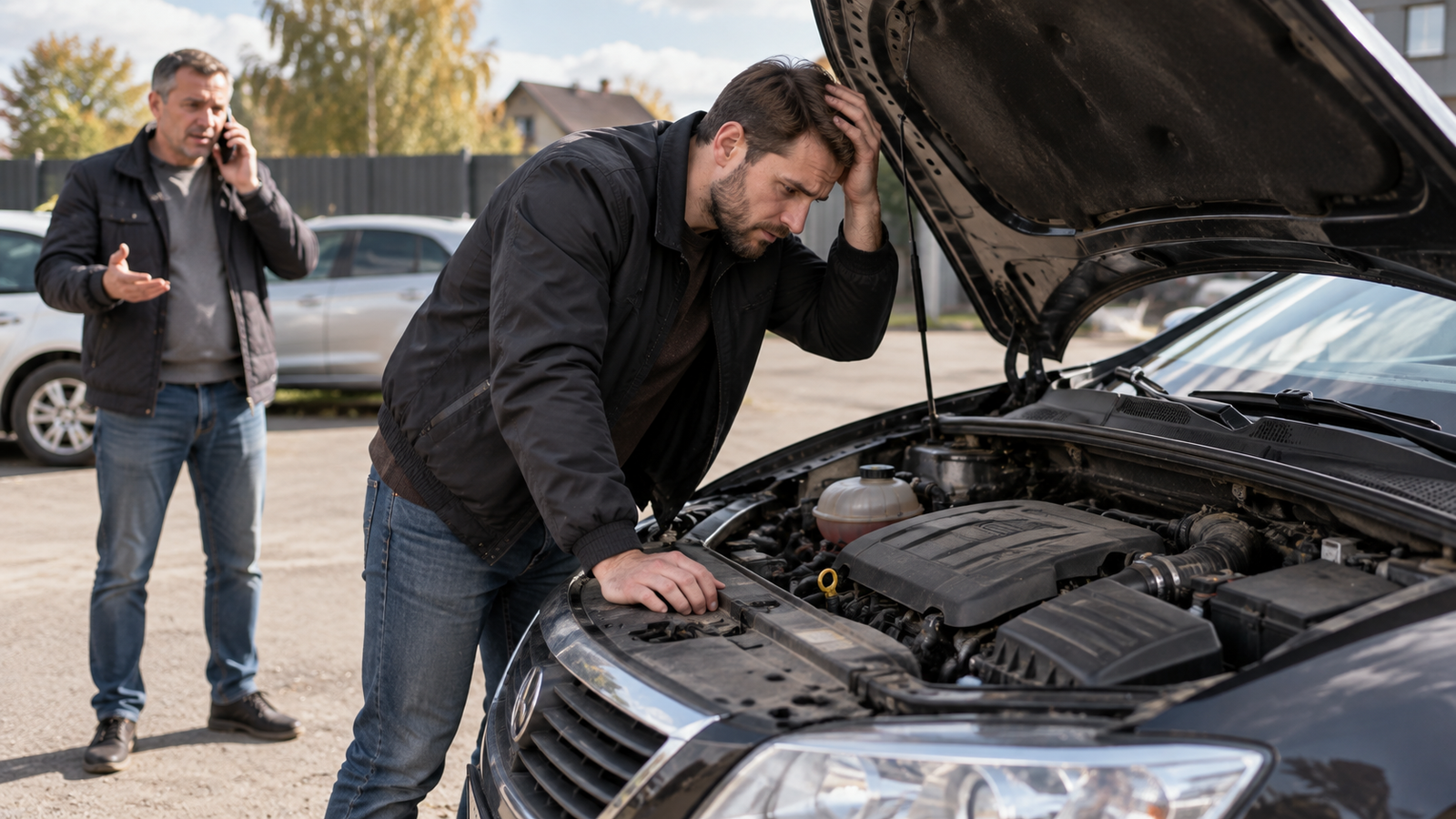
But for a used car, there is a fundamentally important detail. The mere fact that the engine broke down three weeks after the deal does not yet prove that the seller transferred the car with a faulty engine. It is necessary to establish the cause of the breakdown and the moment the defect arose.
That is why in such conflicts, technical expertise can be more important than the words of both parties. If an expert determines that the malfunction existed before the car was transferred and was hidden, the buyer's position becomes significantly stronger. If it turns out that the engine was in good condition at the time of the deal, and the damage arose due to subsequent operation, there are significantly fewer grounds to demand the return of the car solely on the fact of a breakdown.
What exactly the buyer must prove
A used car always has natural wear and tear. Mileage, age, condition of the engine, gearbox, suspension, and body – all this affects the likelihood of future malfunctions. Therefore, the dispute does not boil down to the question "did the car break down or not." It is important to establish:
- what defect was discovered;
- was it hidden;
- did it exist before the car was transferred;
- was it stipulated in the contract;
- could it have arisen after the purchase;
- how significantly it affects the possibility of using the car.
The Supreme Court, in its review of practice, also indicates that according to Article 475 of the Civil Code of the Russian Federation, consequences arise when defects were not stipulated by the seller. Therefore, the phrase "the engine broke down after two weeks" in itself is not yet proof that the seller sold a faulty car.
When the contract can really be terminated
Let's imagine a situation: the buyer purchased a car, and after the deal, discovered a serious defect that the seller did not warn about. Diagnostics show that the problem did not arise due to the actions of the new owner. An expert establishes that the prerequisites for the malfunction existed before the car was transferred. In such a case, the dispute is completely different.

If the defect is significant and falls under the conditions provided by law, the buyer can raise the question of terminating the contract and returning the money. That is why the seller should not respond to the claim in the spirit of "the car is yours now, deal with it yourself." Such an approach can be erroneous.
A telling case with a Volkswagen Jetta
In Kostroma, a dispute was considered involving a Volkswagen Jetta buyer who faced serious technical problems after the purchase.
In another Kostroma case, on the contrary, the court denied the buyer's request to terminate the contract. There, a 2016 car was initially sold as used, and its technical condition and engine malfunction were detailed in the contract. The buyer also confirmed that he inspected the car and agreed to purchase it taking into account its existing condition.
The court specifically noted that the mere presence of additional damage discovered later did not mean that the seller was obliged to return the money: there was no evidence in the case materials that these specific defects existed before the car was transferred and were knowingly hidden by the seller. This example clearly shows why there is no universal rule "a used car can always be returned."
The entry "no claims" is not magical protection
In car sales contracts, the wording "The buyer has no claims regarding the technical condition of the car" is often found. For the seller, this is a useful document, but it should not be considered absolute protection. If it is proven that the seller knew about a serious hidden defect and did not report it, one general phrase in the contract will not necessarily resolve the dispute in his favor.
On the other hand, a detailed contract can significantly change the position of the parties. Especially if it lists specific malfunctions, traces of repairs, body damage, engine features, gearbox, and other known defects.

In the same Kostroma case, the court took into account that the buyer was notified in advance about the technically faulty condition of the car and the need for engine repair. This reveals an important distinction. The phrase "any hidden defects are possible" and a detailed description of the specific condition of the car are far from the same thing.
Why the inspection report is more important than a general phrase
Before selling a car, it is best to document its condition as thoroughly as possible. The document can indicate discovered:
- scratches and dents;
- traces of body repair;
- engine malfunctions;
- gearbox problems;
- electronic system errors;
- tire condition;
- interior damage;
- other defects known to the seller.
The more specifically the car's condition is described, the less room there is for dispute about what exactly the buyer was warned about.
It is also useful to keep the results of diagnostics before sale, work orders from the service, and receipts for recent repairs. If the car underwent diagnostics before the deal, this document can be especially important if, after some time, the new owner reports a serious malfunction.
What to do if the buyer calls with a claim
The first rule is not to immediately admit guilt. Do not promise over the phone to return the full amount or pay for repairs if the cause of the malfunction is still unknown. Instead, it is better to ask the buyer to formulate the claim in writing and provide diagnostic results.
The next step is to understand the technical reason. If the parties cannot agree, an independent examination of the car can help establish the nature of the malfunction and the time of its occurrence. It is important to keep documents and evidence.
The seller should collect:
- sales contract;
- acceptance certificate;
- car photos at the time of the deal;
- diagnostic results;
- work orders and repair receipts;
- correspondence with the buyer;
- documents confirming the transfer of the car.

If specific defects are listed in the contract, it is necessary to keep the exact version of the document signed by both parties.
Why expertise becomes the main evidence
A car can start normally on the day of sale, and after some time, the engine can indeed be seriously damaged. But there are many scenarios. The cause can be natural wear and tear, lack of oil, overheating, improper operation, an already existing defect, or a combination of several factors.
Therefore, the dispute "the seller says one thing - the buyer another" is often technically impossible to resolve without a specialist. Expert examination should answer at least the main questions: what broke, why it happened, and whether the corresponding defect could have existed before the car was transferred. It is the technical reason, not the number of days after purchase, that is of fundamental importance.
What to do if the buyer immediately sues
Ignoring a lawsuit or claim is not advisable. If the buyer demands to terminate the contract, it is necessary to carefully examine the circumstances on which he bases his claims and what evidence he attaches.
It is especially important not to agree with formulations that actually acknowledge the presence of a defect at the time of sale if the seller does not agree with this. If the matter goes to court, the parties can petition for an expert examination. And if the technical condition of the car indeed supports the seller's position, this can become key evidence.
An honest sale reduces risk, but does not completely eliminate it
Selling a car to a private individual does not mean that the former owner is automatically released from any liability immediately after handing over the keys. But buying a used car also does not turn into the right to return it for any subsequent breakdown. The dispute centers on the condition of the car at the time of transfer and the nature of the discovered defect.
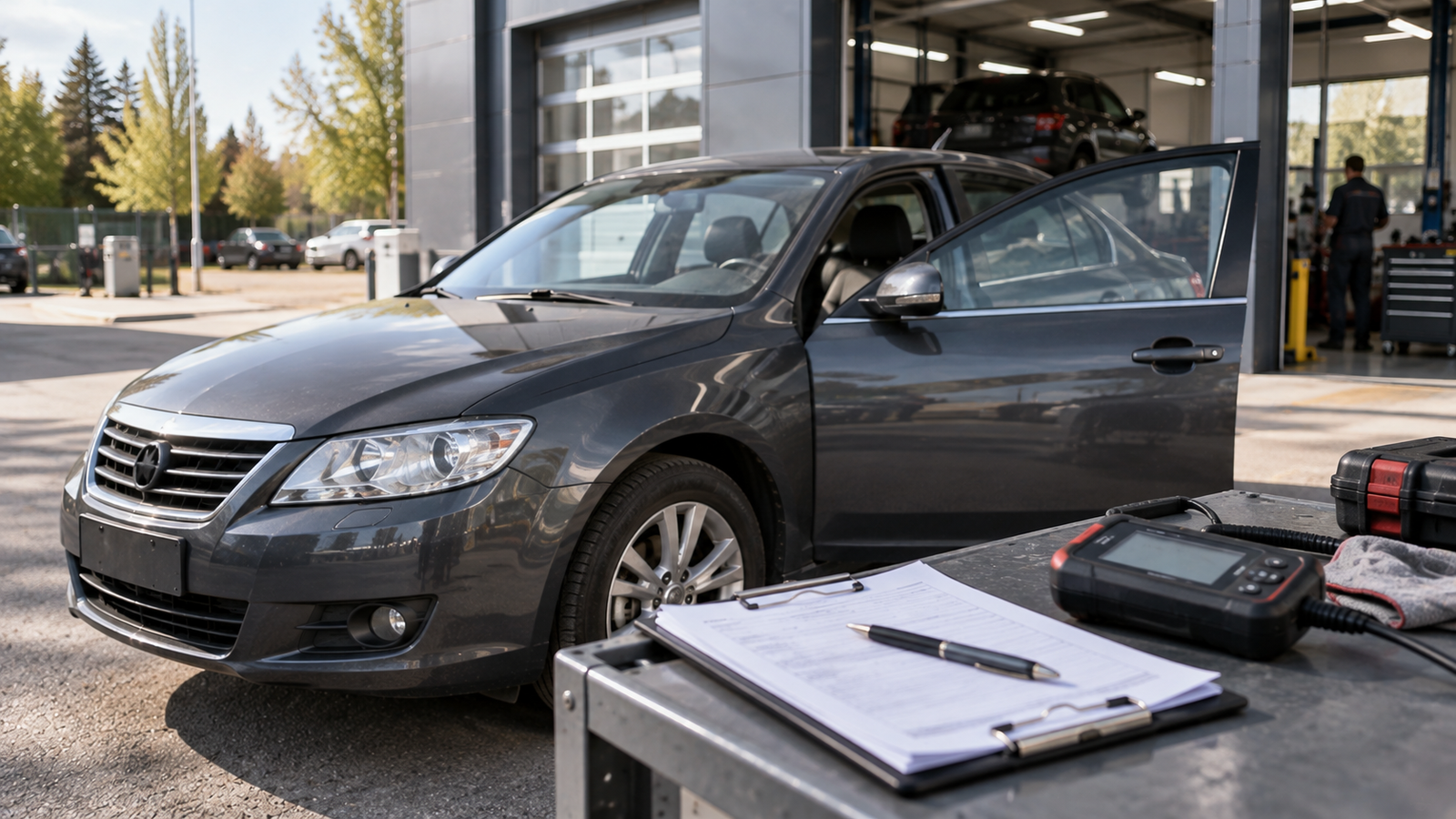
If the seller knew about a serious malfunction but kept silent about it, the buyer's position differs significantly from a situation where the car was inspected, known defects were listed in the contract, and the breakdown occurred after the car was transferred. Therefore, it is better for a used car seller to do in advance what seems like unnecessary bureaucracy: describe the car's condition in detail, document known defects, keep diagnostic results, and transfer the car with an acceptance certificate.
And if, a few weeks after the deal, the buyer claims that the engine "knocked" and demands a refund, do not automatically pay or automatically consider the claim empty. First, you need to establish what exactly happened to the car and whether the cause of the malfunction existed before the sale. The further fate of the dispute largely depends on this.
Read more materials:
- "Atom" went into production: can the market accept its price?
- How an electric car was the first in history to accelerate to 105 km/h
- The main mistake when loading a trailer that is dangerous at speed
Комментарии