The steel panel of a car roof today typically has a thickness of only 0.65–0.75 mm, which is noticeably less than one millimeter. For comparison, previously, metal up to 1.5 mm thick was used in roof manufacturing. At the same time, the outer roof panel remains the largest element of the entire upper body.
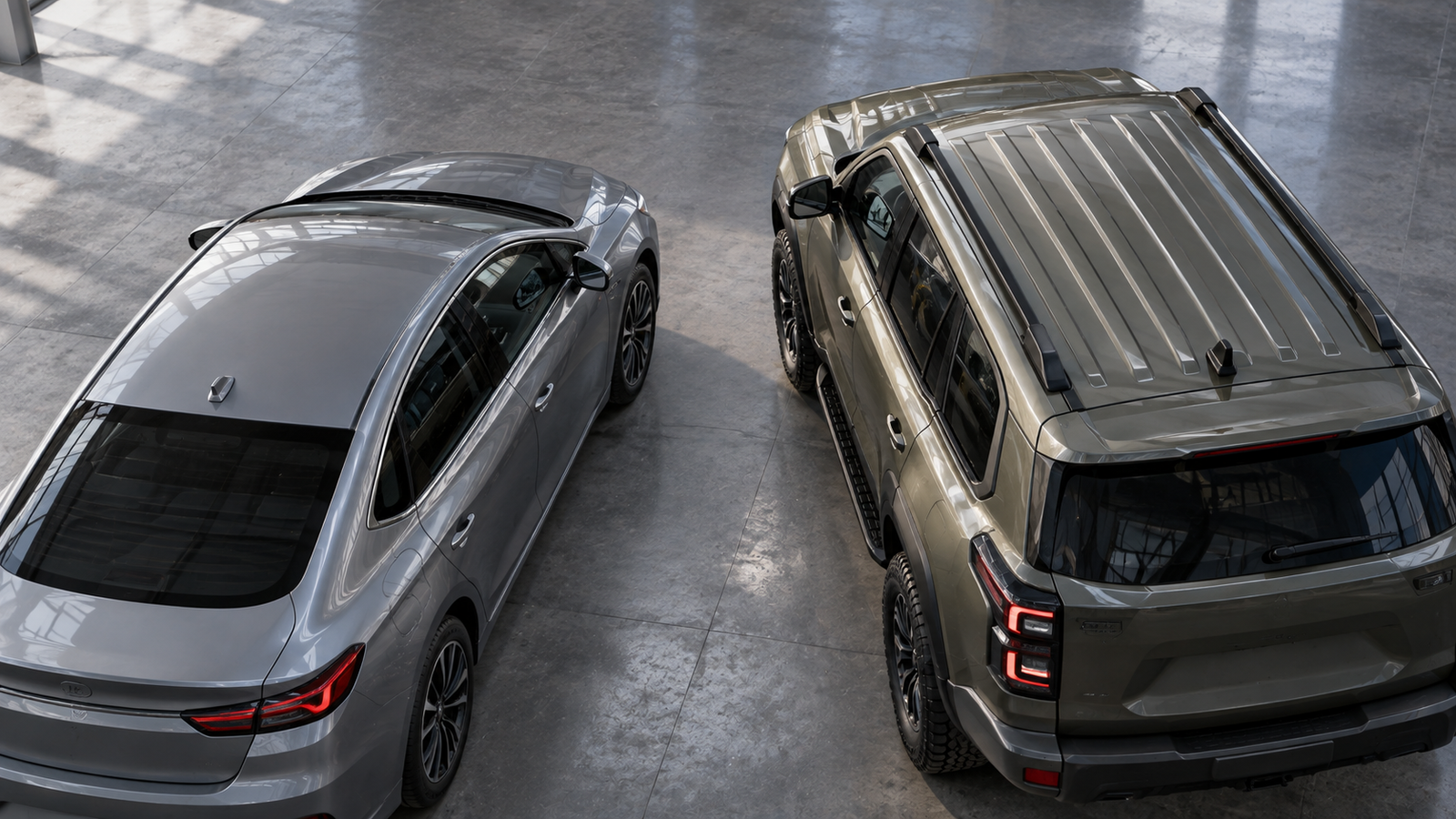
On sedans, this panel is usually smooth. For SUVs, crossovers, and vans, the situation is different: longitudinal stampings usually run along the roof — from two to 12 ribs per vehicle. There are several explanations for why they are needed. Five reasons are usually cited:
- ribs should help the roof withstand a rollover;
- they supposedly increase body rigidity when driving off-road;
- improve aerodynamics and reduce noise;
- allow cargo to be carried on the roof;
- make it possible to save metal and reduce costs.
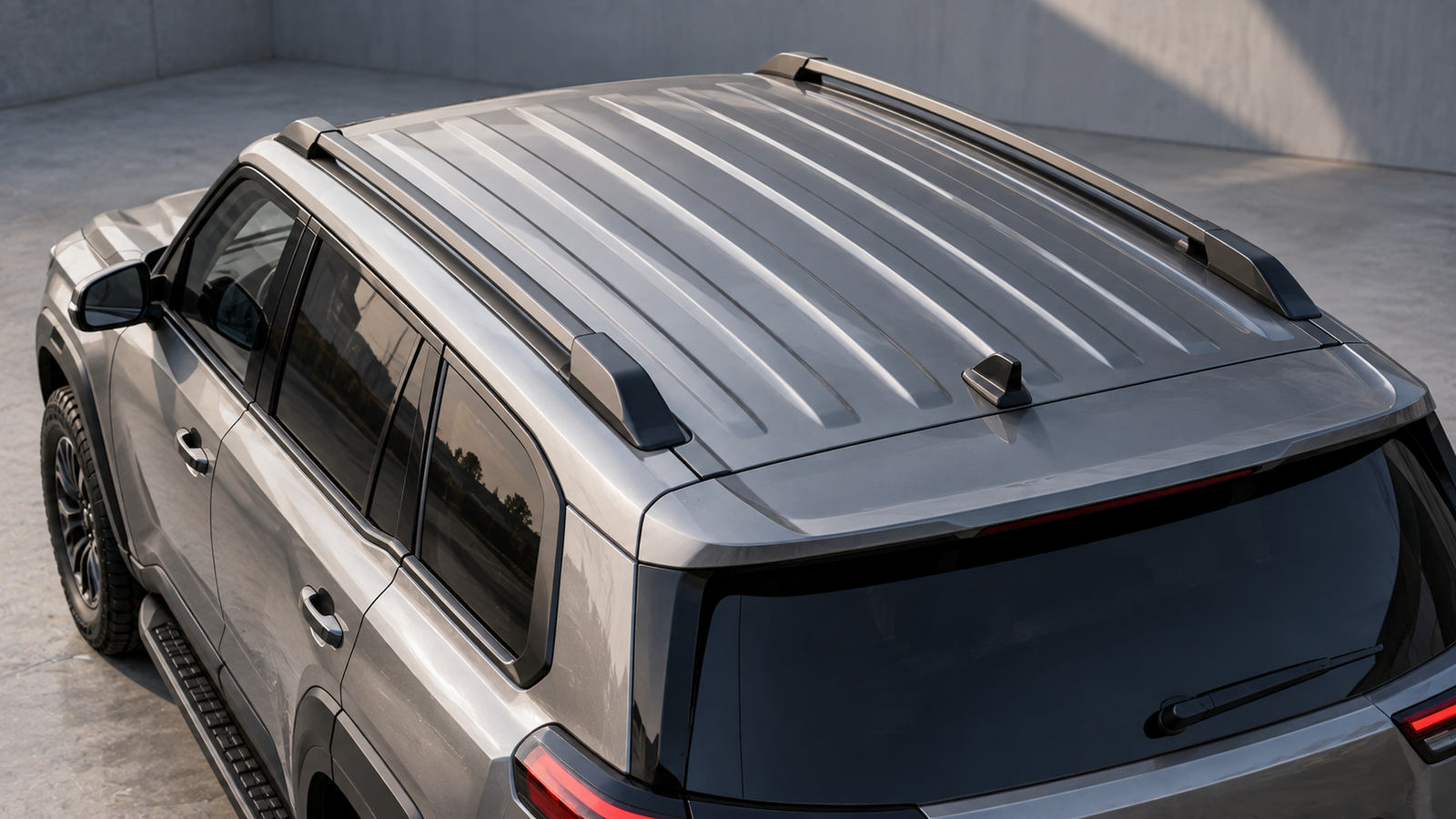
However, if you ask in each individual case which specific car element performs the stated function, most of these explanations cease to look convincing. In reality, the role of the outer roof panel is much more modest, and its relief is primarily related to the behavior of a thin metal sheet.
Will the roof withstand a rollover
One common theory is that an SUV's high and large roof is inherently less strong, and longitudinal ribs help prevent it from collapsing during a rollover. But the roof strength test setup shows which parts actually bear the load.
During a crash test, an inclined steel plate is lowered onto one edge of the roof at approximately 3 mm per second. Then, the force required to depress the upper part of the body by 127 mm is determined. To achieve the highest rating, the structure must withstand a load equivalent to four times the vehicle's own weight.
During the test, the plate rests on the roof section in front of the rear pillar. The resulting load is distributed by the front and middle pillars, the crossbar above the windshield, and the side roof rails. These elements are made of high-strength steel.
The outer panel, however, has completely different properties. Soft and ductile steel is used for its forming — otherwise, such a sheet cannot be stretched into the required shape on a press. In a side impact, the outer panel accounts for about 12% of the load, which is less than most other elements of the upper body. Therefore, in a structure designed to maintain cabin space during a rollover, the outer roof is primarily a covering, not a structural element.
Ribs are not responsible for body rigidity
Another explanation links the stampings to the body's resistance to twisting on uneven roads. It is believed that the ribs prevent the body from skewing, which maintains the geometry of the openings and allows doors to continue opening normally.
But the outer body panels perform almost no structural work. This applies not only to the roof but also to the fenders and outer door panels. The main work of resisting twisting falls on the parts located under the skin:
- pillars;
- sills;
- cross members;
- reinforcements made of thicker metal.
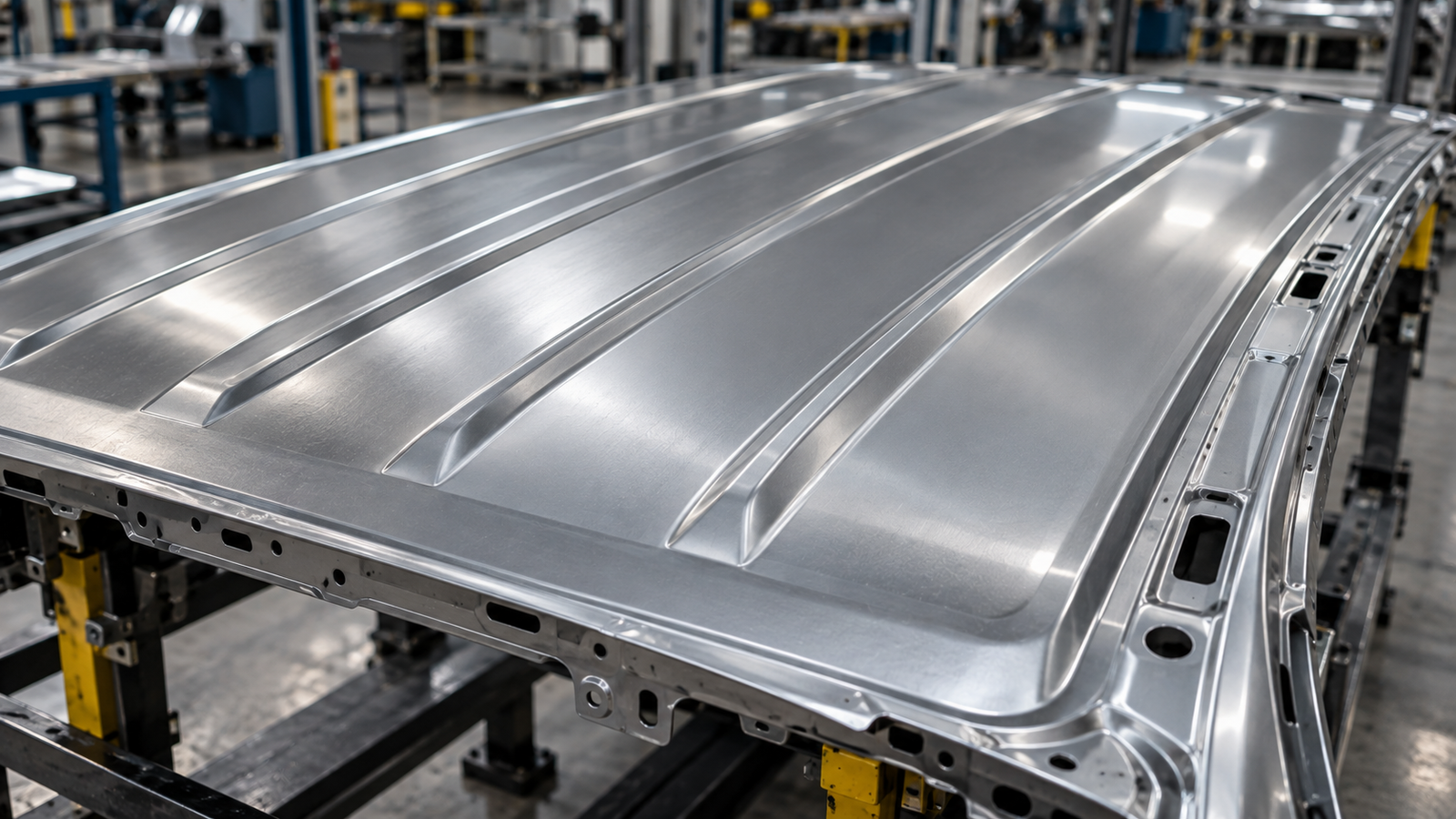
A thin sheet about 0.7 mm thick with shallow stampings does not add the structural function to this design that is sometimes attributed to it.
Aerodynamics are not involved here either
The third explanation places longitudinal ribs directly in the realm of aerodynamics. According to this version, the stampings should manage airflow, reduce turbulence, decrease fuel consumption, and simultaneously make the car quieter.
The airflow itself is indeed important: if it separates from the roof surface too early, a turbulent area forms behind the separation point, and drag increases. However, the desired effect is not provided by the corrugation of the metal sheet.
The roof is specially stamped with a small dome, the apex of which is located approximately in the area of the central pillar. It is the surface profile that helps the flow not to separate too early. The same convex shape is useful during rain: water flows to the side gutters, and then is directed forward and backward, bypassing the door openings.
Items installed directly on the roof change aerodynamics much more significantly. Luggage rack crossbars intersect the airflow, increase drag, and become a source of additional noise on the highway.
Ribs do not hold luggage
The fourth version seems logical only at first glance. An SUV's roof is large and relatively flat, so it seems that longitudinal stampings should act as a kind of structural element holding luggage.
But the load from the luggage rack is transferred in a completely different way. Its supports are installed on roof rails, in rain gutters, or in special threaded holes covered with plugs. Thus, the weight passes into the side parts of the body, bypassing the outer roof panel.
The limitation of the allowed load, which is usually 50–100 kg, is also not due to the sheet possibly denting or the pillars not withstanding the weight itself. The cargo is high and raises the car's center of gravity. As a result, the car rolls more in turns and becomes more prone to skidding, so the permissible mass is kept small.
However, the explanation with luggage still has one real aspect. A textured sheet is harder to damage with a heavy object, and a small dent on a surface with stampings is much less noticeable.
The main purpose of ribs is thin metal
The fifth version turns out to be the only one that truly withstands scrutiny, although the reason is not directly in the cost of manufacturing the stamping itself. The problem is related to the behavior of a very thin sheet of large area.
A flat steel panel less than a millimeter thick behaves much like the bottom of a tin can. Noticeable waves appear on its surface, and when pressed, the metal can sharply bend in the opposite direction, then just as sharply return. In a car, vibration coming through the pillars from below is added to this: as a result, the thin sheet begins to hum directly above the heads of people in the cabin.
This phenomenon has an engineering name — oil canning. Stampings help combat it without increasing the panel's thickness and mass. A single longitudinal strip can increase the rigidity of a flat sheet by about a third. Moreover, a 2 mm thick sheet with ribs can withstand a greater load than a smooth 3 mm thick sheet. This is especially important for the roof: stampings provide the necessary rigidity without adding metal.
On the roof, ribs are placed along the body at intervals of approximately 25–30 cm. If they were omitted, one of two options would have to be chosen:
- use thicker steel;
- install additional reinforcements under the roof and add vibration-damping materials.
Both solutions increase the mass and cost of the structure, and internal reinforcements also take up space above passengers' heads. The pattern of the stampings itself must be coordinated with designers, as the roof is an external, visible part of the car.
Why sedans have smooth roofs
A typical passenger car's roof is shorter and noticeably more convex. Such a dome itself increases the panel's rigidity and prevents it from flapping and vibrating. Designers have been using this property for a long time.
In 1935, GM was the first to use an all-steel roof. It was given a heavily rounded shape partly to reduce the drumming of the metal panel.
Before such a design, the central part of the roof was covered by a combination of wood, mesh, and impregnated fabric, which also helped to dampen noise. At the same time, a mill capable of rolling a sheet almost 2 m wide appeared only three years earlier. Even after switching to metal, wooden supports remained under the panels in American cars — without them, the sheets would start to vibrate and hum.
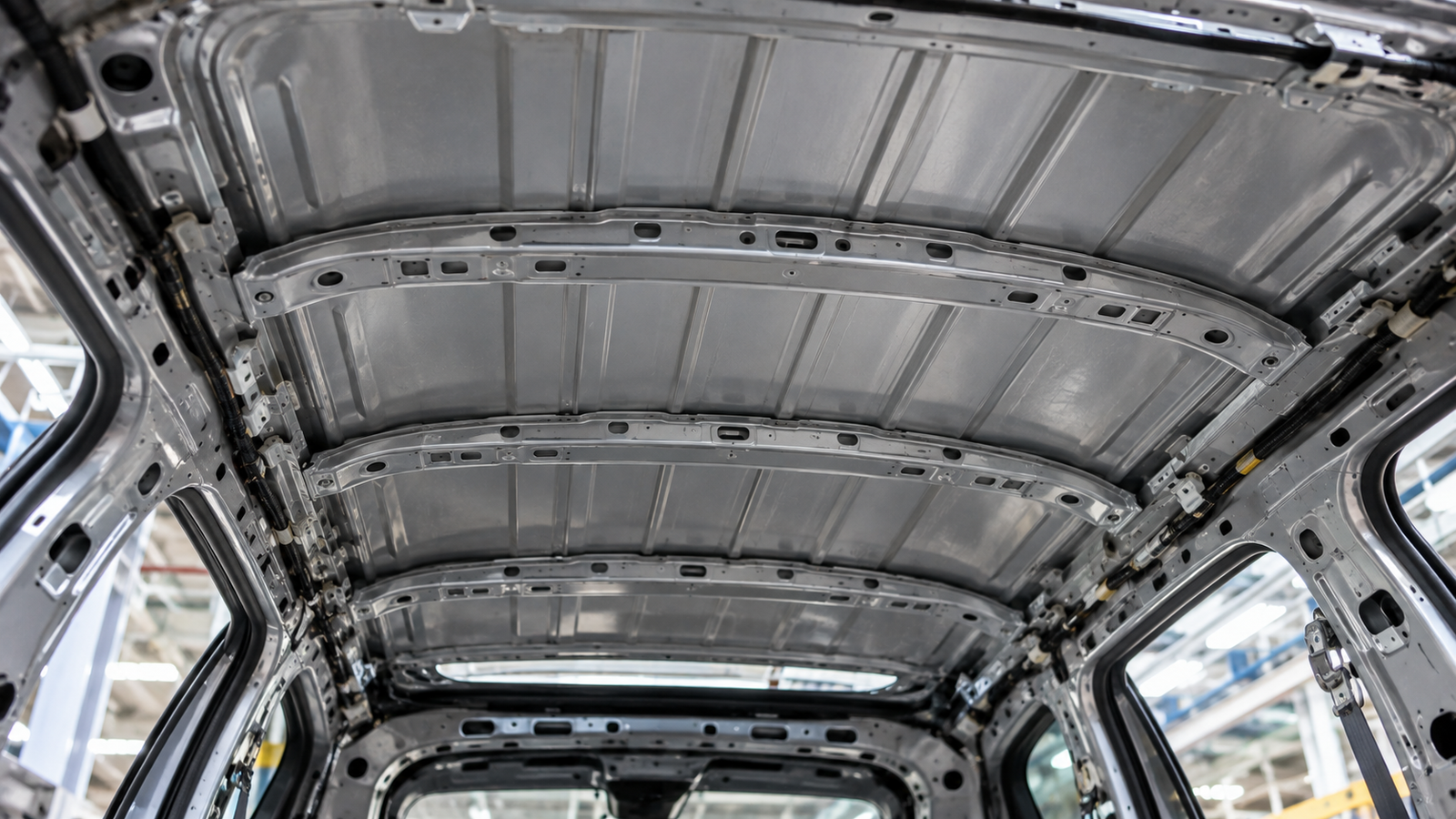
An SUV has different conditions. Its roof is longer and much closer to a flat shape, so convexity alone is no longer sufficient. Longitudinal ribs increase the rigidity of the panel itself, and transverse arches are installed underneath to prevent vibration at speed.
Mastic or foamed sealant is used between the metal sheet and each such arch. But this material is not eternal either. Sometimes, within the first year, it dries out and cracks, after which it no longer holds the sheet properly. As a result, the roof starts to shake again.
For a small car, such corrugation is usually not required. Its roof area is smaller, and if reinforcement is still necessary, it can be placed on the reverse side of the panel. After installing the headliner, such elements are no longer visible from the cabin.
What happened to the Chevrolet Colorado and GMC Canyon
A striking example of what happens to a large roof with insufficient rigidity was provided by the new generation mid-size Chevrolet Colorado and GMC Canyon pickups, introduced in 2023.
Owners discovered the problem at automatic car washes during drying. Under the influence of a strong airflow, the roof would loudly buckle inward. On some vehicles, the metal would then return to its original position on its own, while on others, the dent remained. The problem did not affect cars with a sunroof. The sunroof frame itself served as an internal support for the panel and supported the metal.
GM issued a service bulletin stating that dealers needed to partially lower the headliner and install five reinforcing pads on the inside of the roof. However, the solution was not effective for all vehicles. One owner of a 2024 pickup received such pads after the first car wash. A few weeks later, the vehicle went to the car wash again, from which it returned with a new dent on the roof.
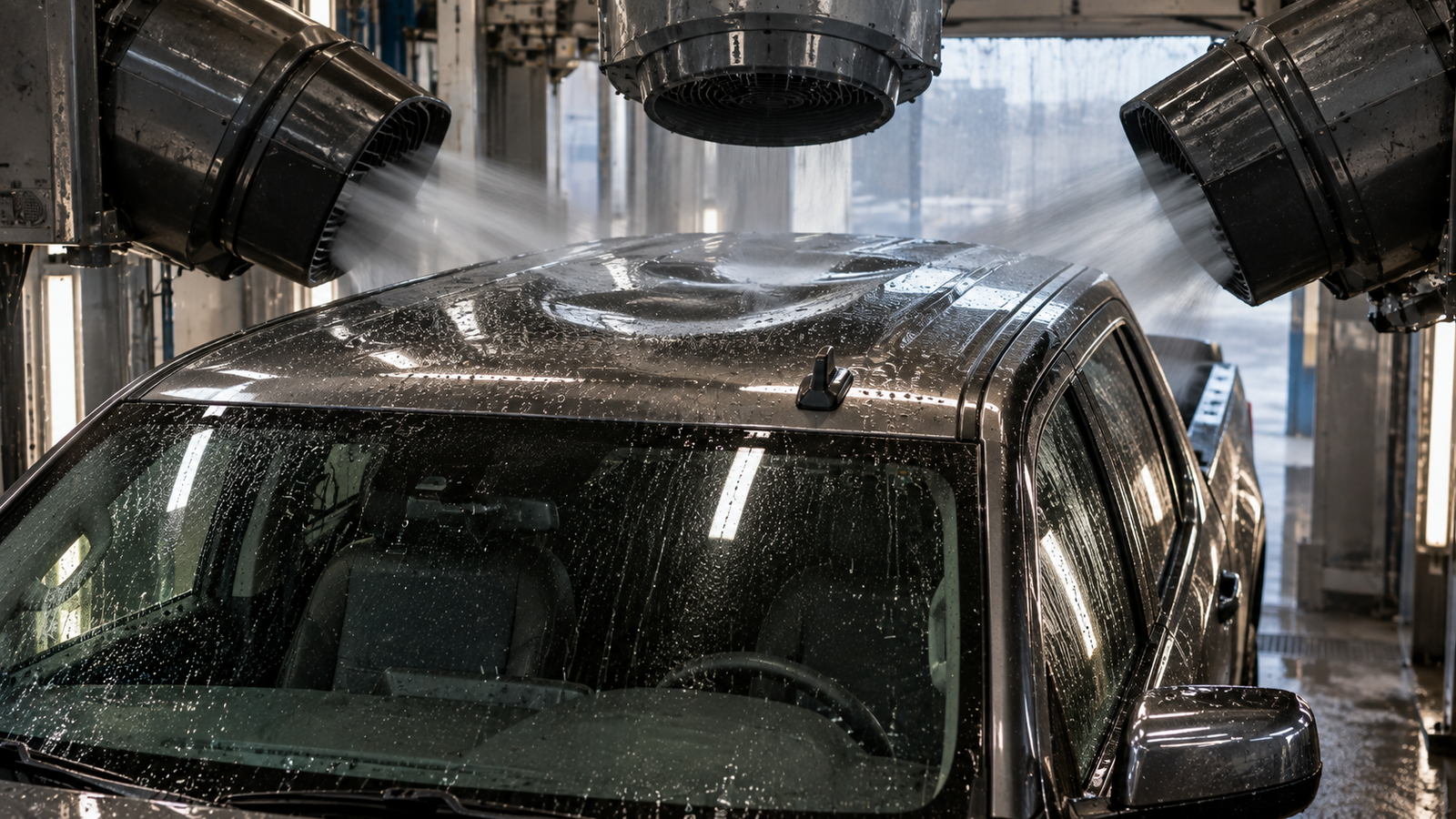
In 2025, the procedure was expanded. In addition to the five pads, a longitudinal arch was installed under the roof, secured with five rivets and structural adhesive. An anti-vibration layer was provided along the entire length between the elements.
Thus, the longitudinal ribs on an SUV's roof are primarily not needed for the car to better withstand a rollover, not for holding luggage, and not for improving aerodynamics. Their main task is related to the thin outer panel of a large area: the stampings allow it to be given the necessary rigidity while avoiding an increase in metal thickness, additional reinforcements, and vibration-damping materials.
Read more materials:
- Why oil, not water, is poured into a shock absorber
- ESP OFF: why disable the stability control system
- Car warranty: can you do maintenance yourself
Комментарии