When you disassemble a shock absorber, nothing particularly mysterious happens inside: a spring, a rod, a piston, valves, and fluid. But it is the latter detail that at first glance raises a strange question: why is there oil here at all? Water is cheaper, more accessible, and looks much more convenient. It would seem, why not fill the shock absorber with it?
The answer lies not in the cost of the fluid, but in its physical properties. A shock absorber needs more than just fluid. It is required to create calculated resistance to movement, lubricate parts, maintain performance when heated, and not become a problem in winter. Therefore, ordinary water is practically unsuitable for such a task.
A spring alone cannot calm the suspension
To understand the purpose of oil, you first need to understand how the shock absorber itself works. The suspension spring absorbs the energy of the impact. When the wheel hits an irregularity, the spring compresses and then tends to return to its original state. The problem is that the stored energy does not disappear.
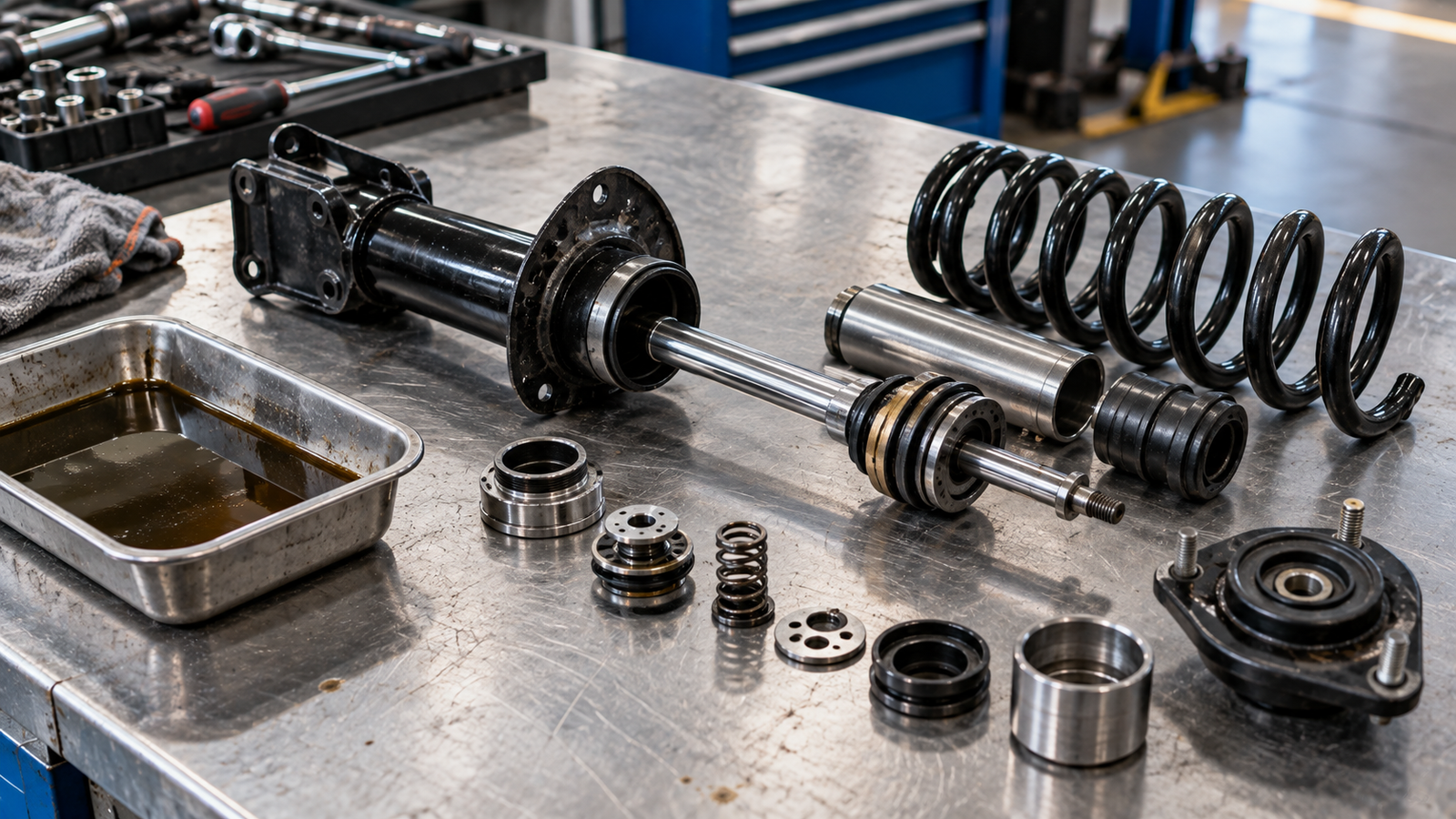
If only a spring is left in the suspension, after hitting an obstacle, the car will start to sway. The body will rise, fall, rise again - and the oscillations will continue, gradually fading away on their own. This is where the shock absorber comes in. Its task is not to "hold" the car instead of the spring, but to control its movement and dissipate oscillation energy. As a result, mechanical energy is mainly converted into heat. And this happens due to the movement of the working fluid through the valve system.
The main principle is resistance to fluid flow
Inside the shock absorber is a piston with channels and valves. When the rod moves, the piston forces the fluid to move from one part of the body to another. The passage for the fluid is restricted. Therefore, when it moves through small openings, hydraulic resistance occurs.
The more intensely the piston moves, the greater the resistance created by the flow. The energy of movement is dissipated in the fluid and shock absorber parts in the form of heat. Simplified, the process looks like this:
- The wheel encounters an irregularity.
- The spring compresses or expands.
- The piston moves inside the shock absorber.
- The working fluid passes through valves and throttling channels.
- Resistance to movement occurs.
- Oscillation energy is dissipated as heat.
That is why the shock absorber is able to quickly calm the spring, which without it would continue to rock the car.
Why one hole is not enough
The shock absorber must work differently in various driving modes. If the resistance is always the same, the suspension will be either excessively soft or too stiff. Therefore, valves are used inside, the characteristics of which are calculated for different directions and speeds of piston movement. Roughly, two main modes can be distinguished:
- compression — when the rod enters the body;
- rebound — when the rod exits back.
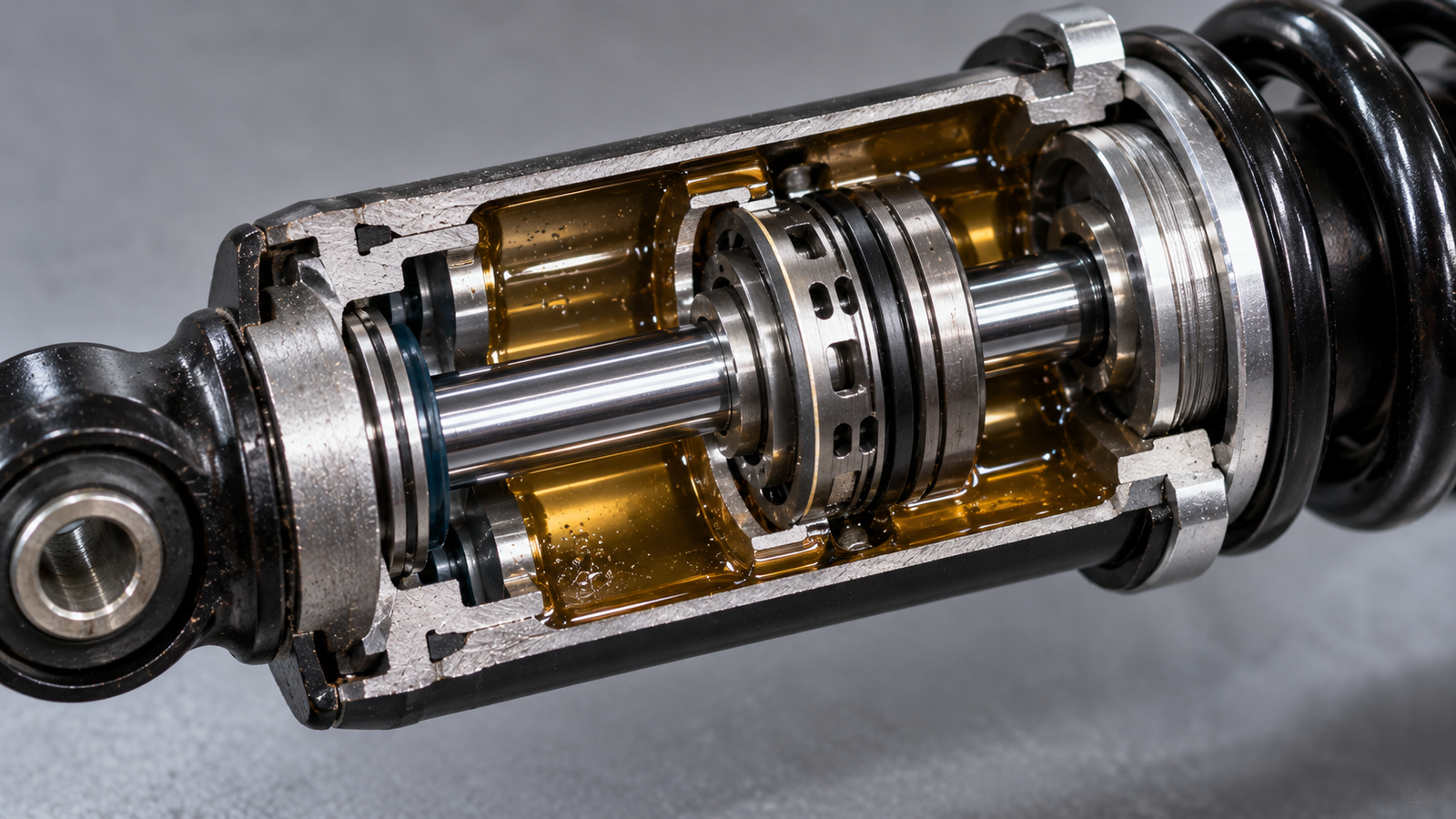
During compression, the fluid passes through the corresponding valves and channels. During rebound, the flow is directed along a different path. The characteristics of these elements determine how the car reacts to irregularities, how quickly the body stops swaying, and how stably the wheel maintains contact with the road. That is why tuning a shock absorber is a much more complex task than simply choosing a "thick" or "thin" working fluid.
Why oil became the working fluid
Now back to the original question. Why can't ordinary water be used? The first reason is viscosity. Oil usually has significantly greater viscosity than water. This allows for the necessary hydraulic resistance to be formed when the fluid passes through relatively small channels and valves.
Simply put, engineers can precisely tune the characteristics of the shock absorber by combining the properties of the fluid and the design of the valves. Water is significantly less viscous. To obtain comparable flow resistance, the geometry of the hydraulic part would have to be changed. But the problem would not end there.
Oil performs several tasks simultaneously
The working fluid in a shock absorber is needed not only to create flow resistance. Firstly, it provides lubrication. Inside the shock absorber, there are moving and rubbing parts. The oil film reduces friction and wear of the rod, piston, guides, and other elements.
Secondly, temperature is important. During intensive operation, the shock absorber heats up. The fluid changes viscosity, which means the resistance it creates also changes. Therefore, special working fluids are used for automotive shock absorbers, whose characteristics are designed for a wide range of temperatures.
Thirdly, frost resistance matters. Ordinary water freezes at 0 °C. For a part that must work on a car in winter, this is an obvious problem. The working fluid of the shock absorber must remain fluid at negative temperatures.
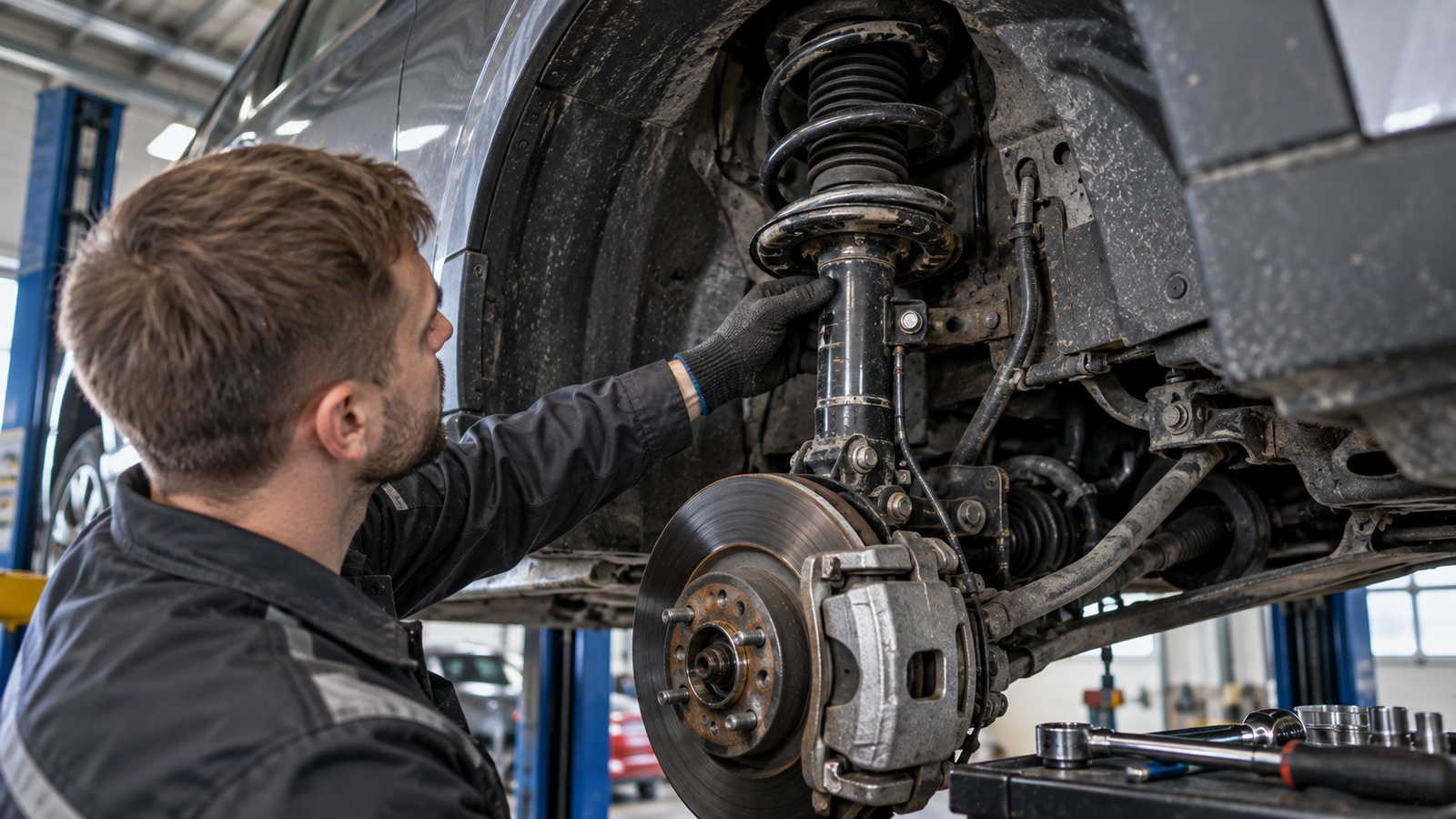
Fourthly, it is necessary to protect internal parts from corrosion. Water in contact with metal surfaces creates completely different conditions than specially developed shock absorber fluid. Additives are used in oils, including those that protect parts from corrosion. Finally, property stability is important. The working fluid must maintain predictable characteristics for a long time and under various operating conditions of the shock absorber. Therefore, oil here is not just a random filler, but part of the entire engineering system.
What determines the stiffness of a shock absorber
One might think that the thicker the oil, the better the shock absorber dampens vibrations. But it's much more complicated. Resistance is created not only by the properties of the fluid. The size of the channels, the design of the piston, the characteristics of the valves, and the speed of the rod movement play a huge role. For example, too much rebound resistance can lead to the wheel following road irregularities less effectively. Too little will allow the body to continue swaying.
The same applies to compression. If the shock absorber is made excessively stiff, the car will react sharply to irregularities. If not stiff enough, the suspension will not be able to effectively control body movements. Therefore, engineers have to find a balance between comfort, stability, and maintaining wheel contact with the road.
Why the shock absorber heats up
During operation, the fluid constantly moves through valves and narrow channels. Hydraulic resistance leads to energy dissipation in the form of heat. The more intensively the suspension works, the more heat is generated. This is especially noticeable on bad roads, during sporty driving, or under heavy load. The temperature of the working fluid rises, and with it, its physical properties change.
To solve this problem, special shock absorber fluids with a suitable viscosity index are used. Their characteristics must remain as stable as possible when the temperature changes. In some designs, additional gas and working cavities or reservoirs are used to increase the volume of the working fluid and improve the thermal regime of the structure.
Why water loses on almost all important parameters
If you put it all together, it becomes clear why the idea of replacing oil with water doesn't work. Water:
- has significantly lower viscosity;
- freezes at normal winter temperatures;
- does not provide the necessary oil lubrication for rubbing parts;
- creates conditions for corrosion of metal components;
- does not possess the complex of additives and temperature characteristics required for a special working fluid.
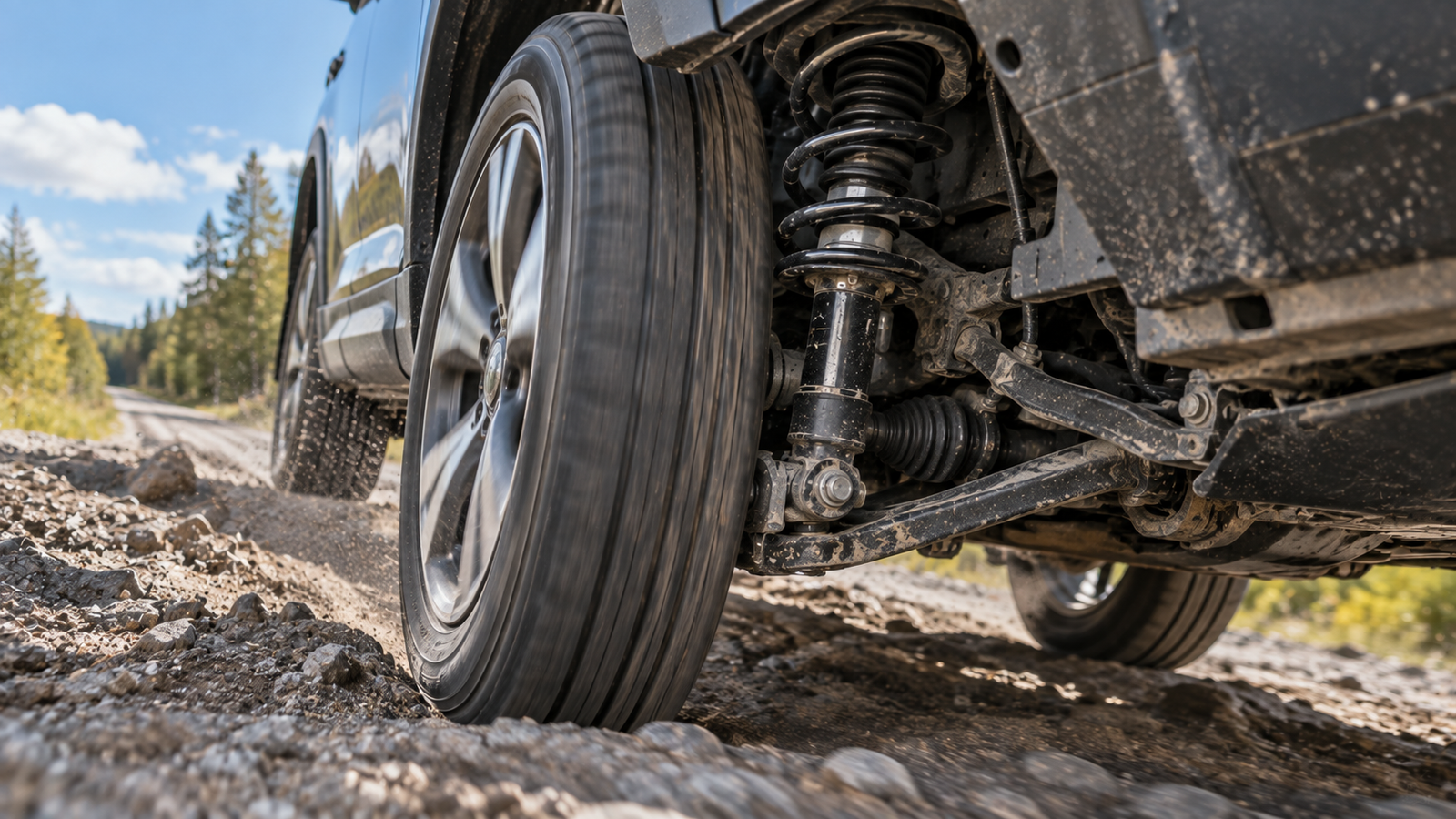
Oil, on the contrary, allows several tasks to be solved simultaneously: provide the necessary hydraulic resistance, lubricate parts, protect internal surfaces, and maintain working properties when the temperature changes. That is why the fluid inside the shock absorber is as important a part of its design as the piston and valves.
The shock absorber doesn't just "hold" the car
In everyday life, it is often said that a shock absorber is needed so that the car does not sway. This is true, but only partially. Its work directly affects the contact of the wheel with the road. The wheel must not only move with the body, but also maintain the ability to effectively transmit braking, traction, and lateral forces. Therefore, the characteristics of the shock absorber are directly related not only to comfort but also to the car's handling.
And here it becomes especially clear why such strict requirements are placed on the working fluid. The shock absorber must predictably convert kinetic energy into heat every time. It does this by moving fluid through a calculated system of channels and valves. So the oil inside the shock absorber is not just "fluid instead of water." It is a working element of the entire hydraulic system, and its properties determine how accurately the suspension will perform its task.
Read more articles:
- How an electric car was the first in history to accelerate to 105 km/h
- The main mistake when loading a trailer, which is dangerous at speed
- Why Soviet trucks had wooden bodies
Комментарии