October brought several notable changes for motorists, but not all messages currently circulating on social media and messengers are true.
Most rumors are related to traffic police fines and automatic OSAGO checks. However, real changes as of early October mainly concern seasonal fuel, tax notifications, and restrictions on petroleum product exports. A separate issue is the launch of automatic OSAGO checks: the relevant legislative framework is already in place, but the timing of full camera utilization should not be confused with the date of October 1.
No new fines from October 1
One of the most actively circulating stories in recent weeks is the alleged new sharp increase in traffic police fines from October 1, 2026. Publications claim that drivers will have to pay more for speeding, driving into oncoming traffic, driving on the shoulder, and driving without OSAGO.

As of October 1, 2026, there is no separate general increase in fines specifically timed for this date. The main significant increase in penalties for traffic violations occurred on January 1, 2025: at that time, fines for many offenses increased by 1.5 times, and the discount system for prompt payment changed simultaneously.
The 2025 changes also include new liability for repeated absence of mandatory insurance. For a repeated offense under Part 2 of Article 12.37 of the Code of Administrative Offenses of the Russian Federation, a fine of 3000 to 5000 rubles is currently provided. However, a separate rule has been in effect since March 23, 2026: for the second and subsequent detections of a violation within 24 hours after the first prosecution, a repeated fine should not be imposed.
Therefore, the assertion of a new increase in these amounts specifically from October 1, 2026, is not confirmed by current regulations.
Seasonal fuel transition begins at gas stations
October is also associated with seasonal requirements for gasoline. GOST R 51866-2002 provides for different classes of fuel volatility for summer, transitional, and winter periods. Specific dates depend on the region: for example, for Moscow, the transitional autumn period in the standard table falls in October, and winter begins in November.
The meaning of seasonal division lies primarily in the requirements for gasoline volatility. At low temperatures, fuel must provide the necessary conditions for normal engine starting, so the characteristics of gasoline for the cold period differ from those for summer.
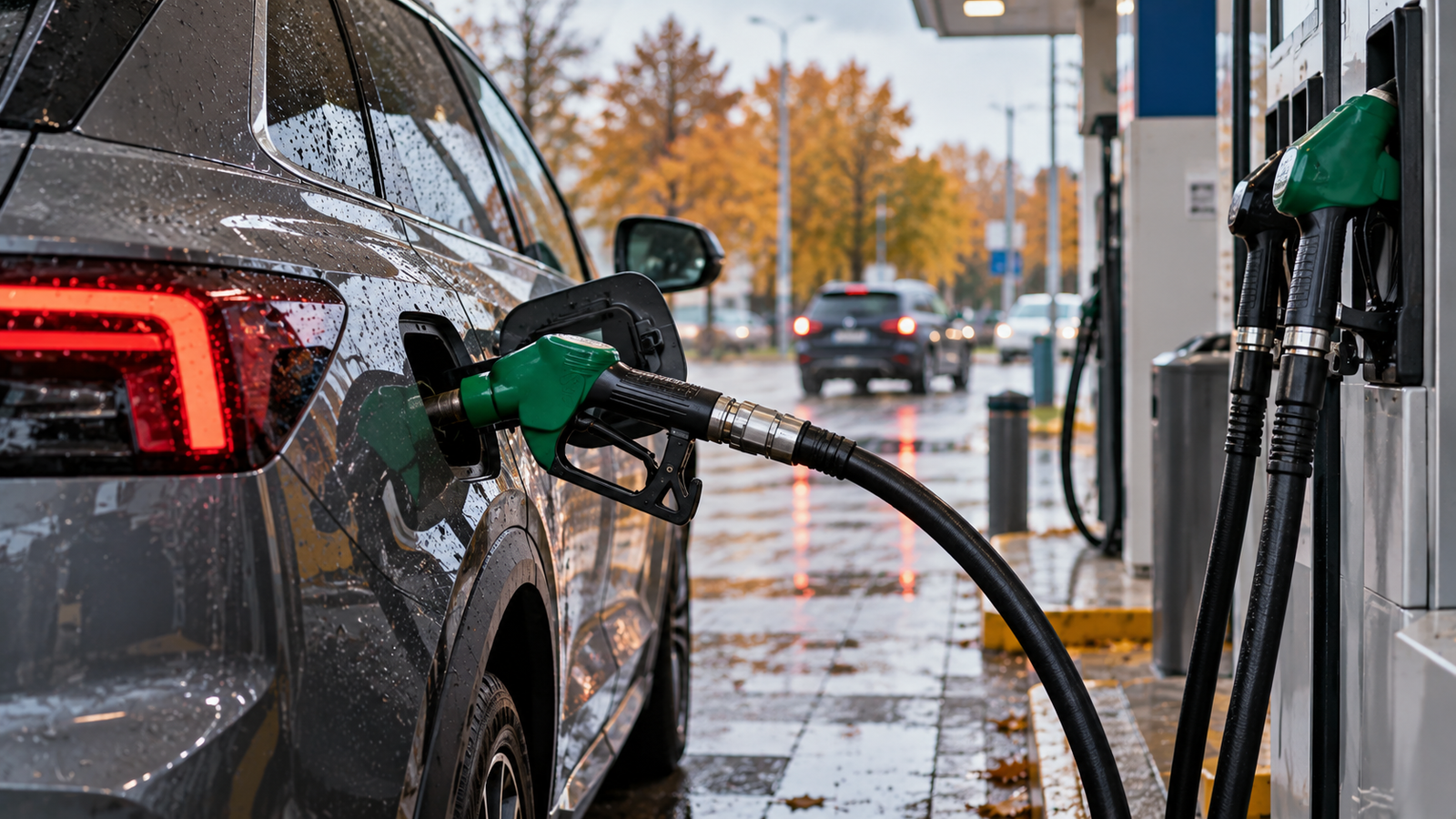
However, motorists do not need to choose between “summer” and “winter” gasoline themselves. The transition to appropriate fuel classes is ensured by manufacturers and suppliers. Therefore, the assertion that from October 1, all Russian gas stations should simultaneously have the same “interseasonal gasoline” is too categorical: the timing of seasonal use depends on the region and fuel class.
Cameras for OSAGO absence should not be tied to October 1
The situation with automatic OSAGO checks is more complex. In 2026, legislation already provides for the possibility of automatic recording of the corresponding violation, and since March 23, there has been a limit on the number of penalties for lack of insurance: the second and subsequent detections within 24 hours after the first should not lead to a new penalty.
However, it does not follow from this that from October 1, 2026, all traffic police cameras automatically began mass checking for policies on every passing car. For such a conclusion, separate information is needed about the actual launch of the corresponding system and its application on specific complexes.
Therefore, it is more correct to say: the legislative possibility for automatic fixation already exists, and the technical launch of the system is a separate process. The date of October 1 should not be presented as a legally established day when all road cameras simultaneously switched to OSAGO checks.
Ban on diesel fuel exports extended until the end of October
One of the confirmed decisions of recent days does not directly concern drivers, but is related to the domestic fuel market. On September 29, 2026, the government amended the resolution on the temporary ban on the export of certain types of fuel. The ban on the export of diesel and marine fuel, as well as certain gas oils, by direct producers has been extended until October 31 inclusive.
The government explained the decision by the need to maintain a stable situation in the domestic fuel market, including during periods of increased demand during the harvesting campaign.

At the same time, this refers specifically to limiting the export of certain petroleum products and specific categories of suppliers. Therefore, directly linking this decision to a guaranteed change in prices at gas stations would be incorrect. The impact of such a measure on the domestic market depends on a combination of factors.
Tax notifications for 2025 are already being sent out
In autumn, motorists should check their tax notifications. In 2026, the FNS sends individuals accruals for property taxes for 2025, including transport tax. The amounts specified in the notification must be paid no later than December 1, 2026.
However, the assertion that all mailings must necessarily be completed in October should not be used. The FNS indicates that a tax notification is sent no later than 30 days before the due date. For taxes for 2025, this deadline is December 1, 2026. Therefore, one should focus not on the end of October, but on the legally established deadline for receiving the notification.
From August 1, 2026, the procedure for sending tax notifications through Gosuslugi changed. For taxpayers registered in ESIA, notifications in electronic form are automatically sent to the personal account on the Unified Portal of State and Municipal Services, unless the citizen has refused such a method of receipt.
Therefore, it is indeed not necessary to wait for a paper letter. You can check the accruals in your FNS personal account or on Gosuslugi.
If the tax is not paid on time, a debt arises and penalties are accrued. The FNS also provides for legally prescribed debt collection procedures, so delaying payment solely due to the absence of a paper notification is not advisable.

October 1, 2026, did not become the date of another mass increase in traffic police fines. The main increase in penalties for many violations occurred in January 2025, and the restriction on repeated fines for OSAGO absence, effective since March 2026, appeared as a separate law and is not related to the beginning of October.
Among the current October changes, one can highlight the seasonal transition to standard-compliant gasoline classes depending on the region, the extension until October 31 of restrictions on the export of diesel and marine fuel and certain gas oils by direct producers, as well as the ongoing mailing of tax notifications for 2025.
Motorists should distinguish between norms that have already come into force and reports of alleged changes. This applies especially to fines and automatic OSAGO fixation: the existence of a legally provided mechanism does not yet mean that from a specific date, all cameras across the country simultaneously began operating in a new mode.
Read more materials:
- What can be changed in a car without coordination with the traffic police
- Why does a car brake worse in autumn even without snow and ice
- What to lubricate caliper guides with: main mistakes