The desire to make a car more comfortable or to add individuality to it is quite understandable. But with modifications, there is an important nuance: not every change is considered a modification to the design, which means not every installation requires a separate approval procedure. At the same time, some common operations that owners consider harmless tuning already affect the car's characteristics and require registration.
Therefore, before installing new equipment, it is important to look not only at its purpose but also at whether it changes the design or parameters of the car, whether such components are provided by the manufacturer, and whether the installation complies with safety requirements. For changes already made, there is an established procedure: first, permission is obtained, then work and safety checks are carried out, after which a certificate is issued and information is entered into the registration data.
Interior: lighting, steering wheel, seats, and equipment
Inside the car, there are indeed many opportunities for modification. Standard ceiling lights can be replaced with others, additional footwell lighting can be installed, the multimedia system can be changed, a diagnostic device or an onboard computer can be installed. However, the phrase “you can do whatever you want” is too broad here: additional equipment must not impair safety or interfere with the operation of standard systems.
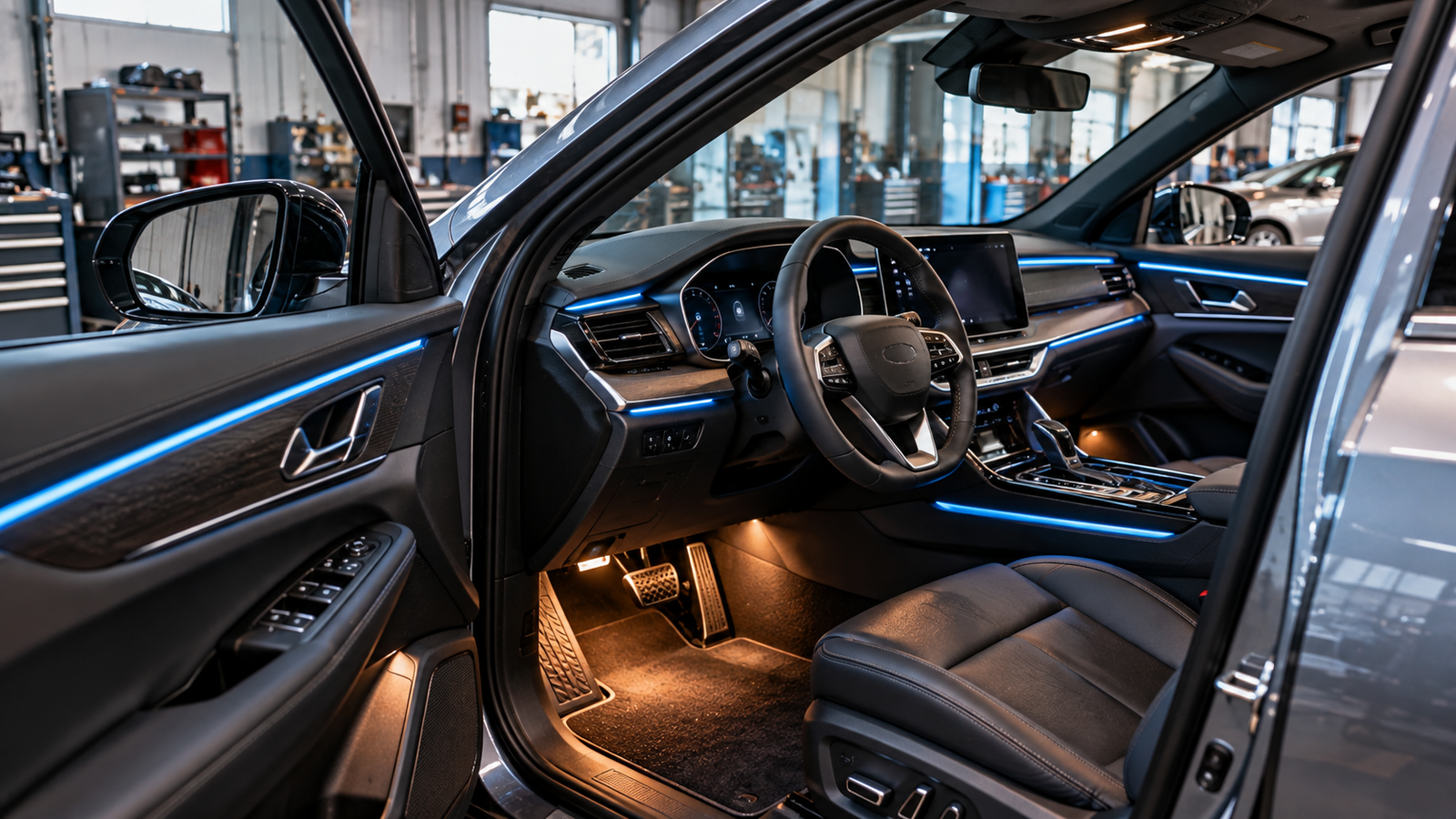
With lighting, it is especially important not to turn a decorative installation into an imitation of special signals. Separate liability is provided for installing red lights on the front of the car, and sanctions are even stricter for special light or sound signaling devices without permission. Therefore, decorative lighting must be placed and connected in such a way that it does not contradict the requirements for external lighting devices.
The steering wheel can be re-upholstered in leather or a cover can be installed, provided it does not interfere with the operation of standard controls and safety systems. However, replacing the steering wheel with another one already requires a separate assessment: if the car's design is changed or a component not intended for this model is installed, the issue must be considered within the framework of the modification procedure.
The situation with seats is similar. Additional covers and equipment are permissible provided they do not interfere with seat belts, airbags, and adjustment mechanisms. Unauthorized replacement of standard seats with structurally different ones may already be considered a design change.
Pedal pads themselves are not a separately prohibited type of equipment, but they must be securely fastened and not impede the operation of the pedals. The same applies to floor mats: the main thing is not their appearance, but that they do not shift and cannot get under the pedals.
The car radio can be replaced with another compatible device, including one with a screen, navigation, a rearview camera, or diagnostic functions. An additional onboard computer connected to the car's standard systems also does not automatically become a design change just because of the fact of installation. But when installing any equipment, it is important not to interfere with standard safety systems and wiring in a way that could affect their operation.
Protection, parking sensors, and additional equipment
Engine or gearbox protection can be installed as additional equipment if the specific option is suitable for the car and does not create safety or maintenance problems. Here, it should not be assumed in advance that any protection is installed without approval: the method of its attachment and whether it affects the structural elements of the car are important.
Parking sensors and a rearview camera are typical examples of equipment that can be installed to improve convenience. The camera can be integrated into the multimedia system, and sensors can be placed in the front or rear of the car. However, the installation must not impair visibility, the operation of standard lighting devices, and other mandatory elements.
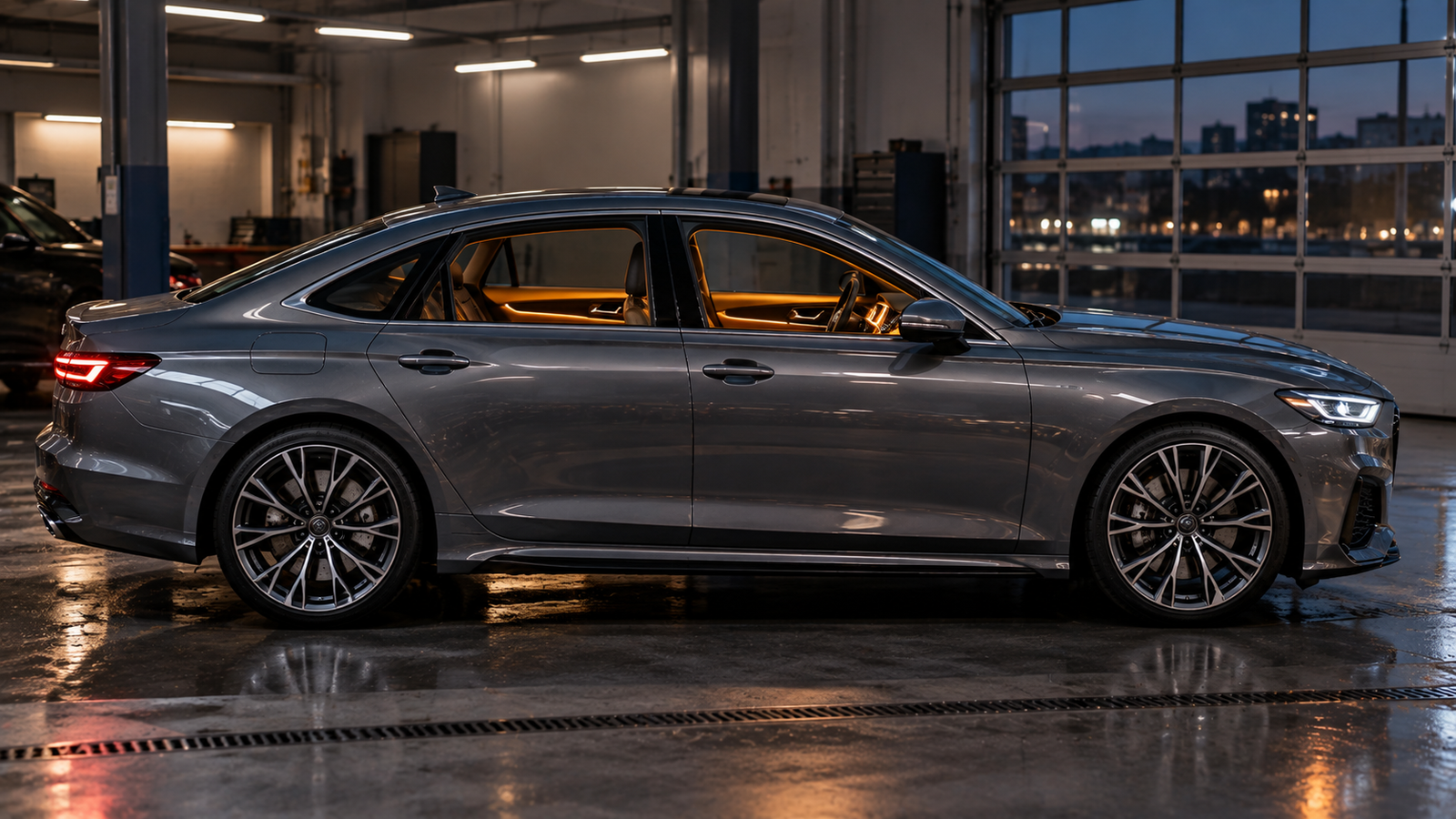
Alarms, central locking, automatic window lifters, and remote start systems are also common additional equipment. When installing them, it is important to comply with the requirements for the car's electrical system and not to confuse a regular security system with special sound or light signals, the use of which is regulated separately.
In the trunk, additional shelves, a false floor, or storage systems can be organized. But here too, the general principle applies: the equipment must not impede access to elements provided by the design and reduce the safety of transporting passengers or cargo.
Gas hood struts, a battery of a different capacity, or additional equipment under the hood cannot be automatically classified as “allowed without registration.” For each specific modification, its design, installation method, and the car manufacturer's requirements must be taken into account.
Wheels and tires: fewer universal rules here than it seems
The situation with wheels is more complex. Legislation does not establish a simple rule according to which any size different from that installed on the car is automatically prohibited, nor is there a universal norm about a permissible deviation of the diameter by exactly 3%. Tire size must comply with the requirements of the car's operating documentation and the wheel used.
Therefore, relying solely on the sticker on the door pillar is not enough: it is necessary to take into account the operating documentation of a specific model and the options provided by the manufacturer. If the selected size is not provided for in the documentation and its installation requires a design change, appropriate registration may be required.
At the same time, it is important not to confuse technical compatibility with legal admissibility. Even if the tire physically fits into the arch and its outer diameter differs insignificantly, this does not yet mean that such a size is allowed specifically for this car.
Low-profile tires are also not automatically prohibited. If a specific size is provided by the manufacturer for this modification of the car, its use itself does not mean making changes. But when switching to a non-standard size, it is already necessary to check compliance with the documentation and the requirements of the technical regulations.
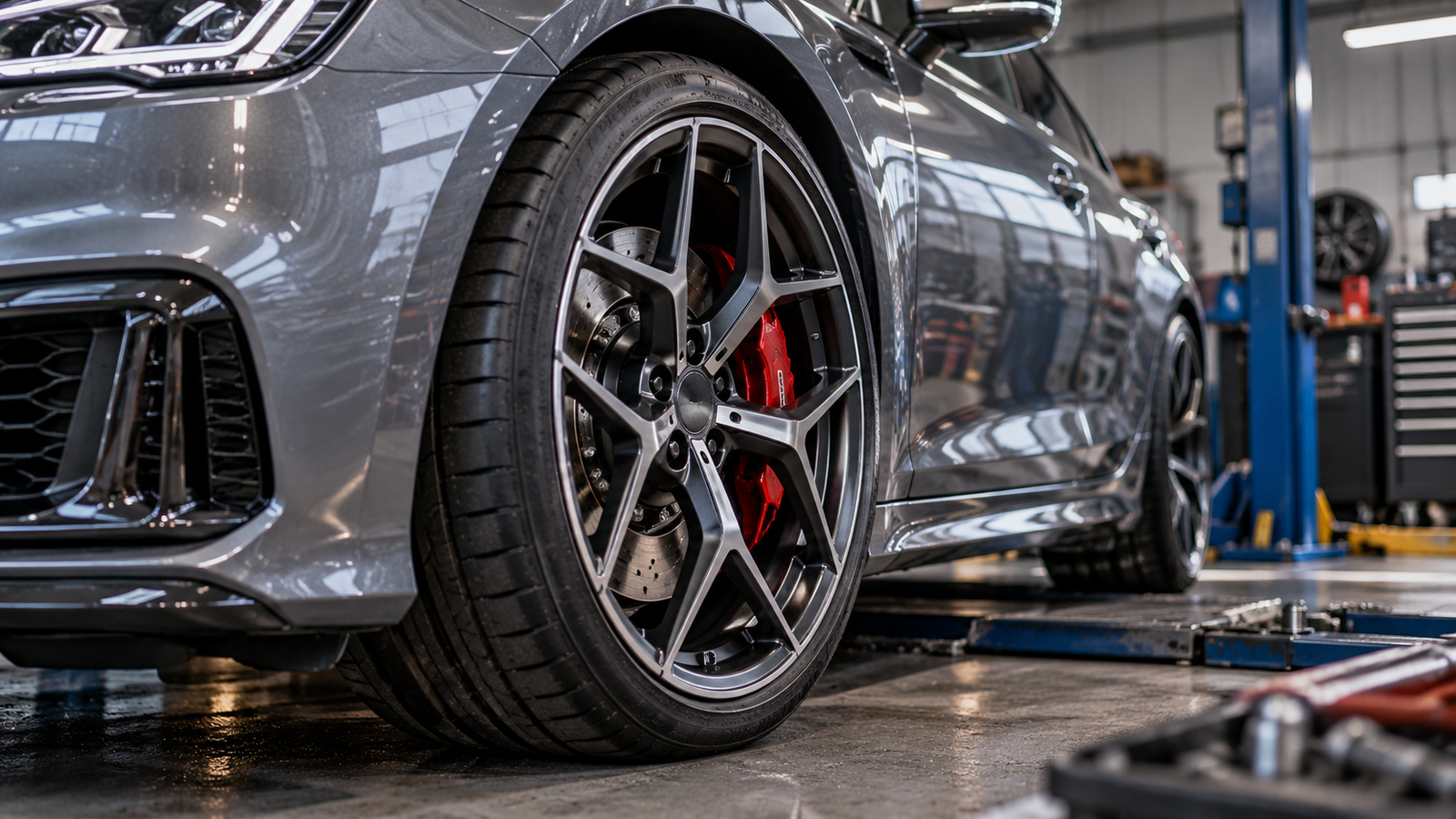
Tire seasonality is regulated separately. For passenger cars of categories M1 and N1, winter conditions are considered to be those in which in December, January, and February, the car must be equipped with winter tires on all wheels. The use of studded tires is prohibited in June, July, and August. These requirements are established by technical regulations.
At the same time, the phrase “you will definitely be fined for summer tires in winter” requires clarification. The technical prohibition on operating a car without winter tires exists, but the issue of specific administrative liability cannot be reduced to a universal statement about a fine for any summer tire.
Wheel disks also cannot be chosen solely by appearance. It is necessary to take into account the diameter, width, offset, mounting parameters, and fastener compatibility. An incorrect disk can create not a legal but a direct technical problem — from a violation of the installation geometry to the risk of fastener damage.
Light and tinting
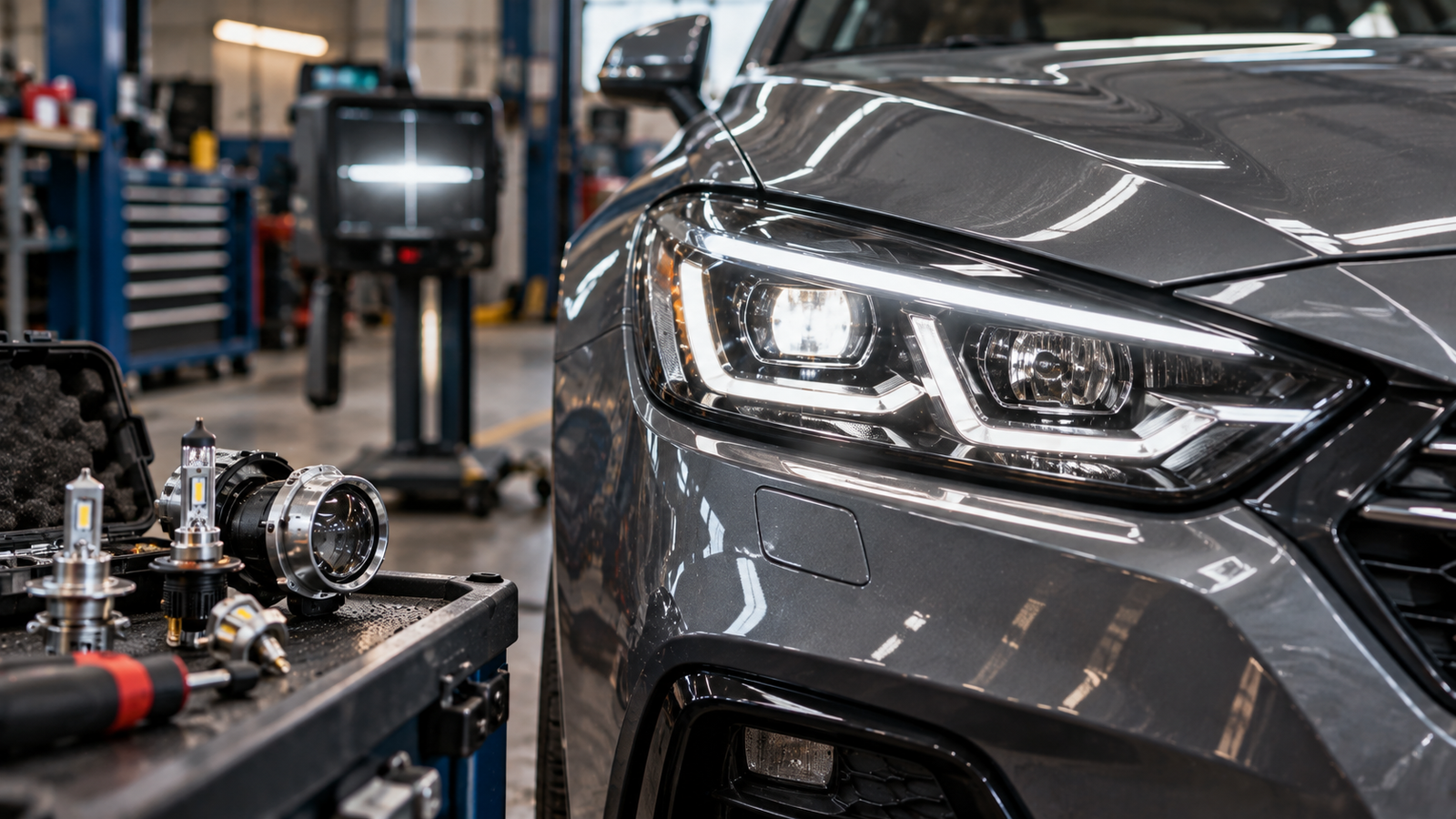
With external lighting devices, you need to be especially careful. A simple replacement of a light source with another type without appropriate optics does not become legal just because the new lamp physically fits into the socket. The design of the headlight, the light source provided for it, and compliance with the requirements for color and operating mode are important.
Separately, it is worth considering the liability for lighting devices that do not comply with established requirements. For example, installing red lights on the front of the car or devices with inappropriate color or operating mode can lead not to a usual fine of 500 rubles, but to deprivation of the right to drive for a period of six months to a year with confiscation of the corresponding devices.
Therefore, installing xenon or an LED source instead of a halogen lamp provided by the design requires an assessment of the entire system, not just the lamp itself. It is necessary to check the requirements for a specific headlight and car, and not to focus solely on the marking of the light source.
With tinting, the rule is much simpler. The light transmission of the windshield and windows through which the driver's forward visibility is ensured must be at least 70%. This requirement is enshrined in the technical regulations and in the current requirements for admitting a car to operation.
For driving a car with windows whose light transmission does not comply with established requirements, a fine of 500 rubles is provided. At the same time, the statement that rear windows can be tinted “even to zero” is too categorical: it is necessary to take into account the general requirements for visibility and the car's design.
What modifications require registration
If the installation of equipment actually changes the car's design, a special procedure applies. Before carrying out the work, it is necessary to obtain permission from the State Traffic Inspectorate, after installation, undergo a safety check of the design, and obtain a certificate of conformity. Then, information about the changes is entered into the car's registration data.
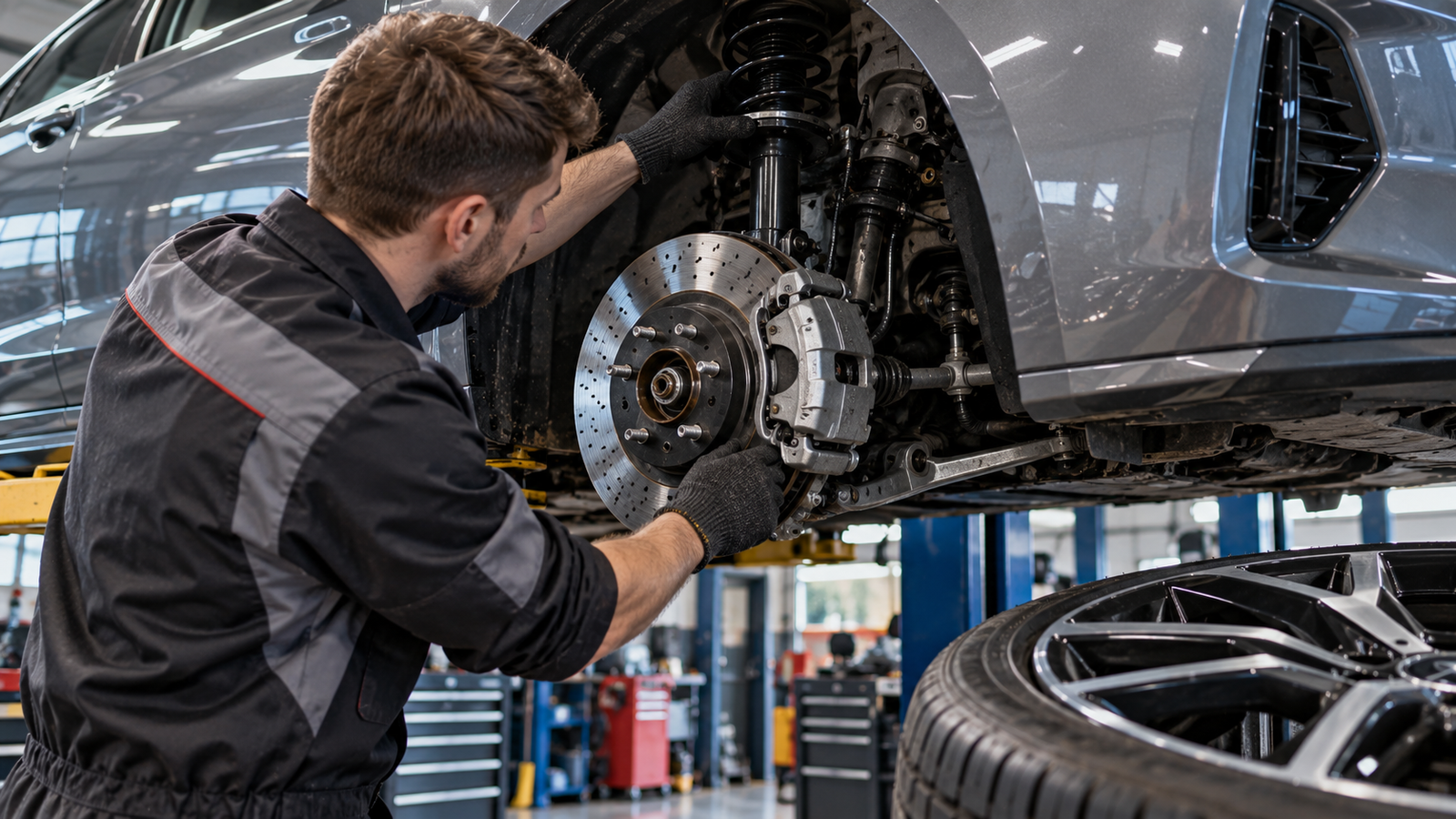
Such cases may include various serious alterations if they change the car's design: installation of power elements, modification of the suspension, replacement of the engine with an option not provided for this modification, conversion to gas fuel, and other works. But here it is impossible to compile a universal list only by the name of the part: the legal qualification depends on the specific design, car, and nature of the change.
Chip tuning should also not be automatically described as a design change in every case. If software intervention changes parameters that affect the car's compliance with established requirements, the issue must be assessed in relation to the specific modification and its consequences.
The cost of the procedure itself also does not come down to one fixed amount. The Tax Code establishes a state fee of 3000 rubles for issuing permission to make changes to the design and 4500 rubles for issuing a certificate of conformity of a car with changes made to safety requirements. Separately, there may be expenses for preliminary technical expertise, inspection, and other necessary procedures.
After receiving the certificate, the owner must contact the State Traffic Inspectorate to make changes to the registration data. The rules provide for contacting within 10 days after receiving the certificate.
Separate restrictions also exist for the external design of the car. For example, illegal application of the color scheme of a passenger taxi for a citizen entails a fine of 5000 rubles. Installation of special light or sound signals without permission is also punished separately.
How not to make a mistake with tuning
The main rule here is simple: the absence of a separate prohibition on a specific part does not yet mean that it can be installed on any car without any conditions. You need to check whether it is provided by the manufacturer, whether it changes the car's design, whether it affects mandatory systems, and whether it complies with safety requirements.
For minor interior modifications and additional electronics, proper installation and the absence of interference with standard systems are usually more important. With wheels, lights, suspension, engine, and other structural elements, the requirements are stricter.
Therefore, before serious tuning, it is better to first determine the legal status of a specific change, and only then buy parts and start work. If the modification is recognized as a design change, permission is first obtained, then work is performed and an inspection is carried out. This procedure allows avoiding a situation where installed equipment has to be dismantled due to the impossibility of confirming the safety of the design.
Read more materials:
- Why car windows constantly fog up
- Why the Chinese automotive industry found itself in a price trap
- 120 years of attempts to replace the wiper: why nothing came of it, even for Tesla
Comments