The braking system has parts that drivers usually only remember after the first problems appear. The car starts to pull to one side when braking, one wheel becomes noticeably hotter than the others, the pads wear unevenly, and after a trip, there is a characteristic smell of overheated brakes. Often, the cause is a small part — the caliper guide pin, which stops moving freely due to dirt, corrosion, or a damaged dust boot.
However, simply taking any thick automotive grease and applying it to the guide pin is not the best maintenance method. Some compounds may be incompatible with the rubber elements of the brake mechanism, lose their working properties when heated, or interfere with the normal movement of the pin. Therefore, for guide pins, it's not so much the name of the lubricant or the promises on the packaging that matter, but its composition, temperature range, compatibility with materials, and direct purpose.
Why lubricated guide pins are needed
In a floating caliper, the guide pins ensure its movement relative to the bracket. When the brake pedal is pressed, the caliper must shift in such a way that the pads are evenly pressed against the disc, and after braking stops, the mechanism can return to its working position.
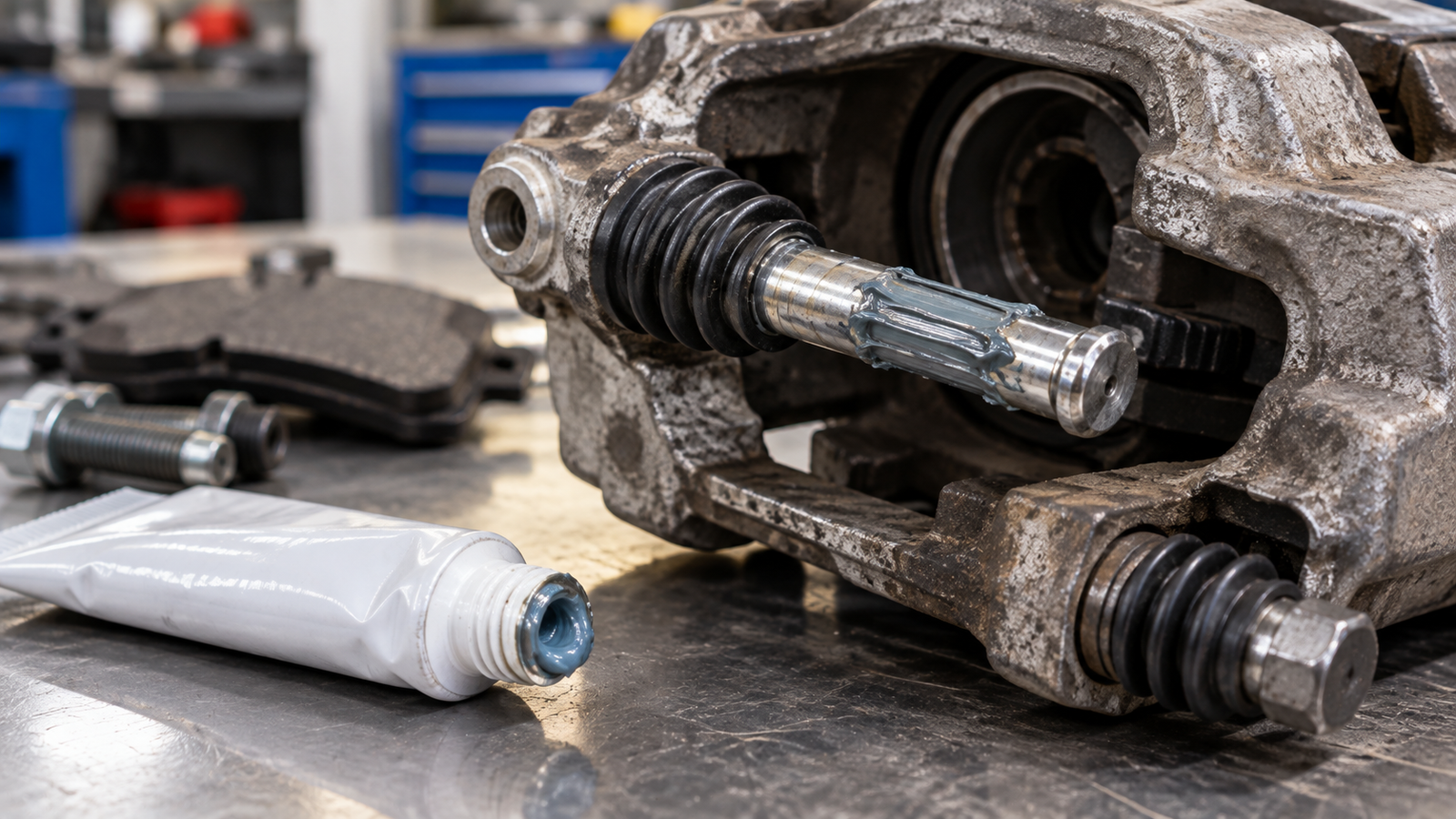
If the guide pin starts to seize or move with great resistance, this process is disrupted. One of the pads may constantly remain in contact with the disc, which increases friction and temperature. As a result, the pads begin to wear unevenly, the disc receives additional thermal load, and the driver may feel the car pulling or vibrating.
An additional problem is related to the external environment. Water, road dirt, and reagents get into the mechanism, and if the dust boot is damaged, contamination accelerates. A suitable lubricant reduces the friction of the guide pin and simultaneously helps protect the working surface from moisture and contaminants. But it cannot compensate for existing corrosion, wear, or damage to parts.
How to choose lubricant for guide pins
The main rule is to use a compound that the manufacturer explicitly allows for guide pins of a specific caliper type. A universal high-temperature grease does not automatically become suitable for the brake mechanism just because it can withstand heat.
Special attention should be paid to compatibility with rubber dust boots and seals. The guide pin works directly next to elastomers, so the compound should not cause them to swell, degrade, or lose elasticity. For many brake mechanisms, manufacturers recommend special synthetic or silicone compounds, but one should focus specifically on the requirements of the particular caliper.
Resistance to temperature, water, and road chemicals, as well as the ability to maintain the desired consistency during operation, are also important. A too-liquid compound can quickly leak or wash away, and an unsuitable thick grease can create additional resistance to pin movement.
In practice, specialized compounds for caliper guide pins are used, including Slipkote, TRW products, and some Molykote, Niglube, and Febi compounds. There are also Bosch, ATE, Permatex brake lubricants, and those from domestic manufacturers. However, even within the same product line, the purpose of a specific product may differ, so it is necessary to consult the manufacturer's instructions before use.
Why ordinary universal grease may not be suitable
One of the common mistakes is to choose a compound based on the principle of “the thicker and more heat-resistant, the better.” For a caliper guide pin, not only the lubricant's ability to withstand temperature is important. It must maintain its working properties when the pin moves and be compatible with the dust boot materials.
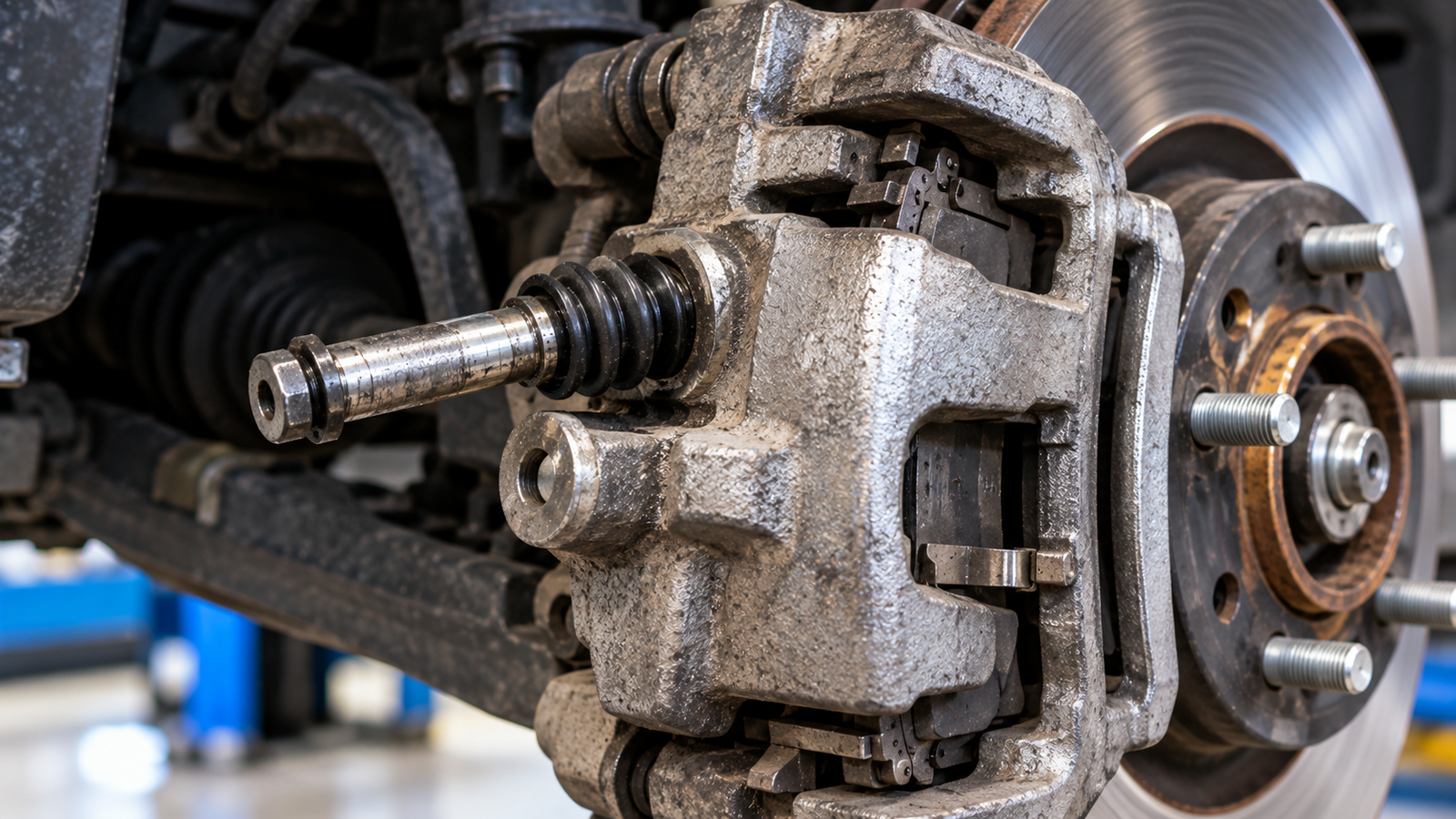
Therefore, Litol, Solidol, and other mineral greases should not be used in guide pins without direct permission from the manufacturer of the specific brake mechanism. It is especially undesirable to experiment with compounds that can negatively affect rubber. Even if the pin initially moves freely after maintenance, the problem may manifest later when the dust boot material changes its properties.
Graphite compounds are also not a universal solution. The ability to withstand load does not in itself mean that the lubricant is suitable for the guide pin. The same applies to copper paste. It is indeed used in brake maintenance in certain places, but this does not automatically make it suitable for the space under the guide pin's dust boot.
Anti-squeal pastes are designed for other contact zones and should not be used instead of special guide pin lubricant unless the caliper manufacturer specifies it. Therefore, the inscription “for braking system” on the packaging does not yet mean that the compound is intended specifically for guide pins.
How to service guide pins without mistakes
Before starting work, the car must be placed on a level surface and securely fixed. After removing the wheel, the caliper is freed from the necessary fasteners and carefully moved aside, avoiding stress on the brake hose. Then, the guide pins are removed, and old grease and contaminants are completely removed.
The pin itself, the mounting hole, and the dust boot must be inspected. Deep corrosion, scoring, or significant wear mean that simply replacing the lubricant will not solve the problem. A dust boot with cracks, cuts, or loss of elasticity also requires replacement, as water and abrasive material will quickly enter the mechanism through the damage.
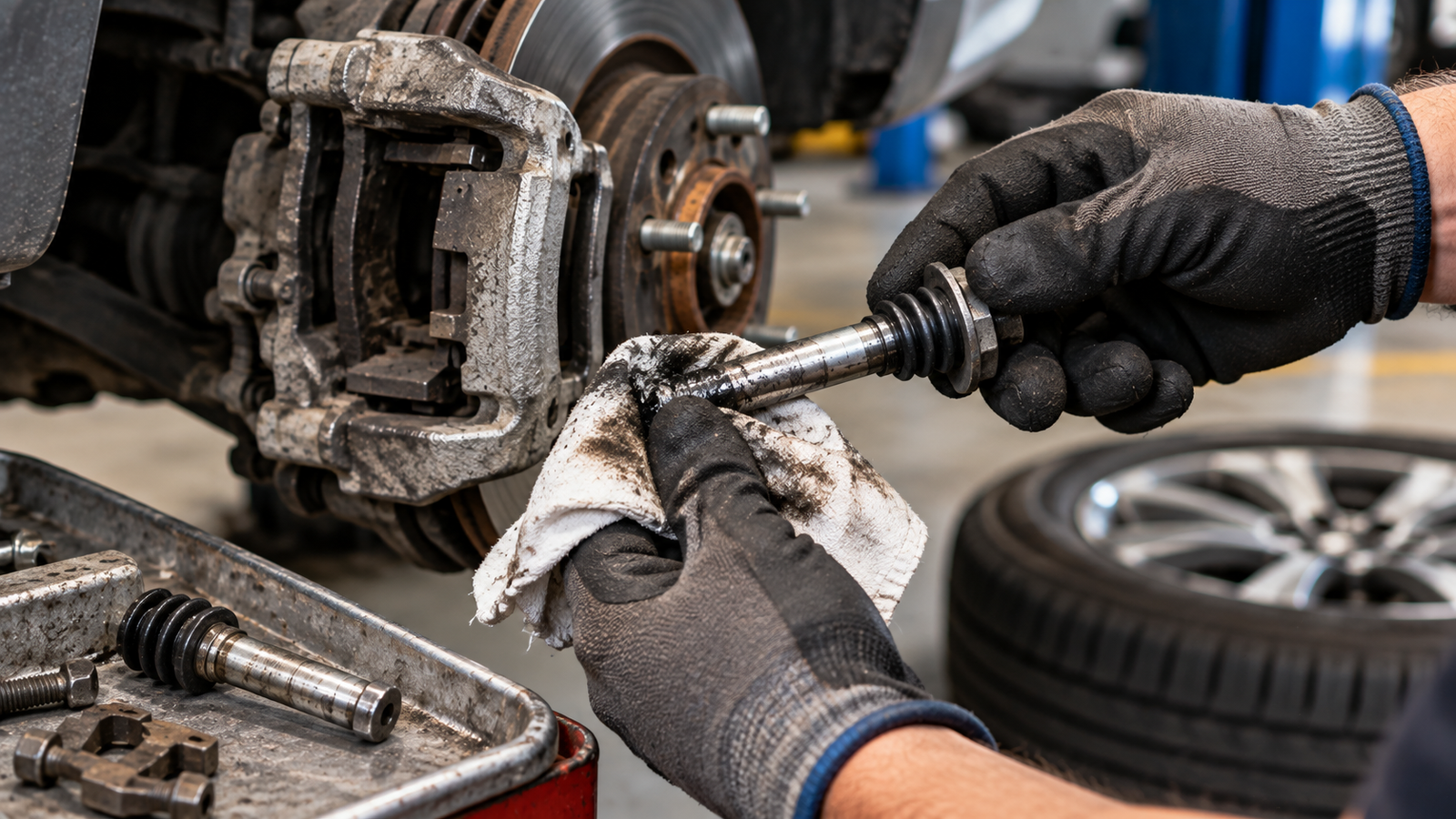
New lubricant is applied in a thin, even layer to the working surface of the guide pin according to the instructions for the specific compound. It is not necessary to fill the cavity with a large amount of lubricant. Excess can hinder the normal movement of the pin, especially if the guide pin design involves limited space under the dust boot.
After assembly, it is necessary to press the brake pedal several times and ensure the normal operation of the mechanism. The lubricant must under no circumstances get onto the working surface of the brake disc or the friction layer of the pad. After installing the wheel, it is advisable to perform a short test drive at low speed and ensure that the car brakes normally and does not pull to one side.
How often to check guide pins
There is no universal service interval for all cars. It is reasonable to check the condition of the guide pins when replacing brake pads, and more often when operating in harsh conditions. Frequent driving through water, dirt, reagents, and broken roads increases the load on the dust boots and other elements of the brake mechanism.
Therefore, relying solely on mileage of 30–50 thousand km or a certain number of years is incorrect: the regulations depend on the specific model, caliper design, and operating conditions. The condition of the mechanism is much more important. If overheating of one wheel, a characteristic smell, the car pulling when braking, or noticeably different pad wear appears, diagnostics should not be postponed.
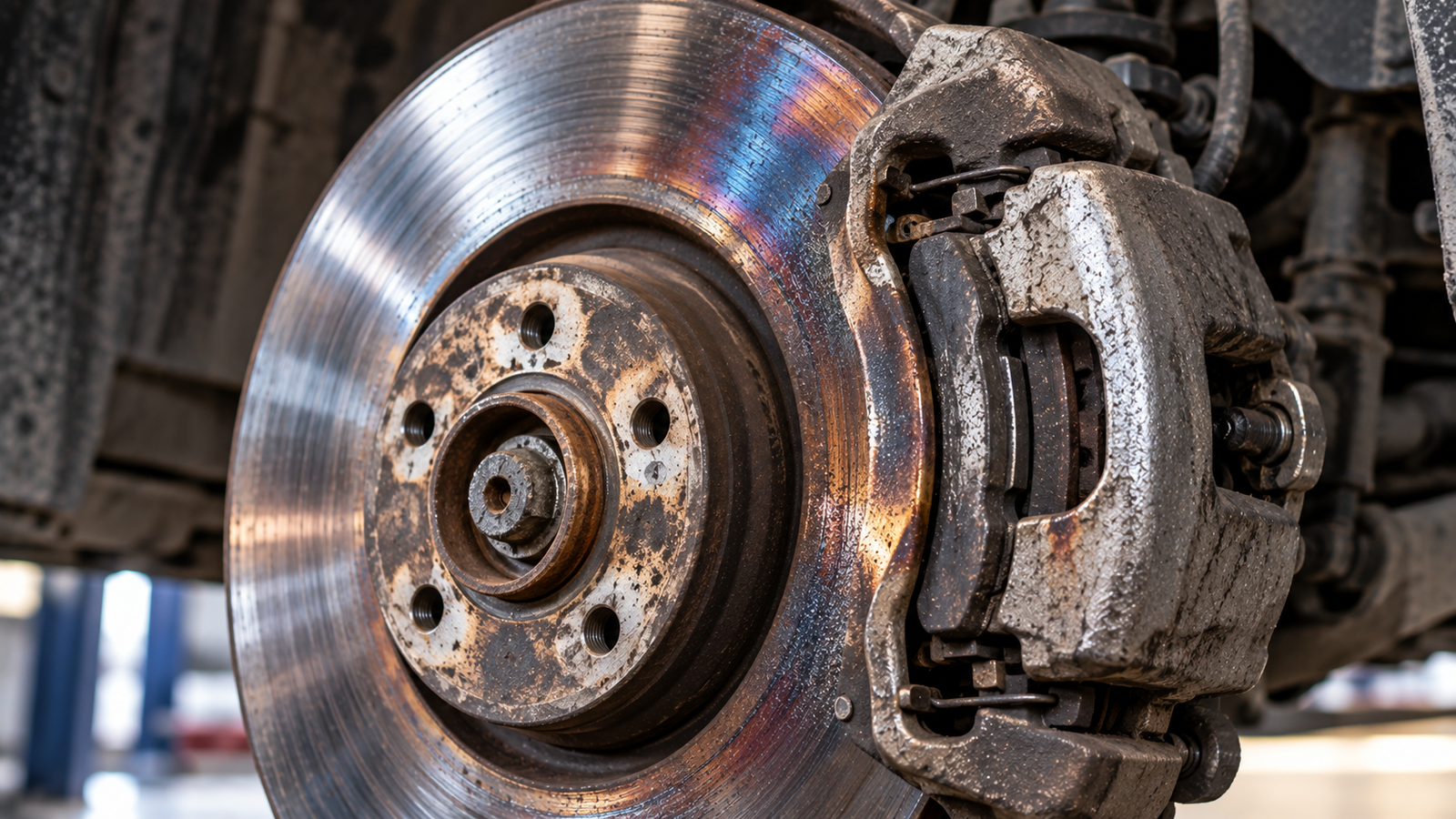
Ultimately, guide pin maintenance is not just about applying any thick compound. It requires cleaning the mechanism, checking the condition of the pins and dust boots, choosing a compatible lubricant, and applying it in the necessary amount. If the guide pin is already damaged or seized due to corrosion, new lubricant alone will not fix the malfunction.
A correctly chosen compound helps ensure the free movement of the caliper and even brake operation. However, an attempt to save money by using unsuitable lubricant or applying it “with a margin” can lead to the opposite result — from dust boot damage to mechanism sticking and brake overheating.
Read more materials:
- 120 years of attempts to replace the wiper: why nothing worked out even for Tesla
- VAZ-2115 spoiler: not just a trunk decoration
- Deep tread is deceptive: how winter tires age
Comments