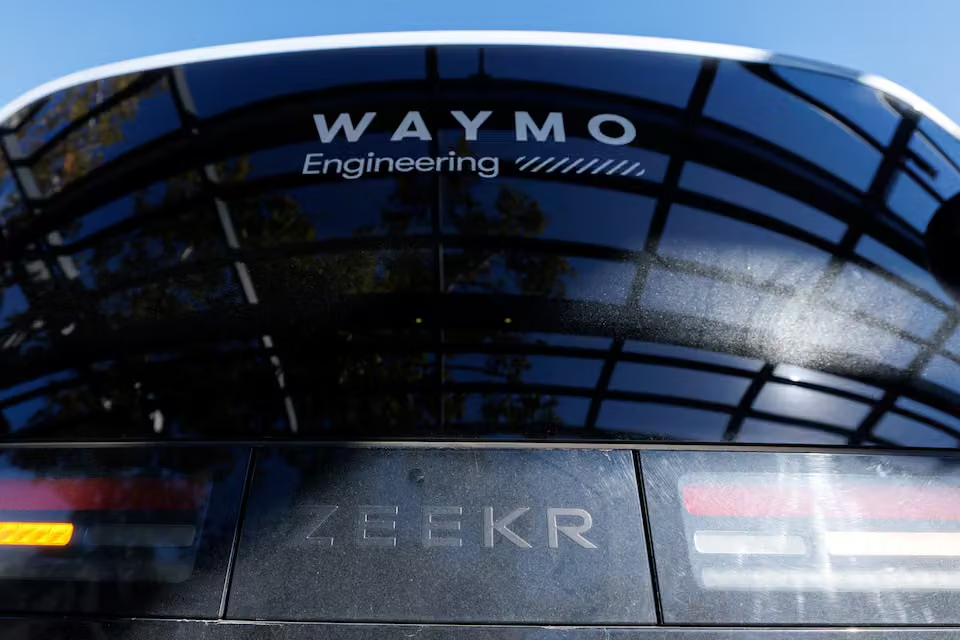
A large-scale power outage in San Francisco in late December led to the shutdown of Waymo robotaxis and caused traffic jams in the city. After a fire at a PG&E substation, approximately a third of the metropolis was left without power, traffic lights stopped working, and Alphabet's self-driving cars were stuck at intersections with their hazard lights on. The company temporarily suspended the service, restoring it only the next day.
The situation has once again intensified the discussion about how prepared autonomous transport operators are for large-scale emergencies - earthquakes, floods, and prolonged infrastructure outages. Experts point out that in the event of an incorrect response to such failures, regulators may require companies to provide evidence of their ability to operate safely in crisis scenarios before allowing further expansion of services.
Waymo explained that their cars are designed to navigate non-functioning traffic lights according to the rules of intersections with equal priority, but this time there was a sharp increase in requests for remote confirmation of actions. Despite successfully navigating thousands of intersections, the load on the remote control system led to delays and exacerbated the traffic situation. The incident became an argument in favor of stricter regulation of the industry.
Read more materials:
- AvtoVAZ Officially Explains Which Gasoline to Use in Lada
- Moskvich Announces Prices for the Moskvich 6 Sedan of the 2026 Model Year
- Tank Raises Prices for the Entire Model Range in Russia: Tank 500, 700, and 400 Become More Expensive
Комментарии