Chinese company CATL announced that the first commercial energy storage systems based on sodium-ion batteries will begin shipping to customers in September 2026. This is one of the most significant steps in the commercialization of a technology that for many years was considered promising but too complex for mass application.
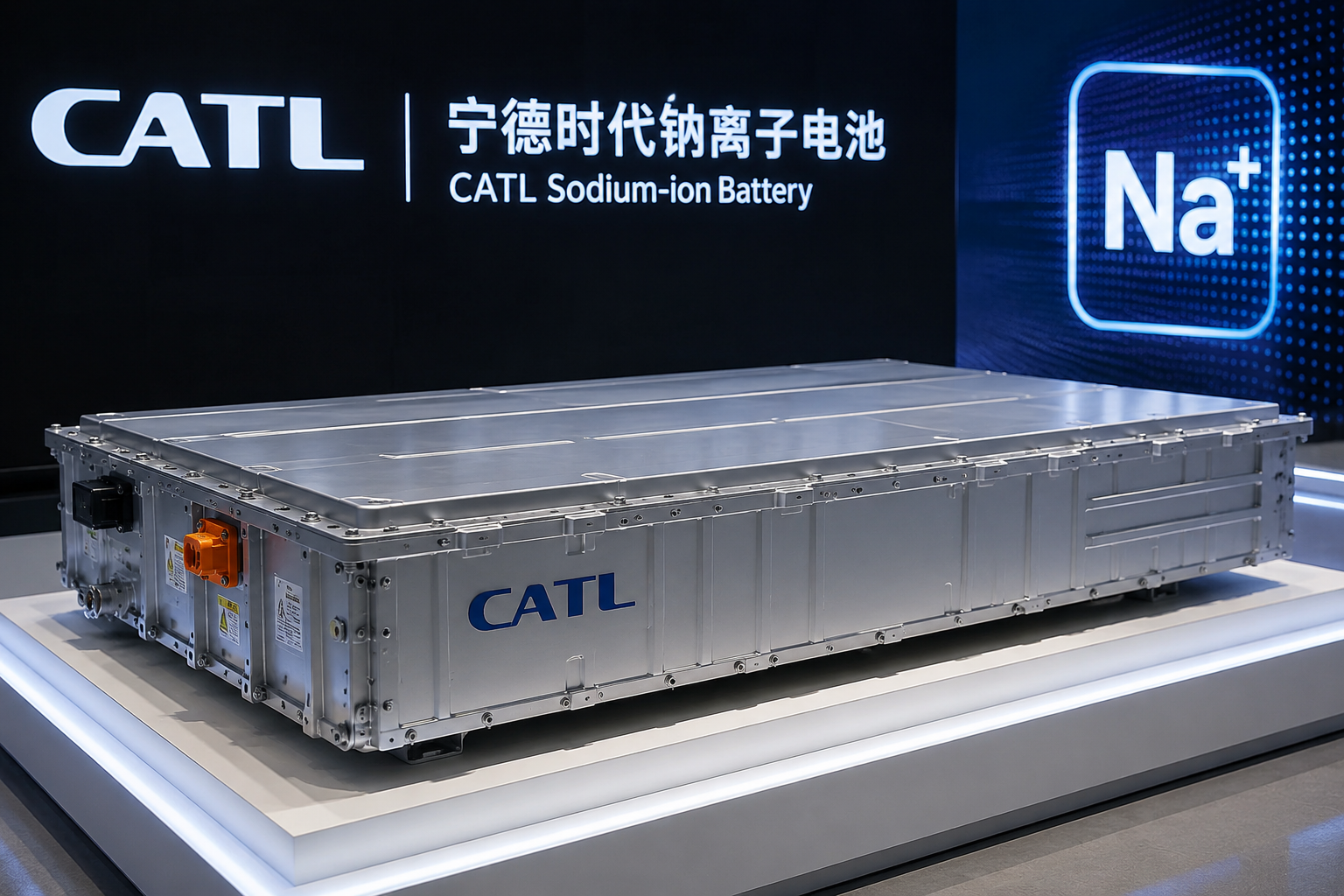
The main advantage of sodium-ion batteries lies in the raw materials used. Sodium is significantly more abundant in nature than lithium, and its cost is less dependent on global market fluctuations. According to industry research, the reduction in material costs has been one of the key factors enabling the technology to approach mass production.
CATL has been developing this area since 2021. In 2025, the company introduced the second generation of Naxtra sodium-ion batteries, and is now moving towards their industrial implementation. The manufacturer expects to achieve gigawatt-scale deliveries within 2026.
For the automotive industry, this event is of great importance: CATL previously reported plans to use new sodium-ion batteries not only in energy but also in passenger cars, where they can provide a range of up to 600 km at a lower cost compared to traditional solutions.
However, the technology may prove particularly important for energy storage systems. Unlike electric vehicles, where maximum energy density is critical, stationary storage systems prioritize cost, safety, and durability. This is why sodium-ion batteries are considered one of the main competitors to lithium iron phosphate batteries in the energy sector.
Read more materials:
- Chery to start producing cars at Nissan factory
- Geely may abandon differential locks: new Galaxy Cruiser 700 technology changes approach to off-road driving
- The average age of cars in the USA has approached 13 years, and Ford wants to capitalize on this
Комментарии