The spoiler has long been one of the most popular exterior tuning parts. Many car owners are confident that even a small overlay on the trunk lid significantly increases downforce and makes the car more stable even at ordinary city speeds.
In practice, the operation of aerodynamic elements is much more complex. Their effectiveness depends on the speed of movement, body geometry, and the design of the spoiler itself.
Why the effect is almost imperceptible at low speeds
Downforce arises from the interaction of airflow with the car's body.
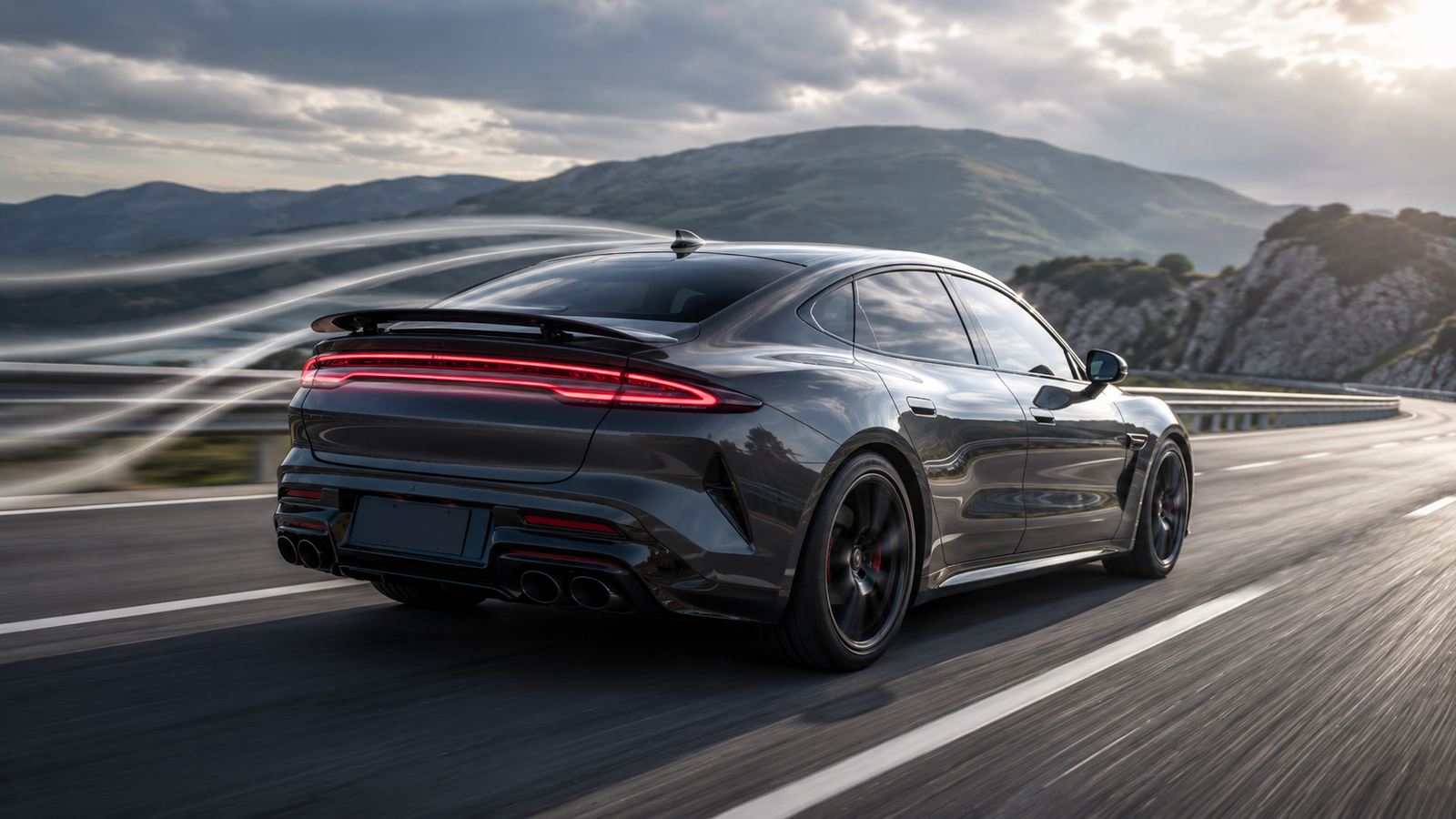
As speed increases, aerodynamic forces grow approximately proportionally to the square of the speed. Therefore, when speed doubles, their magnitude increases by approximately four times.
This is why the most noticeable effect of aerodynamic elements manifests itself at high speeds.
For most production cars, a tangible effect usually begins to appear only when driving on high-speed highways, whereas in urban mode, where speeds rarely exceed 60–80 km/h, the impact of a small spoiler is often minimal.
What is the purpose of a spoiler?
The main function of a spoiler is not to literally "press" the car to the road at all driving modes.
Its task is to change the nature of the airflow around the rear of the body.
As the car moves, the airflow flows over the roof, passes over the rear window, and then separates from the body surface.
It is in this zone that vortices and a low-pressure area are formed.
A well-designed spoiler can:
- change the flow separation point;
- reduce the intensity of vortices;
- in some cases, reduce the lift force on the rear axle;
- for certain models, slightly reduce aerodynamic drag.
However, the final result always depends on the specific design of the car.
Why results from one model cannot be applied to another
Sometimes test data is published showing improved aerodynamic characteristics after installing a spoiler on a specific car model.
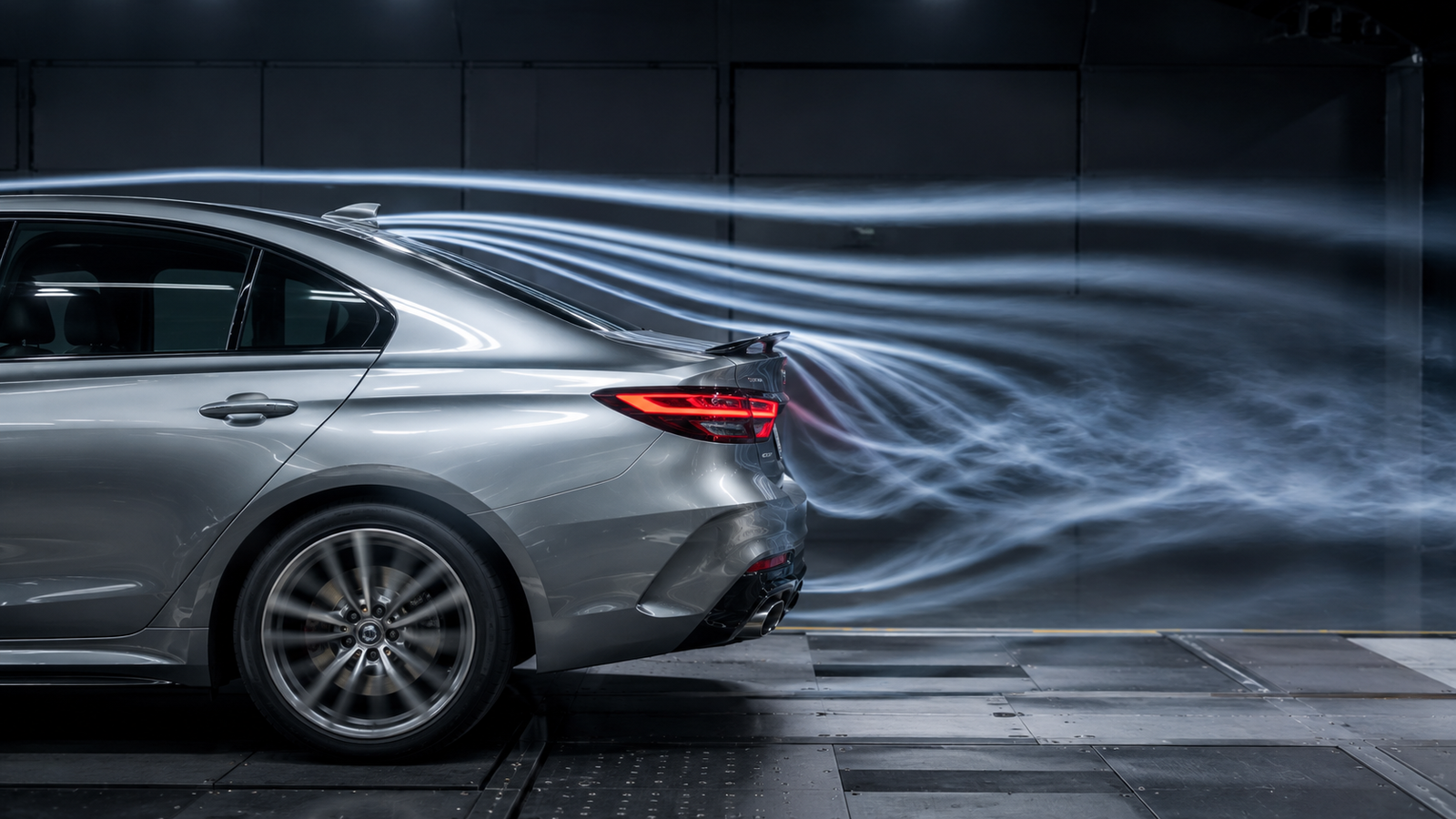
However, such results cannot be considered universal.
Even small differences can significantly change the airflow:
- roof shape;
- rear window angle;
- trunk lid length;
- spoiler dimensions;
- its installation angle.
Therefore, an accessory that looks identical on two different cars can work completely differently.
Does a spoiler affect fuel consumption?
For most production passenger cars, the impact of a small spoiler on fuel consumption in normal operation is practically imperceptible.
At city speeds, the change in the aerodynamic drag coefficient is too small for the driver to objectively notice the difference in everyday use.
A similar situation is observed with handling.
During normal driving on city streets or country roads, small changes in downforce rarely have a noticeable effect on the driver's perception.
Such effects become most noticeable on a racetrack or when driving at high speeds, where aerodynamics plays a significantly more important role.
Practical benefits still exist
Despite common myths, a spoiler cannot be called completely useless.

On some body types — especially hatchbacks, liftbacks, and station wagons — a properly designed spoiler can change the airflow behind the car.
This can reduce the amount of dust, water, and road grime settling on the rear window.
The severity of this effect depends on many factors:
- body design;
- spoiler shape;
- weather conditions;
- driving speed.
Therefore, the result can vary significantly even among cars of the same class.
Why is a spoiler installed most often?
For most owners, the main reason for installation remains the car's appearance.
Even a compact overlay on the trunk lid can visually change the body proportions, make the silhouette more dynamic, and give the car a sporty character.
This effect remains the most noticeable regardless of the operating mode.
What really affects car stability?
When it comes to safety and handling in everyday operation, other factors are much more important.
First of all, it is worth paying attention to:
- tire condition;
- correct tire pressure;
- suspension serviceability;
- braking system effectiveness;
- correct wheel alignment angles.
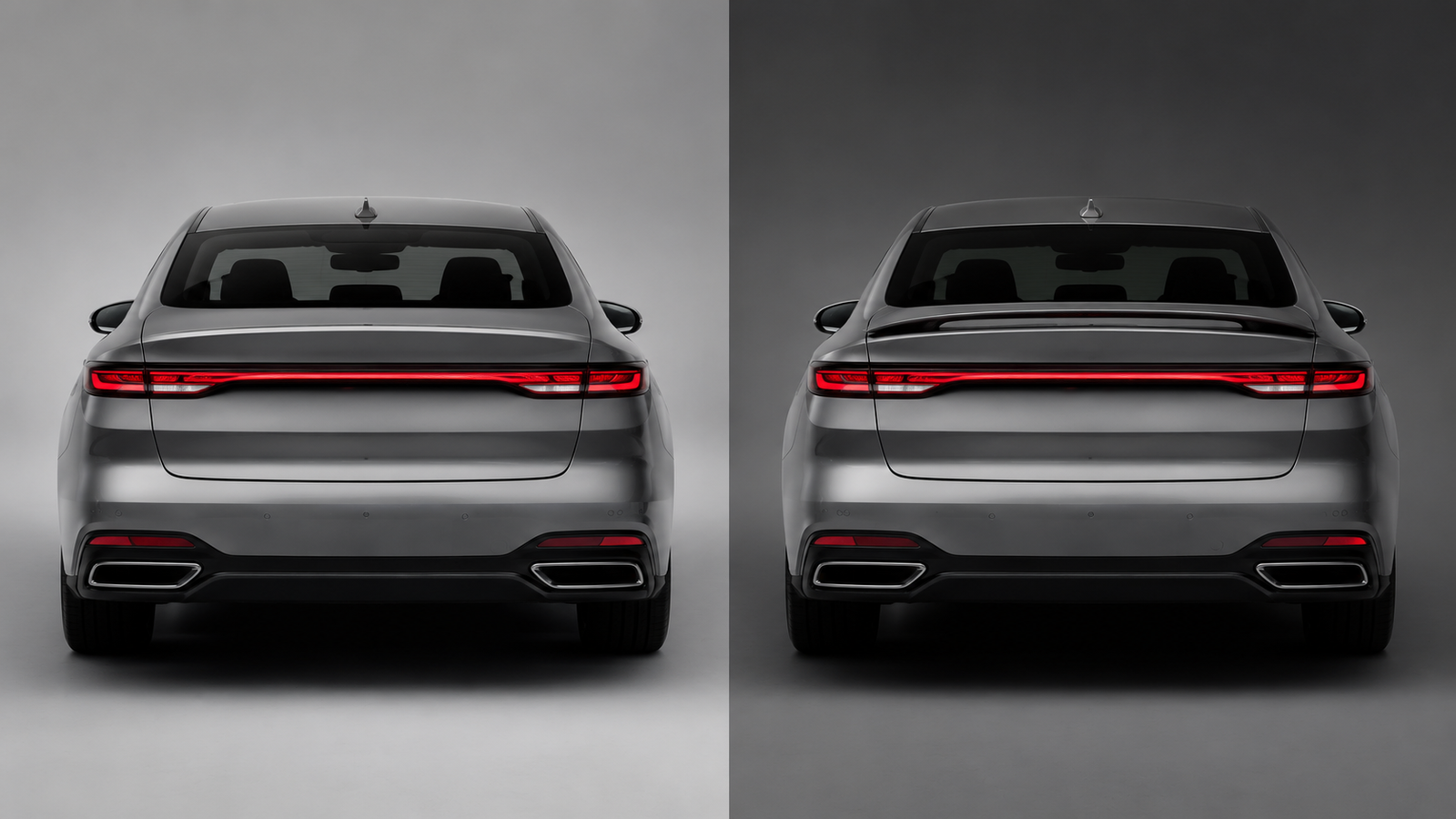
These parameters have a significantly more noticeable effect on car behavior than a decorative spoiler installed on the trunk lid.
Therefore, for most production cars, a spoiler should be considered primarily as a design element with a possible additional aerodynamic effect, which manifests itself only under certain conditions and depends on the specific design of the car.
Read more materials:
- German car market in 2025: who is leading and why cars have become gray
- Disc-less wheels: why they were invented and why they were forgotten
- How Alfa Romeo turned its flagship sedan into a fire truck and built a racing car with a V10 engine
Комментарии