BMW continues road tests of the iX5 Hydrogen – the brand's first production car with a hydrogen powertrain. The crossover is expected to go into production in 2028 and will be an alternative to the battery-powered version of the X5.
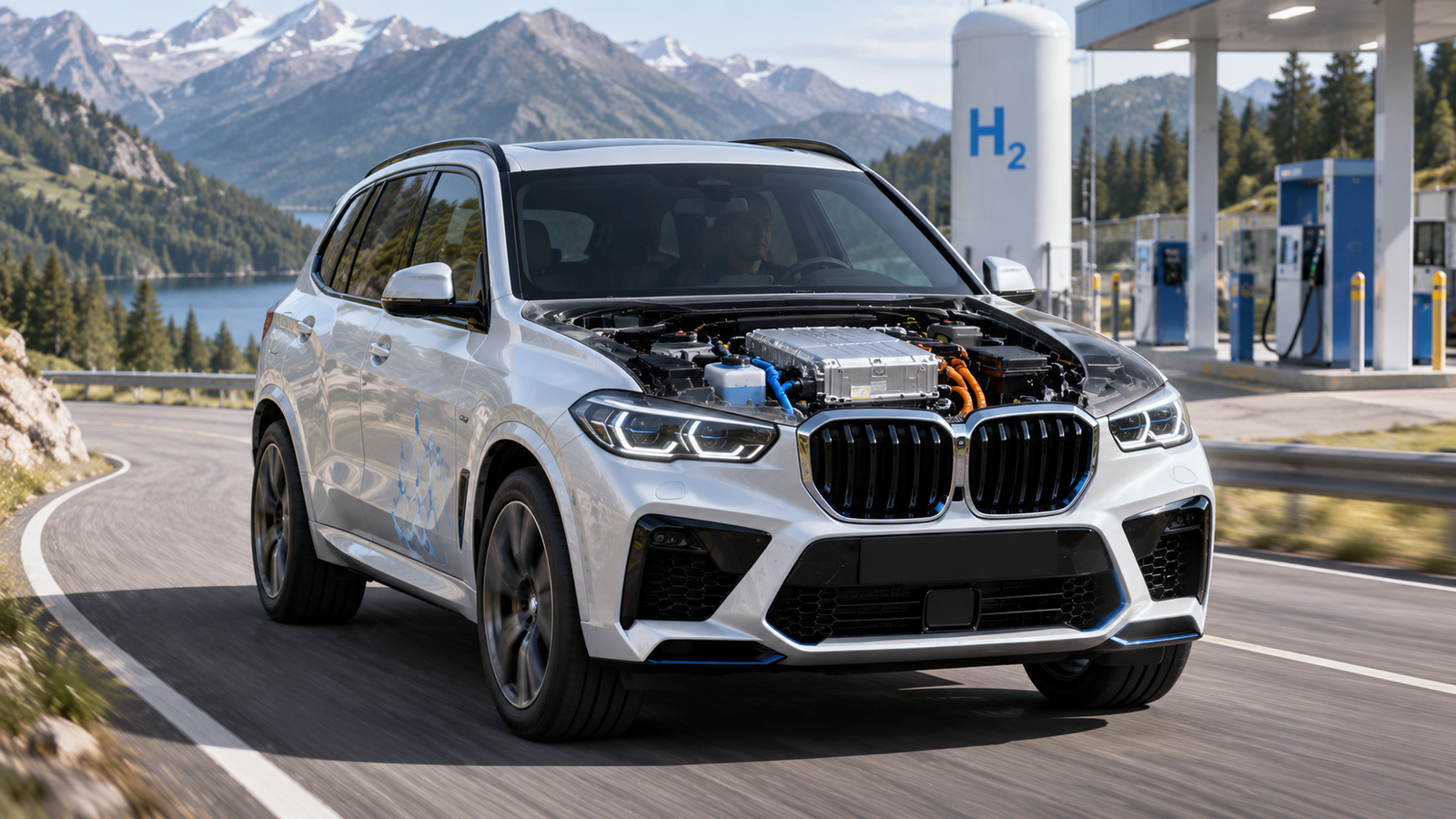
The car is based on the third generation of fuel cell developed by BMW in cooperation with Toyota. The system has become 25% more compact than its predecessor. Hydrogen from seven high-pressure cylinders enters the fuel cell, where an electrochemical reaction generates electricity for the electric drive.
The main advantage of the scheme is the combination of a long range and fast energy replenishment. BMW claims up to 750 km according to the WLTP cycle, and filling the cylinders takes less than five minutes. The tanks themselves are designed for at least 7 kg of hydrogen and are combined into a single structure under the car's floor.
At the same time, the iX5 Hydrogen is not a car with a hydrogen internal combustion engine. The wheels are driven by electric motors, and the fuel cell acts as a source of electricity. The system also uses a small high-voltage battery that helps manage energy flows.
BMW aims for acceleration to 100 km/h in less than five seconds. For comparison, the future battery-powered iX5 should achieve the same acceleration in 4.6 seconds.
The hydrogen version solves two problems of modern battery-powered cars at once – the need for long charging times during long trips and the dependence of range on the capacity of a heavy battery. But it introduces another problem: for mass use, a developed network of hydrogen refueling stations is needed.
Read more articles:
- Electric vehicles want to be rid of artificial engine sound: what will change for AVAS
- Stellantis sells plant in Canada: instead of Jeep Compass, armored vehicles may be produced there
- Chinese automakers opened the way to the US market – but there is an important condition
Комментарии