By October 2026, Tesla's documents for the US National Highway Traffic Safety Administration (NHTSA) included information about five robotaxi collisions that occurred while being remotely controlled by an operator. These incidents involved Model Y vehicles used in the autonomous ride-hailing service.
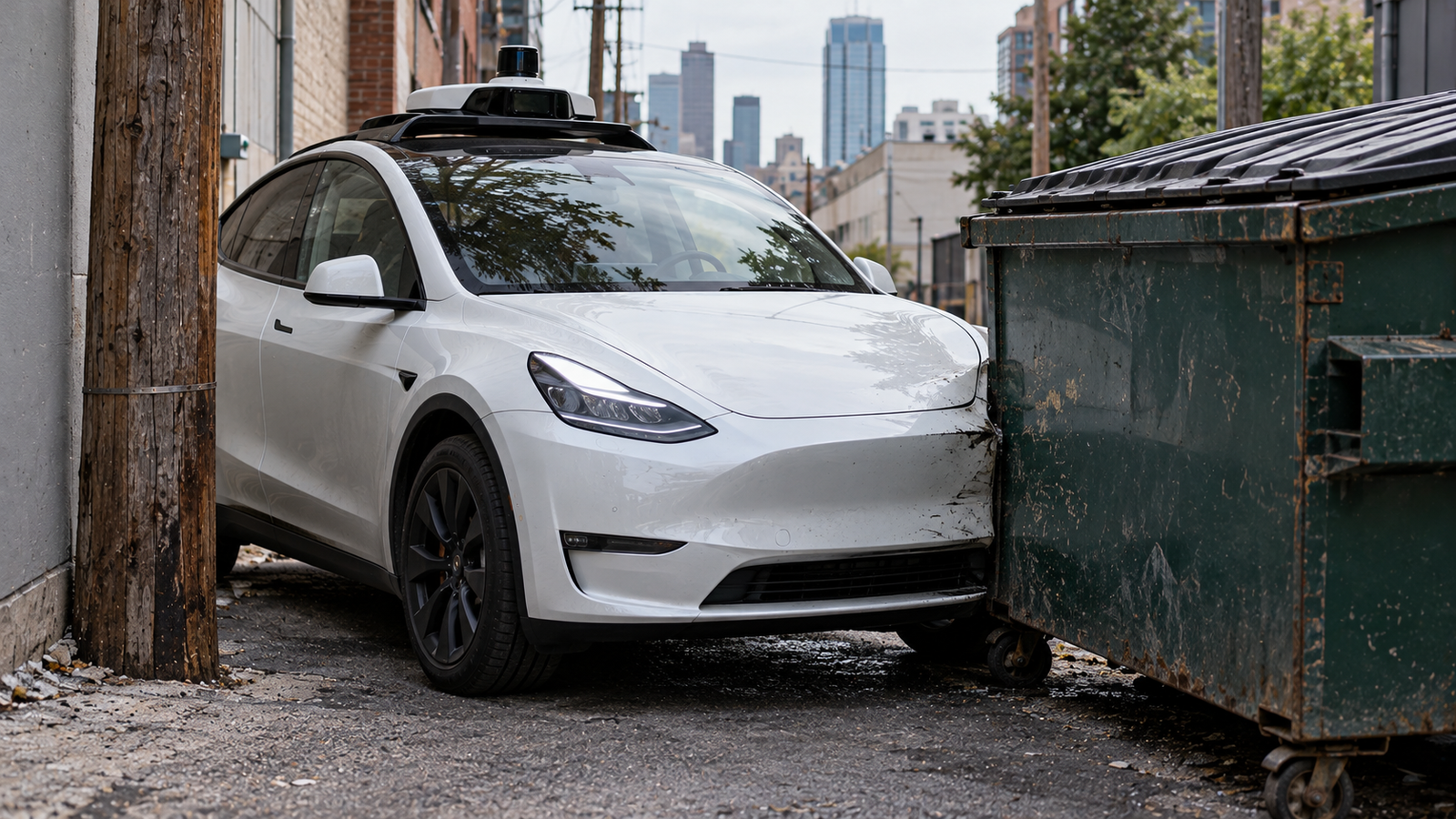
The last two incidents occurred in August. In Dallas, an operator attempted to maneuver a stopped vehicle out of a narrow space between a concrete mixer and a parked SUV. While moving forward, the Tesla brushed against the adjacent car at about 0.4 mph (0.6 km/h). In Austin, a remotely controlled vehicle was moving down an alley between a pole and a dumpster, then collided with the dumpster at approximately 1 mph (1.6 km/h). In both cases, there were no passengers in the vehicle.
Three other incidents occurred earlier. In July 2025, after remote control was taken over, a robotaxi drove onto a curb and crashed into a metal fence. In January 2026, the car collided with a temporary construction barrier. In May of the same year, an operator assisting the vehicle to exit a dead-end street in Houston directed it onto a grassy slope, where the car hit a hidden stump.
In all five reported cases, remote intervention resulted in a collision. However, this information does not allow for the calculation of accident probability: Tesla does not report how many times operators successfully assisted robotaxis. Furthermore, the collisions themselves occurred under different circumstances, and their severity varied.