The domestic school of diesel engine building began to take shape many decades ago, and over that time it made it possible to create quite a few reliable and durable power units. True, the main area of their application remained unchanged for a long time: diesel engines were primarily intended for trucks and armored vehicles. Passenger transport in the country, meanwhile, was almost universally equipped with gasoline engines. Notably, even today the engine lineup of Russia's largest automaker lacks a production diesel unit. Let us try to understand why the situation developed this way.
Does a passenger car need a diesel engine?
The question of whether a people's domestic car with a diesel engine should appear has remained a matter of debate for many years. This topic has both supporters and opponents. For a significant part of the country's regions, diesel fuel is considered not the most successful option: in severe frosts, it can cause owners many problems because of paraffin crystallization. At the same time, there are special additives that make it possible to prevent fuel crystallization even when operating vehicles in the conditions of the Far North.
A diesel engine itself has a number of well-known advantages. These include high low-end torque, a substantial service life, and fuel efficiency. Despite this, the share of passenger cars running on diesel fuel in the Russian vehicle fleet remains small, at around 5%. For comparison, in a number of European countries this figure is noticeably higher, and, for example, in Germany diesel cars account for about 30% of the fleet. Nevertheless, interest in "heavy fuel" in Russia has not disappeared completely.
In the AvtoVAZ model range, if desired, one can find cars for which a diesel engine would look quite appropriate. Such an engine could fit organically into the concept of the Niva, providing an even greater reserve of traction off-road. It would also suit the Largus van, which is most often purchased for commercial transportation. However, no production solutions in this direction have appeared so far.
Attempts to create an in-house diesel
AvtoVAZ made its first serious decision to develop its own diesel engine back in the 1980s. As a basis, a block from a 1.5-liter eight-valve gasoline engine rated at 71 horsepower was chosen. However, the result of this work was far from ideal: the resulting unit had too many design flaws.
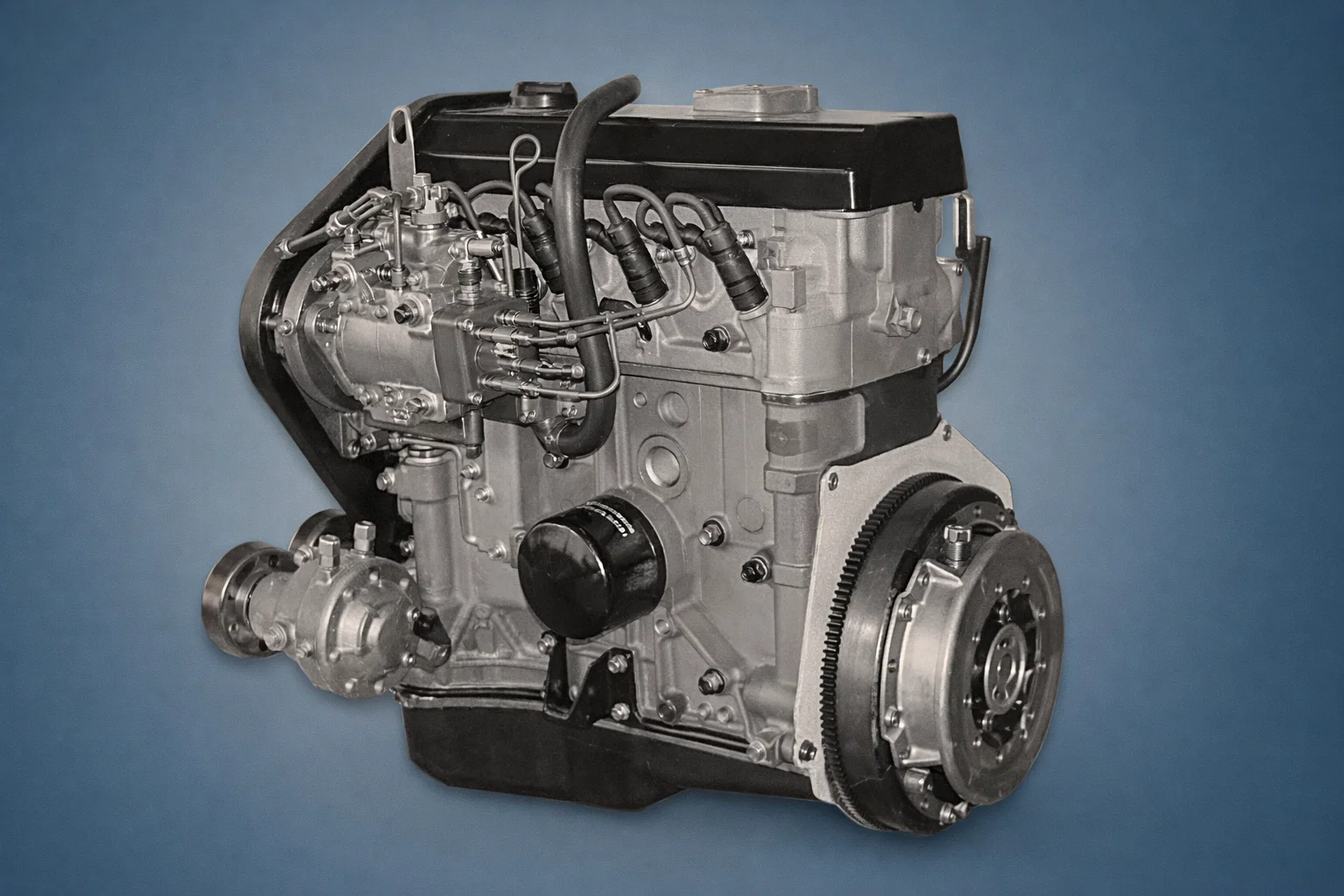
The project was revived about ten years later, this time with the goal of bringing it to an acceptable level and launching it into production. Thus the VAZ-341 engine appeared, a 1.5-liter eight-valve diesel developing 53 horsepower and 96 Nm of torque. By its design, the engine was quite simple, but at the same time it received several interesting technical solutions. In particular, it was equipped with a high-pressure fuel pump manufactured by Bosch. The timing mechanism used a belt drive, which ensured relatively quiet operation; however, if the belt broke, the valves would inevitably bend.
As part of small-series production, the VAZ-341 engine began to be installed in the VAZ-2104 and VAZ-2105 models. The first batches proved extremely problematic: due to insufficient strength of the cylinder-piston group, the real service life of the engine barely reached 50 thousand kilometers. Later, the design was refined, which made it possible to noticeably improve the unit's reliability, but at the same time led to an increase in vehicle cost.
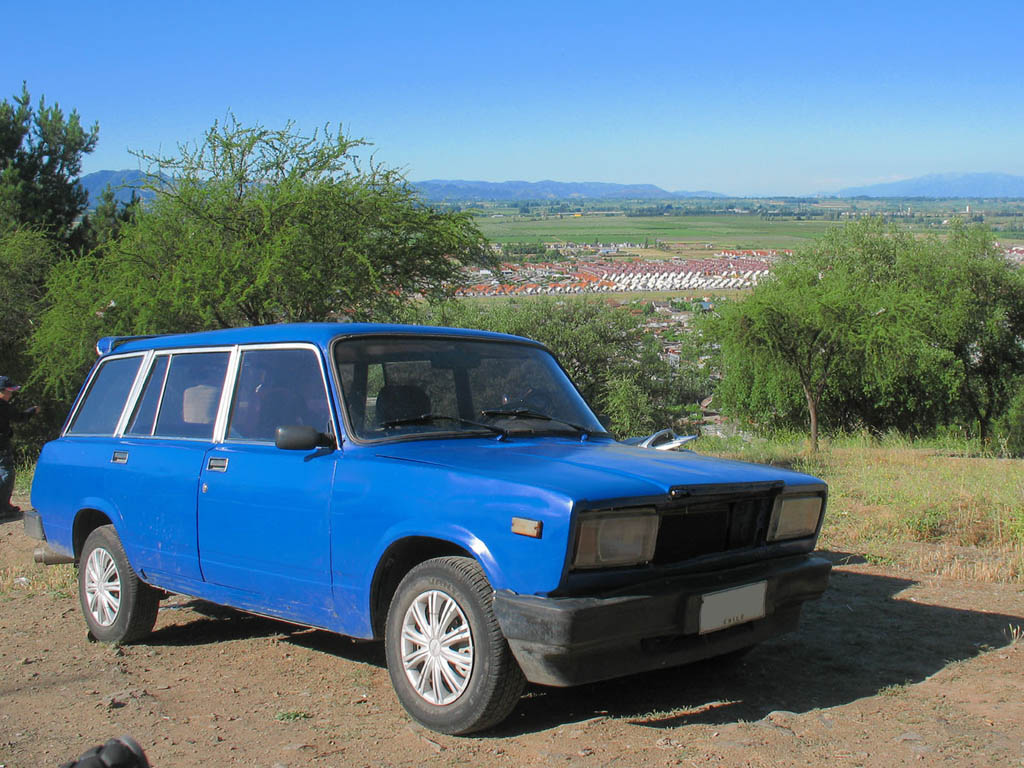
As a result, the VAZ-341 diesel was produced in limited batches from 1998 to 2003, after which the project was closed. At the same time, further plans to launch a 1.8-liter turbodiesel were also abandoned, although by that point it already existed as a completed development. Today, cars with the VAZ-341 engine can still be found on the roads, but their number is gradually decreasing. The main reason is serious repair difficulties caused by the absence of many necessary spare parts.
Why diesel has not appeared in modern times
If we look at the structure of the modern Russian new-car market, it becomes obvious that diesel versions of models are offered by only a handful of manufacturers, and even for them such trims are not in high demand. There are several reasons, and one of the key ones is the noticeable difference in price. As a rule, a diesel version of a car costs about 15% more than a gasoline one.
Although diesel fuel has the advantage of lower consumption, the actual payback period for the extra cost turns out to be too long for most buyers. An additional restraining factor remains the quality of winter diesel fuel. There are many known cases when, already at temperatures around -20 °C, drivers encountered problems caused by paraffin crystallization. The use of anti-gel additives is possible, but it requires additional expense.
From the standpoint of the economics of light commercial freight transportation, gas has become an increasingly attractive alternative. It is significantly cheaper than both gasoline and diesel fuel, and the installation of gas-cylinder equipment pays for itself in a relatively short time.
Thus, AvtoVAZ formally has the groundwork and experience needed to create its own diesel engine. There is no doubt that the 1.8-liter turbodiesel developed at the end of the last century could still interest a certain share of buyers today. However, the key issue remains the vehicle's final price. If the diesel version turns out to be 10-15% more expensive than the gasoline one, will it really become mass-market? There is still no unequivocal answer to that question.
Read more materials on the topic:
- The second life of an engine: everything about major overhaul
- What Common Rail is and how a modern diesel works
- Throttle body: dirt, mileage, and stable idle speed
Комментарии