In the early 1990s, Mercedes-Benz was experiencing a creative surge. The brand's management was simultaneously experimenting with new formats: the front-wheel-drive A-Class, the compact SLK roadster, and the ultra-small Smart. At the same time, Japanese manufacturers were actively exploring the still-young segment of compact crossovers. In the luxury class, such vehicles did not exist at all, and in Stuttgart they quickly recognized the serious potential of this direction — primarily for the U.S. market, where demand was growing for comfortable yet versatile vehicles with enhanced off-road capability.
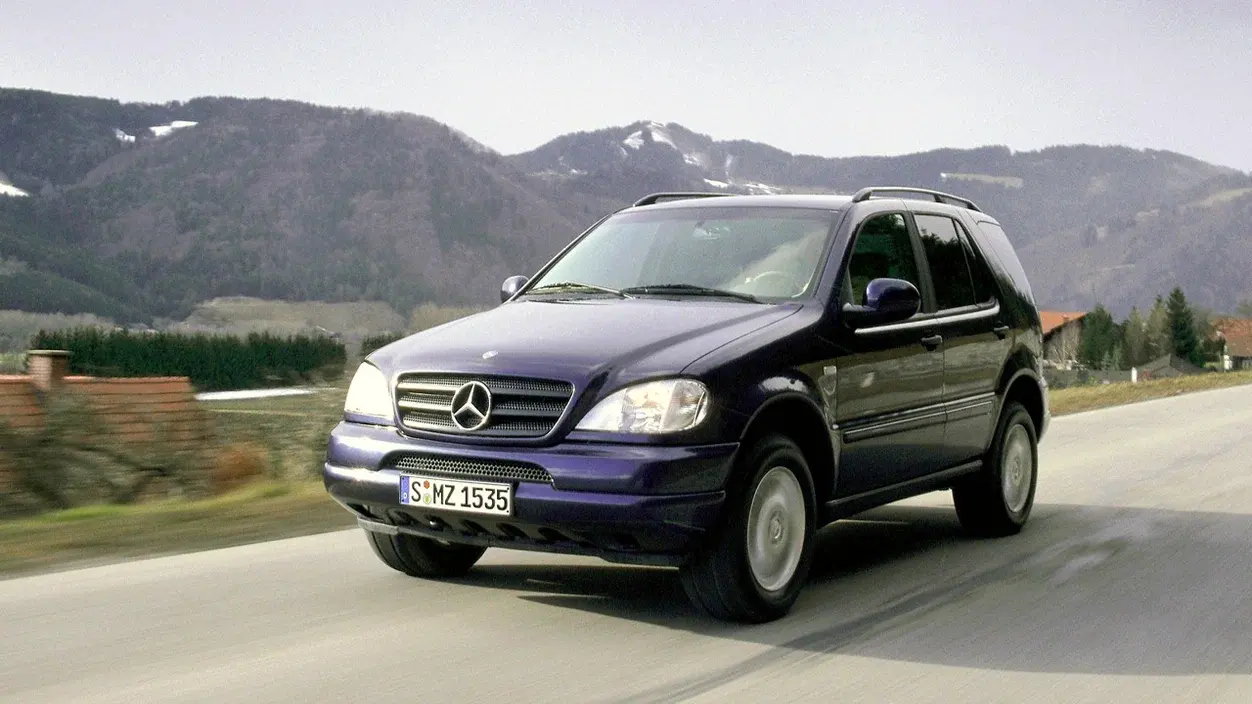
At that moment, the Mercedes-Benz model lineup included only the G-Class — charismatic, but expensive and frankly utilitarian. Making it simpler and cheaper proved pointless, so the decision was obvious: a fundamentally new all-terrain vehicle was needed, focused on comfort and the mass buyer. Initially, the Germans decided to take the short route and in 1991 reached an agreement with Mitsubishi Motors to create a model based on the Pajero. In fact, the plan was to produce a Japanese SUV under the Mercedes-Benz star, but already in 1992 the project was closed, citing technical difficulties.
After the split with Mitsubishi, the company set a course for a completely independent development. At the same time, a strategic decision was made to build a plant in Alabama — the first Mercedes-Benz passenger car production site outside Germany. Construction began in 1994, and already in January 1996 the AA Vision concept was unveiled at the Detroit auto show. For the public, it was a real shock: the world had never seen such an unusual and bold Mercedes-Benz before.
The AA Vision looked playful and eclectic, but at the same time it did not give the impression of being a decorative show car. The name All Activity directly pointed to versatility, while the body shapes, protective cladding, and large wheels hinted at real off-road ability. Unlike the then-benchmark luxury SUV — the Range Rover P38A with a body-on-frame design and solid axles — the German concept aimed to be closer to passenger cars in driving feel without sacrificing comfort.
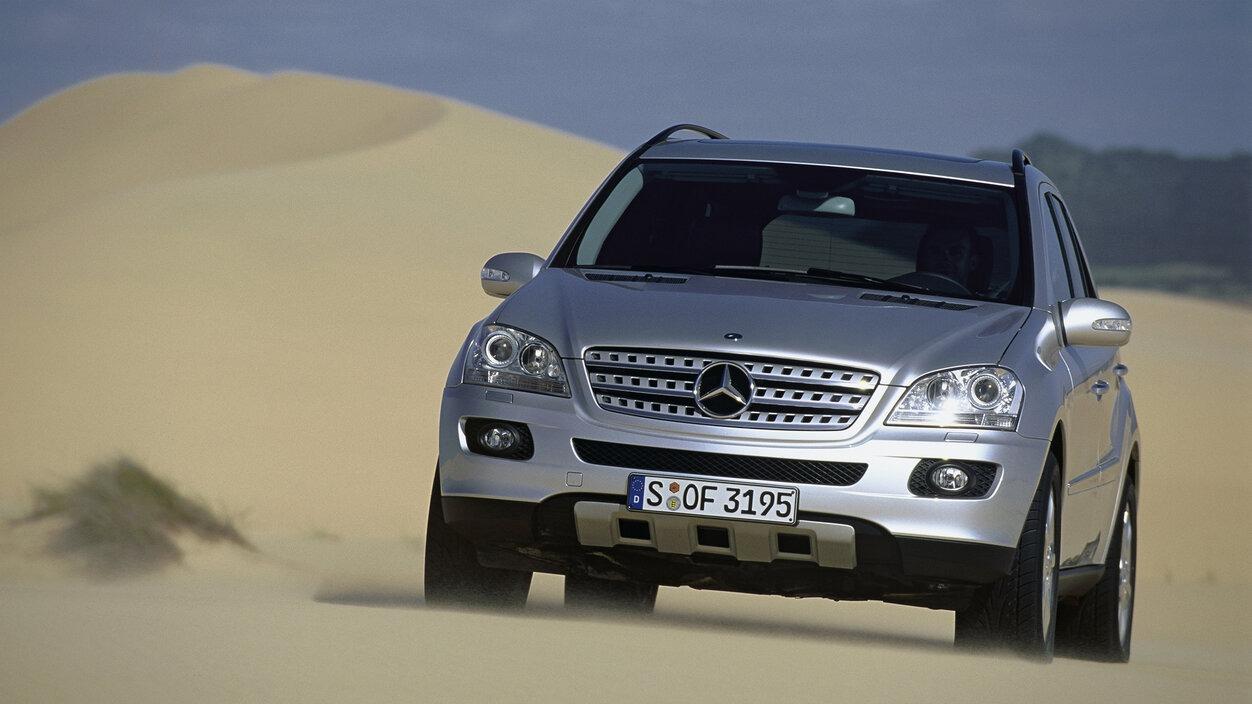
The AA Vision body combined style and practicality. The aerodynamics were refined to reduce noise and fuel consumption, while short overhangs and favorable approach and departure angles provided sufficient geometric off-road capability. The vehicle received roof rails for sports equipment, a retractable tow hitch, two roof hatches, and an unusual split rear door. Even the spare wheel and external speakers for a picnic were part of the overall active recreation concept.
The interior looked no less experimental. Only the steering wheel and controls really recalled familiar Mercedes models, while the dashboard design, cylindrical headrests, and two-tone trim seemed like a bold design challenge. At the same time, behind the striking shell was a high level of equipment: navigation with a pop-up screen, a telephone with steering wheel controls, and an advanced hands-free system for its time.
Technically, the AA Vision also broke conventions. Despite retaining the frame, the prototype received a fully independent suspension — a rarity for SUVs of that time. The all-wheel-drive system could redistribute torque between the wheels, and the list of safety systems included airbags, ABS, and electronic stability control. All this made the concept noticeably closer to passenger cars in its road manners.
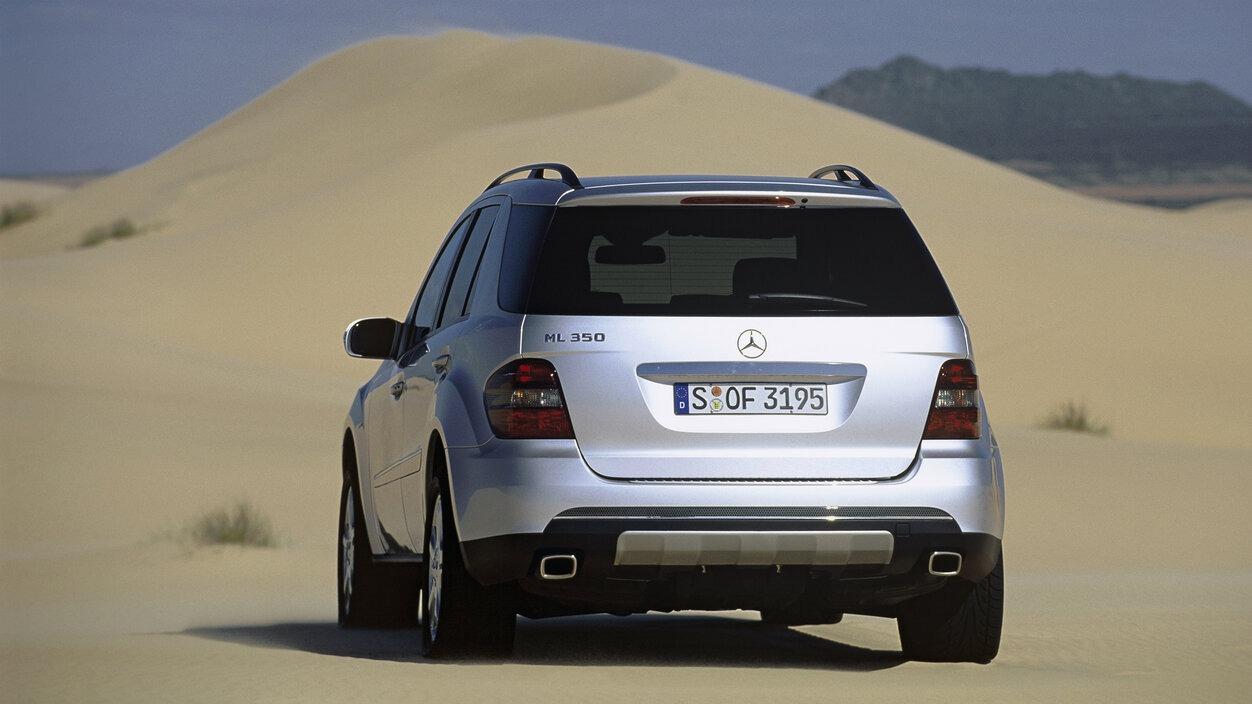
In the transition to the production vehicle, some of the striking solutions had to be simplified. In February 1997, production of the Mercedes-Benz M-Class W163 began. It inherited the key idea of the AA Vision — a comfortable all-terrain vehicle with passenger-car-like manners — but became more restrained in appearance and interior design. Despite criticism for its "American" character and not the most refined trim, it was the ML W163 that effectively created the new segment of premium crossovers. The concept proved so successful that it defined the development of several generations of the model at once and set a standard that the entire industry follows today.
Read more articles:
- AvtoVAZ officially explained what gasoline should be used in Lada
- Moskvich announced prices for the 2026 model year Moskvich 6 sedan
- Tank raised prices across the entire model range in Russia: Tank 500, 700, and 400 have become more expensive