One of the rarest modifications of the Zaporozhye Tavria, a car called the "Dana," also known as the ZAZ-1105, was originally conceived as a trial project. In essence, it was an experiment launched without a clear understanding of the final result. At that time, the management of the Zaporizhzhia Automobile Plant had no clear answer to the question of how to increase demand for the newly launched ZAZ-1102.
It was 1986. In the country, unconventional approaches and fresh ideas for updating familiar products were being actively encouraged. By various estimates, the "Dana" became the third or fourth attempt to create a car for which, as the plant hoped, buyers would line up in queues.
A station wagon as a bet on the mass buyer
As the basis for the new version, they chose one of the most in-demand layouts in the USSR: a five-door station wagon. From a logical standpoint, this looked reasonable: a practical body designed for family and household needs was supposed to appeal to the mass buyer. For the average resident of a small town or settlement, this format really did seem almost ideal.
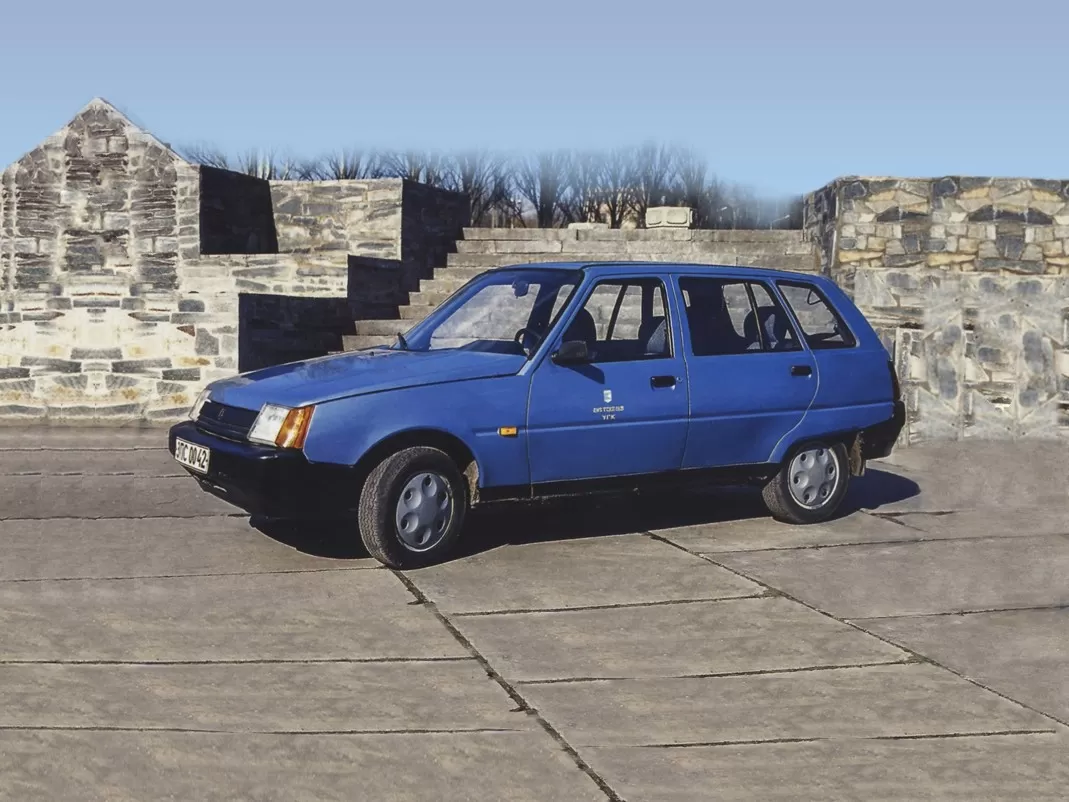
However, the implementation of the idea turned out to be far from optimal. The design of the "Dana" effectively began from scratch. Instead of unifying the body elements with the base Tavria as much as possible, the engineers decided to develop separate floor panels, a roof, side panels, fenders, and a fifth door specifically for the station wagon.
This approach sharply increased the production cost of the ZAZ-1105. At the same time, the final result looked ambiguous: the car became only 13 centimeters longer than the Tavria, whereas a full-fledged station wagon seemed to call for an extension of at least 20 to 25 cm. The luggage compartment volume remained modest, and the wheelbase of both models was the same: 2.32 meters. Apparently, the developers feared that an excessively loaded rear section would worsen the front wheels' grip on the road.
For comparison, one can recall the Czechoslovak Skoda Forman. Its creators were not afraid to stretch the rear of the station wagon a little. As a result, the car did not lose anything in design, became noticeably more practical, and was more stable on the move. Judging by everything, the authors of the "Dana" deliberately avoided increasing the weight of their car.
Controversial design decisions
One of the most unexpected steps was replacing two fairly wide doors with four narrower ones. If getting into the Tavria, with its wide opening reminiscent of the VAZ-2108, was relatively convenient, then in the "Dana" the narrow doors made entry noticeably more difficult. Nevertheless, there were practically no complaints about the cramped interior: buyers perceived the compact dimensions as an inevitable feature of the car.
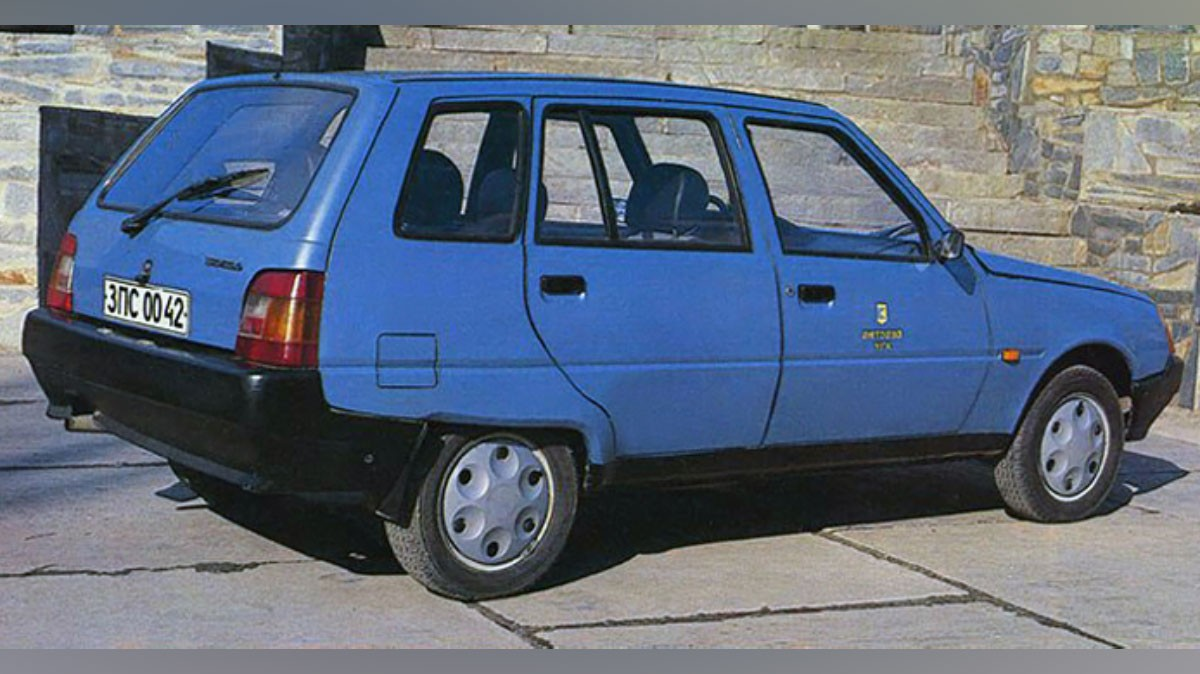
On the other hand, the station wagon made it possible to load the car "to the ceiling" without much trouble. The rear doors and luggage compartment were convenient enough for transporting bulky items.
The transition from a three-door body to a five-door one inevitably affected rigidity. In fact, it decreased, although the developers at the Kommunar plant officially claimed that the strength characteristics had remained unchanged.
It is difficult to assess the real level of passive safety today. The accident statistics involving the "Dana" are too limited to serve as a reliable basis for conclusions: only about 14,000 such cars were produced, which is not enough even for full-fledged durability testing. Nevertheless, Avtorevyu magazine attempted its own crash test and concluded that the station wagon turned out to be noticeably weaker in strength even compared with the small Oka.
Engineering, dynamics, and everyday use
High speeds were never considered a priority for the "Dana" from the outset. At an early stage of development, there were plans to equip the car with a 60-hp MeMZ-310 engine. In practice, however, most cars received the much less powerful MeMZ-245 engine. Only a limited batch was fitted with a 1.3-liter VAZ-2108 engine.
At the same time, the compact station wagon had its strengths as well. The car was distinguished by good maneuverability and, unexpectedly, decent cross-country ability. The light car confidently got out of snow drifts and drove along muddy dirt roads without much trouble. For residents of suburbs and urban-type settlements, this quality was of considerable value.
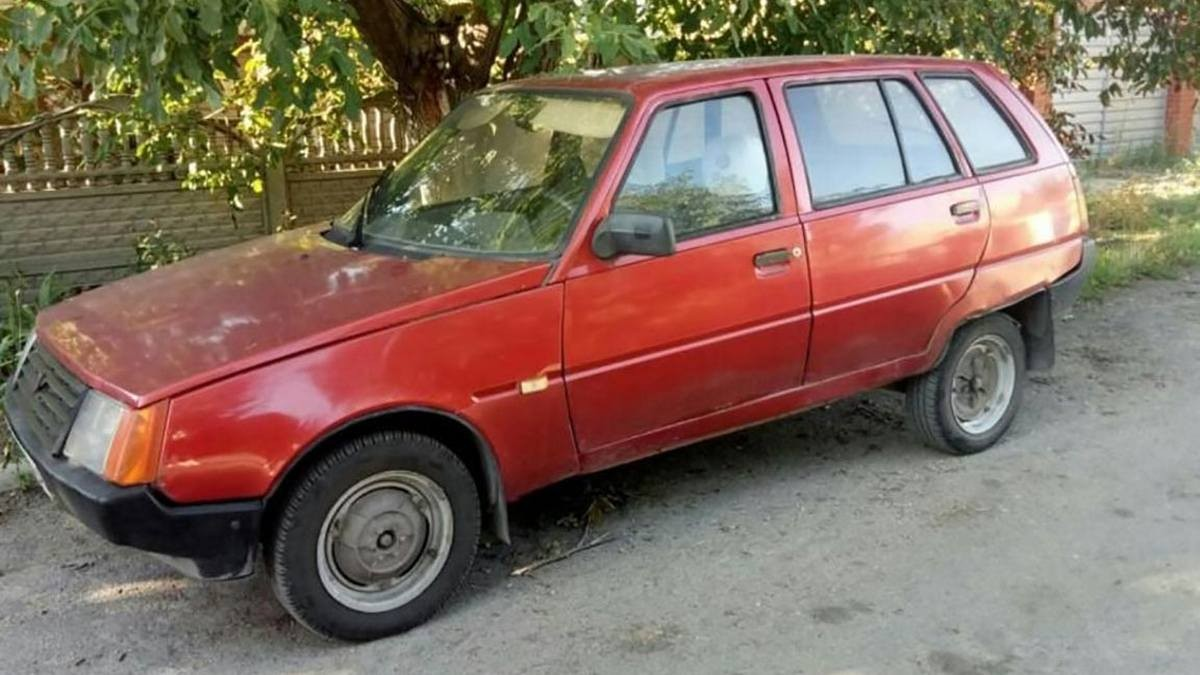
In terms of top speed, the "Dana" did not look helpless either. The car could accelerate to 120 to 130 km/h; specialists from NAMI worked on refining its aerodynamics. However, the sensations at such speeds were mixed: the almost weightless car required caution. Only with passengers in the rear seats did directional stability become more confident.
Potential that was never realized
The ZAZ-1105 definitely had potential. The design solutions built into the car were controversial, but not hopeless. The "Dana" could quite possibly have found its buyer, especially since its price was noticeably lower than that of any model in the Sputnik family.
Nevertheless, after three years of prolonged experiments, the Kommunar plant decided in 1997 to discontinue production of the station wagon. Production capacity was concentrated on the seemingly more promising Slavuta.
The ZAZ-1105 was simply taken off the assembly line, making room for the new five-door liftback. There was a certain logic in this step: the Slavuta was practically reworked from scratch by engineers at the Daewoo corporation, and in terms of development quality it noticeably surpassed the simple and compromise-ridden "Dana." Why they did not produce two or three models in parallel remains a question without a clear answer today.
Read more materials on the topic:
- The last attempt to save the Volga: the story of the GAZ-311055
- Why the Moskvich-412 engine became a revolution in the USSR
- VAZ-2109 and Skoda Favorit: similarities and fundamental differences
Комментарии