Electric vehicles seem to have passed the point of no return. What was recently perceived as an experiment or expensive exotic is now confidently entering everyday reality. The global market is changing right now — and these shifts will inevitably affect Russian motorists as well. Let's analyze the key processes that are shaping the new automotive era.
Charging Infrastructure: When Scale Starts to Work
In the US and European countries, public charging networks have reached a level where the main psychological barrier disappears — the fear of running out of energy on the road. Drivers no longer plan routes with an eye on every outlet: fast DC stations cover not only cities, but also long interregional routes.
The key difference of the current stage is a systematic approach. The infrastructure is formed not in a pinpoint manner, but in the form of connected corridors, where the distance between charging stations is calculated in advance and does not exceed the permissible range. In essence, electric vehicles have received their analogue of classic gas stations.
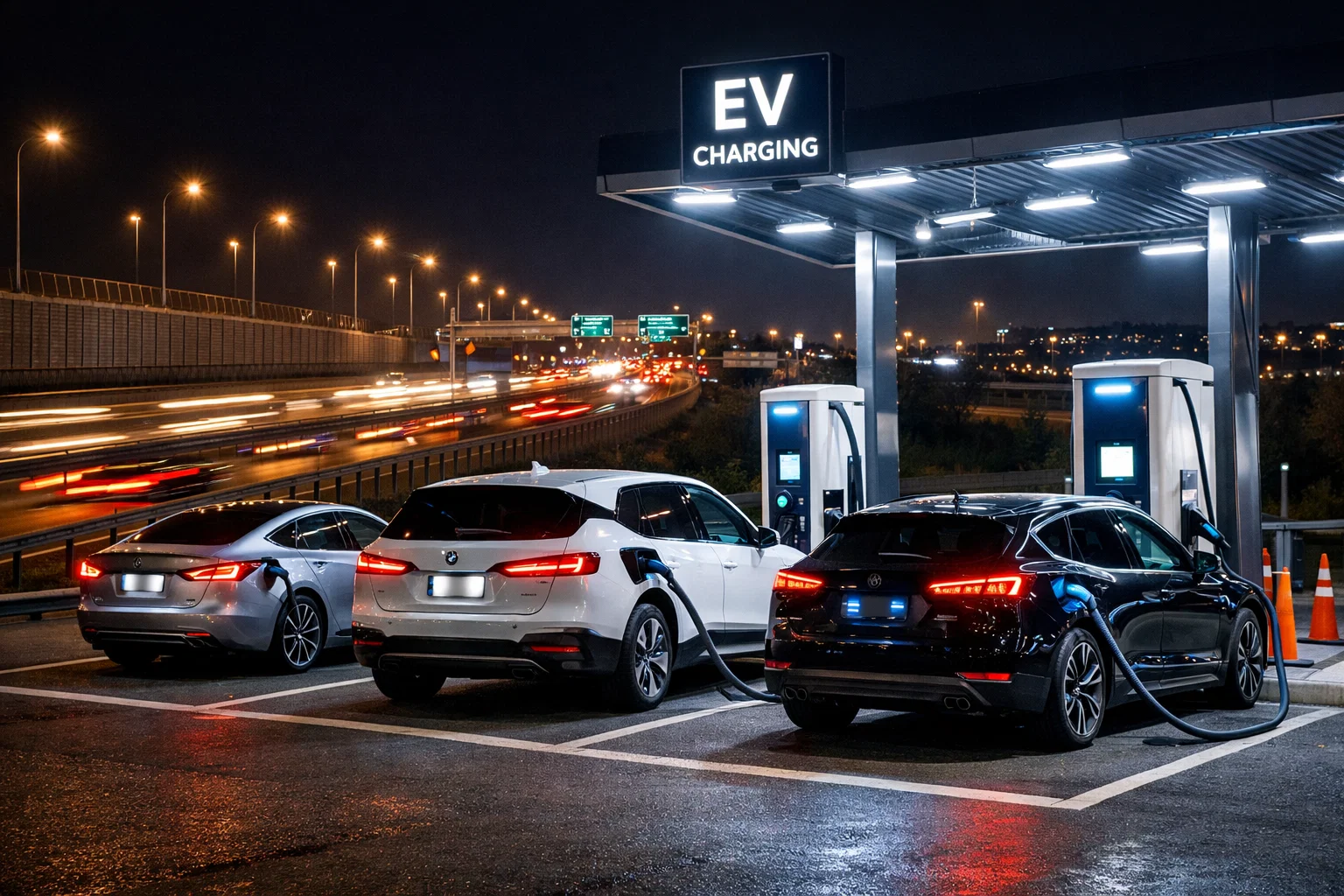
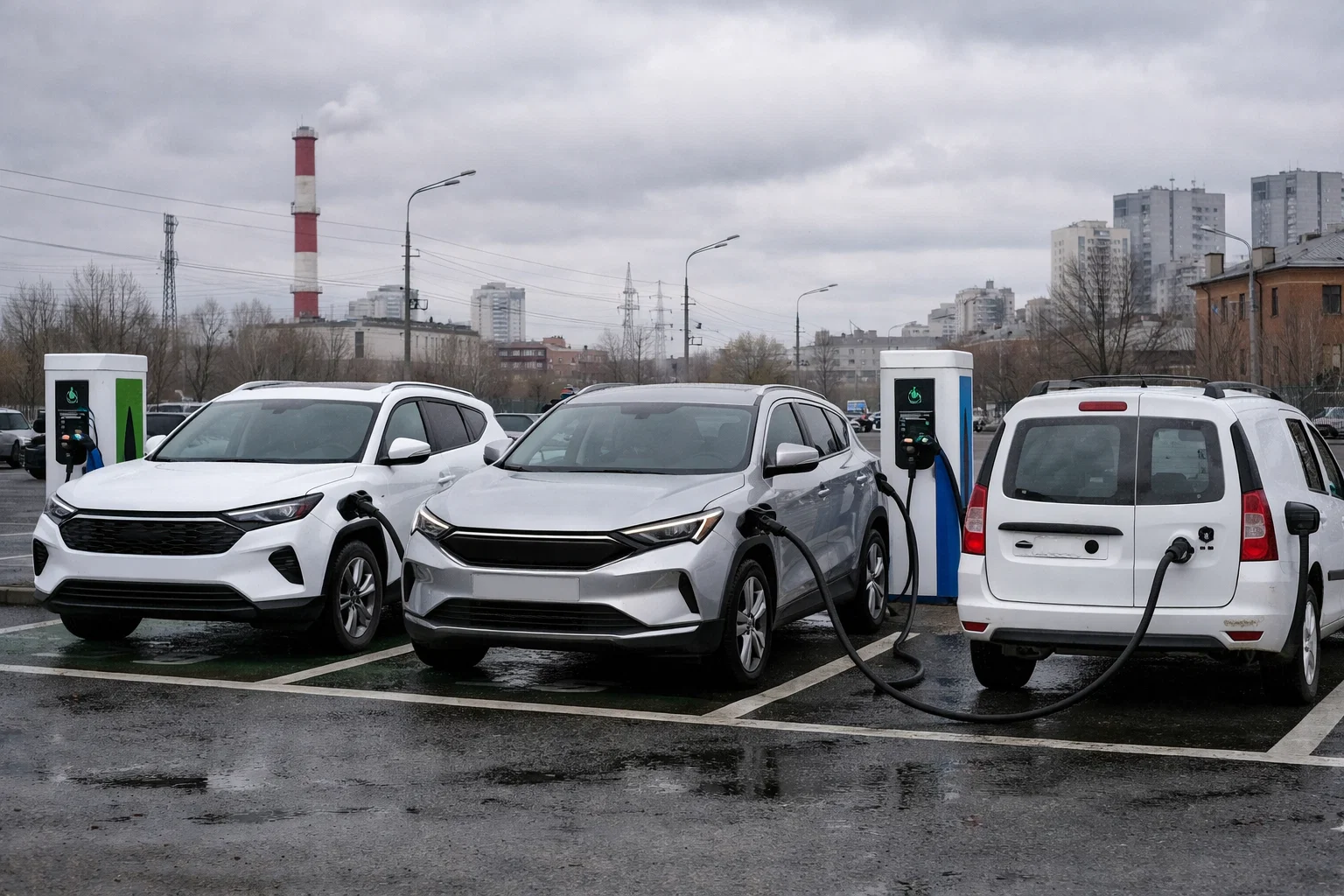
The Russian model is developing differently, but the movement in the same direction is noticeable. According to Rosseti's plans, the network should grow to 9.4 thousand charging stations by 2026. More than 950 points are already operating throughout the country, with 93% of them belonging to the fast charging category. Over the past year, this infrastructure has seen over half a million charging sessions, which indicates a formed demand, not a test operation.
Connector Wars: Standards Are Reaching the Finish Line
2026 promises to be a turning point in the so-called "standard war." The North American market has practically decided: NACS — Tesla's connector, open to the entire industry — has been chosen as the base. Ford, General Motors, Hyundai, and Honda have officially confirmed the transition to this format.
The reasons are obvious. NACS is noticeably more compact than CCS, supports power up to 1 megawatt, and uses a single port for both AC and DC. This simplifies the design of the car and reduces the cost of infrastructure.
Europe, in turn, remains committed to CCS, designed for charging up to 350 kW. At the same time, the largest operators are increasingly deploying hybrid stations that can serve both standards at once.
The Russian market is developing according to a third scenario. The Chinese GB/T connector dominates here. According to data for 2025, it accounted for 64% of all charging sessions. The reason is direct and pragmatic: it is the Chinese brands that today form the bulk of electric vehicle sales in the country.
Bidirectional Charging: Electric Vehicle as an Energy Source
Vehicle-to-Home (V2H) technology is ceasing to be an experiment. The electric vehicle is gradually turning from a passive consumer of energy into an active element of the home energy system. The scenario is simple: at night, the car charges at reduced rates, and during the day it can give energy back to the home network.
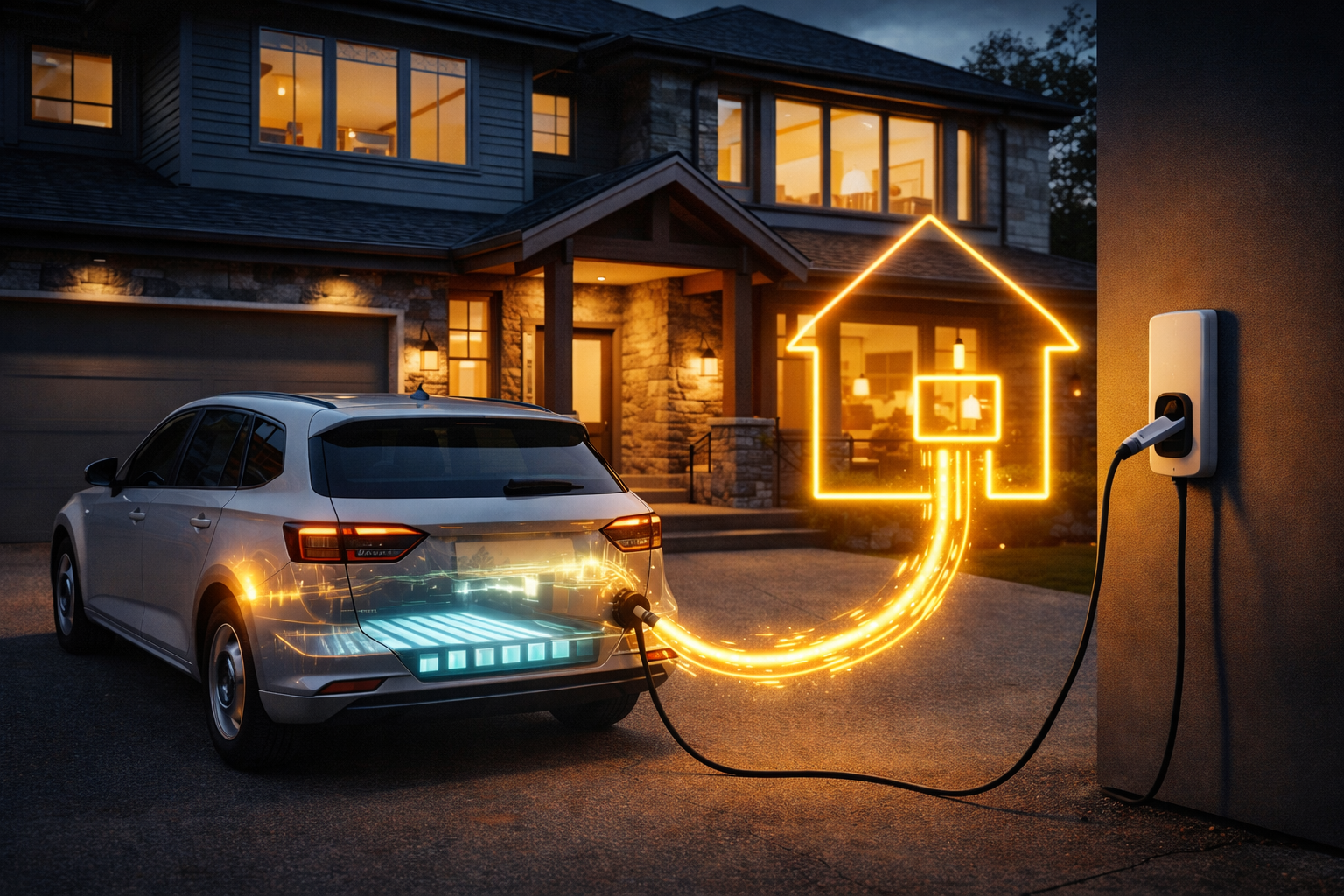
The average traction battery with a capacity of about 60 kWh can provide electricity to an ordinary house for about two days. For example, the Ford F-150 Lightning transmits up to 9.6 kW to the grid — this is enough to power a refrigerator, lighting, and basic household appliances.
General Motors has announced V2H as a standard feature for its electric vehicles. Honda has stated that the technology will be installed on all future models. Even Tesla, despite Elon Musk's previous skepticism, has officially confirmed support for bidirectional charging.
What Automakers Are Preparing
The plans of auto concerns for 2026 no longer look like promises, but like an industrial minimum:
- a range in the range of 560–720 km ceases to be the privilege of expensive versions;
- the energy replenishment time is reduced to 15–20 minutes due to stations with a capacity of up to 600 kW;
- affordable models appear with prices comparable to cars with internal combustion engines;
- artificial intelligence with natural speech understanding is massively introduced in salons.
Russian Specifics
The fleet of electric vehicles in Russia has reached 140 thousand units. At the end of 2024, sales of new cars increased by 27%. Analysts' forecasts indicate further growth: by the beginning of 2026, the number of electric vehicles may increase to 175 thousand.
Own production is also being formed. "Moskvich 3e", the Evolute line, as well as pilot batches of Lada e-Largus have already been presented. The launch of "Atom" from "Rosatom" — the first electric vehicle developed in Russia from scratch — is planned for 2026.
At the same time, a systemic limitation remains. The abolition of the zero recycling fee significantly slows down the development of the market: 66% of industry representatives consider reducing this payment critical for further growth.
2026 becomes the point of transition of electric vehicles from a niche of enthusiasts to a mass segment. The range increases, charging accelerates, the cost of ownership decreases. The electric vehicle no longer looks like a compromise.
When electricity costs less than fuel, charging takes no more than twenty minutes, and stations are located on key routes, electrification ceases to be a fashionable choice and becomes an economic necessity.
Read more materials:
- T-Bank Simplified Toll Payment on Barrier-Free Highways
- Why Tires Wear Unevenly and What to Do About It
- The Law Is Not Written for Them? Why Truckers Are in No Hurry to Change Tires with the First Snow
Комментарии