It's easy to imagine a typical street in a Soviet city in the mid-1970s: a dense flow of "Zhigulis" and "Moskviches", and among them - a strict, imposing "Volga" GAZ-24. At first glance - nothing unusual. But as soon as the car stops, the illusion collapses: the driver's door opens on the right. To a casual passerby, it looked almost like a trick. A familiar car, known down to the last chrome molding - and suddenly the steering wheel is "foreign", as if from foreign films. Such right-hand drive "Volgas" always stood out. They were not just transport, but carriers of biographies - diplomatic, maritime, almost inaccessible to most. To understand where they came from and who drove them, you need to go back to the origins.
Export as the norm, not the exception
The Gorky Automobile Plant initially worked not only for the domestic market. From its early years, the "Volga" was seen as an export flagship, a showcase car designed to demonstrate the country's technical level. Therefore, countries with left-hand traffic - Great Britain, Japan, India, Australia - were also within the sphere of interest. This area was handled by the "Avtoexport" association, and special batches of cars with right-hand drive were regularly assembled in Gorky for its orders.
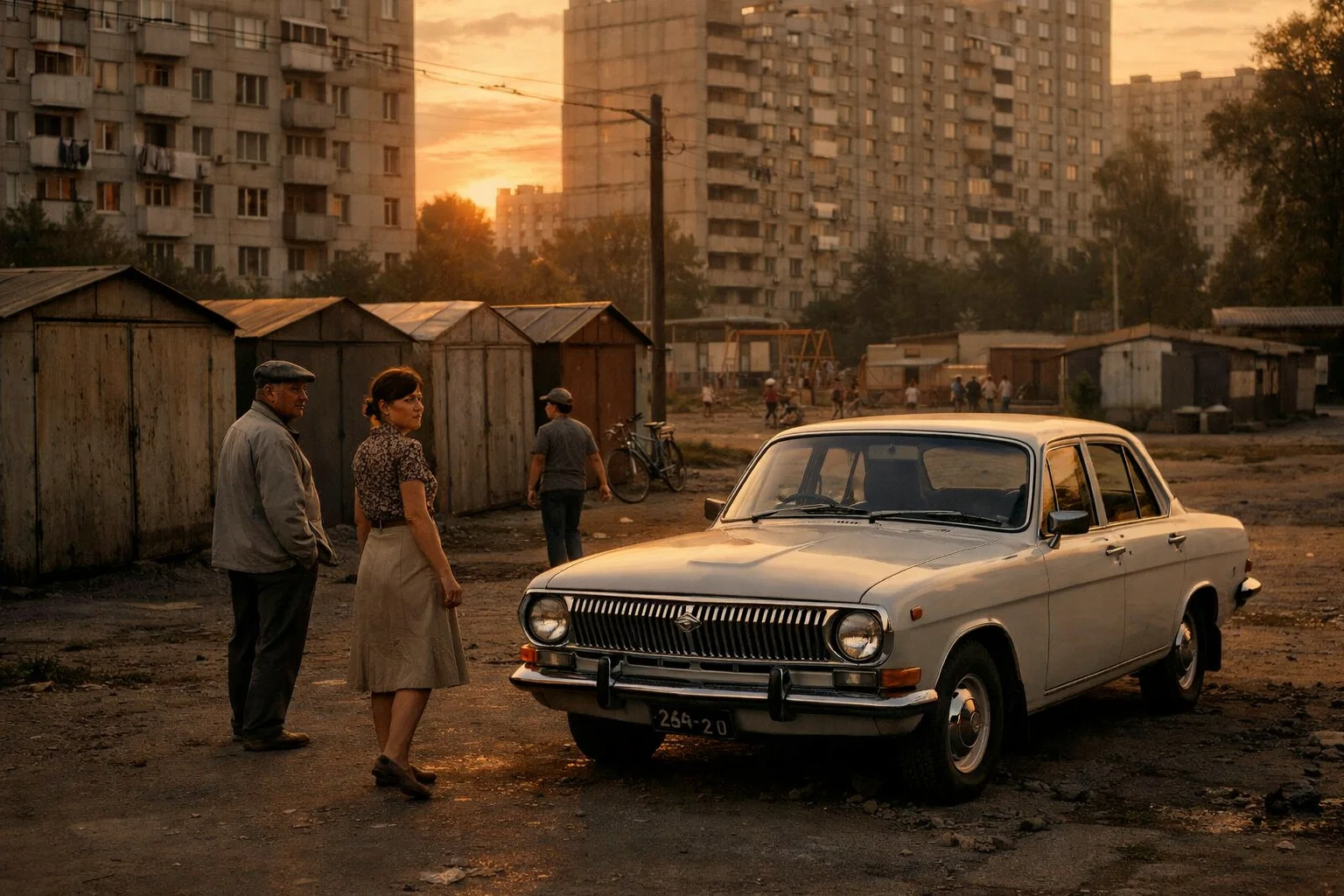
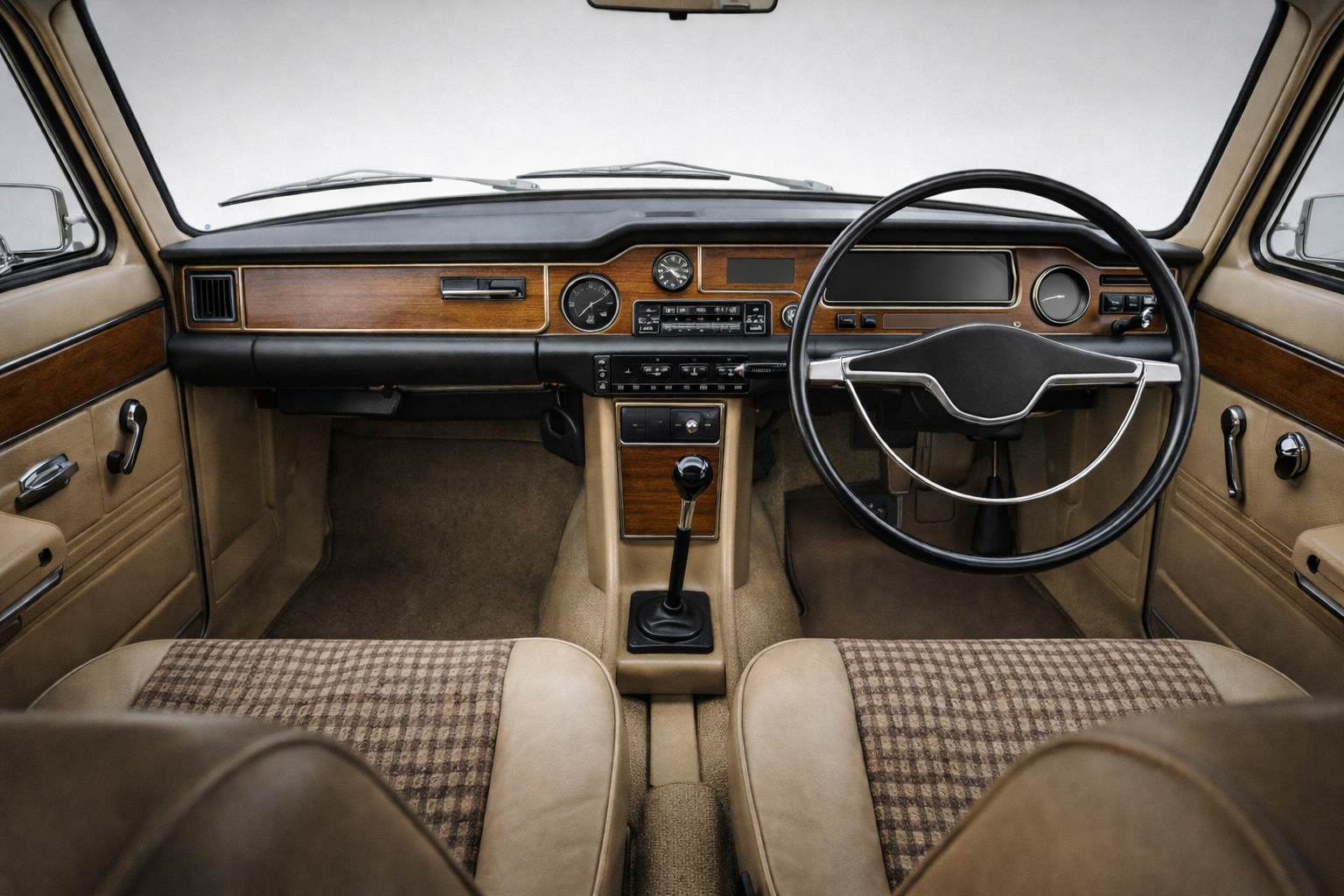
It was precisely about factory production, not makeshift alterations. The layout was completely changed: the steering and pedals were mirrored, and the lighting was adjusted so that the headlights did not dazzle oncoming traffic. In some cases, the ventilation was improved, and for the humid climate of island countries, the anti-corrosion protection of the body was enhanced.
In foreign markets, the "Volga" was perceived as a high-class car. According to journalist and historian Leonid Gomberg, in England it could be afforded by a doctor or lawyer who valued the solidity of the appearance and the exoticism of the brand. The car competed not with budget models, but with comfortable mid-segment sedans. For Japan, especially carefully finished versions were prepared: the level of assembly and the quality of the interior were of decisive importance there. It was these export specimens, made with increased attention to detail, that sometimes returned to the USSR, favorably differing from "domestic" cars.
The road back: people and destinies
The vast majority of right-hand drive "Volgas" remained abroad, but some ended up in the Union with their owners. The main channel was Soviet citizens who had worked abroad for a long time: diplomats, employees of trade missions, journalists, engineers and specialists at foreign construction sites. According to the rules in force, they had the right to import a car after the end of their assignment. Living in England or Japan, many chose the familiar "Volga" in the local, right-hand drive version - reliable, status and easy to maintain. Returning home, a person found himself the owner of a new car without a long wait in line. Such cars were often concentrated in Moscow, in the areas where "visiting" departments lived.
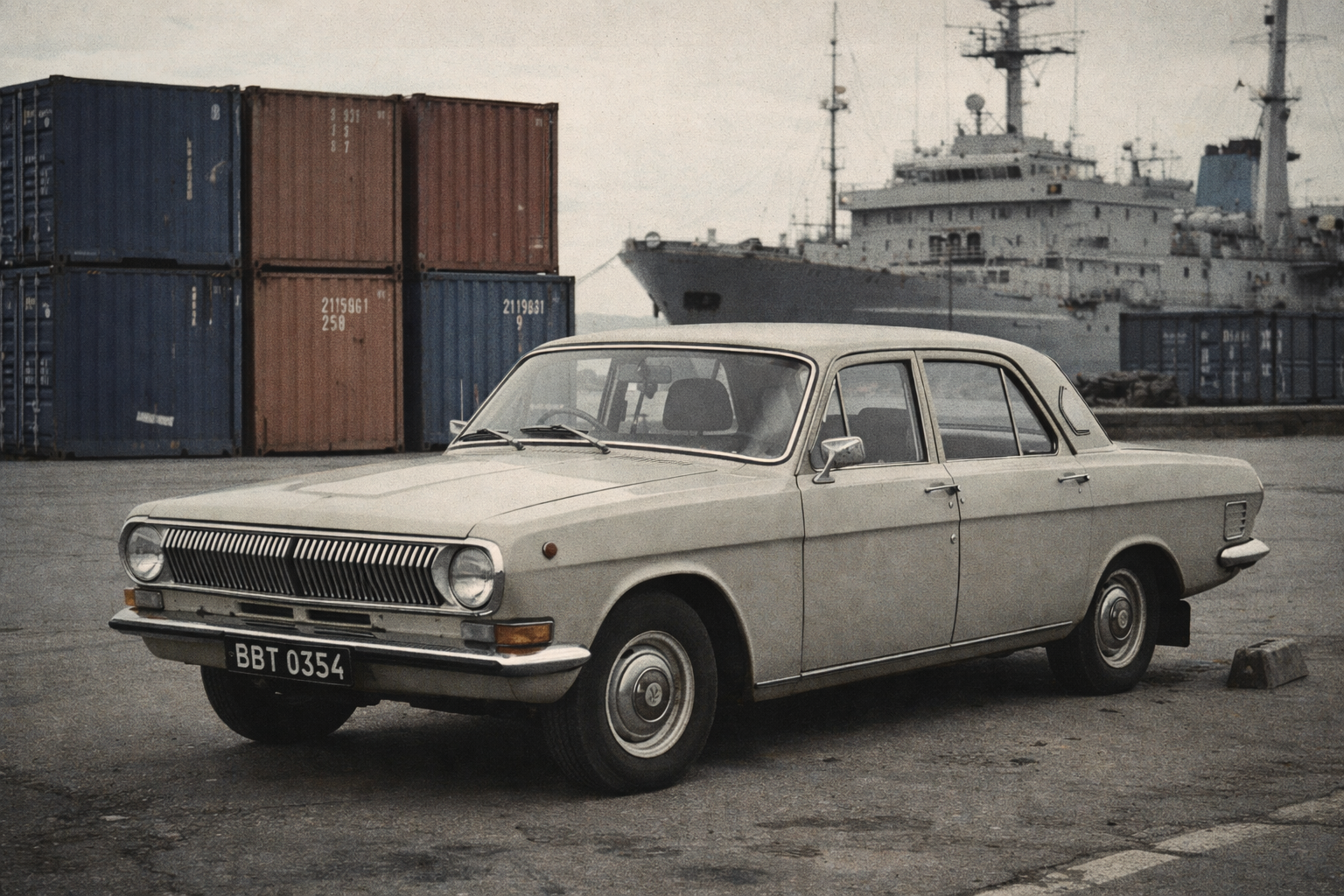
Sailors of long voyages played a special role. The earned currency allowed them to buy a used right-hand drive "Volga" in port cities - for example, in Singapore or Bombay. The car was sent in a container as personal property, delivered to Odessa or Leningrad. The path was difficult, but it gave a chance to acquire a car without diplomatic status. Often, such "Volgas" bore traces of tropical service: faded varnish, unusual options, smells of foreign countries and small artifacts in the cabin.
Over time, some of these cars ended up on the domestic market from hand to hand. Due to the inconvenience of the right-hand drive, the price could be even lower than the standard version. But for a certain circle, it was this strangeness that was the main advantage. Driving a car "from that side" instantly attracted attention - passers-by, neighbors in the garage, traffic police inspectors, who often started a conversation with a question about the origin of the car. It was a silent proof of the owner's special biography.
Everyday life between risk and status
Driving a right-hand drive "Volga" in right-hand traffic required habit and courage. The most difficult maneuver remained overtaking: to see the oncoming lane, the driver either stretched forward or relied on the prompts of the passenger on the left. Any interaction with the outside world - payment, conversation with an inspector - turned into a small test.
Nevertheless, these inconveniences were compensated by the unique feeling of ownership. In a monotonous stream of cars, such a "Volga" instantly became the center of attention. It served as a symbol of scarcity on the contrary - a rarity that emphasized the owner's experience, connections and past trips. For the sake of this status, many were willing to put up with the peculiarities of operation.
Over time, changing owners, right-hand drive "Volgas" passed to enthusiasts. Their value shifted from the social sphere to the historical and technical. Some cars were converted to left-hand drive, but connoisseurs sought to preserve the original layout, realizing that it was it that constituted the main essence of the car. Export versions often served as a kind of testing ground for the plant, where solutions were developed that were later used in mass production.
Legacy
Today, the right-hand drive "Volga" is perceived as a living relic of the era. Each such car is a witness to a time when the world was divided by borders, but some of its fragments still penetrated inside the country in the form of such paradoxes. This is a reminder that history is made up not only of official schemes, but also of private, almost detective routes. About how a Soviet car, created for left-hand roads, after long wanderings ended up in a garage somewhere near Moscow and continued to tell its unusual story to those who were willing to listen to it.
Read more materials on the topic:
- The last attempt to save the "Volga": the story of GAZ-311055
- GAZ-Siber: how and why the "American" Volga did not take off
- ZAZ-1105 "Dana": a station wagon from the USSR that did not become mass-produced