The appearance of exhaust fumes inside a car is a serious signal that should not be ignored. It's not just about unpleasant sensations. The exhaust contains carbon monoxide, nitrogen oxides, unburned hydrocarbons, and particulate matter. Some of these substances are toxic even at minimal concentrations. Carbon monoxide is the most dangerous: it has neither color nor a distinct odor. If the driver starts to feel "exhaust" in the cabin, it means that the system's tightness is compromised. In a properly functioning car, this situation should not occur.
The reasons for the smell can vary from relatively simple problems with seals to serious defects in the exhaust system. Let's consider the most common sources of such a malfunction.
Leakage of exhaust system components
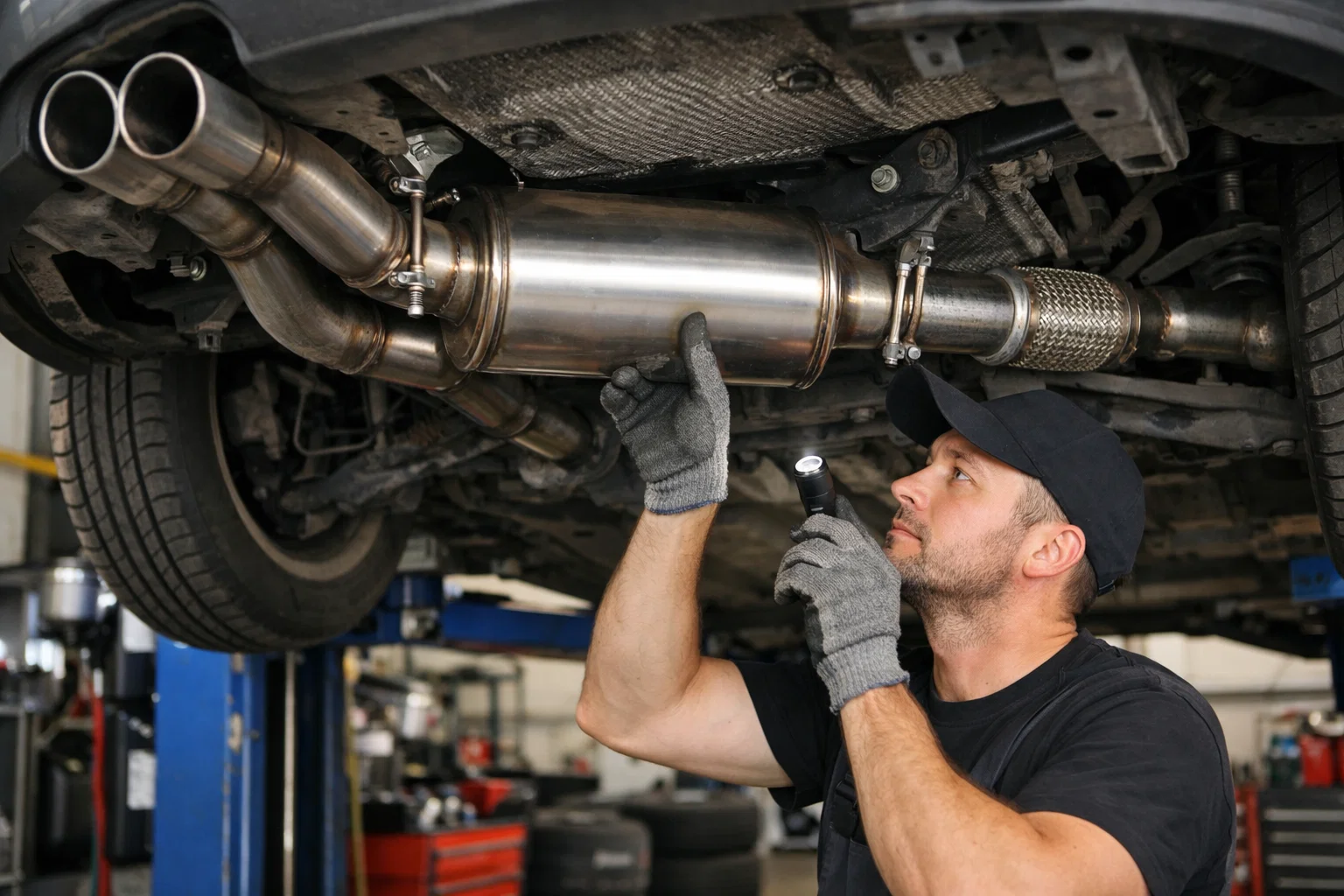
The exhaust system of a car consists of several main elements: the exhaust manifold, the front pipe, the catalytic converter, the resonator, and the muffler. All connections between them are sealed with gaskets or fixed with clamps. If the manifold gasket burns out or a crack forms in the pipe, exhaust gases begin to escape earlier than they should.
When a leak occurs in the engine compartment, the airflow through the ventilation system can draw exhaust directly into the cabin. The smell is usually stronger at idle. This is simply explained: at low speeds, the oncoming airflow is weak, so the gases linger longer under the hood. At a speed of 60–80 km/h, the smell may become less noticeable. However, this does not mean that the problem has disappeared; only the aerodynamics of the air movement around the car changes.
Violation of body tightness
Even a fully functional exhaust system does not guarantee that the smell will not enter the cabin. If the body is not airtight, channels are formed through which outside air can be drawn inside. This can be caused by worn door or trunk seals, as well as technological openings without plugs.

The smell is especially common when driving with the windows or sunroof open. A low-pressure zone is formed in the cabin, which causes air to be drawn in from the rear of the car. This is where the exhaust pipe is located. This effect is well known to body aerodynamics specialists, especially in relation to station wagons and hatchbacks: vortices arise behind the car, returning part of the exhaust gases back to the body.
Malfunctions of the ventilation and recirculation system
The car's heater and air conditioner can draw air either from outside or from inside the cabin. If the recirculation damper is not working correctly and gets stuck in an intermediate position, the system may constantly mix outside air. As a result, the driver may feel the smell of exhaust even when the recirculation mode is on.
The condition of the cabin filter plays an additional role. If it is damaged or missing, the smell becomes more noticeable. The filter is not able to trap carbon monoxide, but it reduces the amount of particulate matter and partially reduces the smell of unburned hydrocarbons. When there is no filter, the perception of exhaust is enhanced.
Burnout of the corrugated pipe or connections under the bottom
The corrugated insert in the exhaust system serves to compensate for engine vibrations. It is constantly exposed to high temperatures and mechanical loads. Over time, the metal may fatigue, and microcracks appear in the structure. Through them, gases escape directly under the bottom of the car.
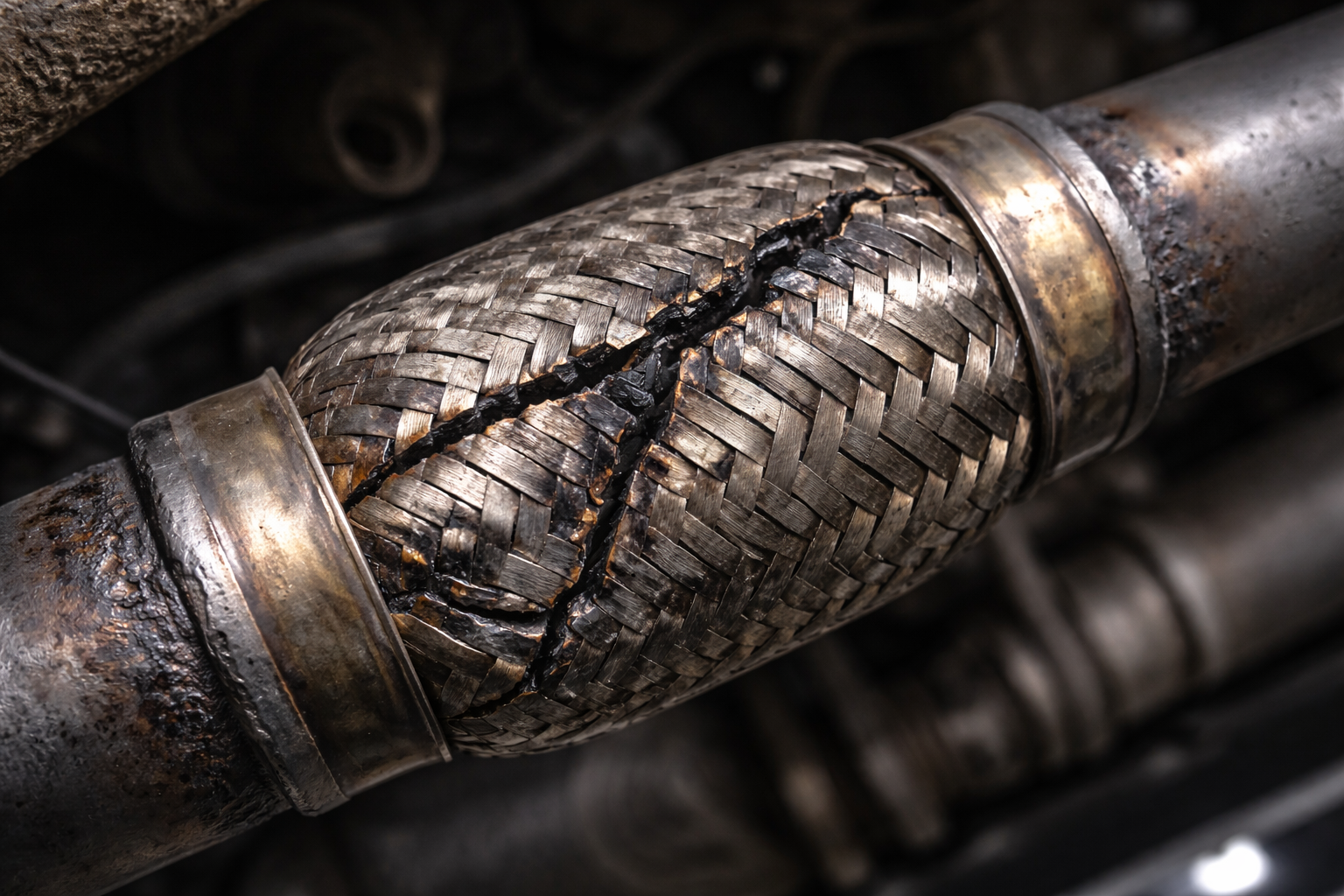
When the windows are closed, the smell is sometimes almost not felt. However, if you open the window, the air flow begins to draw exhaust inside. Changes in pressure in the cabin amplify this effect. In winter, the situation can become even worse: snow and ice under the car can trap gases under the bottom.
Damage to the catalytic converter or particulate filter
If the ceramic block of the catalytic converter is destroyed, the composition of the exhaust changes, and a sharp, irritating odor appears. With partial destruction, leaks are possible at the junction points of the housing.
In diesel engines, the particulate filter performs a similar function. If there are cracks in its housing or leaky flanges, exhaust can escape and enter the cabin, especially when driving at low speeds.
Such problems are often accompanied by the activation of the engine malfunction indicator on the instrument panel. This signal should not be ignored.
Exhaust manifold cracks
The exhaust manifold operates at extremely high temperatures — over 700 °C. Cast iron or steel parts are constantly subjected to thermal cycles. Over time, cracks may appear in them.
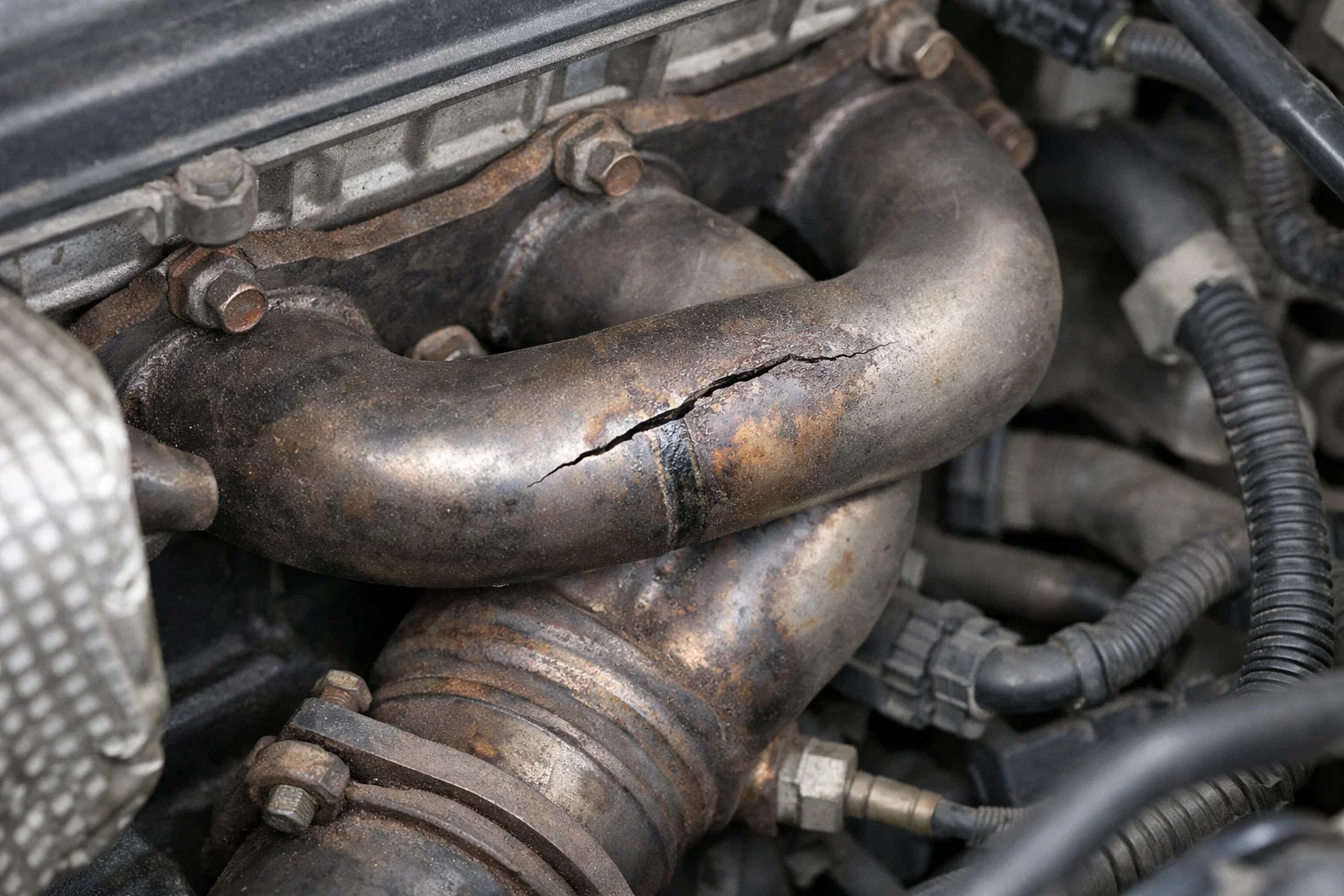
If the manifold is damaged, gases begin to escape directly into the engine compartment. In this case, the smell is felt almost immediately after starting the engine. Sometimes a characteristic "ticking" sound can be heard on a cold engine.
Such a malfunction requires immediate attention. The flow of hot gases can damage nearby parts and even wiring elements.
Running engine while parked
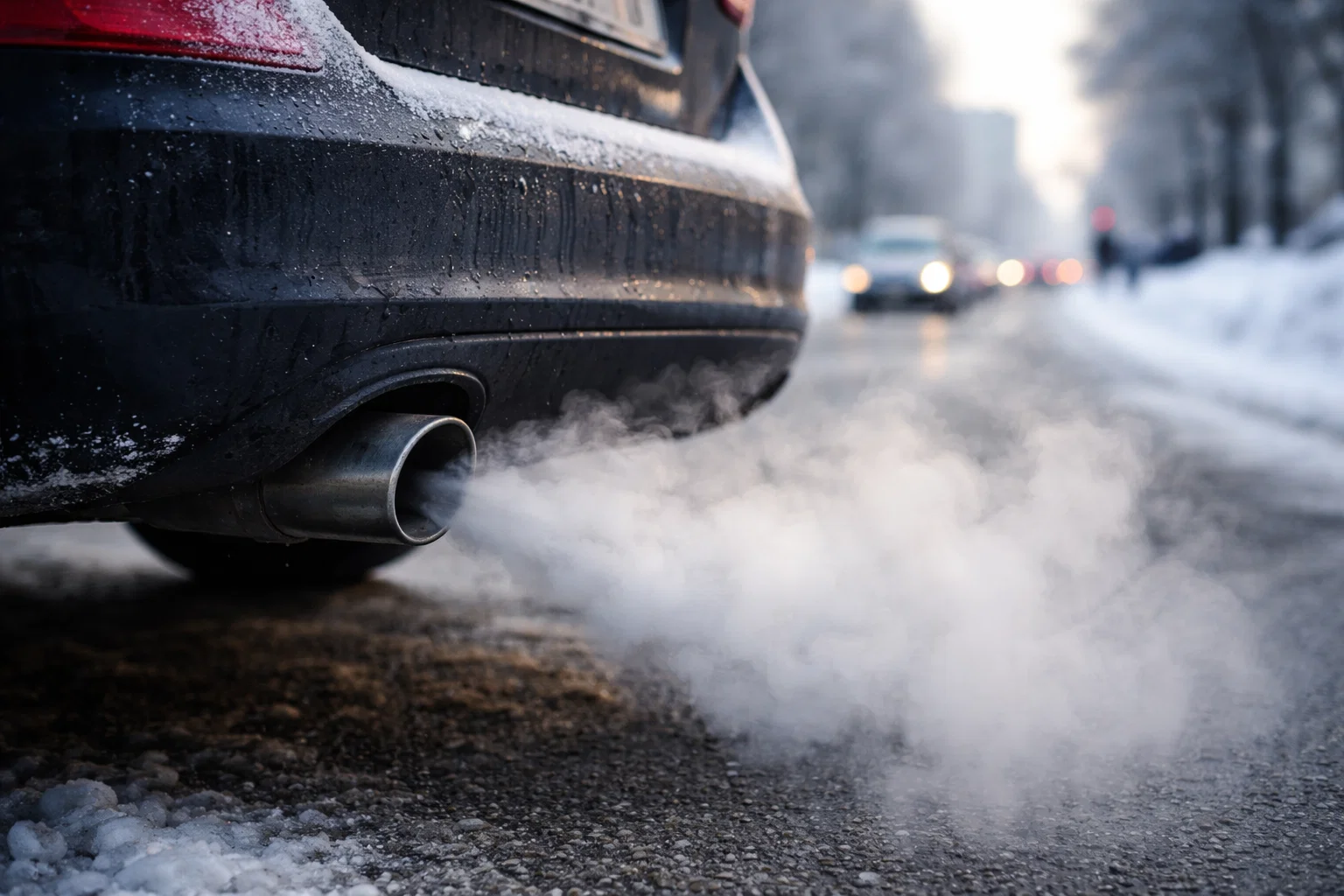
Sometimes the cause of the smell is not related to a technical malfunction of the car, but to the operating conditions. If the engine is running in a closed garage or in a dense urban area, a cloud of exhaust gases may form around the car. The ventilation system inevitably draws part of this air inside.
This situation becomes especially dangerous in winter, when the driver warms up the car in place for a long time. Carbon monoxide is almost odorless. Its effect manifests itself as headache, weakness, and drowsiness. In severe cases, even loss of consciousness is possible.
What to do if you smell exhaust
The first rule is not to ignore the problem. The next step is to diagnose the exhaust system on a lift. During the inspection, the pipe connections, the condition of the corrugation and gaskets, and the integrity of the exhaust tract elements, including the catalytic converter housing, are inspected.
At the same time, the tightness of the body and the condition of the door and trunk seals are assessed. Operating a car with a distinct smell of exhaust gases in the cabin is highly undesirable. In this situation, it is not only about comfort, but also about the safety of the driver and passengers.
Read more materials:
- Drops from the exhaust pipe: normal or breakdown
- Michèle Mouton — the fastest female rally driver
- YaG-10: how the first heavy truck of the USSR appeared
Комментарии