One of the most common Soviet trucks, the ZIL-130, was produced in a large number of variants. However, the ZIL-MMZ-555 modification with a body of unusual, rounded shape stood out among them. A logical question arises: why was such a solution needed and what advantages did it offer compared to the usual rectangular geometry?
This version of the dump truck was produced from 1969 to 1987 and was based on a shortened ZIL-130D chassis. The car was equipped with a gasoline V-shaped eight-cylinder engine with a volume of 5.5 liters, developing 150 horsepower. Fuel consumption ranged from 28 to 40 liters per 100 kilometers. At the same time, the carrying capacity reached 5 tons, and the body volume was 3 m³. The design included reinforced rear springs, and the car itself was originally designed for the transportation of construction bulk materials and concrete.
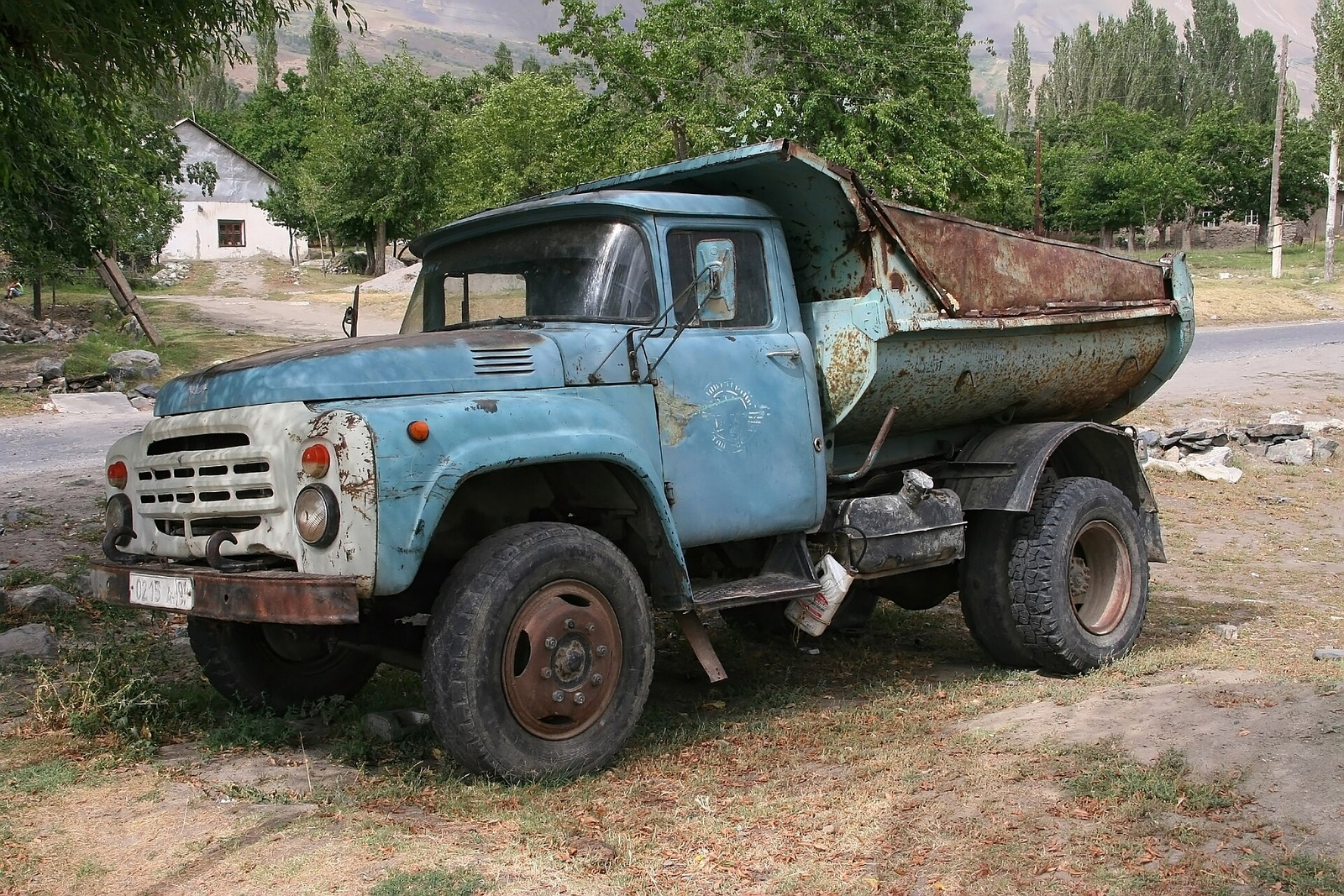
The reduced volume body with rounded walls was designed for transporting high-density cargo, including cement mortars. This form was not accidental; it directly affected the nature of unloading and ease of use.
When using a classic body with right angles, the following happened:
- the material was distributed over a significant area during unloading
- the height of the embankment remained small
- the cargo took up a lot of space after unloading
In the case of a rounded body, the behavior of the cargo changed:
- it came off in a compact mass
- formed a higher and narrower pile
- took up less space on the site
This advantage became especially noticeable when working with concrete. Unlike rectangular bodies, where the mixture accumulated in the corners and stuck to the walls, the rounded shape contributed to a freer descent of the material. Loose and viscous masses were less retained inside, which reduced unloading time. As a result, the dump truck turned out to be universal: it coped equally effectively with both soil and gravel, and with concrete mix, while operation was cheaper than specialized concrete mixers.
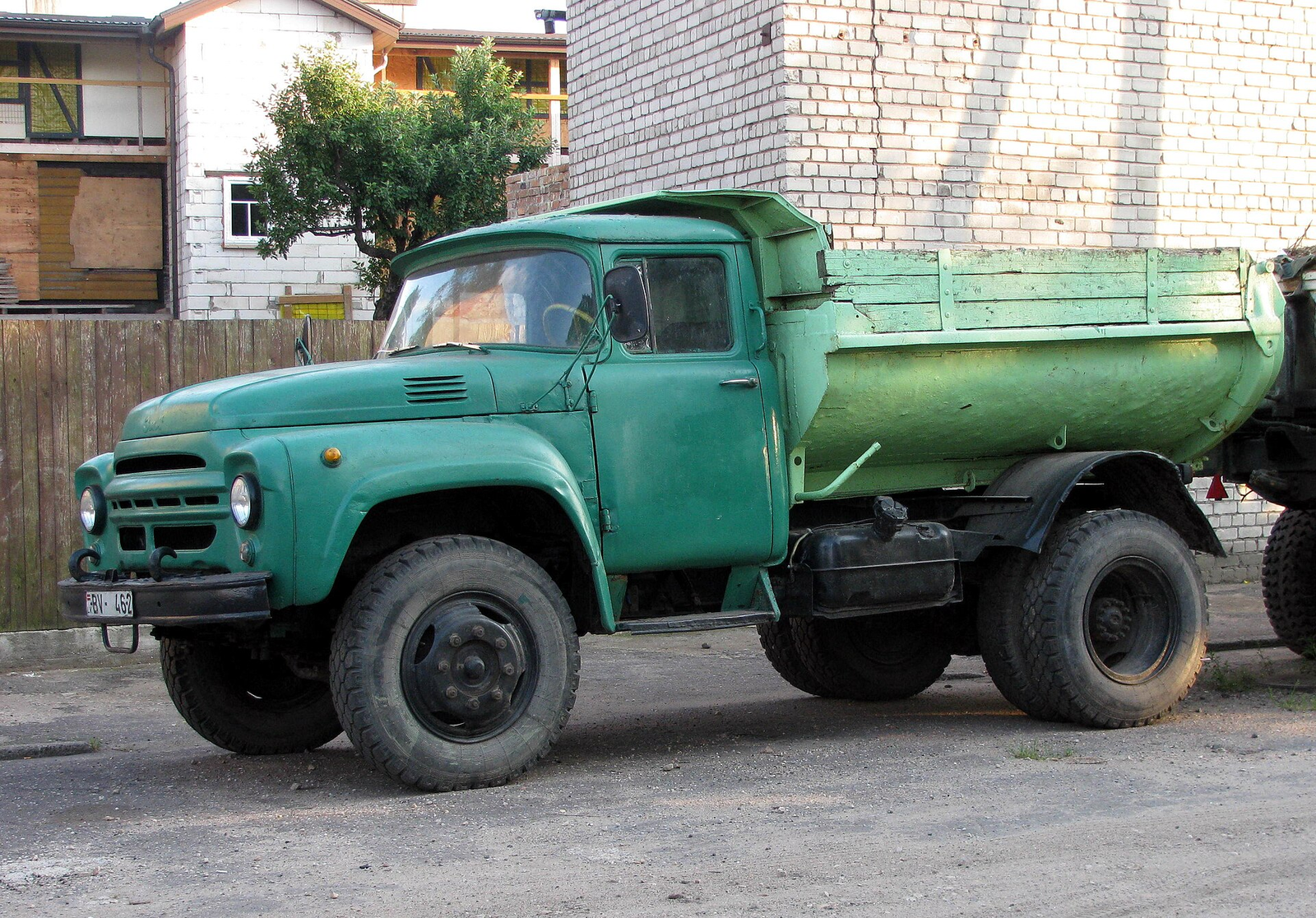
The predecessor of this model was the ZIL-553, a specialized vehicle for transporting concrete. It also used a similar body shape. This solution made it possible to reduce the adhesion of the mixture and ensured its displacement during movement, preventing premature setting. An additional advantage was that this geometry did not require strengthening the structure with stiffening ribs, which saved metal.
The ZIL-MMZ-555 also had other features associated with the shortened base:
- lower weight compared to the standard ZIL-130
- higher dynamics
- the ability to conveniently place a spare wheel on the side
Over time, the side location of the spare tire was abandoned; an additional fuel tank began to be installed in its place, and the wheel itself was excluded from the configuration.
This model also provided for a small single-axle trailer, made in the same style with a rounded body, which expanded its functionality.
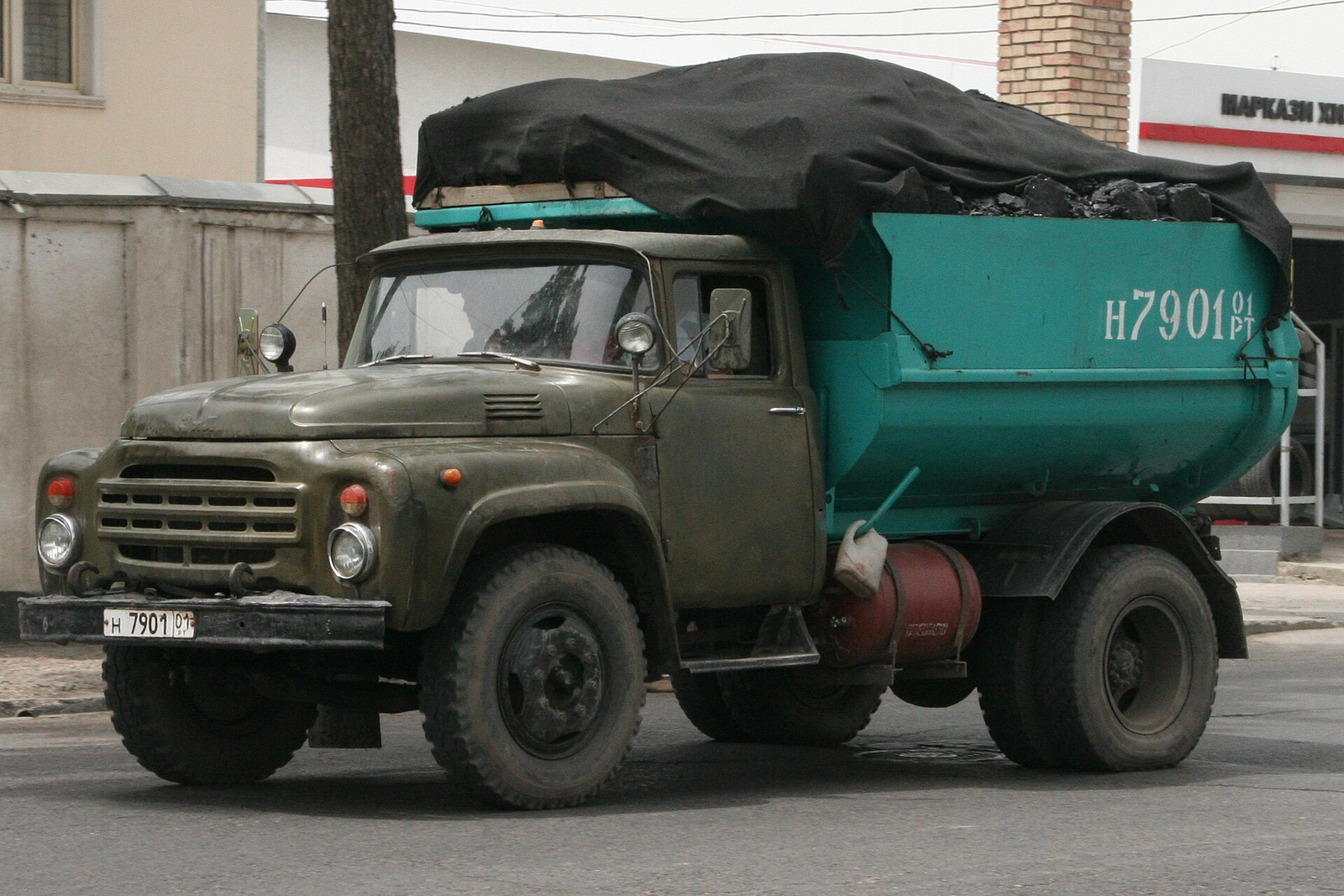
An interesting page in history was the experimental version of the ZIL-MMZ-555D, which received a fiberglass body. This design had a number of features:
- the weight was only 410 kg, which is about one and a half times less than the steel analogue
- the body was a single piece without welds
- the metal version required about 40 meters of manual welding
Engineers expected that the plastic solution would be simpler and faster to manufacture, but these expectations were not met. Despite the fact that the tests showed high wear resistance and ease of repair, the technology turned out to be too complex for mass implementation, and such a body did not go into series.
The ZIL-130 and its modifications themselves became one of the most massive trucks in the country. However, the history of the enterprise ended: in 2013, the Likhachev Plant stopped producing cars, and by 2021 it was completely liquidated. The territory located within Moscow was subsequently built up with residential complexes. It is believed that a key role in this was played by the high attractiveness of the land for developers.
Nevertheless, the memory of the plant was preserved. In 2025, the Zilart Museum and Exhibition Center opened on the site of the former industrial zone, dedicated to the history of the enterprise and its products.
Read more materials:
- YaAZ-210G: Soviet response to Lend-Lease
- Ceramic engine: a myth that almost became a reality
- Unexpected brands: cars from Africa