When the first serial GAZ-69 rolled off the assembly line of the Gorky Automobile Plant in 1952, the Soviet automotive industry was practically not taken seriously in the West. Meanwhile, this very car, known in the army as "goat" and in everyday life as "gazik", confidently coped with tasks that at that time remained unattainable for most mass-produced SUVs.
The story becomes even more interesting when considering the context. In those years, when the GAZ-69 worked in harsh conditions from Arkhangelsk to Kabul, Japanese engineers carefully studied its design. And a number of solutions implemented in the Soviet car can later be found in the developments of Toyota and Nissan.
From Idea to Assembly Line
Development began in 1946, when the country needed a light universal SUV for military and civilian tasks. By 1948, the first prototypes were ready, and in 1952 the car went into mass production. A few years later, production was completely transferred to UAZ, where the model lasted until 1972.
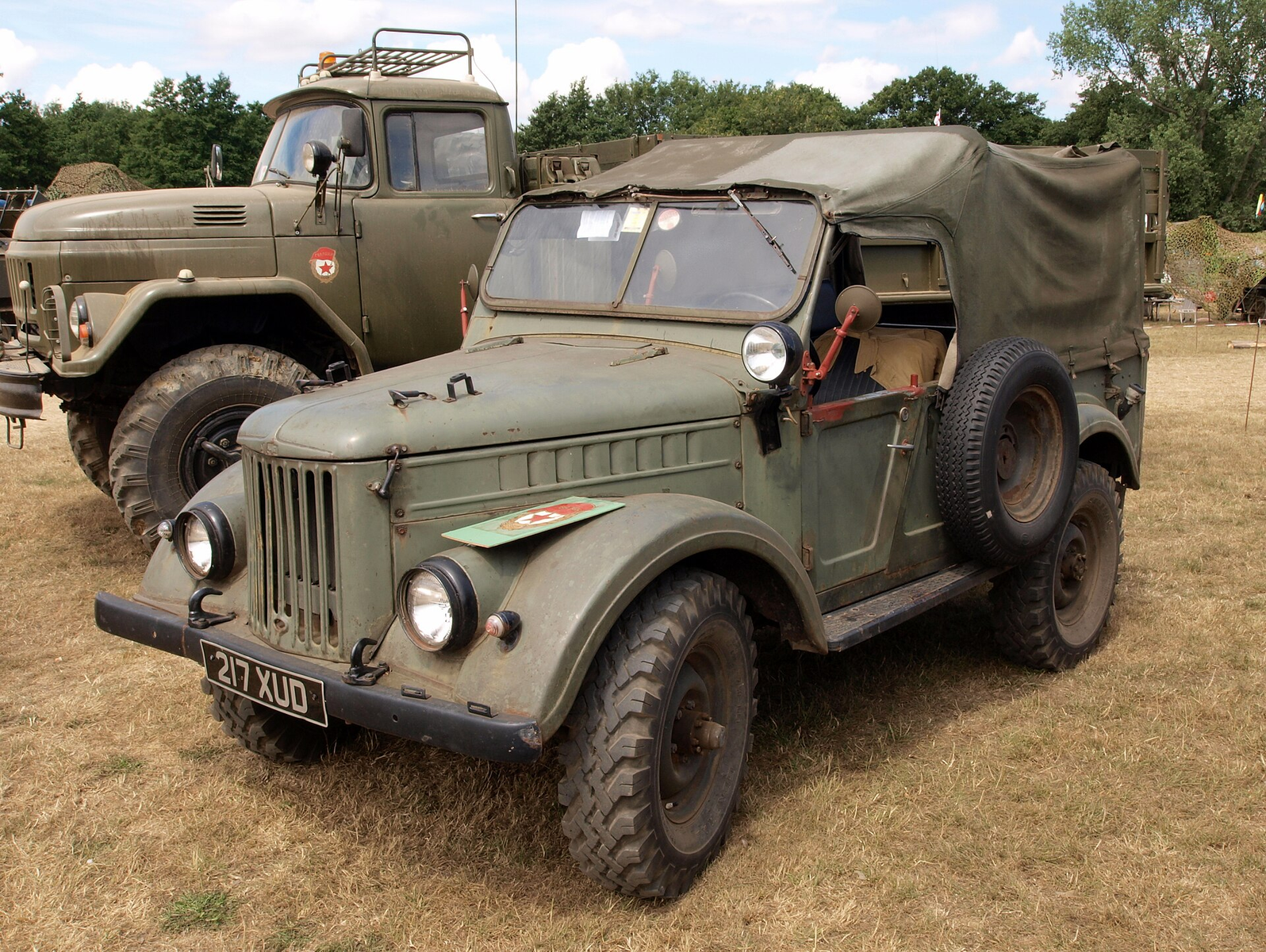
It is noteworthy that the design remained practically unchanged for two decades. This was not a consequence of conservatism — the initial solutions simply turned out to be so successful that no serious revision was required.
Engineering without Excess
From a technical point of view, the GAZ-69 looked modest: a 2.1-liter engine with a capacity of 55 hp. However, with a weight of 1520 kg, this was enough to provide the necessary cross-country ability. A ground clearance of 210 mm and an approach angle of 45° made it much better prepared for off-road conditions than many modern crossovers.
The key role was played not by numbers, but by the principles laid down by the designers:
- switchable front axle, allowing to save resource and fuel on the highway
- two-stage transfer case with a reduction gear
- frame construction, providing maintainability and survivability
- extremely simple mechanics without complex components and unnecessary systems
This architecture allowed the car to work in conditions where maintenance was virtually absent.
A Car for Extreme Reality
Unlike Western counterparts like early Land Rover or Willys Jeep, the GAZ-69 was originally designed for much harsher operating conditions. It was not only about bad roads, but also about their complete absence, extreme frosts and huge distances without infrastructure.
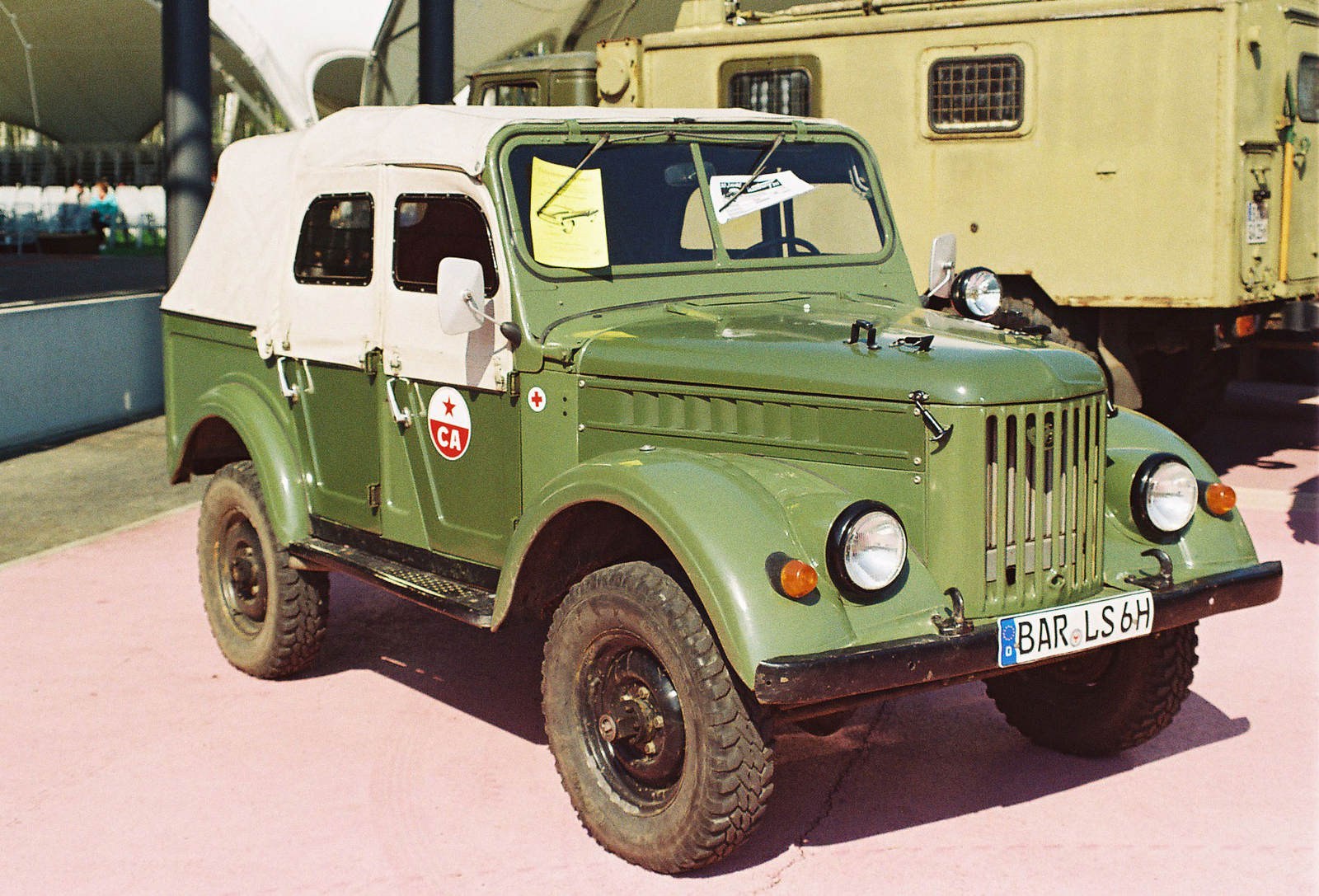
That is why the car received utilitarian solutions dictated by practice: an external spare wheel, fuel tanks in the body, the absence of electronics sensitive to moisture and cold. All this looked simple, but provided the main thing — reliability.
Export and Distribution
The endurance of the design quickly made the GAZ-69 popular outside the USSR. In the 1950s and 1960s, it was supplied to dozens of countries, from Europe to Asia and Africa. In Romania, under the ARO brand, from 1957 to 1975, a virtually copy of the Soviet car was produced — almost without changes in design.
This distribution was explained not by ideology, but by practicality: the car worked confidently where others failed.
Echoes of Japanese Models
The Nissan Patrol (1951) and later the Toyota Land Cruiser FJ40 (1960), which appeared around the same years, solved similar tasks. Their design largely echoes the approach implemented in the GAZ-69.
The similarity is manifested in the basic principles:
- frame base instead of a load-bearing body
- switchable all-wheel drive with a reduction gear
- minimalism of design and orientation to repair in the field
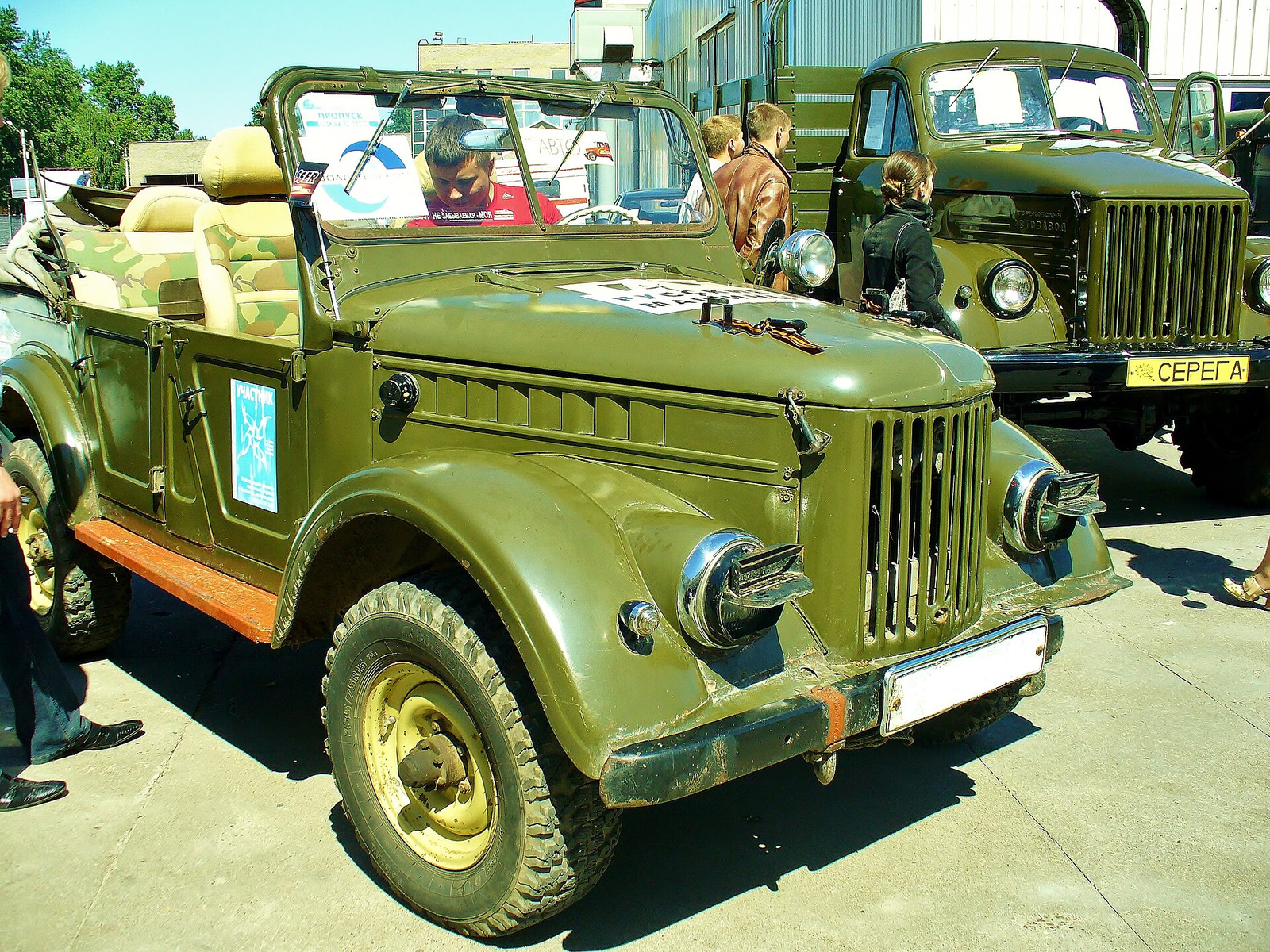
There is no documented borrowing, but it is known that Soviet equipment was actively studied through export deliveries and in regions of joint operation. As a result, regardless of the source of the idea, the result turned out to be close.
Legacy and Modernity
The production of GAZ-69 ended in 1972, but the cars themselves did not disappear. Many copies are still in use, albeit in a modified form: owners install other engines, modernize brakes, and restore the chassis.
In the secondary market, such cars are estimated at about 150–600 thousand rubles, and fully restored copies cost more and are in stable demand.
The main legacy is not specific cars, but the concept itself: a light frame SUV with switchable all-wheel drive, minimal complexity and high maintainability. It is this approach that is now considered classic and underlies modern "honest" SUVs.
In fact, the formula for which they are now asking for millions was implemented back in the early 1950s — in conditions of limited resources, but with maximum focus on practicality.
Read more materials:
- The mystery of the iron "handles" on the wheels of Soviet trucks
- Why the ZIL-MMZ-555 had a round body
- YaAZ-210G: the Soviet response to Lend-Lease