Surely you have come across pictures of cars on tests covered in strange patterns: sharp zigzags, contrasting black and white lines, chaotic geometric shapes. This visual chaos is not a decorative technique at all — there is a very specific task behind it. The history of such camouflage goes far beyond the automotive industry and is directly related to military technologies.
From Fleet to Roads: The Origins of Camouflage
The idea of the so-called "dazzle camouflage" did not originate among the engineers of auto concerns. It was proposed by the military. In 1918, marine artist Norman Wilkinson, who served in the British Royal Navy, developed an unusual way of painting ships. Instead of making ships less visible, he suggested the opposite: covering them with bright, contrasting patterns.
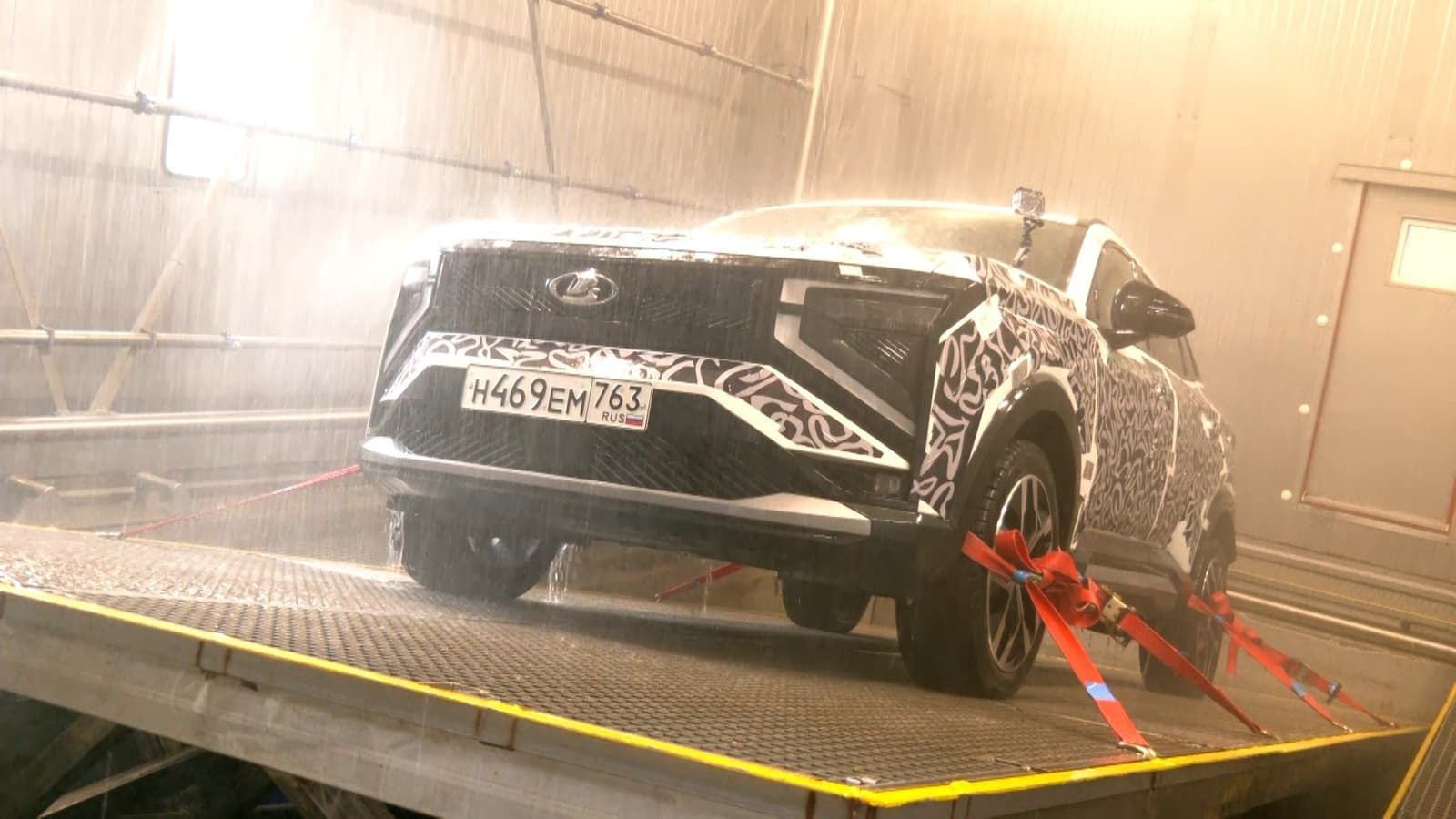
- the goal was not to hide the object
- the main task was to disorient the enemy
- complex lines and shapes made it difficult to determine the direction of movement
- it also made it difficult to assess the speed and even the orientation of the ship (where is the bow, where is the stern)
The method was called dazzle camouflage. During the years of the First World War, about 4,000 British ships were decorated in this way. Despite disputes about its effectiveness, the approach itself demonstrated that optical illusions can be misleading.
How Camouflage Became Part of the Automotive Industry
In the automotive industry, similar techniques began to be used much later. The turning point was an episode in the 1950s, when German journalists Heinz-Ulrich Wieselmann and Werner Oswald published photographs of secret prototypes in the magazine Auto, Motor und Sport without the manufacturer's consent. This caused a serious resonance and forced companies to reconsider their approach to protecting information.
Since then, automakers have begun to actively hide the appearance of their new models, adapting military developments. In Germany, such camouflaged cars received the nickname Erlkönige ("forest kings"). The name is associated with Goethe's ballad and a section in the same magazine where "spy" photos first appeared. Over time, the term became established as a designation for any disguised test vehicles.
How Automotive Camouflage Works
The masking of prototypes is built in stages and combines several techniques. Its task is to make any photographs useless for competitors and journalists.
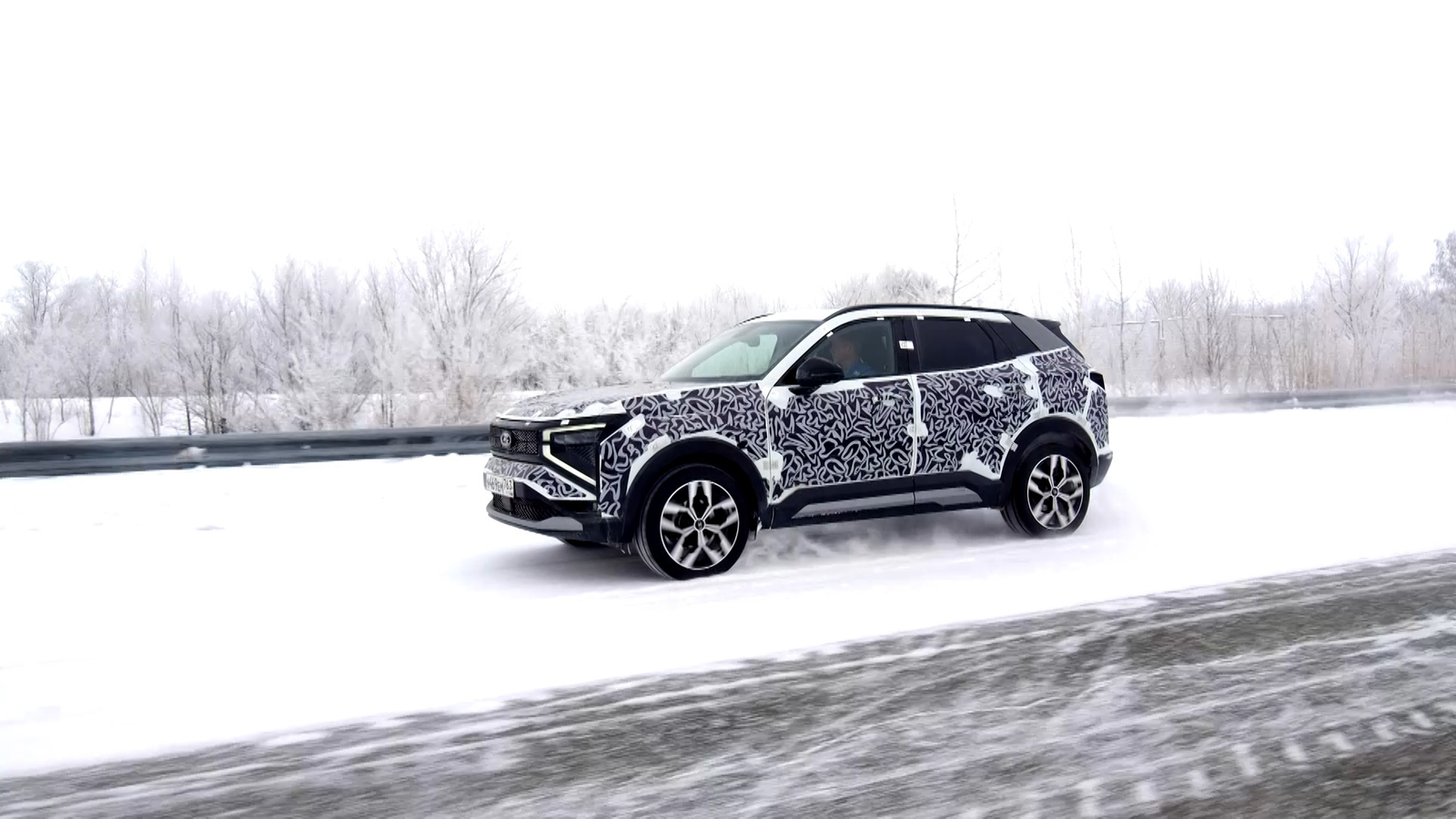
- at an early stage, the body of the new model is hidden inside a "donor" — a car of similar size; such cars are called "mules", and they often look disproportionate
- then false panels are used, which change the geometry of the body, and the headlights and windows are also masked
- the final stage is the application of a vinyl film with characteristic patterns, hiding the details of the surface
It is important to understand that this film does not hide the silhouette completely. It works differently — it interferes with perception. The human brain interprets shape by light and shadow, and chaotic contrasting lines disrupt this process. As a result, the real curves of the body are difficult to distinguish from the pattern.
Why Prototypes Go Out on Public Roads
Despite the availability of their own test sites, automakers are not limited to them. Real conditions cannot be fully reproduced on closed tracks.

- road irregularities, potholes and various surfaces
- weather factors — snow, heat, rain
- heavy traffic and city traffic jams
- variety of regions and climatic zones
That is why camouflaged cars can be found in various parts of the world, especially where conditions are considered extreme.
Camouflage as a Marketing Tool
Over time, camouflage has ceased to be exclusively a means of protection. Some brands, including BMW, have begun to use it as an element of promotion. Camouflaged cars become part of advertising campaigns:
- the names of models are applied to the film
- add QR codes leading to official pages
- use ironic or provocative inscriptions
- organize full-fledged photo shoots of prototypes.
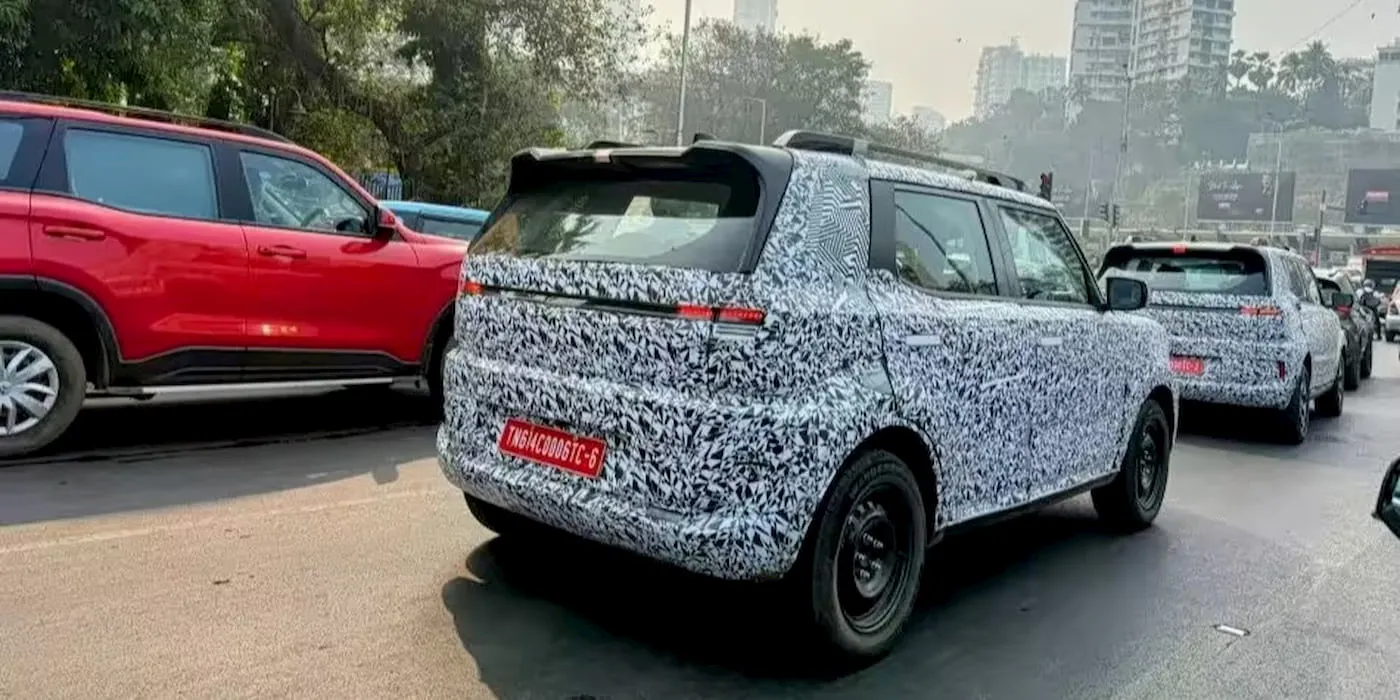
Thus, the effect of "secrecy" turns into a way to attract the attention of the audience and fuel interest in the new product.
Beyond Cars
Dazzle camouflage has long gone beyond the automotive industry. It is used in various fields:
- design of wetsuits and surfboards (it is believed that patterns can scare away sharks)
- use in motorsport — for example, in 2015, the Red Bull team decorated the RB11 car with similar stripes to complicate the analysis of aerodynamics by competitors
Behind the strange black and white patterns on test cars lies not a design whim, but a technology with more than a century of history. Its task is to deceive perception, confuse the observer and keep secret what is not yet ready for public display.
Read more materials:
- Datsun 620 4×4: a pickup that became an SUV despite everything
- OAF 745 in the USSR: a rare truck from Austria
- Scooter for every day: how not to make a mistake