In the mid-1970s, pickups were undergoing a unique transitional phase. While fully-fledged all-wheel-drive solutions formally existed, such designs had not yet become the norm in the compact model segment, especially among Japanese manufacturers. While American companies were actively developing utilitarian 4×4 vehicles like the Ford F-Series, Japanese brands were more cautious, focusing on efficiency and simplicity.
Nissan, which promoted the Datsun brand in foreign markets, adhered to this philosophy. The production Datsun 620 was a classic rear-wheel-drive pickup without pronounced off-road ambitions. However, real demand quickly showed that the market expected something different.
American Context: Where Rear-Wheel Drive Proved Insufficient
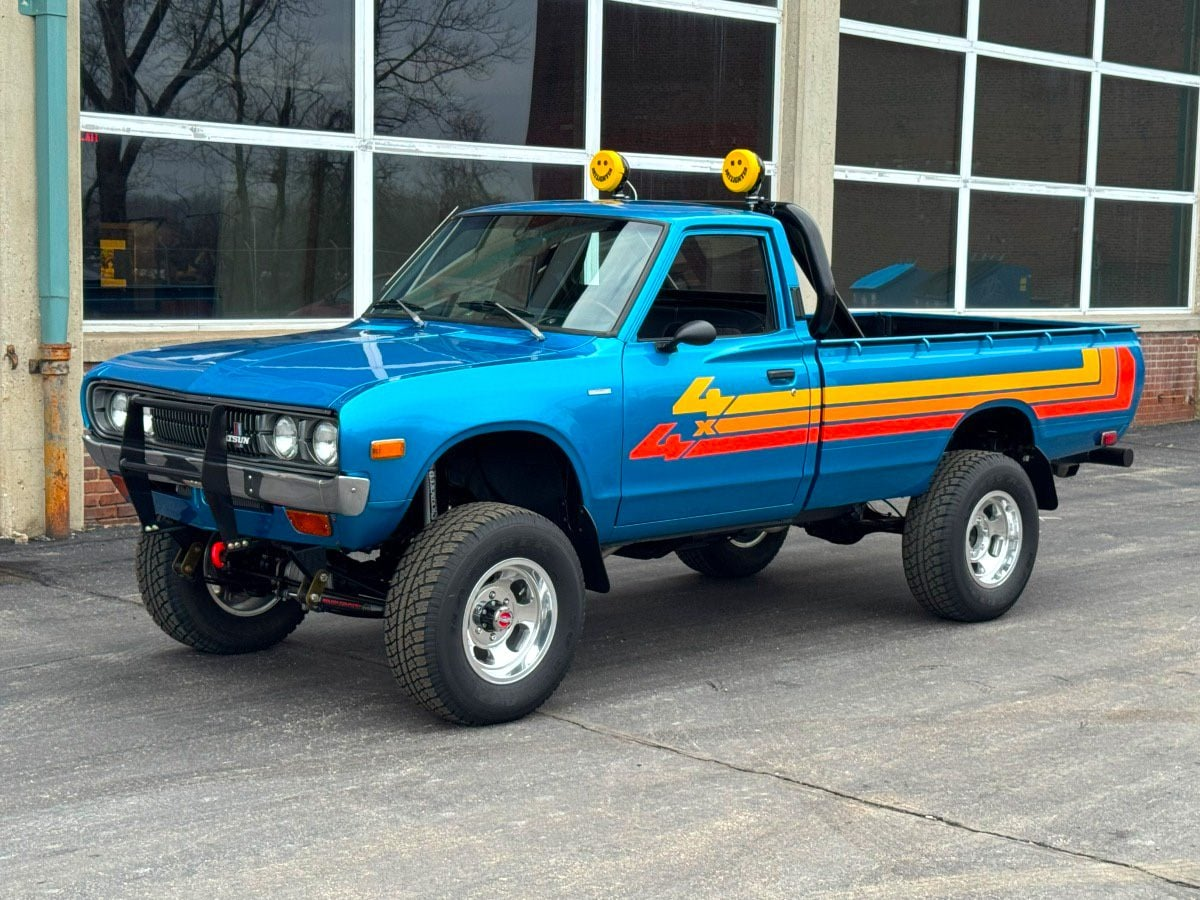
With the start of active sales of the Datsun 620 in the USA, it became obvious: buyers needed all-wheel drive. And not as entertainment, but as a tool for everyday work. Operating conditions dictated their requirements:
- farms with loose soil
- construction sites
- off-road outside of asphalt
- winter roads
In such conditions, the capabilities of a rear-wheel drive pickup were quickly exhausted. At the same time, the manufacturer itself did not offer a factory version with all-wheel drive.
Conversions: How Dealers Created a "Non-Existent" Car
The solution came not from the factory, but from the outside. Dealers and third-party workshops began to independently modify standard Datsun 620s, turning them into all-wheel drive vehicles. In fact, it was a full-fledged engineering revision.
A typical conversion scheme included:
- installation of a front drive axle
- adding a transfer case
- transmission modification
- suspension lift
- frame reinforcement
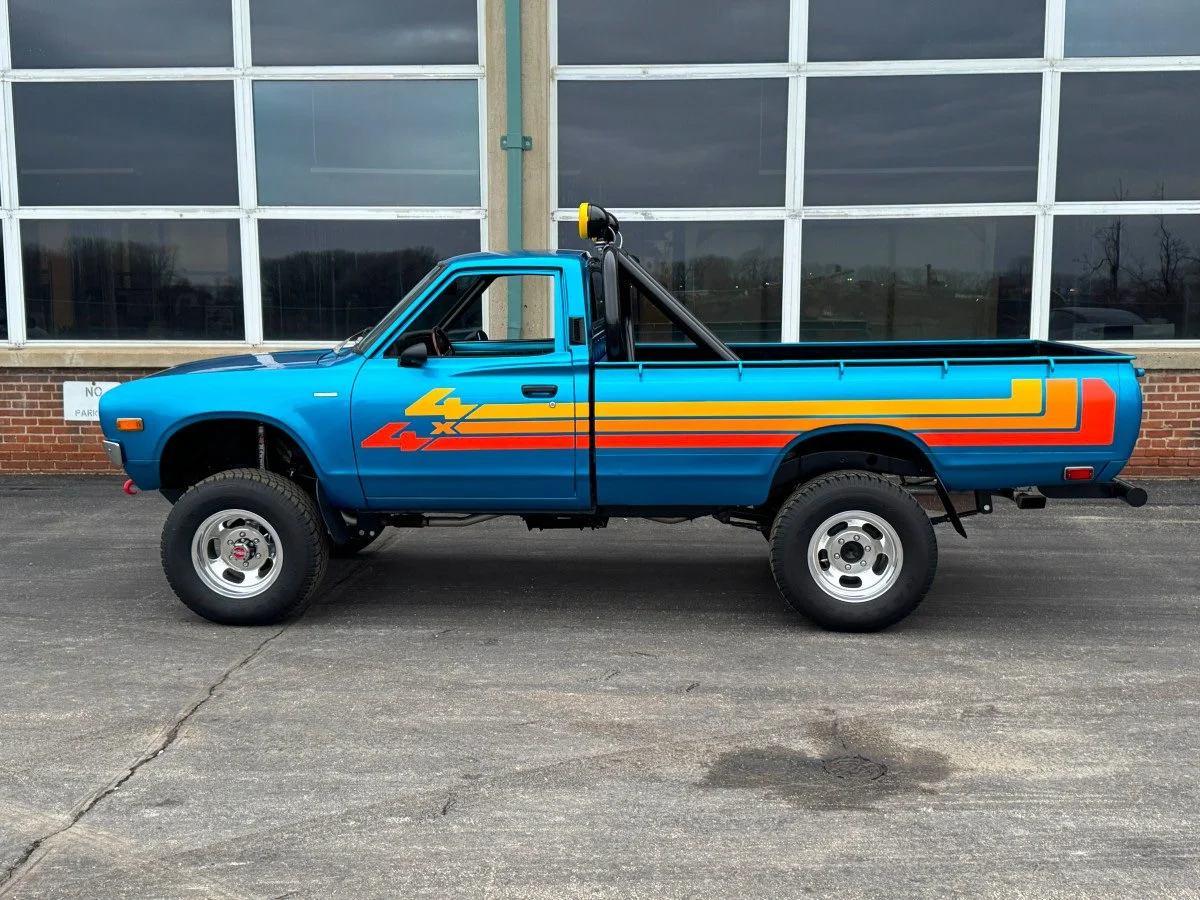
Components from American SUVs, including axles and individual units, were often used. The result was a kind of hybrid: a Japanese base combined with American off-road mechanics. It is these versions that are perceived today as rare and atypical representatives of their time.
Construction as a Basis for Modifications
The success of such conversions was largely due to the initial simplicity of the Datsun 620 design. The car turned out to be an almost ideal platform for modifications.
The frame had a ladder structure, was durable and maintainable. This made it possible to make changes to the design without critical consequences.
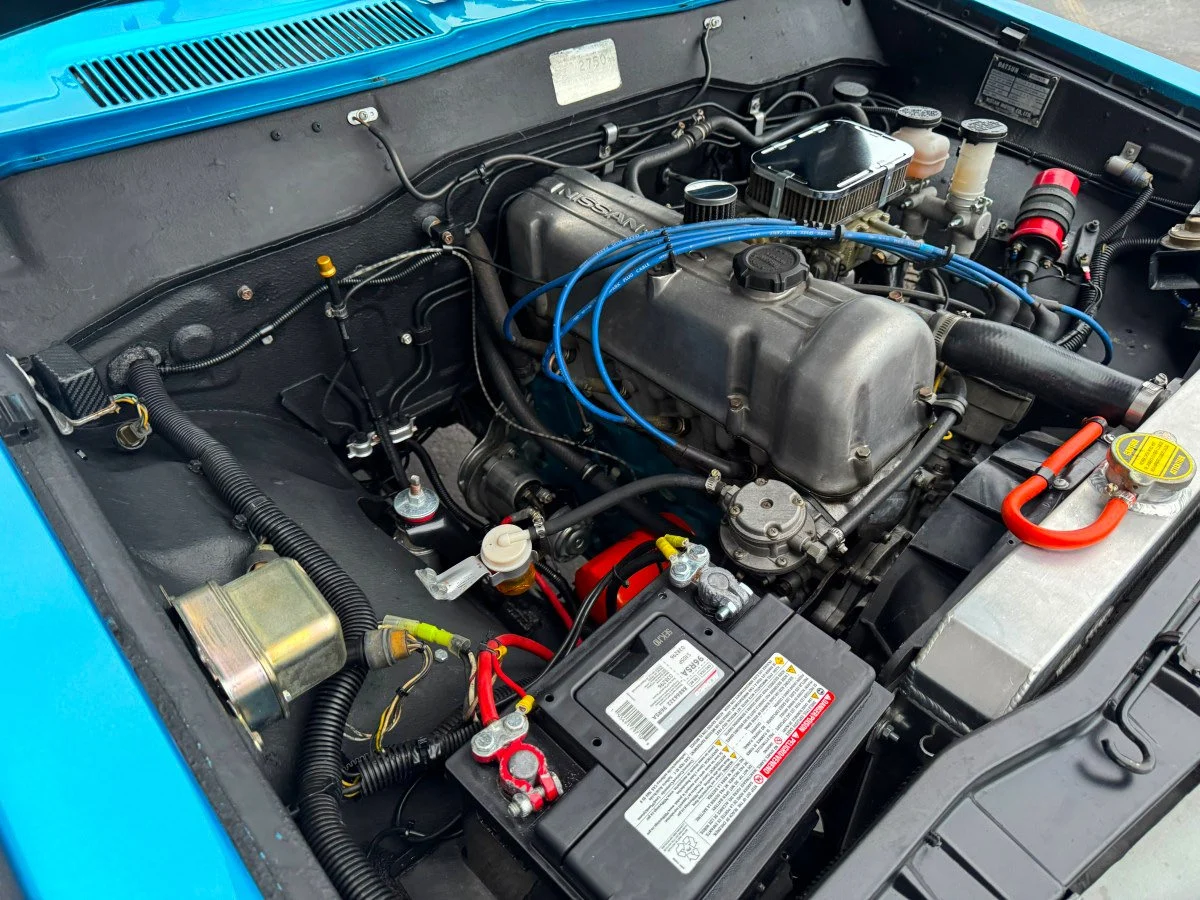
The L-series engine was most often used as a power unit:
- inline four-cylinder layout
- volume of about 2.0 liters (L20B)
- power of about 95–100 hp
Despite the lack of turbocharging and complex electronics, the engine was distinguished by its high service life, confident traction at low revs and ease of maintenance - qualities that are especially important for utilitarian equipment.
After the conversion, the chassis and transmission also changed. A front solid axle, leaf spring suspension and a mechanical transfer case with switchable all-wheel drive appeared. This turned a light pickup into a full-fledged tool for difficult road conditions.
Off-Road Behavior
Design features directly affected the character of the car. In the all-wheel drive version, the Datsun 620 was distinguished by:
- light weight
- short wheelbase
- successful geometry
As a result, the car demonstrated good cross-country ability and high maneuverability. At the same time, the power remained moderate, but in off-road conditions this was compensated by the effective implementation of traction and the absence of unnecessary weight.
Why Such Versions Are Valued Today
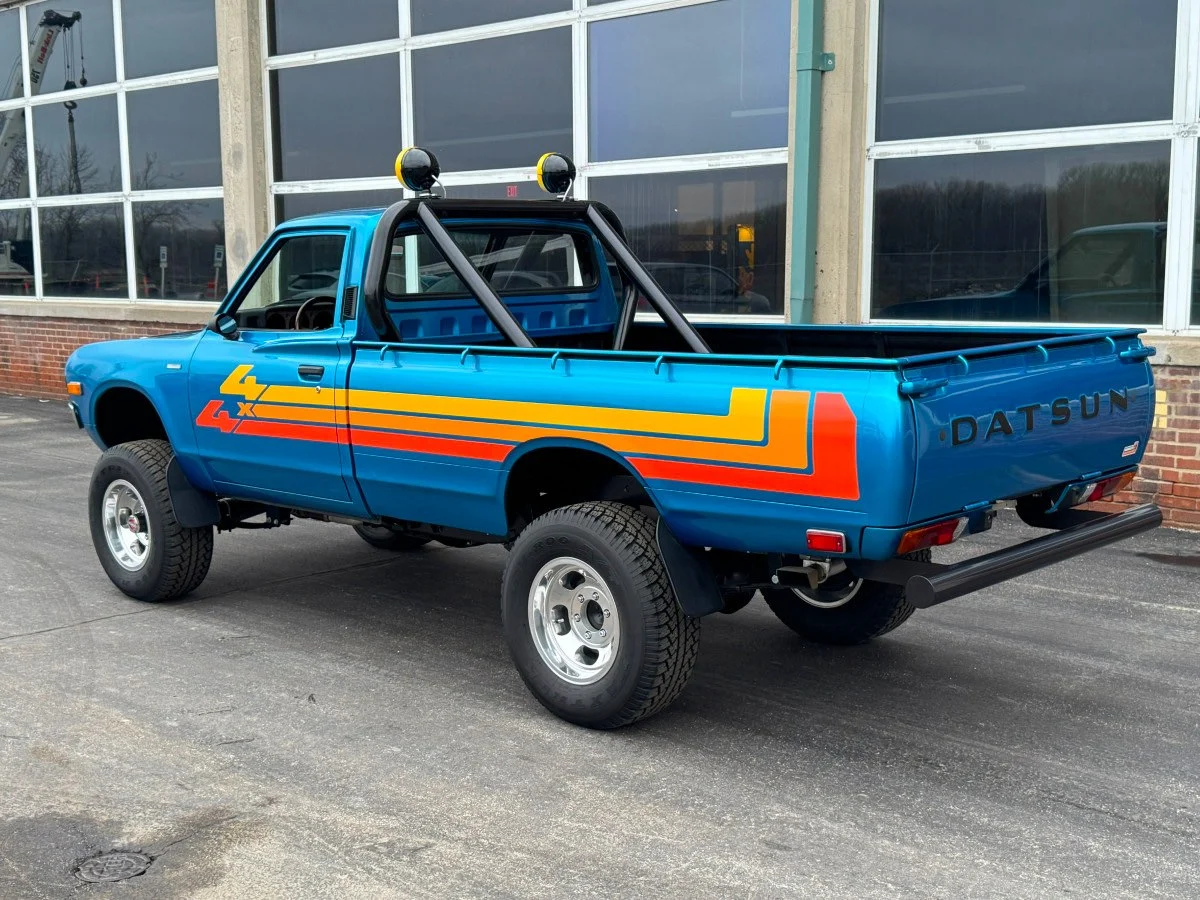
At first glance, a modified Datsun 620 may seem like an ordinary old pickup. However, its value is determined by a number of factors. First of all, this is not a factory configuration, but the result of adaptation to real operating conditions. In addition, such cars reflect a kind of "field" engineering, where solutions were dictated by practice, not corporate standards.
The combination of different engineering schools also plays an important role: the Japanese base was complemented by American components, which created a unique technical balance.
The Datsun 620 in all-wheel drive is an example of a car that officially did not exist, but turned out to be in demand. Its appearance was a consequence of real needs, and not the manufacturer's plans. Such cars were born not at the design stage, but during operation, which determined their character.
In this sense, they are not just equipment, but a reflection of the demand and conditions in which they worked. That is why such versions are perceived today as more authentic than many production SUVs created within the framework of strict engineering regulations.
Read more materials:
- Tesla Sales Can't Keep Up with Production
- China Bets on HEV Hybrids
- Tesla Disables FSD for Owners Bypassing Regional Restrictions