The squeak of a car door seems like a minor issue until that sound accompanies every opening. Many drivers encounter this problem after several years of car operation. Most often, the cause lies in the door restrictors – parts that experience daily stress and gradually wear out.
The main culprit for unpleasant sounds is usually one: a lack of lubrication between rubbing surfaces. If you ignore the squeak for too long, over time, clicks, jerks when opening the door, or even a malfunction of the mechanism itself may appear. Therefore, proper maintenance of the restrictors not only eliminates the annoying sound but also extends the service life of the assembly.
Why common lubricants can harm
Many motorists prefer to service restrictors themselves. However, there is an important nuance here: not every lubricant is suitable for this task.
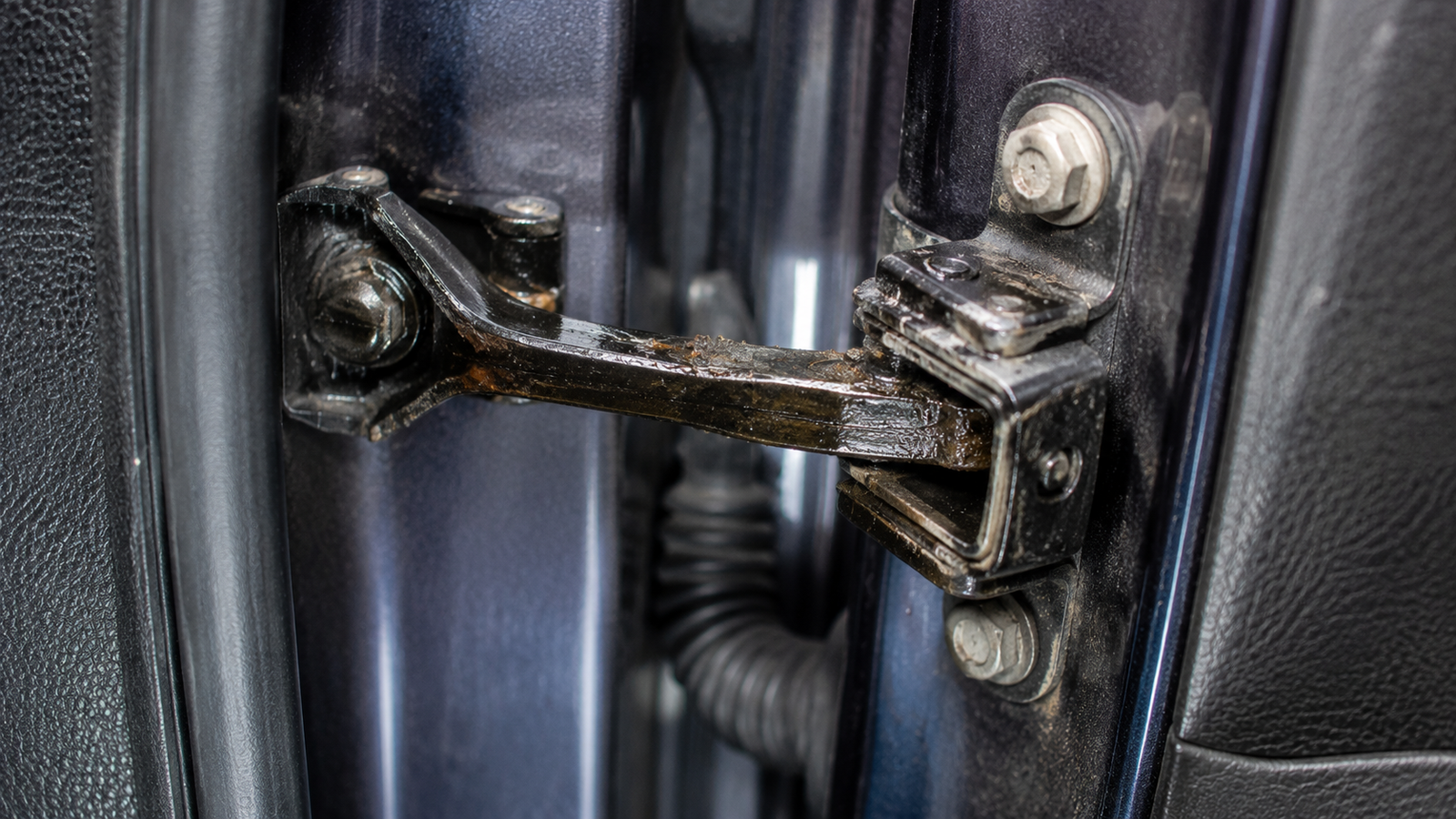
At first glance, it seems logical to use Litol, silicone compounds, or other thick lubricants. Immediately after treatment, the effect is indeed noticeable – the door begins to open easier, and the squeak disappears. But the problem appears later.
The door restrictor is exposed to the open air and constantly comes into contact with dust, sand, and road dirt. Sticky lubricant quickly turns into a kind of abrasive paste, which begins to accelerate the wear of the mechanism's parts. As a result, the assembly may fail earlier than if it had not been lubricated at all.
It is important to understand that the visible metal rod of the restrictor rarely becomes a source of serious problems. The plastic retainers and guides hidden inside the door suffer much more. They bear the main load, and the impact of the abrasive mixture significantly reduces their lifespan.
An old method that still works
Several decades ago, many drivers fought squeaks with ordinary household soap.
This method has its advantages:
- soap effectively eliminates squeaks;
- does not attract dirt;
- does not form a sticky layer.
However, there are also plenty of disadvantages. The main one is its short lifespan. After rain or car wash, the protective layer quickly washes off, so the procedure has to be repeated regularly. In addition, this method does not look very neat externally.
Modern solution
In recent years, dry Teflon lubricant based on PTFE has gained increasing popularity among motorists.
Its principle of operation differs significantly from traditional compounds. Inside the can is a fine fluoroplastic powder, which is applied to the surface along with a carrier gas. After the base evaporates, a thin slippery layer remains.
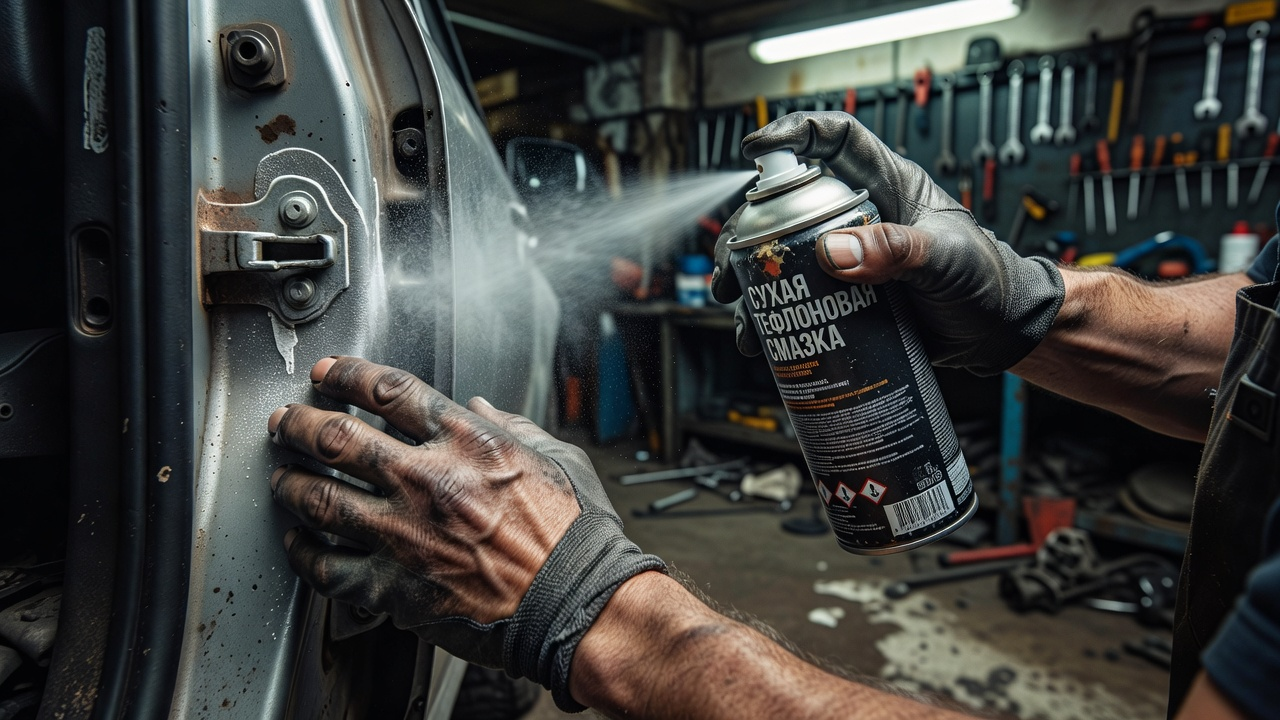
The advantages of such lubrication are obvious:
- very low coefficient of friction;
- resistance to moisture;
- non-stickiness;
- ability to practically not collect dirt and dust.
When choosing, it is worth paying attention specifically to dry PTFE compounds. Products with inscriptions like "with added Teflon" or "with added PTFE" are often found on store shelves. They are usually cheaper, but they can remain sticky and do not provide the desired effect. For door restrictors, it is better to use a full-fledged dry Teflon lubricant.
How to properly treat the restrictor
Before applying the new compound, it is necessary to thoroughly prepare the surface.
If Litol, silicone, or other lubricants were previously used, their residues should preferably be completely removed. For this, the following are suitable:
- parts cleaners;
- degreasers;
- other products safe for paintwork.
After cleaning, the surface should be further degreased and allowed to dry for about one minute.
Then, Teflon lubricant can be applied. A very thin layer is sufficient to treat the restrictor. Immediately after spraying, the compound is practically invisible, but after some time, a characteristic white coating appears on the surface. This is normal, as the natural color of polytetrafluoroethylene is white.
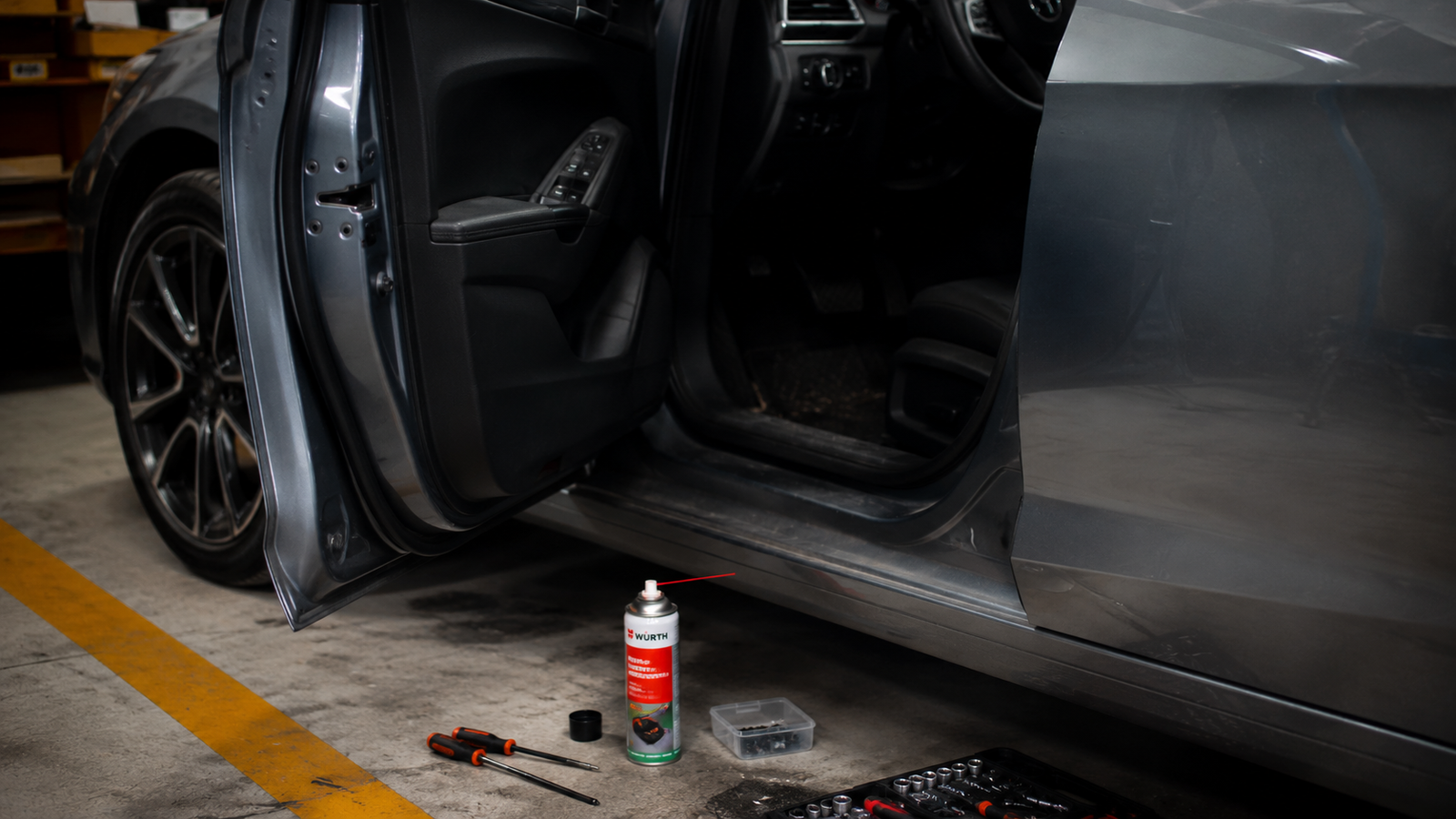
After a few minutes, the excess coating can be removed with a soft cloth or napkin. After this, a thin protective film remains on the surface, which provides easy sliding and reliably works for a long time.
The squeak of door restrictors is not always a sign of a serious malfunction. In many cases, the problem is solved by proper lubrication. The main thing is not to use sticky compounds that turn into a dirt collector and accelerate the wear of the mechanism.
Dry PTFE Teflon lubricants are best suited for this task. They do not collect dust, protect parts from moisture, and provide a long-lasting effect. By spending a few minutes on maintenance, you can forget about the unpleasant squeak for a long time and maintain the serviceability of the door restrictors.
Read more materials:
- 400 thousand km: which cars live the longest
- SAZ-2500: a dump truck that could do more than others
- Why you shouldn't be afraid of tire repair with a plug
Комментарии