Engine replacement remains one of the most critical procedures for car owners. It affects registration issues and directly impacts the ability to legally use a car, obtain insurance, sell the vehicle, and cross borders without hindrance. Although the attitude towards the engine as a “numbered unit” has changed in recent years, installing a different engine still requires confirmation of its origin and proper registration of changes through traffic police departments.
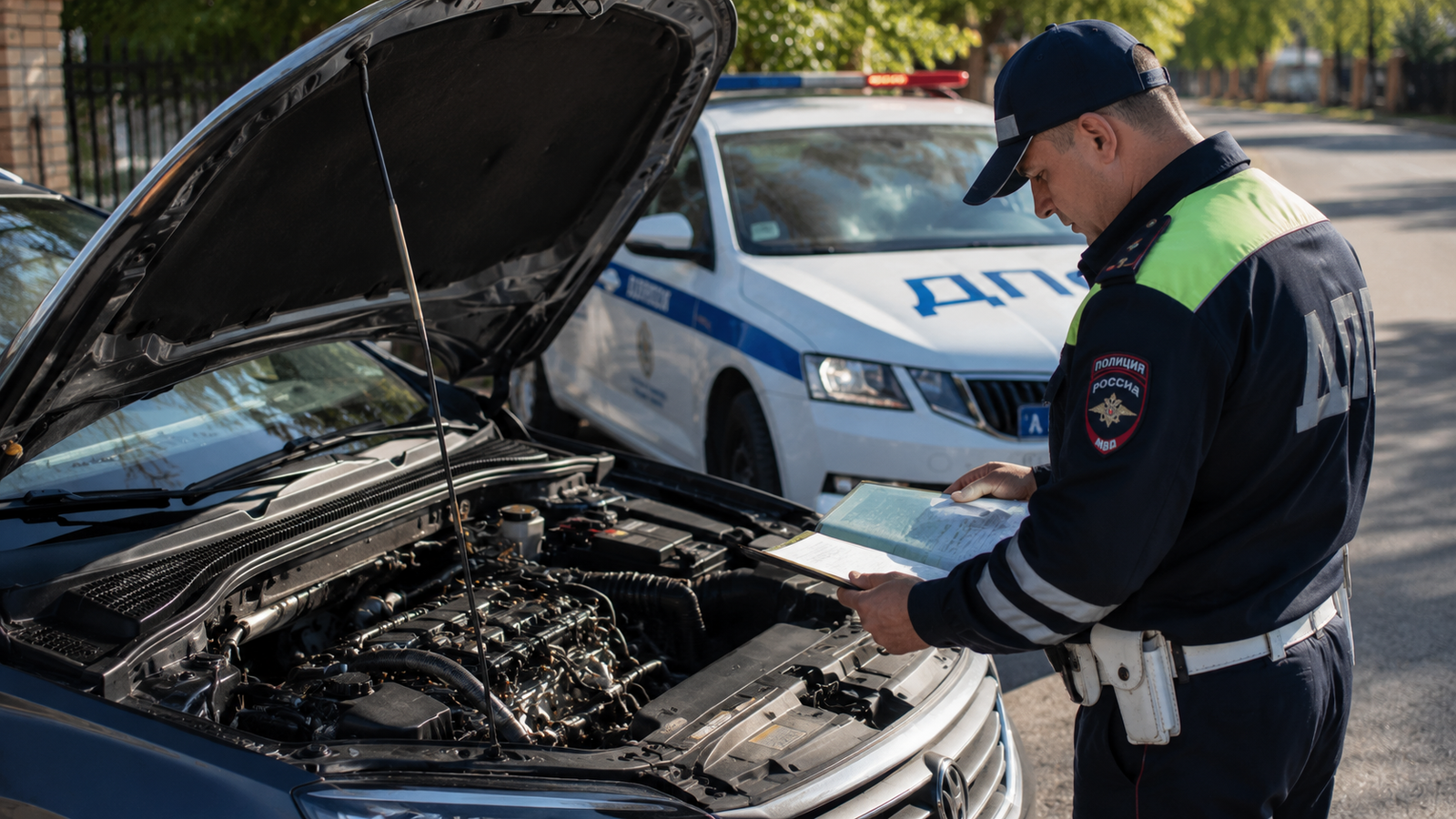
In practice, errors in document preparation are most often the cause of refusals in registration actions, additional checks, and increased costs. Therefore, a pre-assembled set of papers and an understanding of the entire procedure can significantly reduce the likelihood of problems.
What an Inspector Checks When Replacing an Engine
In 2026, control over ICE replacement registration is built around two main tasks:
- confirmation of the legality of the installed engine's origin;
- verification of the compliance of the actual work performed with the information that should be contained in the vehicle's registration documents.
Despite the fact that the engine is no longer considered a numbered unit in the traditional sense, the inspector must ensure that the installed unit does not have a dubious history of origin. Otherwise, risks arise not only for the current owner but also for future owners, insurance organizations, and regulatory bodies.
Special attention is paid to the engine marking and its condition. It is the identification marks that allow establishing the origin of the unit and comparing it with the seller's documents. If, during the inspection, signs of tampering with the marking are found, discrepancies, or if supporting documents are missing, the standard registration procedure may escalate into an additional check or examination. This inevitably leads to increased time and costs.
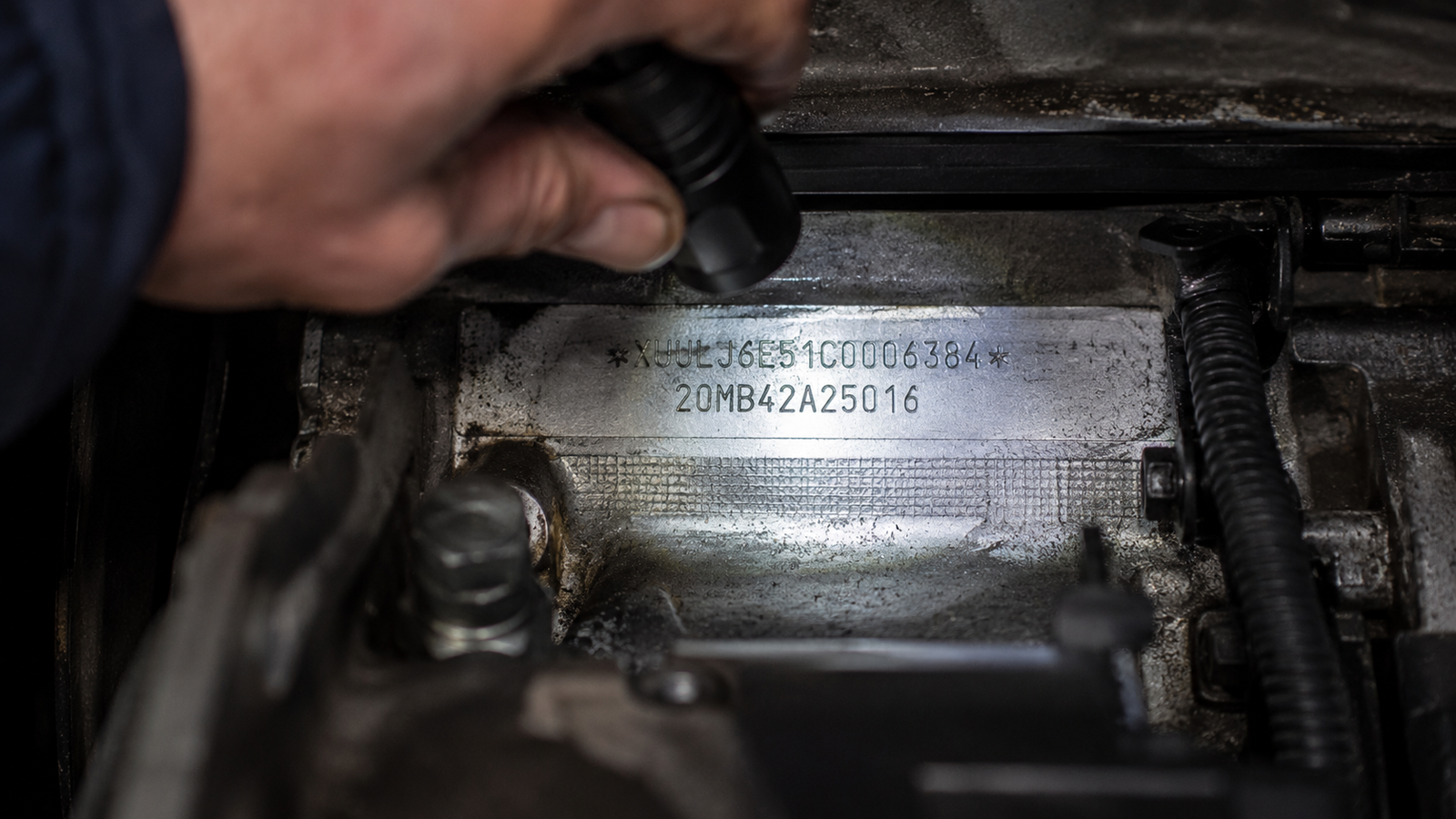
Therefore, it is important for the car owner to prepare not just for a visit to the traffic police, but for a check of the entire history of the engine's acquisition. The more transparent the origin of the unit and the more carefully the documents are prepared, the higher the probability of completing registration without additional requirements.
What Documents Confirm Engine Origin
The core of the document package consists of papers related to the engine purchase. They must confirm where the unit was acquired, who was the seller, and on what basis the transaction took place.
As a rule, the inspector expects to see:
- engine sales contract;
- documents confirming payment, including a check or other payment document.
The correctness of the contract's execution is of particular importance. It must specify the parties to the transaction, the date of conclusion, the subject of the contract, and engine characteristics that allow the document to be unambiguously linked to the installed unit.
If the engine was imported from abroad, the requirements become stricter. In this case, documents confirming the legality of import, as well as documents on the payment of customs duties, are added to the usual package of documents. Without such confirmations, the origin of the unit remains legally unclear.
For the owner, this matters not only at the registration stage. The absence of a transparent customs history can complicate any further actions with the car.
It is also worth considering the risks of buying an engine from a private person without documenting the transaction. Even a fully functional unit in such a situation becomes a source of problems, as the owner effectively remains without proof of its origin. This increases the likelihood of refusal during registration and can seriously complicate the sale of the car in the future, as a potential buyer will be no less interested in the engine's origin than an inspector.
How Registration in the Traffic Police Takes Place
After installing the engine, the owner must apply to the traffic police with a statement about making changes to the vehicle's registration data. Along with the application, documents confirming the engine's origin, as well as a receipt for payment of the state duty, are submitted.

In some cases, a diagnostic card is additionally required. Having it in advance helps avoid situations where registration has to be postponed due to technical formalities.
Usually, the procedure includes an inspection of the car by an inspector. During the check, the installed engine and the actual condition of the car are compared with the submitted documents. If questions arise or discrepancies are found, an additional examination may be ordered. This leads to increased processing times and complicates the entire process.
That is why, even at the preparation stage, it is important to ensure that there are no discrepancies between the documents and the actually installed unit.
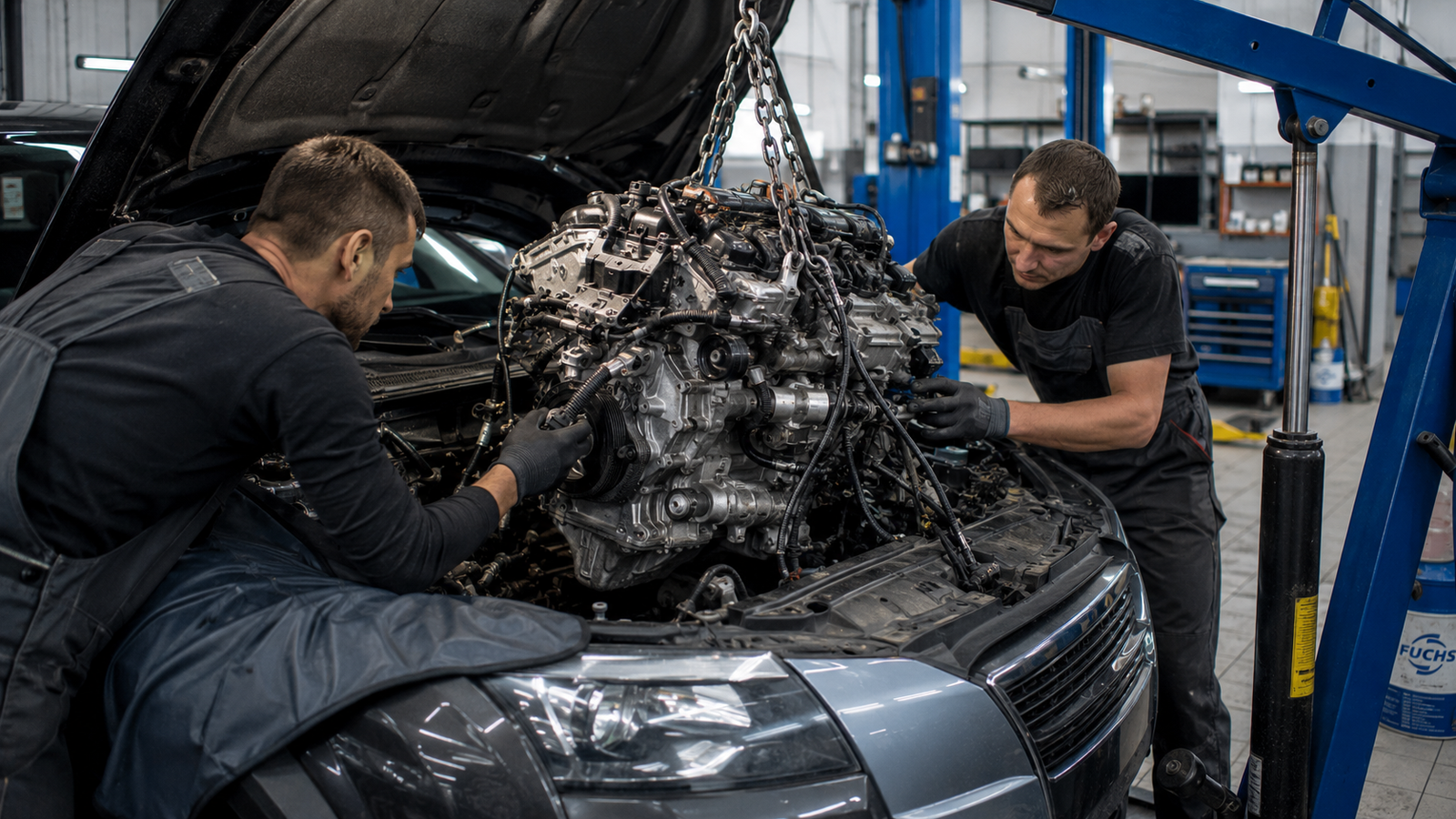
The quality of the work performed also plays a significant role. Engine installation in a specialized car service reduces the likelihood of technical violations and questions related to safety. In addition, if necessary, it becomes easier to confirm the fact and quality of the work performed.
After all procedures are completed, changes are entered into the PTS, and the owner is issued a new STS. This stage is considered the final result of registration, as the updated documents confirm the legality of operating the car in the modified configuration. In the future, this allows selling the car, obtaining insurance, and passing road checks without unnecessary complications.
Why Document Errors Are Costly
According to practical observations, engine replacement registration often takes about one week. However, this period is only a guideline and can significantly increase if any disputed circumstances arise.
Most often, additional checks are caused by:
- errors and inconsistencies in documents;
- lack of payment confirmation;
- unclear engine origin;
- questions about the unit's marking.
Such situations often end with the appointment of an examination, which automatically increases the duration of the procedure and financial costs. As a result, an attempt to save time on document preparation often leads to even greater losses of time and money.
Long-term consequences are no less important. If engine documents are missing or lost, the car becomes less attractive from a legal point of view. The sale of such a vehicle usually raises additional questions from buyers who want to receive confirmation of the unit's origin and the correctness of the registration data.
In addition, difficulties may arise when obtaining insurance and traveling abroad. Any doubts related to documents or identification of vehicle units increase risks for third parties and can be grounds for refusal or additional requirements.
In 2026, engine replacement should be perceived not as a regular repair, but as a procedure culminating in registration. The earlier the owner collects documents for the unit, checks the correctness of their execution, and plans to contact the traffic police, taking into account the need to pay the duty and the availability of a diagnostic card, the higher the probability of completing the process within the standard timeframe and receiving updated PTS and STS without delays. This approach allows maintaining the legal transparency of the car and its normal market value.
Read more materials:
- How to cool the interior without air conditioning in a minute
- Five myths about paint protection film that people still believe
- Honda Element: a car that wasn't understood immediately
Комментарии