The dashboard of a modern car has many buttons and pictograms, the purpose of which the driver remembers only in rare cases. ESP OFF is one of them. Most motorists prefer not to touch this button, as the stability control system is considered one of the car's main electronic assistants.
And this is the right approach for a normal road. However, there are situations when active electronics can complicate movement instead of helping. This primarily refers to deep snow, sand, mud, and other surfaces where controlled wheelspin is sometimes necessary for the driving wheels to overcome an obstacle.
How the car learned to fight skidding and wheelspin
Modern stability control systems did not appear on their own. Their development was a continuation of the evolution of electronic assistants, which began with ABS.
The anti-lock braking system prevents the wheels from completely locking up during braking and helps the driver maintain control of the car. The next stage was traction control systems, which learned to monitor the wheelspin of the driving wheels during acceleration. Later, electronics gained the ability to take into account not only the rotation of individual wheels but also the behavior of the entire car.
This led to various systems that manufacturers designate as TCS, ASR, ETS, ESP, and other abbreviations. The specific name depends on the car's brand and design, but their task is similar: to prevent excessive loss of traction and help the car maintain stability. For asphalt, this is an advantage. But on loose surfaces, the requirements for car behavior become different.
Why electronics sometimes interfere
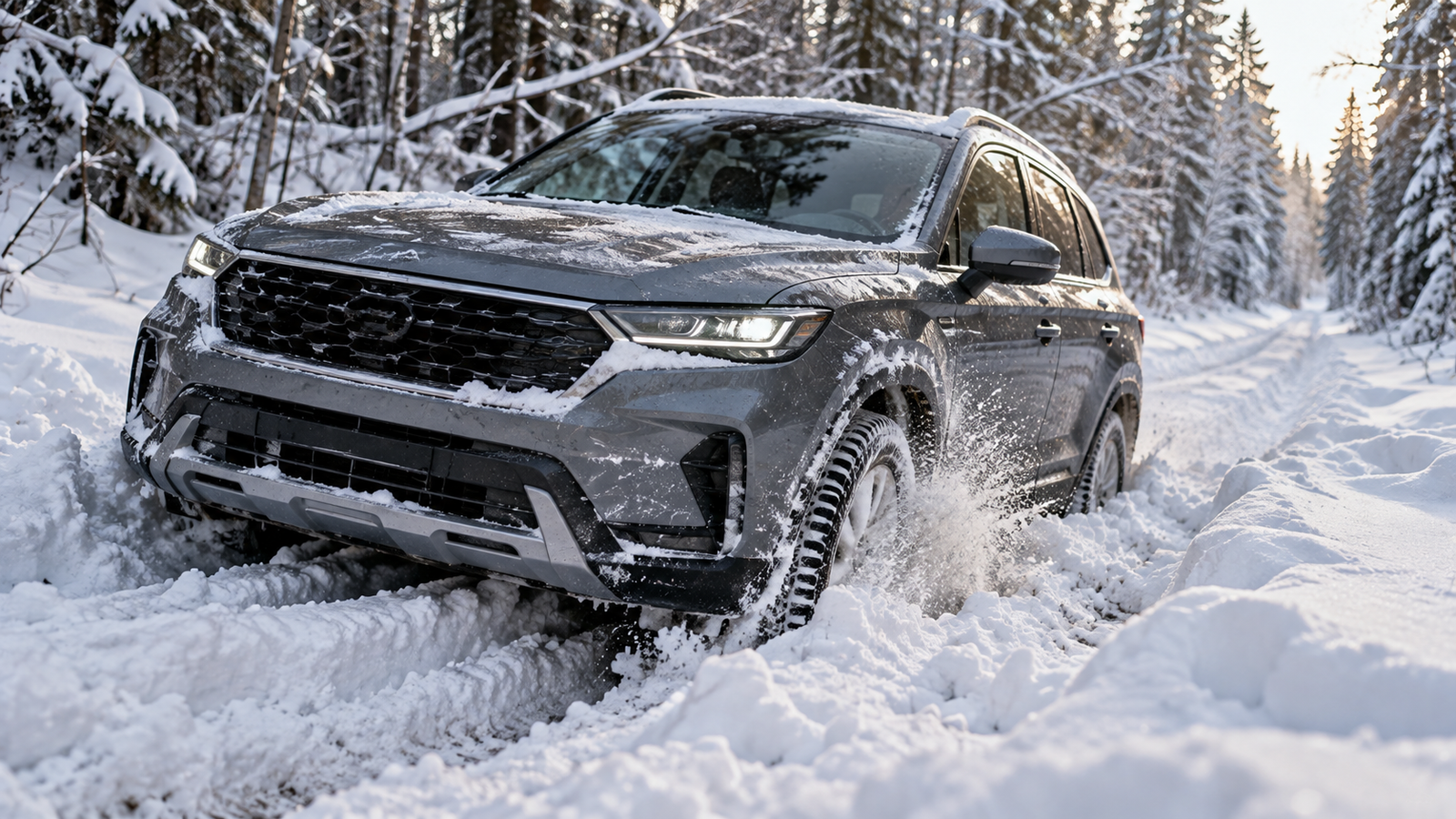
Imagine a car stuck in a deep snow rut. To get out, the driver may need to spin the driving wheels a little harder. As they spin, they will throw off snow and gradually clear space in front of the tires.
However, the electronics see a different picture. One or more driving wheels begin to spin faster than the system expects. The control unit perceives this as wheelspin and tries to eliminate it. To do this, the car can reduce traction or act on the braking mechanisms of individual wheels.
On dry asphalt, this algorithm helps. In deep snow, it can lead to the opposite result: the driver presses the accelerator pedal, but the car does not get the traction needed to get out of the rut. A similar effect is possible on sand and viscous mud. That is why some cars provide the ability to temporarily reduce the intervention of electronic assistants.
What ESP actually does
ESP is an electronic stability control system. It constantly receives information from the car's sensors and compares the actual behavior of the car with what the driver sets. The electronics analyze, among other things, the car's acceleration, wheel rotation, and body movement parameters. If the system determines that the car is deviating from the intended trajectory, it can intervene independently. Depending on the situation, the car can:
- reduce engine thrust;
- brake an individual wheel;
- correct the car's behavior at the beginning of a skid;
- help return the car to the set trajectory.
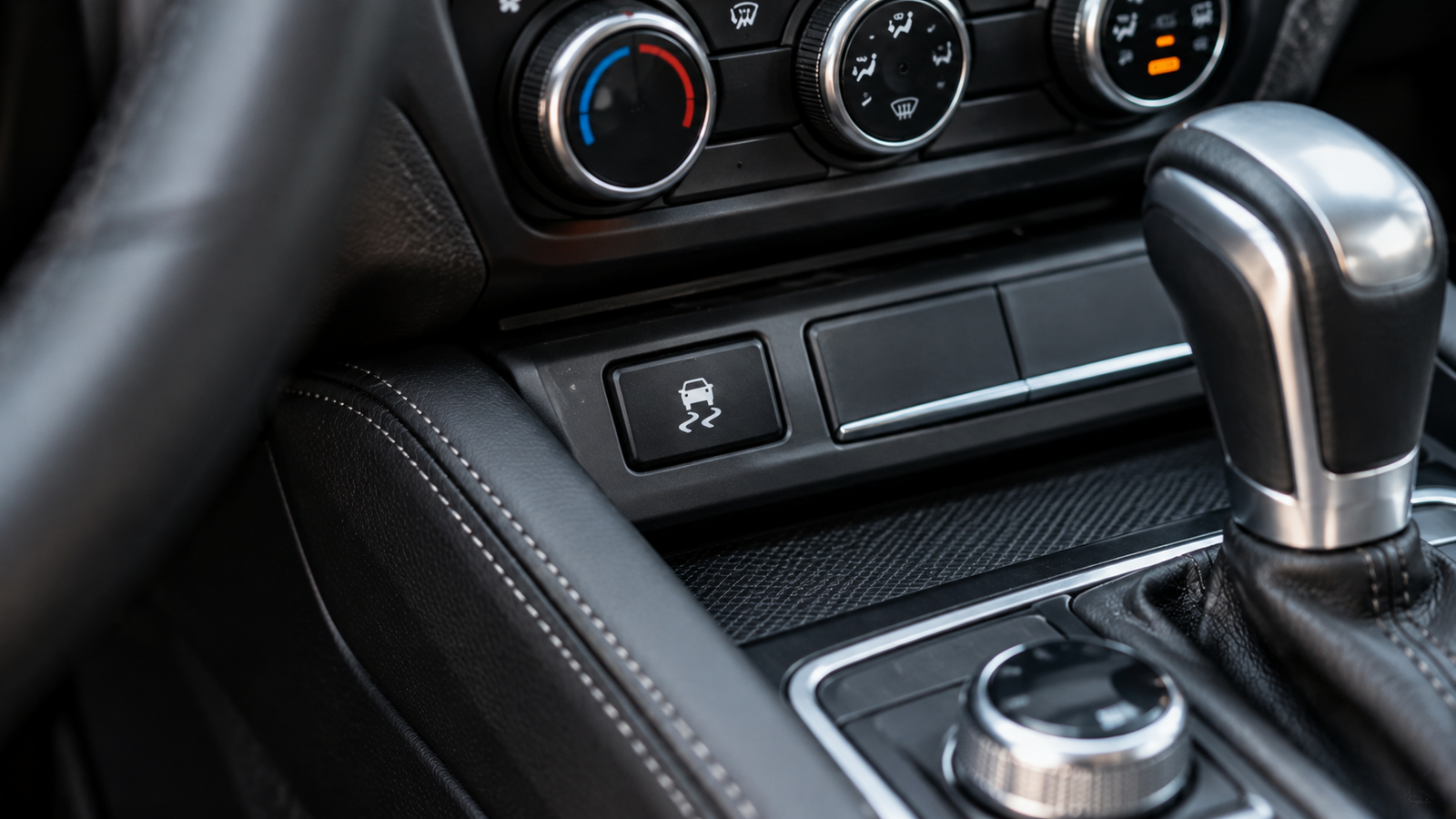
That is why ESP is especially useful during sharp maneuvers, on slippery surfaces, and in case of sudden loss of stability. But for overcoming some off-road sections, such logic turns out to be not the most suitable.
When ESP OFF may be needed
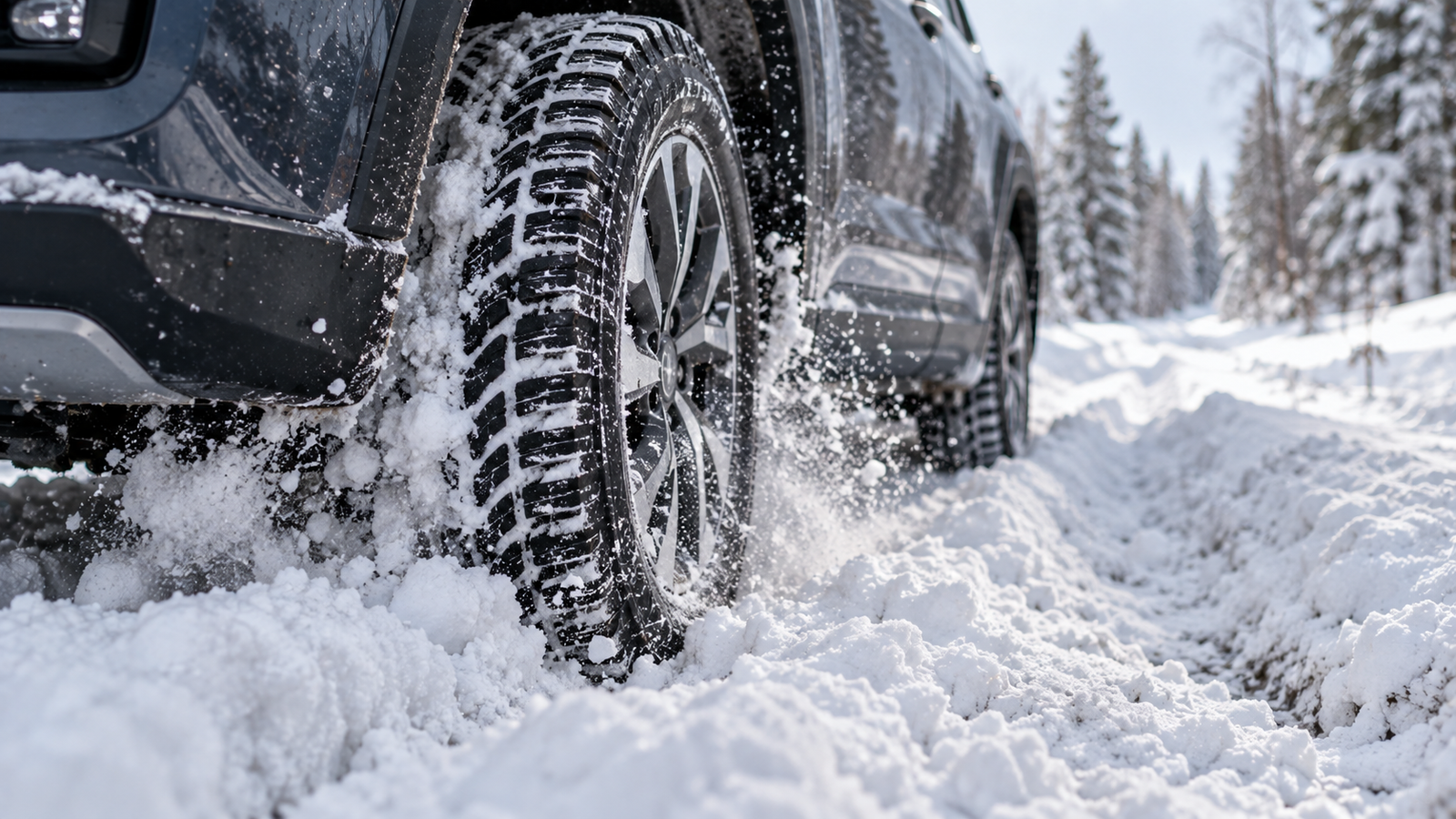
The most understandable example is deep snow. If the car is already in a rut, it is sometimes necessary to allow the driving wheels to spin a little. Due to this, the tires can work more effectively with loose surfaces and gradually push the car out of the obstacle. With an active anti-slip function, the electronics can almost immediately limit traction. Therefore, temporary disabling or weakening of its operation can facilitate exit.
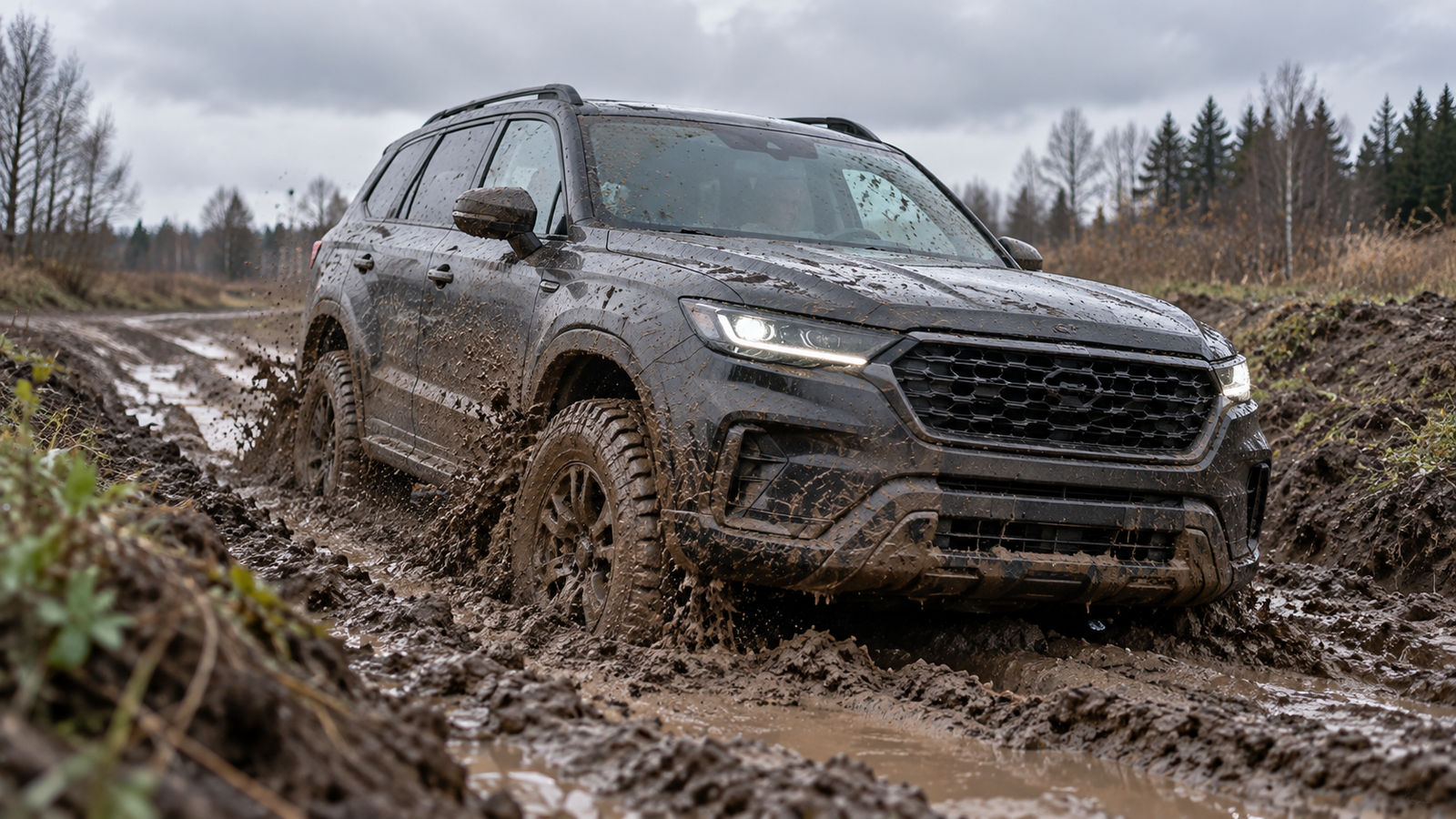
A similar situation arises on sand. Here, the wheels also sometimes require a certain degree of wheelspin, which the stability control system in normal mode tends to suppress. Another example is viscous mud, where the car can stop precisely because the electronics too actively limit the rotation of the driving wheels. The ESP OFF button is not needed to make the car "sportier," but for specific situations where the driver consciously wants to reduce the intervention of electronic assistants.
ESP OFF does not always mean complete system shutdown
This button has an important feature: the same inscription on different cars can mean completely different operating algorithms. In one model, a short press will disable or weaken the anti-slip function, while the stability control system will continue to function. In another, a longer press will be required to make a more serious change to the algorithm.
For example, in a Hyundai Creta, a short press is associated with disabling the anti-slip function, and a long press allows you to disable the stability control system. Therefore, there is no universal rule of "press once" or "hold for five seconds" for all cars. Before using the function, you need to consult the manual for the specific car and find out exactly which systems are disabled or switched to another mode.
Why ESP turns on again after starting
Even if the driver once disabled the system, there is no need to expect it to remain off until the end of the car's operation. In many models, after turning off the engine and the next start, electronic assistants automatically return to normal mode. Manufacturers do this precisely so that the driver does not end up on a normal road with the stability control system disabled just because they previously used a special off-road mode.
Some cars also have additional limitations. The system can reactivate after reaching a certain speed. The original material provides examples where re-activation occurs after accelerating to approximately 40–50 km/h. Therefore, before overcoming a difficult section, it is not enough to simply remember that ESP was previously disabled. It is necessary to look at the dashboard indicators and make sure what mode the car is currently operating in.
When it's best not to touch ESP at all
On a normal road, the system's task is the opposite of what arises when trying to get out of a snow rut. If the car starts to slide, sharply changes direction, or deviates from the set trajectory, ESP can intervene in the operation of the engine and the braking mechanisms of individual wheels. Such intervention can be especially useful on wet asphalt, when sharply avoiding an obstacle, or in an unexpected skid. Therefore, there is no point in disabling stability control for everyday driving.
Nor should ESP OFF be perceived as a power boost button. Disabling the electronic assistant itself does not make the car faster or safer. It only changes how actively the electronics will limit wheelspin and correct the car's behavior.
What the driver needs to remember
The ESP OFF button exists for specific operating conditions, not as a permanent alternative driving mode. If the car is stuck in deep snow, sand, or mud, the ability to temporarily reduce the intervention of the anti-slip system can indeed be useful. In such a situation, a little wheelspin of the driving wheels is sometimes necessary to overcome the obstacle.
But on a slippery public road, the logic is completely different. There, loss of traction usually means the need to maintain the car's stability as much as possible, rather than allowing the wheels to spin freely. Therefore, before using ESP OFF, you need to remember a few things:
- The algorithm depends on the specific car. One button can only disable the anti-slip function, another can change the operation of several systems at once.
- After starting the engine, ESP often turns on again. Therefore, the system's status must be checked by the indicators.
- On a normal road, it is better to leave stability control active. It is designed for such conditions.
- In snow, sand, and mud, the situation can be the opposite. Sometimes the car needs a little wheelspin of the driving wheels.
- The owner's manual is more important than universal advice. Only the manufacturer of a specific model determines exactly what happens after pressing or holding ESP OFF.
The main thing here is to understand the logic of the system. ESP does not try to "interfere" with the driver: it acts according to an algorithm designed primarily to maintain the car's stability. It's just that sometimes conditions require completely different behavior from the car. That is why disabling ESP can be a useful tool when overcoming a difficult section, but a bad habit for normal driving.
Read more articles:
- Car warranty: can you do maintenance yourself
- Engine "knocked" after sale: who will pay for repairs
- "Atom" went into production: can the market accept its price
Комментарии