When the wheels are fully turned while starting from a standstill, a characteristic metallic crunch sometimes begins to emanate from the front of the car: a series of rhythmic clicks becomes especially noticeable when accelerating in a turn. On a straight road, the sound may completely disappear.
One of the most likely causes of this behavior is wear of the outer constant velocity joint, colloquially known as a 'grenade'. If a damaged boot and traces of grease on the inner side of the wheel or suspension components are found simultaneously, the likelihood of a CV joint problem becomes even higher.
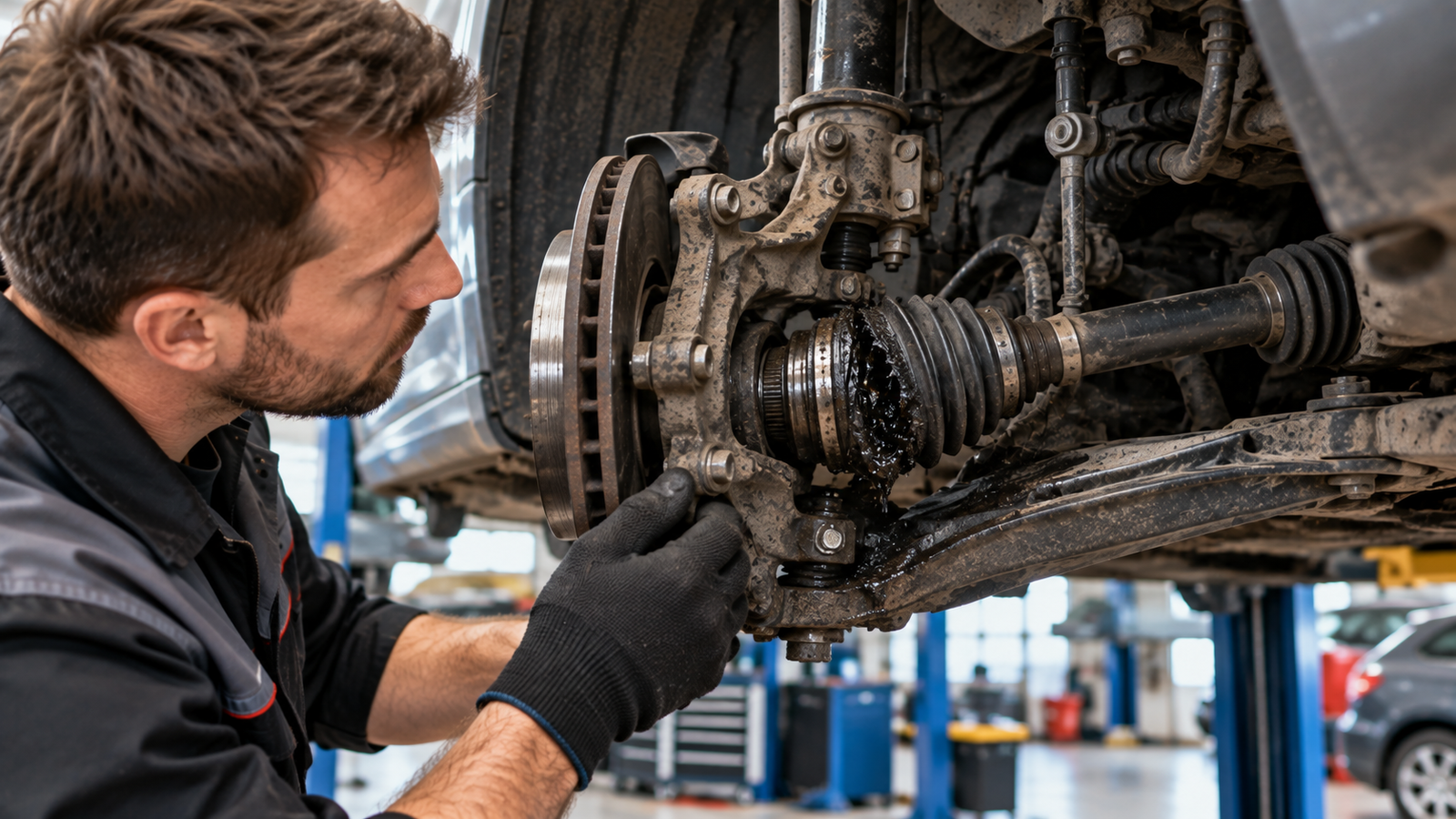
In such a situation, the owner may have a perfectly logical idea: replace the boot, remove the old grease, flush the joint, and fill it with fresh grease. If the damage is detected in time and the joint itself has not yet suffered serious wear, such a repair may indeed be justified. But if the CV joint has already started to crunch characteristically under load, simply replacing the boot usually won't solve the problem.
What happens inside the CV joint after boot damage
The CV joint operates under high loads and constantly changing angles between the drive shaft and the hub. The design of the outer joint uses a housing, an inner race, a cage, and balls that move along special tracks.
As long as the boot remains sealed, the necessary amount of special grease is retained inside, and water, dust, and road dirt do not get into the joint. A tear or serious crack in the boot violates this protection: some of the grease may leak out, and contaminants may get in.
The combination of water and abrasive particles with the working surface of the joint is especially dangerous. They accelerate the wear of the tracks, balls, and other parts. Gradually, wear marks, scuffs, and other damage appear on the working surfaces.
That is why it is better to detect a damaged boot before any extraneous sounds appear. If it is replaced at this stage, the joint is cleaned, and the grease provided by the design is used, the serviceable mechanism can be preserved.
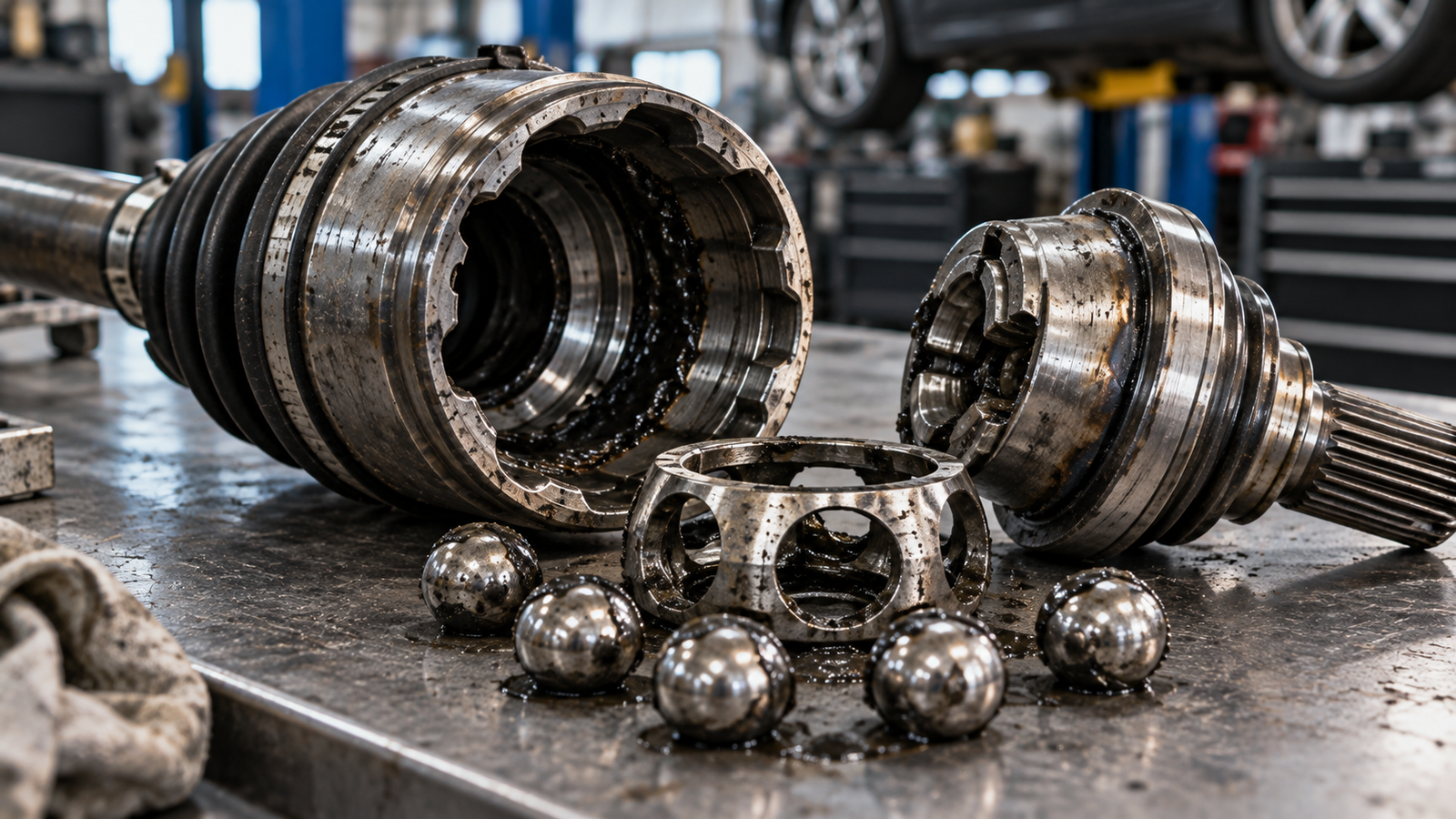
But the characteristic crunch during acceleration with the wheels turned already indicates that the joint needs to be thoroughly checked. A new boot itself will not restore metal that has already worn out.
Why a simple boot replacement may not help
If, after the boot was damaged, the joint continued to operate with insufficient lubrication and contaminants, its working surfaces gradually wear out. After installing a new cover and fresh grease, the noise may indeed become less noticeable for a while. However, this does not mean that the defect has disappeared.
Under load and a large operating angle, the worn elements of the joint continue to interact with the damaged tracks. Therefore, with significant wear, replacing only the boot is only a temporary measure.
The exact repair method depends on the condition of the specific CV joint. If, after disassembly, there are no noticeable damages on the working surfaces, replacing the grease and boot can restore the unit to normal operation. However, if there are pits, scuffs, wear, or other signs of serious wear, the joint is usually replaced entirely.
It is not worth driving with an already crunching CV joint, hoping that a new boot will restore its condition. With further destruction of the part, the drive may lose its ability to transmit torque normally, and the consequences of failure depend on the design of the specific car and the nature of the damage.
How to distinguish an outer CV joint from an inner one
Most front-wheel drive cars indeed use inner and outer joints, but they operate under different conditions and have different characteristic symptoms of malfunction.
The outer CV joint is located near the hub and must transmit torque at significant wheel turning angles. Its wear often manifests as a characteristic clicking or crunching sound during acceleration with the wheels sharply turned. The greater the turning angle and the load on the drive, the clearer the sound may become.
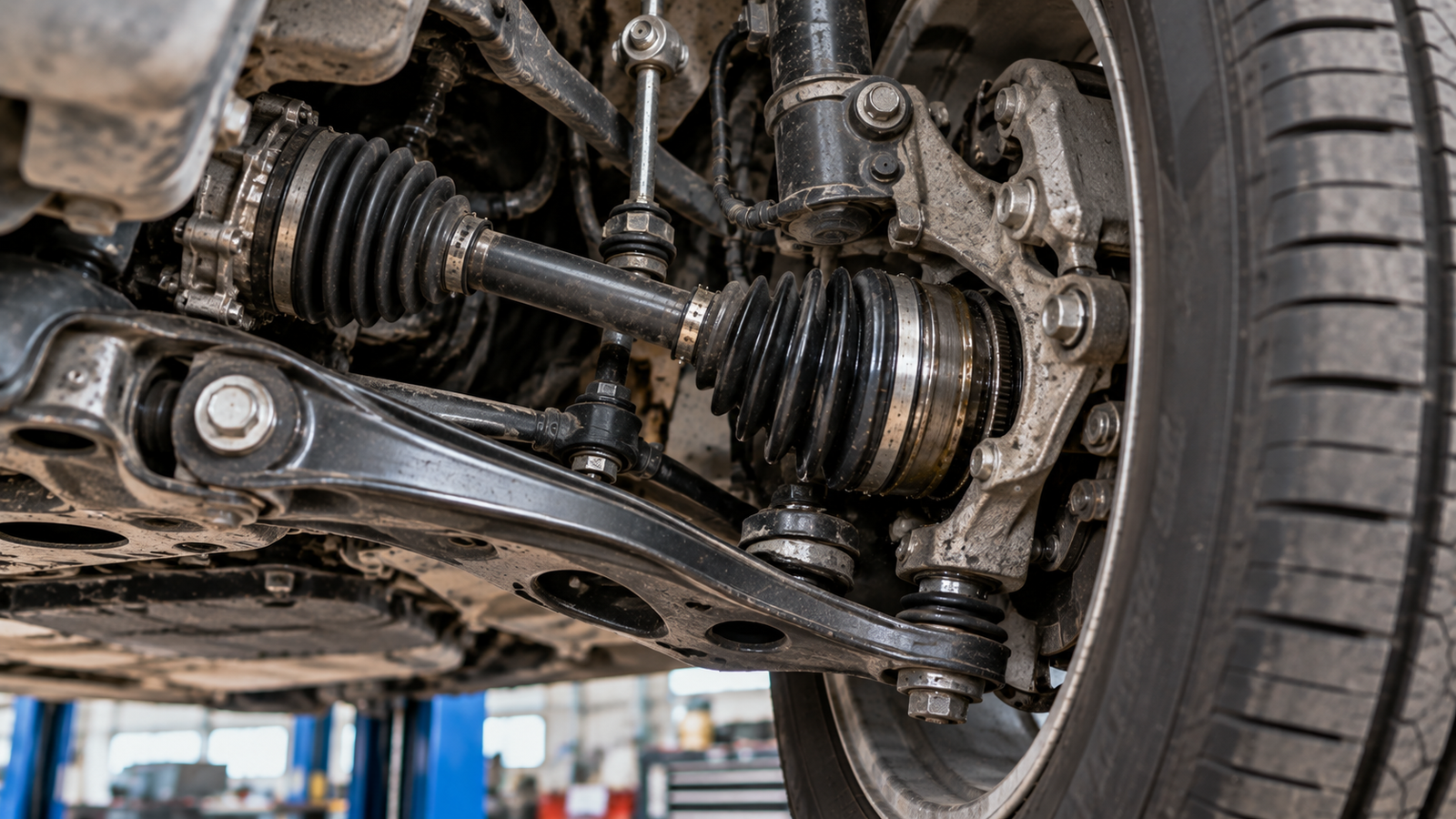
The inner joint works on the gearbox side and compensates for changes in length and angle of the drive during suspension operation. In cars with a tripod design, it uses rollers with needle bearings.
For a worn inner joint, vibrations and jolts during acceleration are more characteristic, especially under load. In some cases, the vibration decreases after releasing the accelerator. However, any such symptom cannot be exclusively attributed to the tripod: similar manifestations can be caused by wheels, hubs, suspension components, and other drive parts.
Therefore, the simple rule is: rhythmic crunching during acceleration with the wheels turned primarily requires checking the outer CV joint, while vibration under load requires checking the inner joints and other drive components.
What to do if the CV joint starts to crunch
If the crunch has appeared recently, the first step is to inspect the boots of both drives. The situation is especially suspicious when a tear is found on the boot, and grease is scattered around it and on the inner side of the wheel.
If the boot is torn, but the joint is not yet making extraneous noises, there is a chance to get by with replacing it, cleaning the parts, and applying suitable grease. The specific composition and amount of grease must correspond to the type of joint and the manufacturer's requirements.
However, if the characteristic crunch has already appeared, the joint must be removed and the condition of the working surfaces assessed. If there is noticeable wear or damage, it is more practical and reliable to replace the CV joint itself, rather than limiting yourself to a new boot.
During installation, it is important to use appropriate clamps and properly secure the boot. They must correspond to the drive design and not interfere with rotating parts. Universal solutions that may catch adjacent elements or disrupt the normal operation of the boot should not be used.
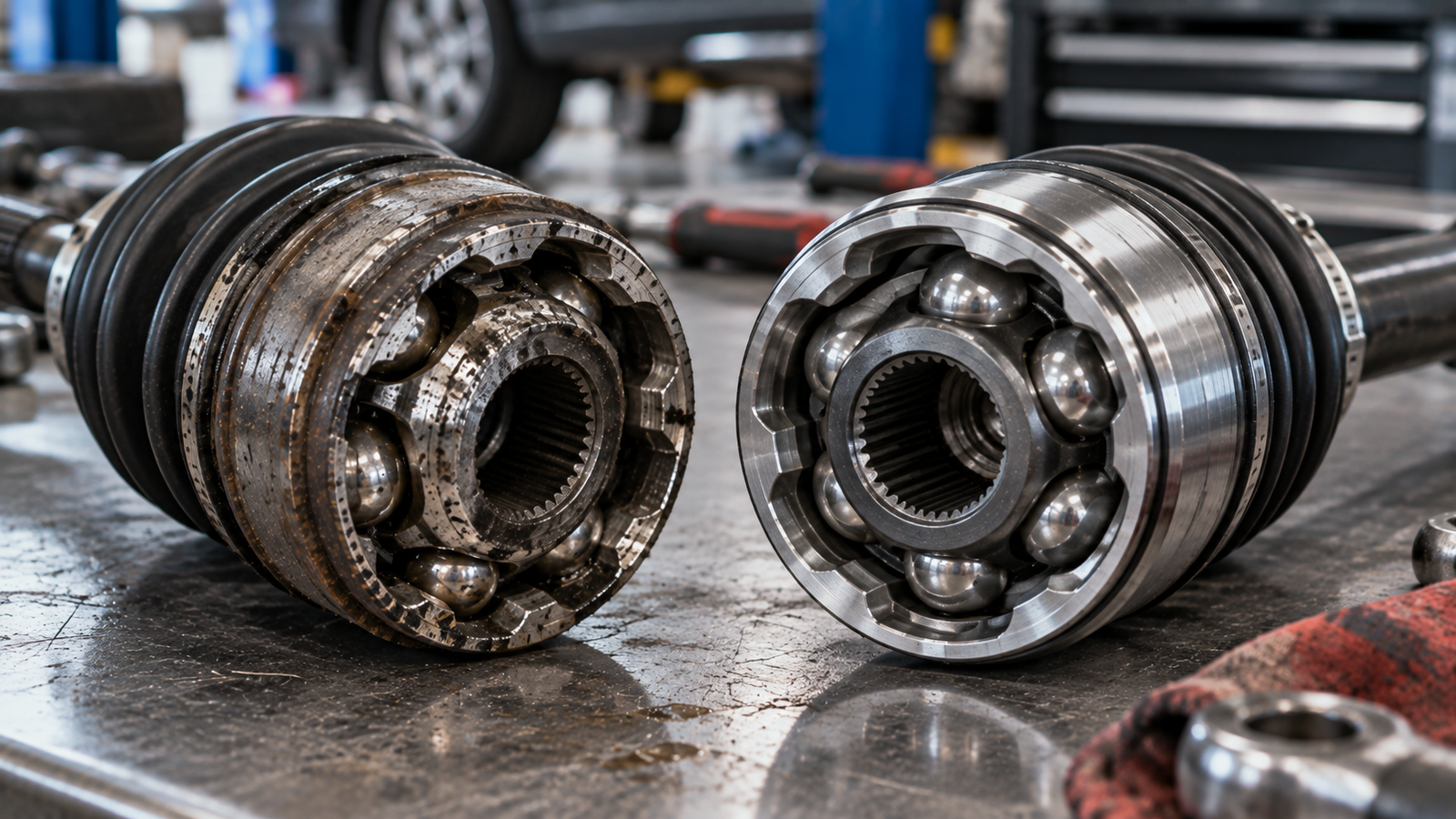
It is worth checking the condition of the boots regularly — for example, during seasonal maintenance or during a planned vehicle inspection on a lift. Early detection of damage allows you to preserve the joint itself and avoid much more expensive repairs.
The main rule here is simple: a torn boot does not automatically mean that the CV joint is already faulty. But a torn boot combined with a characteristic crunch is a serious reason for diagnosing the joint itself.
Read more materials:
- Fines, OSAGO and fuel: innovations for drivers in October 2026
- What can be changed in a car without coordination with the traffic police
- Why a car brakes worse in autumn, even without snow and ice