Technology company Navio has presented the autonomous shuttle L5 in Russia, which has a modular interior architecture and runs on electric traction. The new product is designed for passenger transportation, both as a regular city transport and as a transfer in campuses, airports or resort areas.
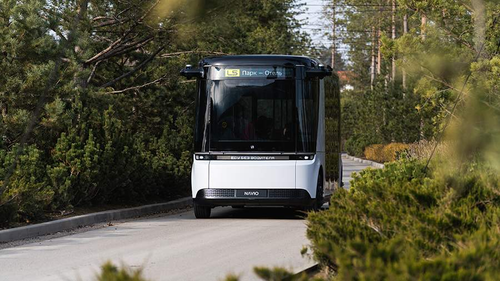
L5 can accommodate up to 36 passengers. The possibility of transforming the interior space is provided. The Navio L5 does not have a driver's seat; it is controlled by a system under the control of generative artificial intelligence, which makes safe decisions about maneuvering and complies with traffic rules.
The shuttle is fully ready for the integration of an automated driving system corresponding to the 5th level according to the SAE (Society of Automotive Engineers) classification.
In 2025, Navio began a technological transition in the development of autonomous transport from a traditional algorithmic approach to the use of generative artificial intelligence (GenAI).
One of the key planned stages is the integration of VLA (Vision-Language-Action) models, thanks to which the transport will be able to understand the surrounding world: it sees the scenario as a whole, connects it with the context and is able to interpret meanings.
Read more materials:
- The most reliable engines of the last 20 years have been named
- Geely has rewritten prices in Russia
- Drunk driving is a chance to earn money: Russians have begun to be paid for vigilance
Комментарии