Despite the low build quality, the Chinese auto industry has turned the market in Siberia and the Far East upside down in a matter of years, Nikita Ivanov, a top manager of a large used car sales company, told the Siberian Economist. Now the secondary market for Japanese cars is experiencing a catastrophe.
According to him, until 2020 there were no problems with the sale of Japanese cars: buyers trusted their reliability, quickly assessed the condition, and sellers easily found a compromise on the price. The buyback scheme through specialized services worked flawlessly - owners lost only about 5% commission, and buyers received a proven car with a guarantee.
Now everything has changed. Ivanov cited as an example a ten-year-old working RAV4 with a mileage of about 100 thousand kilometers, the real cost of which is approximately 2.5 million rubles. However, today such cars are not bought even for one and a half million, and offers from 2 to 3 million hang for months. Owners are left with either dropping the price to the point of absurdity, or operating the car "until it dies".
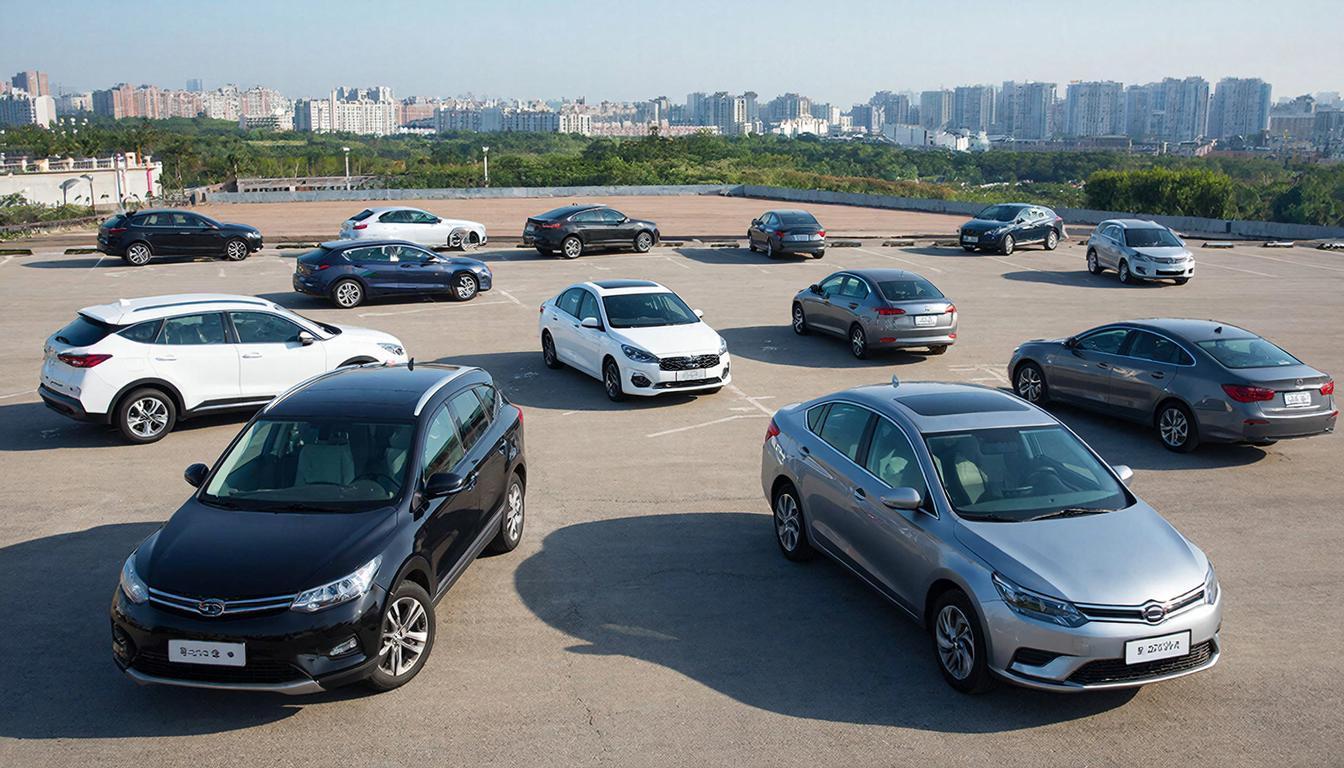
The reason for everything is Chinese cars. Yes, they are of low build quality (in most cases). But they are beautiful, new and packed with electronics. At the same time, the cost, for example, of a new GAC GS4 (essentially similar to the RAV4) starts at 2.3 million rubles in the showroom, and the premium Hongqi HS5 starts at 3 million.
Buyers choose new cars with bright design and modern options, and Chinese dealers are actively fueling demand with marketing: discounts, loans and installments. Instead of saving 2.5 million for a used RAV4, a buyer can deposit 300 thousand and immediately leave the showroom in a new GAC, paying the balance in installments.
Ivanov also noted that Chinese companies have learned to retain customers by offering to replace a car with a new one with an additional payment of 20–30% even before the end of the warranty. Where thousands of redeemed "three-year-olds" go afterwards is a mystery, but if they hit the secondary market, prices for Chinese cars will collapse.
For a long time, Chinese cars in Siberia were not taken seriously, with the exception of the Great Wall Hover, which attracted with its reliable design and low price, as well as budget FAW sedans. However, after 2022, the situation changed. First, the expansion affected freight transport - the Russian KamAZ turned out to be uncompetitive compared to Chinese trucks, and the highways were filled with strings of new equipment, Ivanov says. Then the wave reached passenger cars, especially beyond the Urals, where traditions and logistics restrained this process less.
Read also:
- New BelAZ tractor will be able to move Airbus A320, A220 and Boeing 737 liners
- China reveals real timeline for solid-state batteries
- Sollers launches new automotive safety systems plant
Комментарии