Translated with AI from the Russian original.
Toyota has registered a patent for a new design of traction battery mounting for body-on-frame vehicles. The development is designed to solve one of the main problems of electric SUVs and pickups — the transfer of loads from frame twisting to the battery pack during off-road driving.
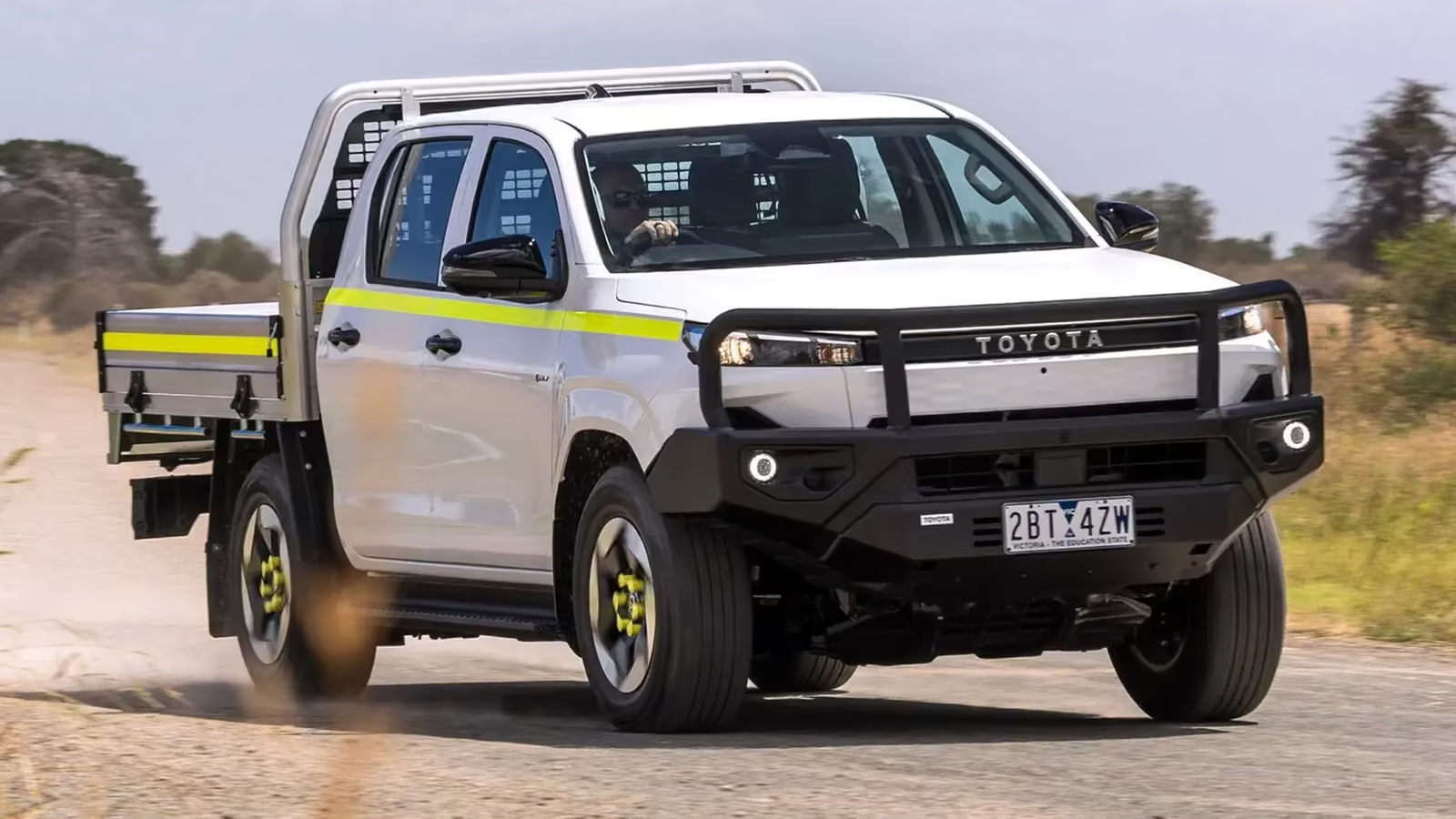
When driving over rough terrain, the ladder frame is constantly subjected to torsional loads, as each wheel moves over its own relief. For traditional internal combustion engine vehicles, this is not a serious problem, but electric models have a heavy battery pack located under the floor, which tolerates constant deformations much worse.
According to published USPTO patent application No. 20260200306, Toyota proposes to abandon rigid battery mounting along the entire length of the frame. Instead, the main part of the battery rests on the central area of the chassis, where the level of deformation is minimal.
Additionally, one end of the battery pack is connected to the frame via a special swivel joint. This design allows the frame to twist freely when driving off-road, practically without transferring the resulting loads to the battery.
According to the engineers' plan, such a solution should reduce mechanical stress inside the battery, increase its durability, and reduce the likelihood of damage during long-term operation in harsh conditions.
Another advantage of the new scheme could be more efficient use of space under the vehicle. The freed-up space could potentially allow for the installation of higher-capacity batteries without significant redesign of the chassis structure.